





 Português
  Inglês
  Espanhol
 7 min de leitura
  8 comentários


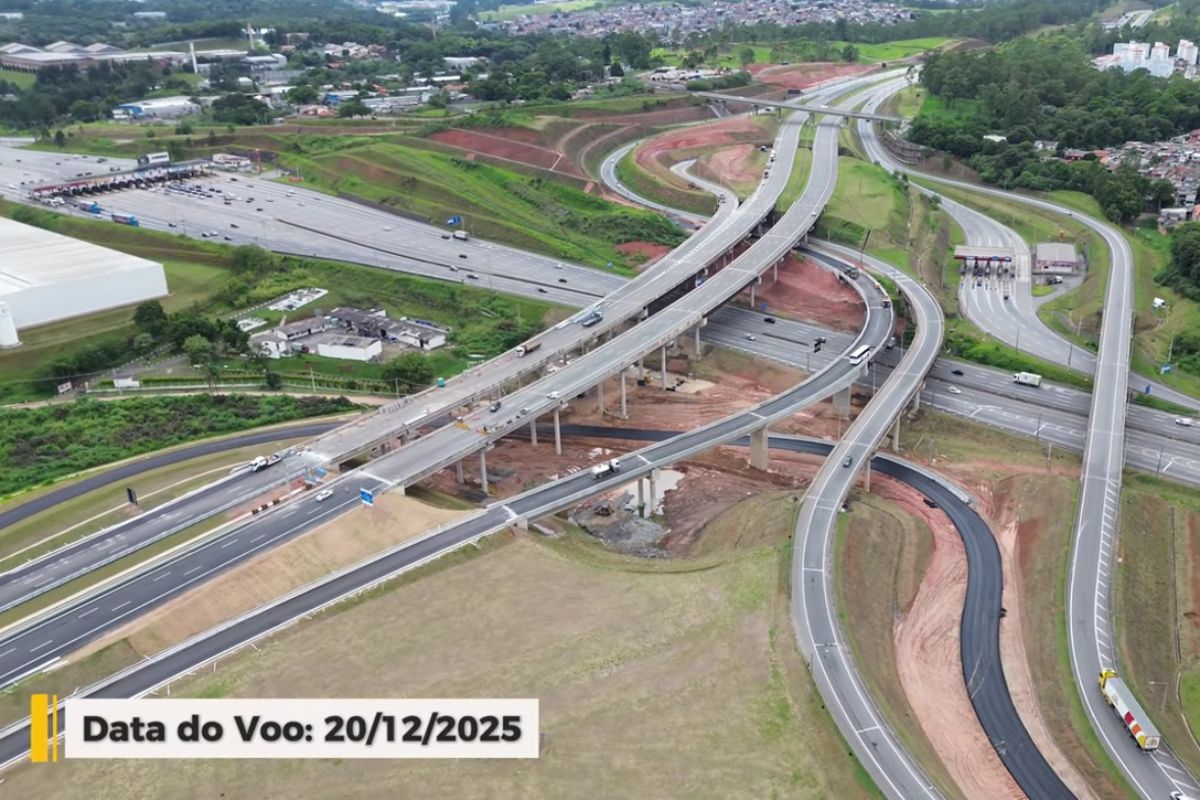


After More Than a Decade of Construction, the New North Ring Road Opens in a Convoy, with Free Flow Toll, Tunnels Under the Cantareira, and Access to Guarulhos, to Remove Trucks from the Tietê Marginal and Change the Traffic in São Paulo Every Day
After more than a decade of waiting, the opening of the new North Ring Road officially begins on December 22, with the political inauguration ceremony, and is only made available to regular drivers on December 23, when traffic starts to flow in convoys escorted by the Highway Police, opening the section in two stages. In this first phase, spanning 24 km between lots 5 and 6, the zero-class project was designed to remove more than 10,000 trucks a day from inside São Paulo, relieving the Tietê Marginal and other corridors currently saturated by heavy cargo traffic.
From an engineering standpoint, the segment combines a package of uncommon solutions for Brazilian highways, with SMA asphalt of the type used in Formula 1 race tracks, sections in rigid concrete in areas of soft soil, four tunnels under the Serra da Cantareira, slope protection with shotcrete over anchored soil, electronic free flow tolling without physical booths, and an integrated operational base in Guarulhos, which concentrates tow trucks, medical rescue, and the Highway Military Police to reduce response times in any incident.
What Is the Route of the New North Ring Road Between Arujá and Fernão Dias

The technical flight over the new North Ring Road begins at the Arujá interchange, where three fundamental axes of São Paulo logistics meet: the eastern section of the Ring Road, Via Dutra in the Rio-São Paulo corridor, and the new northern segment that completes the arc over the metropolitan area.
-
Scientists transform sawdust into fire-resistant panels, stabilize the compound with an enzyme extracted from watermelon seeds, and turn waste into promising material for construction.

-
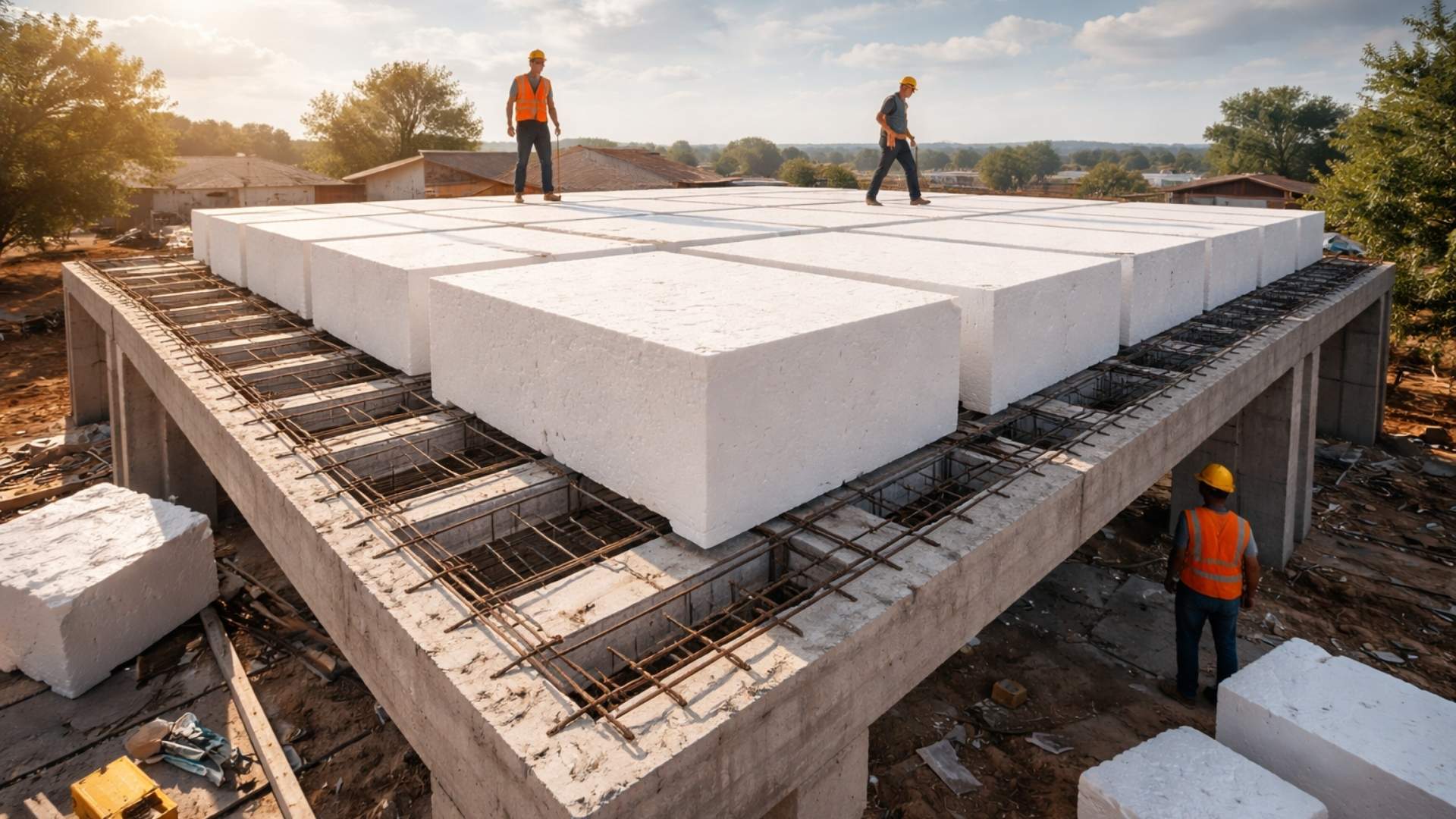
Forget concrete: architects are replacing tons of concrete with giant blocks of expanded polystyrene to build the roofs of houses and reduce structural weight by up to 50%, cut costs, improve thermal insulation, and speed up construction.
-
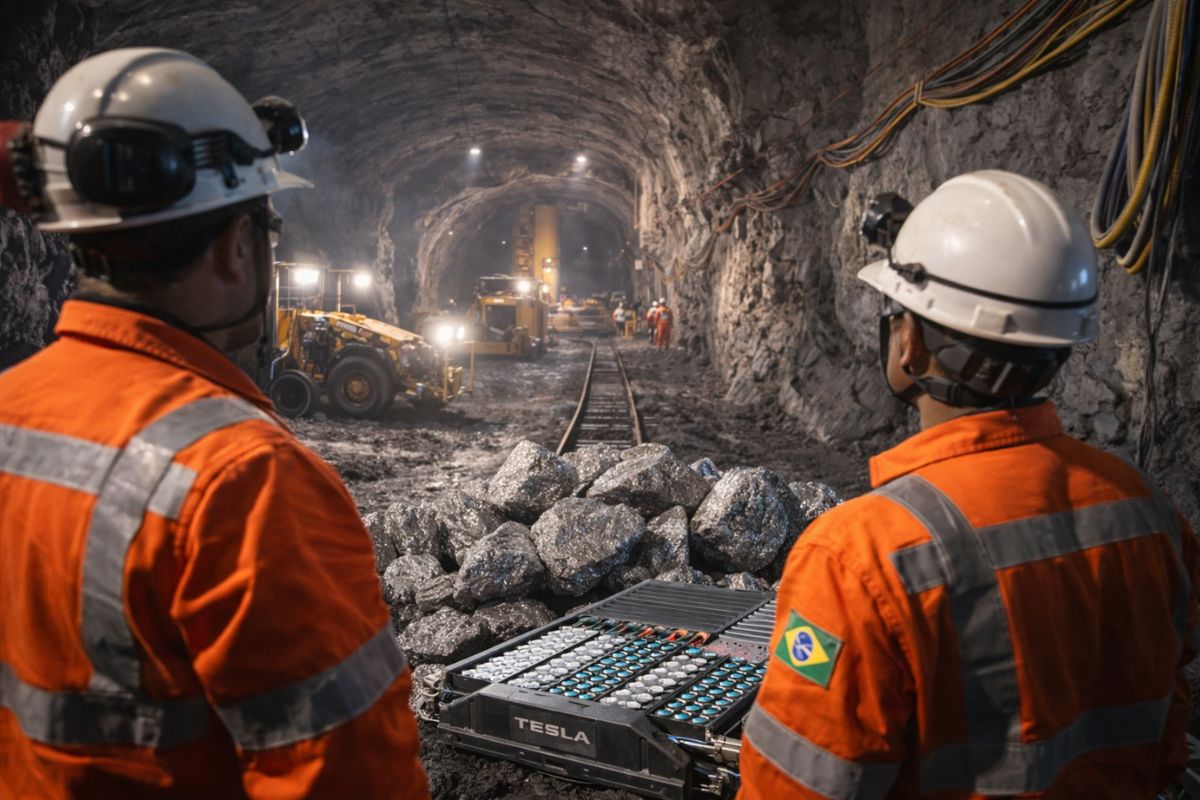
The Brazilian state enters the center of the global race for critical minerals by starting the construction of the largest underground nickel mine in Latin America, a mineral essential for electric car batteries that the entire world is competing for at this moment.
-
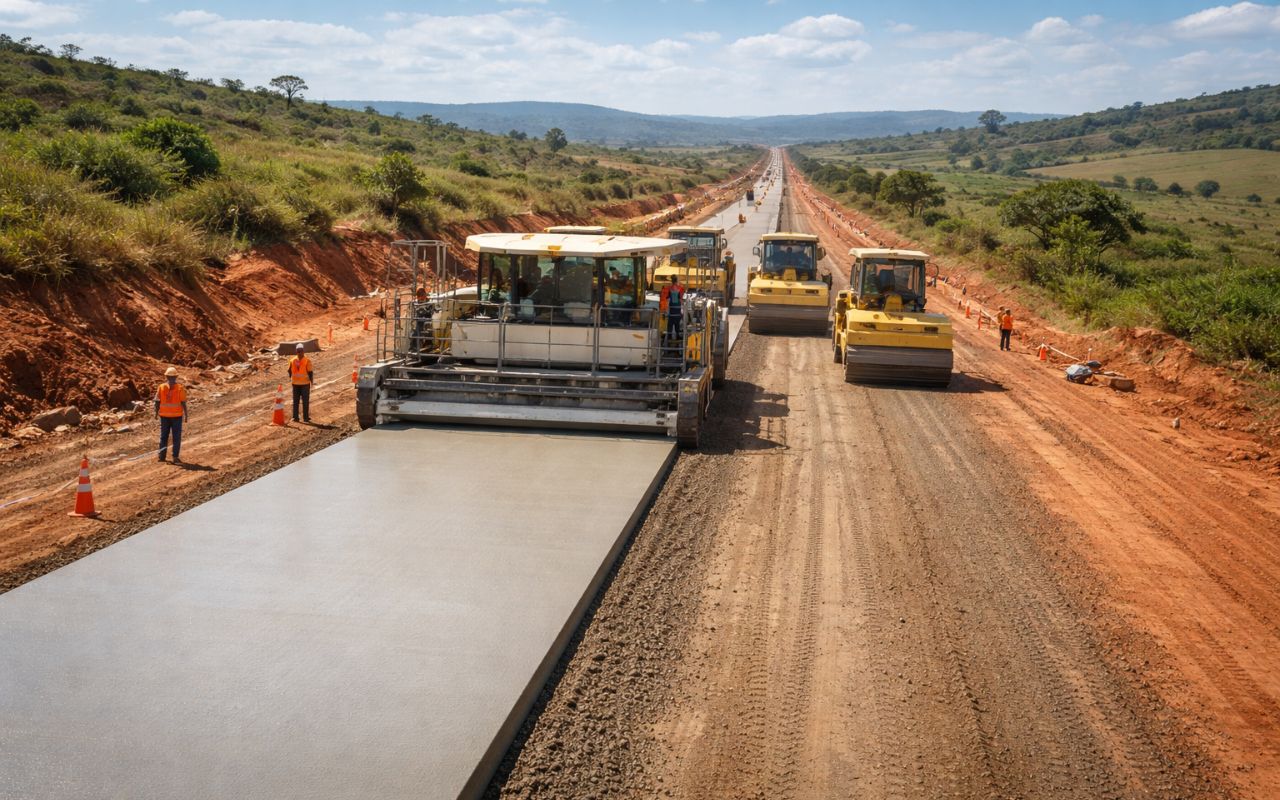
New CCR concrete paving technology promises roads up to 3x more durable, less maintenance, and cost reduction in Brazil.

It is from this junction that cargo should flow without crossing the urban fabric of the capital.
Shortly after the Arujá complex, the route crosses Avenida Governador Mário Covas and the Baquirivu River, already in Guarulhos, where expansion joints are installed to allow for the movement of viaducts without cracks.
Each structural solution was designed to withstand the extreme loading of articulated trucks in continuous operation, reducing maintenance and deformations over the years.
Along the inaugural 24 km, the standard roadway platform features three lanes of 3.6 meters in each direction, a 3-meter shoulder, and operational bays every kilometer, guaranteeing escape and support areas for vehicles in breakdown.
Formula 1 Asphalt and Rigid Concrete in Areas of Soft Soil

In a large part of its length, the pavement of the new North Ring Road uses SMA Stone Mastic Asphalt, a technology mixed with polymers and cellulose fibers similar to that applied in Formula 1 racetracks.
The objective is to combine high traction with efficient drainage, reducing water spray raised by tires in heavy rain and increasing safety at speeds of up to 100 km/h.
In sections of soft and compressible soil, engineering abandoned traditional flexible asphalt and adopted rigid concrete slabs.
In these points, concrete acts as a kind of bridge supported over unstable ground, distributing weight and preventing settlement that would generate undulations and potholes in a short time.
The combination of high-performance asphalt with rigid plates in critical areas is crucial to maintaining service levels under continuous heavy traffic.
Tunnels of the Cantareira, False Tunnel, and Slope Protection


In the mountain segment, the new North Ring Road crosses the Cantareira with a series of tunnels, including Tunnel 501, which was the focus of a previous collapse during construction.
The area has been completely reconfigured, with the implementation of a false tunnel in robust concrete that extends protection out from the mountain and reinforces the segment considered the most sensitive part of the highway.
On the sides, rock blocks in a riprap arrangement act as counterweight and drainage, stabilizing the slope.
Under the apparent concrete shell, steel bars from 6 to 12 meters anchor the mass, forming a geotechnical framework that prevents landslides and the falling of materials onto the road during heavy rain in the mountains.
Other smaller tunnels maintain the same standards of lighting and safety, with a layout that alternates between gallery sections and open sky, always seeking wider radius curves.
The geometry was designed to avoid sharp curves that force trucks to brake suddenly, favoring a progressive and controlled descent to the junctions in the northern zone.
Barriers, Different Levels, and Visual Comfort at Night
Between the lanes, in areas of elevation, engineering adopted large structural walls that act as containment for the upper lane.
These walls also have a positive effect on safety: by completely blocking the view of the opposing lane, they eliminate the glare from high beams of vehicles in the opposite direction, increasing visual comfort and reducing the risk of head-on collisions.
The lanes operate at different levels, adjusting to the natural relief of the mountain to reduce harsh cuts and minimize environmental impacts, keeping the new North Ring Road integrated into the terrain without large open slopes.
Free Flow Toll: Where Is the Pylon and When Does the Fine Arrive
At kilometer 135, in Guarulhos, the driver finds no booths or physical plazas, but it is exactly there that the toll for the new North Ring Road is located.
Pylons equipped with lasers and automatic plate reading cameras classify the vehicle in fractions of a second, even at a speed of 100 km/h.
For those using automatic toll tags such as Sem Parar, ConectCar, or Veloe, the charge is made directly, with a 5% discount on the fee.
The problem lies with drivers without a tag, who have 30 days to go to the concessionaire’s website or app, locate their passage, and pay the one-time fee.
If the deadline expires without payment, the system converts the outstanding amount into a traffic violation for evading tolls, with a fine of R$ 195 and five points on the driver’s license.
The free flow operation thus requires a change in behavior from the user, who no longer receives a bill at home and is now responsible for monitoring their passages through the pylons.
PSO, Base of the Highway Police, and Operational Returns
Still at kilometer 135 is the main operational hub of the new North Ring Road, with the PSO operational base and the fixed post of the Highway Military Police within the segment.
From there, medical rescue teams, tow trucks, and inspection vehicles can reach any occurrence in minutes.
The project includes large-scale operational returns, exclusive to the concessionaire’s service vehicles.
These devices allow ambulances, tow trucks, and vehicles to quickly turn around without having to traverse the entire segment to then return.
In an express and segregated highway, these dedicated returns are essential to reducing response times in accidents or mechanical failures.
“Ghost” Access to Guarulhos Airport Still Without Practical Date
As it progresses through the Guarulhos stretch, the route reveals a large interchange apparently ready, but completely blocked: it is the access designed for São Paulo International Airport.
Today, this set of ramps functions as an interrupted link, without a direct connection to the terminals.
The connection depends on complementary works, expropriations, and agreements between the airport administrator, the city hall, and the state government, currently under negotiation and legal proceedings.
The official forecast is that the direct link between the new North Ring Road and the airport will only be delivered after 2027, which for now forces the maintenance of old routes for those who go to board or disembark.
Inauguration on Two Dates and the Daily Impact on Heavy Traffic
The inauguration of the new North Ring Road was planned in two distinct stages.
On December 22, the political event occurs, with state authorities and guests in the initial region of the segment, intended for the ribbon-cutting and speeches.
However, real traffic only begins on December 23, with the release in security convoys accompanied by the Highway Police, first in the direction of Dutra Fernão Dias and then in the opposite direction.
From then on, the national flow of trucks will have an express alternative between Arujá and Fernão Dias, reducing the need to cross through the Tietê Marginal and urban roads in the northern zone.
If the projection to remove more than 10,000 trucks a day is confirmed in full operation, the combined effect can be felt both in travel time for cargo and in daily congestion in the metropolitan area.
While the other sections of the complete ring are not finished, the now-open stage already functions as a real-scale laboratory for the free flow toll model and for the engineering standard adopted in the crossing of the mountain, anticipating solutions that are likely to be replicated in future expansions.
In your opinion, will the new North Ring Road really remove trucks from the Tietê Marginal and improve the daily traffic in São Paulo, or will the practical effect be lower than promised on paper?










Pelo que entendi, já passou todo esse tempo e até agora o rodoanel não está completo, então, inaugurar um trecho desses, sovai melhorar um pouco a região ali da Dutra e Fernão Dias, mais nada! Não vão tirar nem um mísero caminhão da marginal. Muita conversa mole do privatizador.
Não muda nada, pois o grande fluxo esta centralizado nas rodovias Bandeirantes, Anhanguera, Castelo Branco, só resolverá, quando o outro trecho for entregue, por enquanto isto é somente jogada política e desespero por votos
Claro que este trecho não vai diminuir o trânsito caótico da zona norte de São Paulo, exceto os caminhões ou carros com destino a Belo Horizonte, o que são poucos, porém é um bom começo e surge talvez como alternativa ao trânsito caótico e pedagiado da Dutra e Ayrton Senna na chegada a São Paulo, embora prevejo que a Fernão Dias vai ficar caótica.