





 Portuguese
  English
  Spanish
  5 min of reading
  0 comments


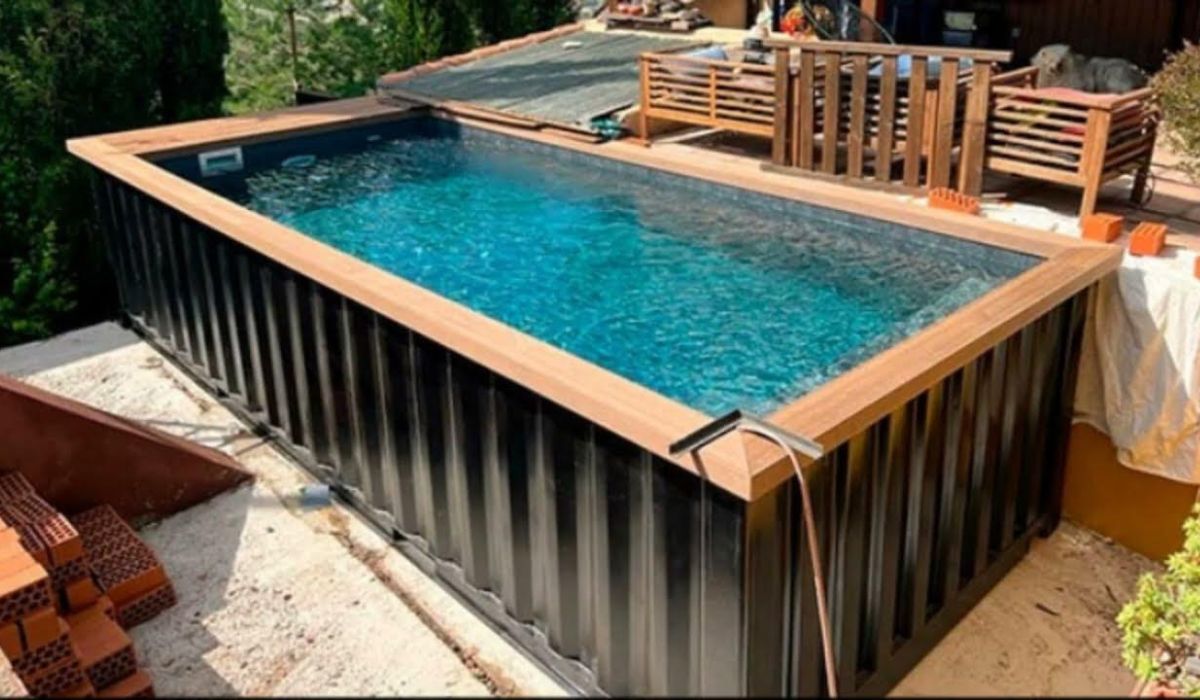
Used Container Pools Are Being Adapted to Become Leisure Areas with Faster Installation, Filtration Systems, and Internal Finishing, in Projects That Vary by Size, Materials, and Steel Maintenance, Attracting Attention for Their Modular Design.
Container Pool as a Fast Installation Alternative
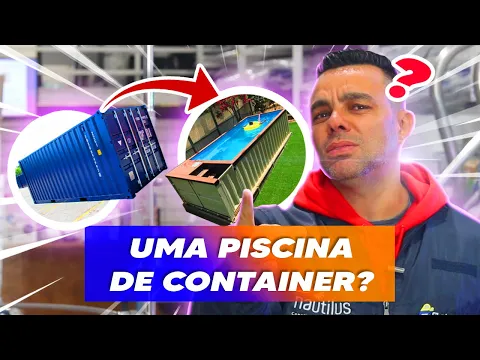
Pools built from used shipping containers have emerged as an alternative for those looking to install a leisure area with less construction time compared to traditional models.
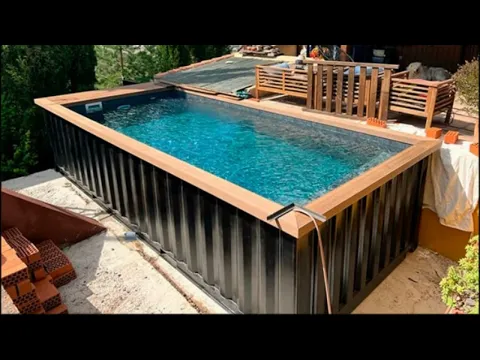
The idea is to repurpose a steel structure originally intended for cargo transport and adapt it to function as a water reservoir, with internal sealing, circulation and filtration system, and finishes suitable for continuous use.
In the market, the final cost can vary according to the size of the container, its condition, the type of internal finishing, and the quality of the finish.
-
Congonhas receives the monorail promised for the 2014 World Cup after more than a decade of delays and becomes the first airport in Brazil with integrated subway.
-
Goodbye, concrete: a new trend in civil construction reduces the weight of the structure by up to 30%, accelerates projects by up to 40%, cuts costs on steel and labor, and improves thermal insulation with EPS.
-
Russian engineers create an innovative propeller blade for aircraft that could completely change the way airplanes and helicopters operate.

-
Couple finishes building PVC chalet on the beach on the last day, with air conditioning and curtains, but discovers the bathroom drain is inverted: water escapes from the drain, risking breaking the floor, and the rush continues before the trip.

However, projects promoted by suppliers and industry professionals often highlight that the model can cost up to 50% less than a masonry pool, especially when the comparison involves more complex construction and greater labor demands.
How to Transform a Used Container into a Pool
The process typically begins with the purchase of a used container.
In the reference text, the range for acquisition is cited as being between R$ 6,000 and R$ 10,000, varying according to the condition of the module and the supply in the region.
Next, the structure undergoes cuts and adaptations, including the upper opening and preparation of the interior to hold water.

To ensure watertightness, projects of this type often apply epoxy paint or use vinyl lining, cited as solutions for sealing and protecting the internal walls.
Being a metal piece designed to withstand transport and stacking, the container is described as a robust base for this type of adaptation.
Still, the result depends on the level of intervention, the method of installation on the ground, and the care taken with the treatment and protection of the steel, since continuous exposure to water requires corrosion control.
Machine Room in the Container and Maintenance
In some projects, the area of the doors is utilized to accommodate the machine room.
The proposal is to centralize components such as pump and filter there, facilitating access for maintenance and reducing the need to build a separate shelter.
This arrangement, however, often requires planning for ventilation, organization of the pipes, and protection of the equipment.
When the technical space is too closed or poorly sized, access to valves and connections can become more difficult, and maintenance tends to be more laborious.
Essential Hydraulic Equipment
A container pool is not just the metal module.
To operate daily, it needs a hydraulic system with pump, filter, and skimmer, sized for the water volume and the project’s dimensions.
The original text indicates an estimated cost of around R$ 5,000 for this set of equipment, emphasizing that it is necessary to maintain water quality.
Additionally, the cost may include items such as piping, return devices, suction points, and electrical adjustments, depending on the solution adopted by those executing the work.
Installation on the Ground and Construction Time
One of the arguments associated with this model is the speed of installation.
Instead of typical stages of masonry construction, such as extensive excavation, concreting, and curing time, the container can arrive on site already adapted or partially prepared, which tends to shorten the schedule.
Installation can occur on the ground or semi-buried.
Even in the simplest cases, it is usually necessary to level the base and prepare the ground to support the weight of the unit, since the structure filled with water imposes significant load.

When the option is to semi-bury, the site preparation tends to be greater, with excavation and adjustments to accommodate the container.
In the supported model, the yard may require less intervention, although aesthetic integration and access via stairs or deck become part of the planning.
Advantages and Limitations of the Modular Model
The proposal is often associated with the repurposing of steel and, therefore, frequently appears linked to the argument for material reuse.
Still, performance and durability depend on the condition of the chosen container and the protection standard applied to the interior and exterior.
Another mentioned characteristic is mobility: being a module, the container can be transported and reinstalled at another address, provided there are technical and logistical conditions for removal and new installation.
At the same time, some limitations commonly arise in this type of project.
One of them is the risk of corrosion, which tends to require monitoring of the coating and maintenance to preserve the structure over time.
Dimensions are also conditioned by the standardized sizes of the container, which limits customization of length and width.
Therefore, those seeking very specific measurements may not find the same level of freedom as in a project entirely molded in masonry.
Additionally, thermal comfort may vary.
Without insulation, the metal structure can respond more quickly to changes in the ambient temperature, which can influence the sensation of the water at different times and seasons, depending on local conditions.
Costs of Container Pool and Comparison with Masonry
The base text describes that the total investment usually varies according to finishes and included items but provides a reference range for the basic execution.
The indicated estimate combines a used container between R$ 6,000 and R$ 10,000 with about R$ 5,000 in equipment, reaching a basic total between R$ 20,000 and R$ 35,000.
The justification pointed out for the savings is the reduction of supplies and common stages in civil construction, with a lower volume of reinforced concrete and less labor time compared to projects that extend for months.
Still, the final price may change according to the finishing standard, the complexity of the installation, and the inclusion of additional items such as special coatings and insulation solutions.
With the popularization of the topic, container pools are also appearing in content from companies and specialized channels, usually focusing on budgeting and execution.
Even in these cases, the price tends to depend on local conditions and the contracted scope, which makes it difficult to compare projects without considering what is included in each delivery.






-

-

-

-

9 pessoas reagiram a isso.