





 Portuguese
  English
  Spanish
  4 min of reading
  0 comments


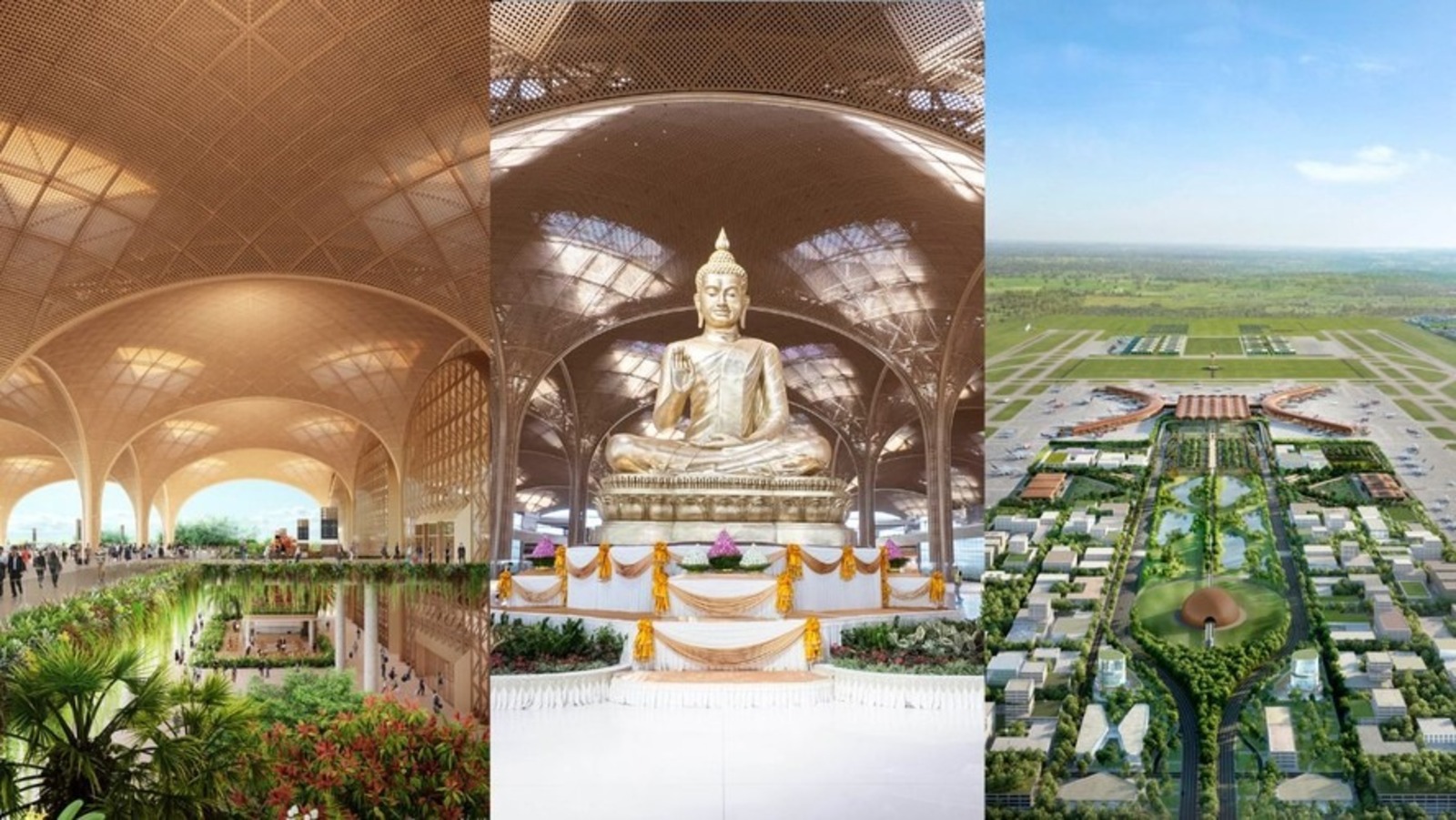
With an Investment of US$ 2 Billion and Architecture Inspired by Apsara Dancers, Techo International Airport Ushers in a New Era in Cambodia, Combining Tradition, Sustainability, and Technology to Boost Tourism and the National Economy
On a humid October day, the silence of the departure hall in Phnom Penh was broken by Buddhist chants. Monks in orange robes surrounded a nine-meter-tall golden statue of Buddha. The ceremony marked the blessing and inauguration of Techo International Airport, the most ambitious aviation project in Cambodia’s history. Only after the ritual did the first planes land at the new terminal, inaugurated on Monday (20).
A Billion-Dollar Investment and Symbol of Modernity
Located about 30 kilometers south of the capital, Techo International cost US$ 2 billion — about R$ 10.78 billion — and occupies 87,000 square meters.
The project was designed by the renowned British firm Foster + Partners and inspired by the headdresses of the Apsara dancers, icons of Khmer culture.
-
China alone accounts for 70% of trade within the BRICS, while Brazil establishes itself as an essential supplier of food and minerals: understand how the group, which already represents nearly 40% of the world’s GDP, is changing the game.

-
Starting in May, those who do not have registered biometrics will not be able to apply for Bolsa Família, sickness benefits, or unemployment insurance: understand the new rule that changes access to benefits for millions of Brazilians.

-
A new law being voted on in Brazil proposes a minimum fare of R$ 10 per trip and R$ 2.50 per kilometer for Uber and 99 drivers, and promises to ensure they earn as well as taxi drivers did during the golden age of taxis in the country.

-
Bauer Group collapses after failed judicial recovery: 25 years, 800 vehicles, and a network of gas stations leave a debt of R$ 50 million and 100 layoffs, exposing costs, tight margins, and expensive credit in Brazil.

Inside the terminal, natural light flows through large floor-to-ceiling windows. The light wood flooring and tropical vegetation complete the modern and welcoming atmosphere.
According to Nikolai Malsch, senior partner at the architecture studio, the focus was on creating intuitive and practical pathways.
He explained to CNN that the route to the gates never exceeds 500 meters, facilitating passenger movement.
Sustainability and Local Integration
The airport was also born with an ecological proposal. The curvilinear roof of the building serves as a rainwater harvesting system, and local companies were invited to participate in its operation.
The Brown Coffee network, for example, maintained a kiosk operating even during the construction, serving workers and visitors.
For Charles Vann, director of the Cambodia Airport Investment Company, the new terminal is expected to become a tourist attraction in its own right.
He stated to CNN that the goal is to put the country on par with major aviation hubs. “We believe this airport can attract many travelers and tourists to Cambodia, similarly to Dubai or London,” he declared.
A Portal to Cambodia’s Future
The government of Hun Manet celebrates the project as a milestone for national development. During the inauguration ceremony, the prime minister stated that Techo International reflects the country’s long-term vision.
Today, Cambodia receives about 2.5 million international tourists annually, while Vietnam attracts 18 million and Thailand, 32 million.
With new direct routes to Istanbul and Abu Dhabi, the expectation is to strengthen connectivity and increase visitor flow.
The bet is that the airport will serve as a new gateway to Southeast Asia.
The technological infrastructure is also a highlight. The terminal features facial recognition systems at boarding scanners and even an official theme song titled Power of Techo International Airport, released on the prime minister’s social media.
In addition, the complex integrates the national plan “Sacred Tourism 2025-2035,” which aims to diversify tourism beyond Angkor Wat.
The proposal focuses on wellness experiences, community tourism, and new attractions in the southern region of the country.
Obstacles and Negative Perceptions
Despite the government’s enthusiasm and massive investment, the project faces challenges.
CNN noted that the airport was inaugurated just four days after South Korea issued a rare alert — the “black code” — advising against travel to Cambodia due to the risk of scams and insecurity.
Analyst Shukor Yusof, founder of Endau Analytics, assesses that infrastructure alone is not enough to transform the country into a standout destination.
He compares that “Vietnam and Thailand offer more in terms of culture, gastronomy, and, especially, safety.”
According to him, Cambodia still needs to improve its reputation, often associated with fraud and human trafficking.
This image, he asserts, may hinder tourism growth, even with the new airport operating at full capacity.
Next Steps and Logistical Challenges of the Airport
The old Phnom Penh International Airport has been closed and awaits a decision regarding its future.
Meanwhile, Techo International is set to undergo a second phase of development, including the construction of a railway line connecting the terminal to the city center.
For now, access is via car or tuk-tuk, along the new highway cutting through rice fields. The scene is symbolic: a mix of tradition and modernity, between agricultural past and the desire for a more connected future.
Cambodia bets that the R$ 11 billion airport will be the boost needed to reposition the country on the global tourism map — but the real challenge begins now, as the flights take off towards credibility.
With information from O Globo.









-

Uma pessoa reagiu a isso.