





 Portuguese
  English
  Spanish
  5 min of reading
  0 comments


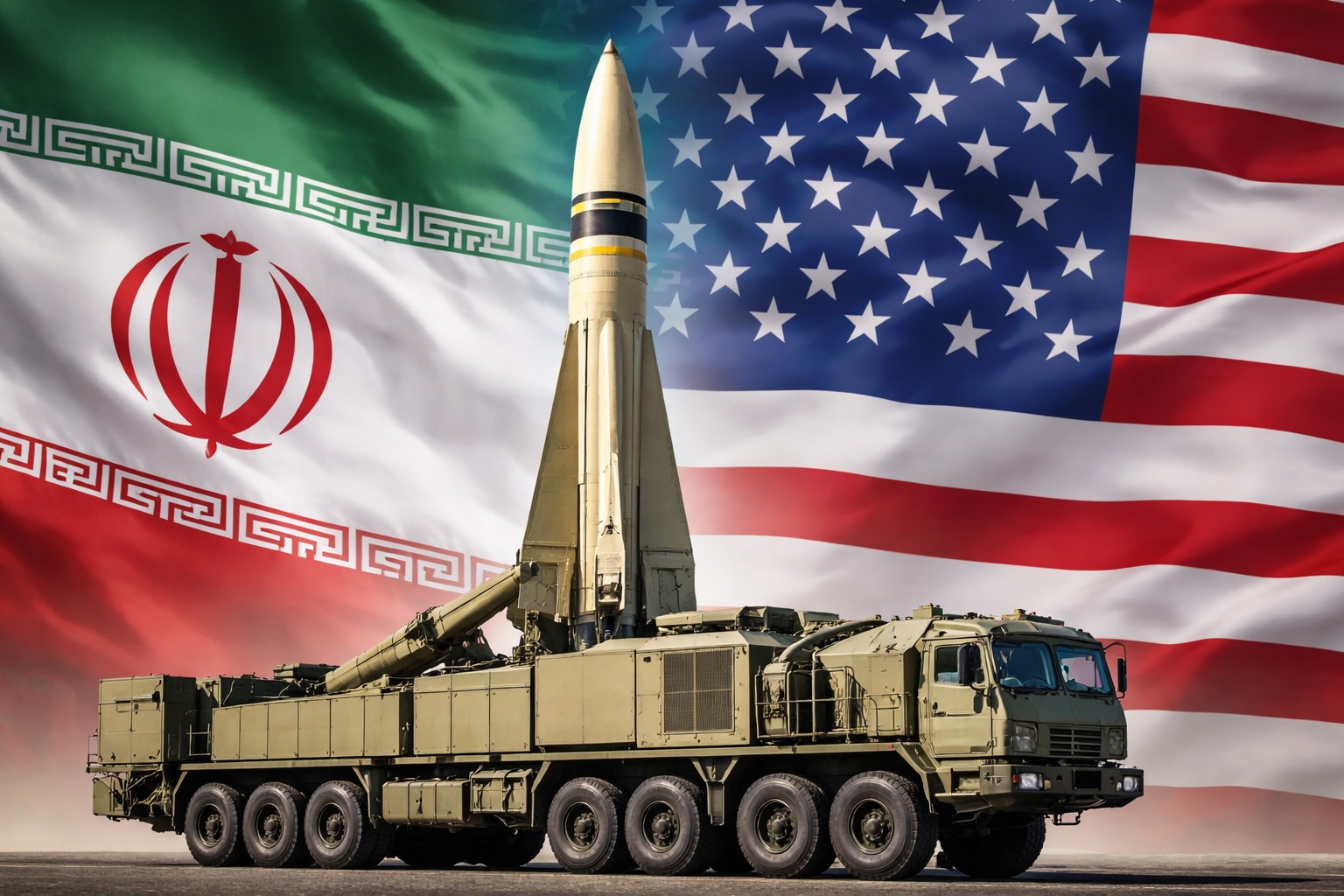
Iran Has One of the Largest Missile Programs in the Middle East, but Public Reports Indicate That by 2026 the Country Will Not Have an Operational Intercontinental Ballistic Missile with a Range of More Than 5,500 km Capable of Directly Hitting the Continental Territory of the United States
The debate about whether Iran can hit the United States with Missiles often resurfaces during periods of tension in the Persian Gulf or after announcements of military tests, involving technical analyses of range, types of rockets, payload capacity, and defense systems.
The discussion on whether Iran can hit the United States with missiles involves technical, strategic, and diplomatic assessments.
Experts analyze the range of ballistic systems, the capability to carry warheads, U.S. missile defense systems, and the geopolitical context to determine the real extent of Iran’s military power.
-
Spain challenges the USA and closes its airspace for operations against Iran, raising global tension and provoking the threat of a trade rupture.

-
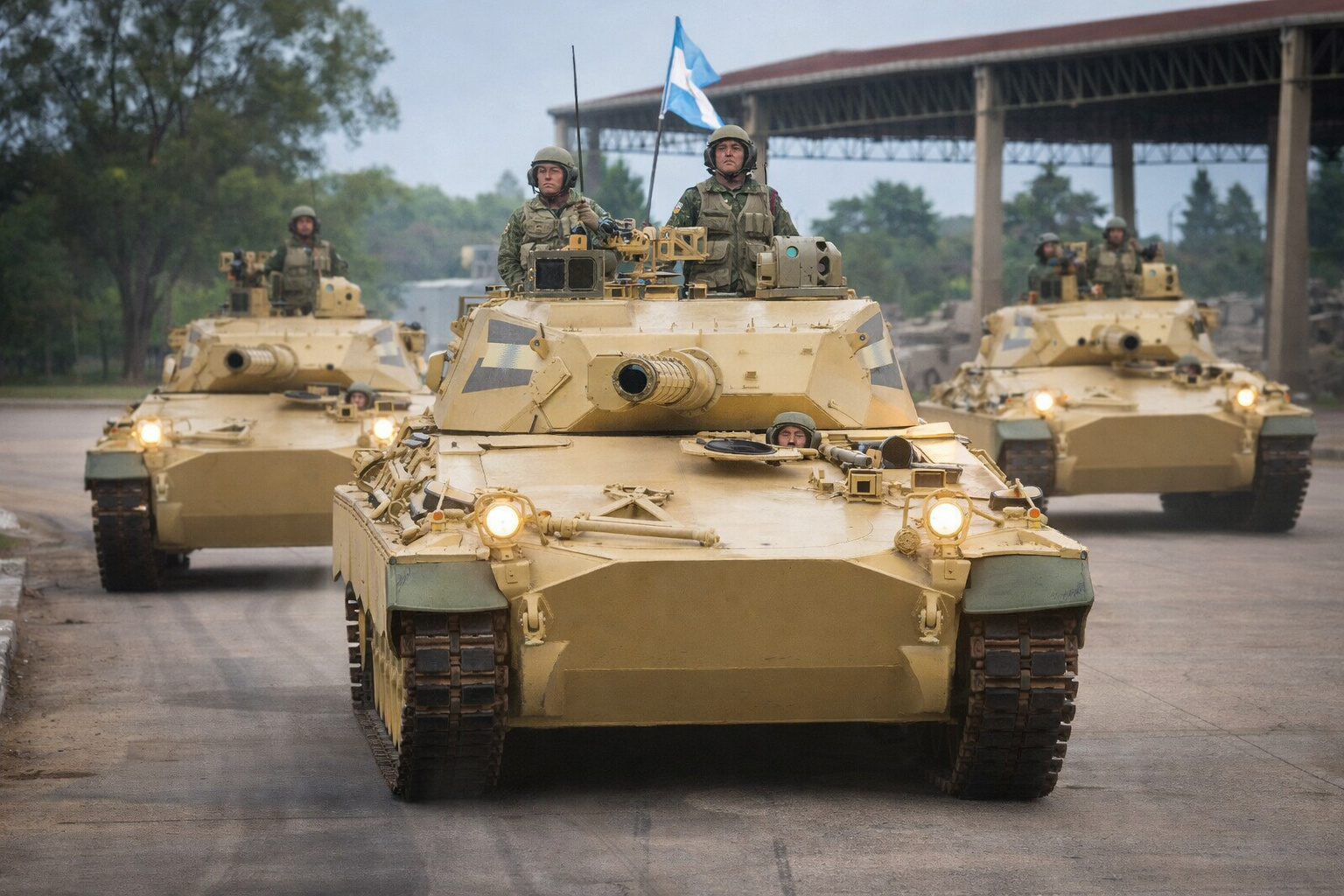
While no other country manufactures tanks in Latin America, Argentina activates the TAM 2C-A2 and raises a curiosity about the technological lag in the region.
-
A Russian ship with 730,000 barrels of oil has just arrived in Cuba while Mexico negotiates fuel sales through private companies: the communist island is desperately seeking alternatives after losing its supply from Venezuela due to American military action.

-
Iranian drones and missiles destroyed a 270 million dollar American spy plane in Saudi Arabia, splitting the E-3 Sentry aircraft in half and injuring 12 military personnel in an attack that exposes the vulnerability of U.S. bases in the Persian Gulf.

In general, defense analysts consider not only the distance a missile can travel but also factors such as accuracy, navigation technology, payload capacity, and the international political landscape. Thus, the assessment usually goes beyond a simple answer.
What It Means to Say That a Country Can Hit the United States with Missiles
When experts discuss whether Iran can hit the United States with missiles, the term typically refers to the existence of intercontinental ballistic missiles. These systems, known as ICBMs, usually have a range greater than 5,500 km.
In addition to distance, the ability to carry conventional or nuclear warheads and to overcome missile defense systems is also considered.
These factors constitute the set of technical requirements for a country to be capable of hitting the continental U.S. territory.
In the Iranian case, public analyses often highlight that the country has developed various types of short and medium-range missiles.
These systems would primarily be aimed at targets in the Middle East or foreign military bases in the region.
For this reason, international reports often differentiate between regional range and intercontinental capability when examining the country’s missile arsenal.
Assessments on Whether Iran Can Hit the United States with Missiles
Reports from Western intelligence services, analyses from the International Atomic Energy Agency, and documents from strategic studies institutes indicate that Iran has developed one of the largest missile programs in the region.
According to these assessments, the country possesses various models of short and medium-range missiles. However, by 2026, there is no public confirmation that an operational intercontinental ballistic missile exists that can directly hit the continental territory of the United States.
Some systems classified as intermediate-range may theoretically reach distances greater than 2,000 km or 3,000 km.
This range could put more distant targets in the Middle East and parts of Europe at risk.
To hit the continental U.S. territory directly from Iran, a system with a significantly greater range would be necessary.
So far, open analyses indicate that the Iranian program is primarily focused on regional deterrence.
Structure and Objectives of the Iranian Missile Program
The Iranian missile program is often described as one of the main pillars of its military deterrence strategy.
This approach gained strength after decades of sanctions and limitations in acquiring modern combat aircraft.
Instead of relying heavily on a modern air force, the country has invested in the domestic development of ballistic missiles, cruise missiles, unmanned aerial vehicles, and long-range rockets.
This set of systems is designed to target military bases, strategic infrastructure, and vessels in regional conflict scenarios.
Analysts emphasize that this model seeks to compensate for limitations in other sectors of the armed forces.
Among the objectives associated with the program are regional deterrence, the ability to pressure rivals during diplomatic crises, and maintaining a threat to foreign bases in the region.
This focus helps explain why many of the systems developed so far primarily cover the Middle East and nearby regions, rather than necessarily the continental territory of the United States.
Technical Limitations Related to Intercontinental Range
The debate about whether Iran can hit the United States with missiles also considers important technical limitations. Having theoretical range does not automatically equate to reliable operational capability.
Among the points frequently analyzed are system reliability, missile flight path, and the accuracy of guidance mechanisms.
The greater the distance, the more complex the navigation and trajectory correction systems become.
Another relevant factor is reentry technology, which protects the warhead when the missile returns to the atmosphere after the flight’s space phase. This stage requires specialized materials and engineering.
It is also necessary to balance the weight of the warhead, the amount of fuel, and the range without compromising the system’s performance. This technical balance directly influences the final outcome of the project.
Furthermore, the United States has land- and sea-based missile defense systems designed to detect and attempt to intercept hostile launches.
Role of the International Community and Multilateral Agreements
The military capability of Iran, including its missile program, has been the subject of international negotiations and sanctions over decades.
Various agreements and diplomatic mechanisms have been created to monitor this type of technology.
The nuclear agreement reached in 2015, known as the Joint Comprehensive Plan of Action, established monitoring mechanisms related to the Iranian nuclear program.
The agreement did not eliminate the missile program but sought to reduce risks associated with the use of nuclear warheads.
After 2018, changes in position by the United States and adjustments to sanctions regimes reignited the debate over Iran’s missile program.
At the same time, the UN Security Council, the European Union, and other international actors discuss restrictions on the export of sensitive technology that could enhance the range or sophistication of these systems.
Thus, the analysis of whether Iran can hit the United States with missiles involves not only known technical data but also diplomatic pressure, international control mechanisms, and the strategic balance between military powers.
Experts continuously monitor new tests, satellite imagery, and official reports, which help update assessments of the evolution of the Iranian missile program and its implications for global security.
Information from Terra.









-

Uma pessoa reagiu a isso.