





Passionate about crafts, Bolivian lawyer Ingrid Vaca Diez accumulated so much recyclable material at home that her husband joked that it was enough to build a house. She took it seriously, filled 36,000 PET bottles with waste, and built a 170 square meter property. Today, she has built 300 homes.
A joke from her husband was what led Bolivian lawyer Ingrid Vaca Diez to transform 36,000 PET bottles into a 170 square meter house. Tired of seeing the amount of recyclable material she kept for crafts, he joked that it was enough to build a house with all that, and the idea caught on. Thus was born the Casas de Botellas project, which repurposes plastic bottles as building material for families in extreme poverty, according to reports from the BM&C News and eCycle portals.
A resident of Warnes, in the department of Santa Cruz, Bolivia, Ingrid began experimenting with ways to build walls with discarded bottles in 2000. From the first house to today, the project has built about 300 homes in five Latin American countries, becoming a reference in social technology in the region and attracting the attention of communities and governments interested in replicating the method.
The husband’s joke that became a project

The starting point of the story has a tone of domestic irony. Involved in volunteer work since childhood and passionate about crafts, Ingrid kept a huge amount of recyclable material at home, which bothered her husband. It was he who, tired of the accumulation, said that she could build a house with all that stuff, without imagining that the provocation would turn into a real social project.
-
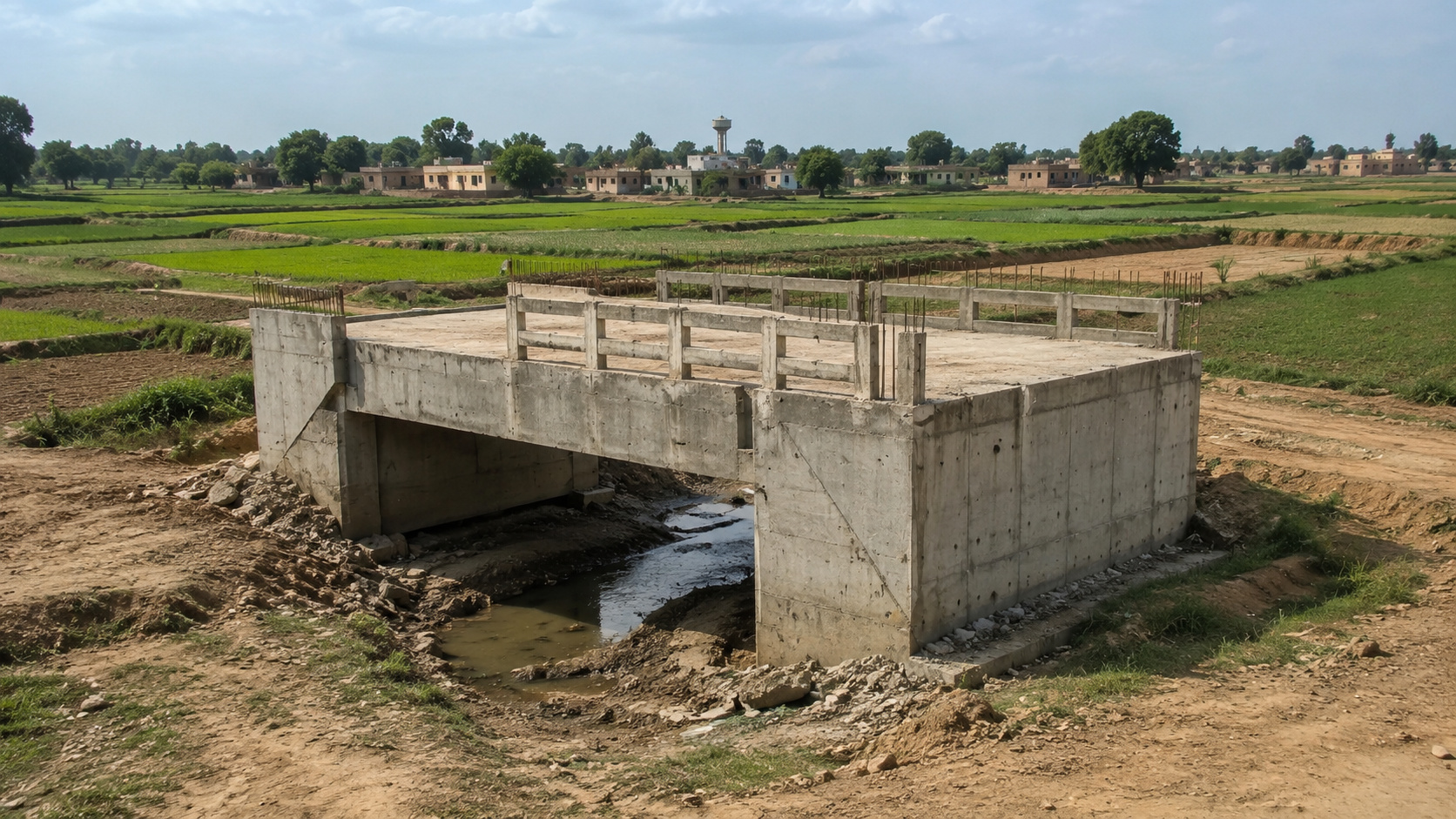
While residents were waiting for a rural road to reach their own homes, a concrete bridge appeared isolated in the middle of a plantation in India, went viral without visible access, and prompted an investigation into the project.

-
Unable to find free land in central London, architects supported a two-story house over a 19th-century warehouse, hid part of the construction behind the rooftops of Covent Garden, and transformed a commercial rooftop into a new urban area awarded by the RIBA.
-
To avoid placing a single pillar in the river, engineers began extending the Joinville bridge over the water from the banks, concreting the base that will support the main span.

-
Without money to buy all new materials, a couple repurposes stones, beams, windows, and pieces taken from 11 barns, builds a castle over decades, and transforms part of the residence into an inn.


Ingrid didn’t mind the mocking tone and took advantage of the opportunity. Disturbed at the same time by the accumulation of plastic waste and the lack of decent housing for vulnerable families, she decided to unite the two problems into one solution. This is how Casas de Botellas, or House of Bottles, emerged, a project that began to transform waste into a resource and provide housing for those who need it most.
The first house: 170 square meters and 36 thousand bottles

The proof that the idea worked came right at the debut. In 2000, Ingrid built her first house, a 170 square meter property that consumed approximately 36 thousand 2-liter PET bottles. The impressive volume of packaging served as a showcase to explain the method in workshops and demonstrations.
The calculation behind the work is quite concrete. According to the project, each square meter of wall consumes about 80 PET bottles, which helps to understand why a single house requires tens of thousands of units. It was this initial, robust, and visually striking result that attracted the interest of people willing to reproduce the technique in other communities.
How a bottle becomes a brick

The construction method is simpler than it seems at first glance. The PET bottles are filled with various residues and sediments, such as expired powdered milk, soot, sand, manure, and organic waste, and then tied together to form the walls, functioning as bricks. They are then fixed with lime and cement, and the finishing reinforces the structure.

The mix that supports the house also relies on low-cost ingredients. Ingrid developed a kind of sustainable cement made from clay, sugar, flaxseed, and porridge, which fills the gaps and binds the structure together. Besides plastic bottles, she incorporates glass bottles into the construction, combining the two types of packaging in the same wall system. It’s a way to make use of what would be discarded and turn it into a solid structure.
A house in 20 days with ten volunteers
The speed of construction is one of the most surprising aspects of the project. After years of perfecting the technique, Ingrid assures that it is possible to build a house in just 20 days, provided there is help from about ten volunteers in the process. The short timeframe makes the model attractive for urgent housing situations.
There is a detail she insists on maintaining, and it has a social function. The future residents themselves participate in building the house they will live in, which adds more value to the home and creates a bond with the property. The project relies on donations for finishing materials and furniture, but depends mainly on labor willing to work for free to help others, something that is not always easy to gather.
300 houses in five countries
From the initial experiment in Bolivia, Casas de Botellas gained scale and crossed borders. Over the years, the project has built more than 300 homes, spread across five Latin American countries: besides Bolivia itself, the technique has reached Argentina, Mexico, Panama, and Uruguay.
The expansion required adaptation to each reality. In each country, the technique is adjusted to the materials available, but always maintains the same logic, transforming waste into a resource and providing housing to those in need. It was this replicable and low-cost method that established the project as a reference in social technology in the region.
Two problems solved at once
The strength of Ingrid’s proposal lies in tackling two serious issues simultaneously. On one hand, the accumulation of plastic waste, which is transformed into construction material instead of going into the environment. On the other, the housing deficit, which gains a cheap and accessible alternative for families unable to build a conventional house.
The environmental gain goes beyond removing bottles from circulation. Replacing part of the brick and common cement with filled bottles also reduces the dependence on a material whose production is among the largest sources of carbon dioxide emissions on the planet. By combining waste reuse and affordable housing in the same place, the project offers a solution that can be replicated in low-income communities in a simple and inexpensive way.
The dream of building in Brazil
After traveling through five countries, Ingrid is eyeing a new destination for the project. She intends to bring the PET bottle houses to Brazil, where she believes it will be easier to gather the necessary raw materials for the constructions, precisely because of the country’s profile.
Her bet has a clear justification. In Ingrid’s view, Brazil has a more widespread recycling culture and a population more receptive to volunteer work than other Latin American countries, which would facilitate both the collection of bottles and the formation of work groups. If successful, the method that started as a joke in a Bolivian house could add another country to the list.
A whole house built with what would be waste
What Ingrid Vaca Diez has built over more than two decades shows that a domestic challenge can turn into a housing policy. There were 36,000 PET bottles in the first house, 170 square meters built with what would be discarded, and about 300 families housed in five countries, all from packages filled with waste and tied like bricks.
And then comes the question that sparks real conversation. Would you live in a house made of PET bottles filled with waste, or do you still have concerns about the durability of such a construction? Comment below if you think this type of sustainable housing should become public policy in Brazil, and what you would do with the bottles you discard every week.


