





A residence delivered in 2018 in Costa Rica combined recycling, modular construction, and volunteer work by transforming tons of discarded plastic into interlocking blocks used in the home of a mother and her son.
A house that, seen from the street, looked like any new construction in the Lámparas neighborhood, in Alajuelita, Costa Rica, hid an unusual material in its walls.
Instead of conventional blocks, the property used interlocking pieces produced with tons of recycled plastic waste.
The residence was delivered on May 26, 2018 to Cindy Mora and her son Fabrizio Jaen, who was six years old at the time.
-
After her husband joked that she could build a house with so much junk stored, a Bolivian lawyer filled 36,000 PET bottles with waste, erected a 170-square-meter building with them, and has already built 300 homes in five countries.

-
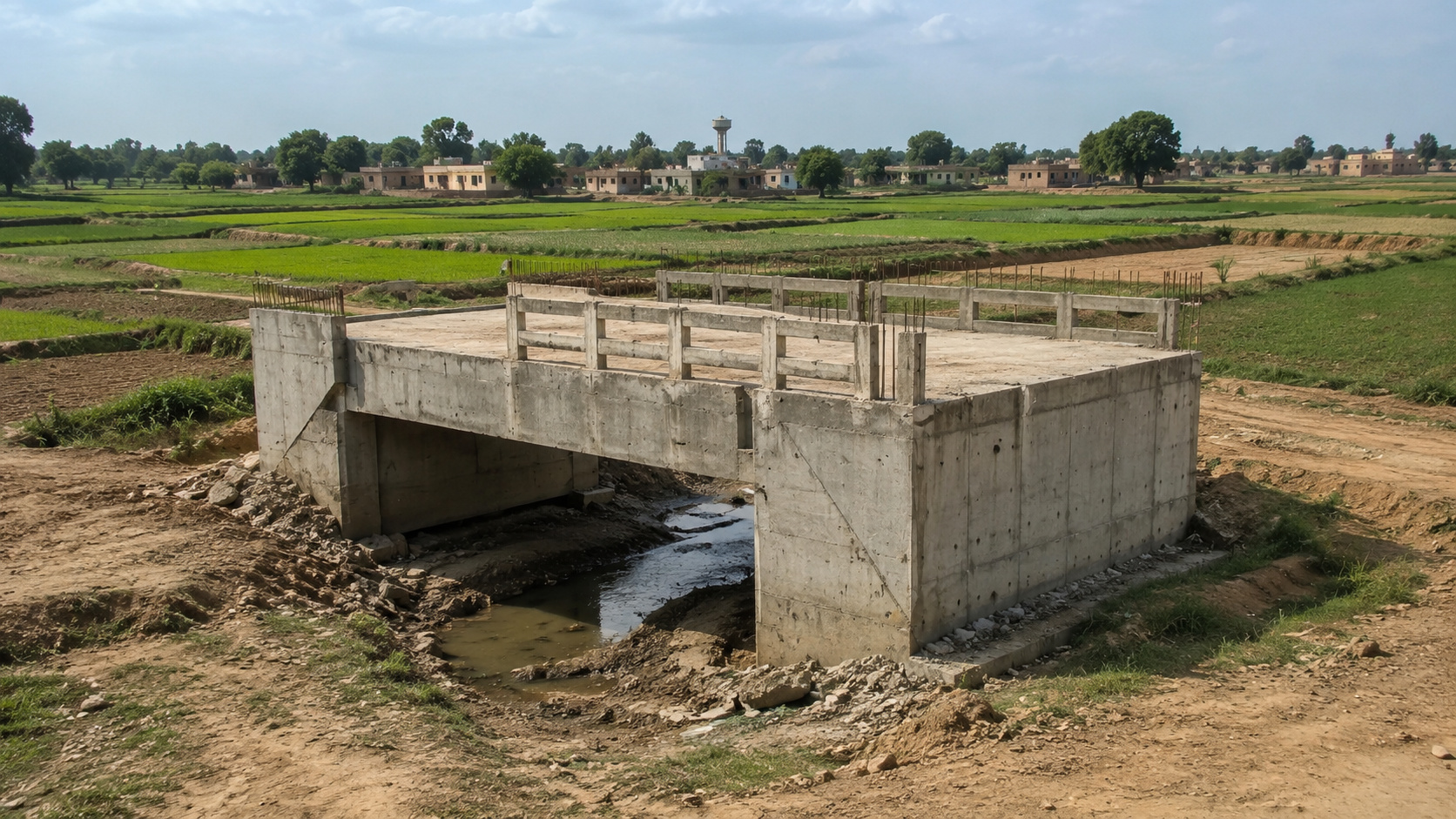
While residents were waiting for a rural road to reach their own homes, a concrete bridge appeared isolated in the middle of a plantation in India, went viral without visible access, and prompted an investigation into the project.

-
Unable to find free land in central London, architects supported a two-story house over a 19th-century warehouse, hid part of the construction behind the rooftops of Covent Garden, and transformed a commercial rooftop into a new urban area awarded by the RIBA.
-
To avoid placing a single pillar in the river, engineers began extending the Joinville bridge over the water from the banks, concreting the base that will support the main span.



The mother had saved for nine years to buy the land where the construction was built, but did not have the necessary resources to build the house.
Materials and labor were provided by an initiative that brought together Procter & Gamble, Habitat for Humanity, and Urbarium.
Company employees participated in the construction and contributed more than 800 hours of volunteer work, according to records published at the time.
Nine years of savings secured the land for the house
Cindy worked as a general services assistant and raised her son.
For nine years, she saved money to buy a lot in the Lámparas neighborhood, located in the canton of Alajuelita, in the province of San José.
Having the land was one of the necessary conditions to participate in the initiative.
The selection also considered the family’s socioeconomic situation and the technical feasibility of building on the chosen site.
The house was not delivered as a ready-made property purchased at another address.
It was built on the land acquired by Cindy, allowing the family to remain in the area where they already had their daily ties.
Walls used tons of recycled plastic
Sources from the time present a small difference in the total weight of the waste.
Teletica reported that the house incorporated 7.5 tons of bottles and packaging, while other publications mentioned approximately seven tons.
The quantity was concentrated in the blocks used to form the walls.
This does not mean that all components of the residence were plastic, as foundation, roofing, installations, doors, windows, and finishes required other materials.
The waste was processed and transformed into modular blocks.
According to the Costa Rican press, the mixture reused items such as bottles, packaging, bags, and discarded plastic parts from vehicles.
A report published the following year indicated that the house used approximately 850 blocks.
This number, however, does not appear detailed in the initial articles about the delivery and should be attributed to the subsequent monitoring of the project.
The reuse prevented the material from going to landfills, lands, rivers, or other environmental areas.
In 2018, data from the Ministry of Health of Costa Rica cited by the newspaper La Nación indicated that the country discarded about 564 tons of plastic per day and recycled only 14 tons.
Interlocking blocks formed the walls of the residence
The construction system used was called Bloqueplas and was introduced in Costa Rica by Ekojunto.
The pieces had interlocks that allowed the blocks to be stacked to form the walls, in a process compared to building toys.
In practice, the components had protrusions and recesses that helped align the pieces.
As the rows were stacked, the enclosures of the residence were formed.
The system did not eliminate all traditional stages of construction.
It was still necessary to prepare the land, execute the base, install reinforcements, build the roof, and perform electrical, plumbing, and finishing services.
The main difference was in the assembly of the walls.
According to the technical description of Bloqueplas, the blocks form a modular system with interlocking elements and complementary reinforcements, which may include metal profiles.
This method reduces the need to cut pieces on-site and allows part of the structure to be dismantled without breaking the blocks.
The speed of assembly, however, depends on the project, the preparation of the foundation, the size of the team, and the site conditions.
Volunteer work totaled more than 800 hours
More than 800 hours of work were attributed to the P&G employees involved in the construction.
The number represents the sum of the time dedicated by the participants, not an uninterrupted construction of 800 hours.
The company operated through a social responsibility program developed in partnership with Habitat for Humanity.
The organization already maintained an international cooperation with the company to mobilize employees and support housing projects in different countries.
Urbarium also appears among the entities linked to the initiative, while Ekojunto was associated with the supply and application of the construction system.
The consulted sources do not detail the complete financial division among the organizations.
A public budget for the residence was also not found.
A local publication estimated the property at 15 million Costa Rican colones, but did not clarify if the value included land, donated materials, installations, finishes, and volunteer work.
Therefore, it is not possible to calculate how much the house would cost if all materials and services were contracted at market price.
The donation and volunteering significantly altered the cost actually assumed by the family.
Plastic house received conventional finishing
Once assembled, the walls received coatings and paint.
The exterior result did not make it evident that the enclosures had been built with recycled plastic.
This appearance helped dispel the idea that the family would receive a temporary structure or similar to an emergency shelter.
The images published in 2018 show a residence with a facade, roof, doors, windows, and defined internal spaces.
The possibility of receiving conventional finishes is one of the features presented by those responsible for the system.
Coatings can also protect the pieces from direct exposure and adapt the appearance of the property to the surroundings.
The available articles do not inform the total area of the house, the number of bedrooms, the thickness of the walls, or the performance measured against heat, humidity, fire, and noise.
Public reports with specific tests carried out on Cindy’s residence were also not found.
Claims about resistance, durability, or lifespan need, therefore, to be separated from the documented experience of the family.
A later publication attributed a possible duration of up to 200 years to the system, but did not present the technical report used to support this estimate.
Without access to the tests and the maintenance conditions considered, the data cannot be treated as the proven lifespan of that property.
Technology reuses different types of plastic
Part of the difficulty of recycling lies in the variety of discarded plastics.
Materials with different compositions cannot always be processed together or transformed again into packaging with the same level of quality.
Construction systems like Bloqueplas aim to use part of these wastes in durable components.
The plastic is separated, processed, and molded to take on a new function, ceasing to circulate as short-use packaging.
The manufacturing of the blocks requires industrial equipment.
Therefore, the house was not built simply by filling bottles or stacking discarded containers on the land.
The waste was converted into standardized pieces, capable of connecting and forming a wall system.
This step distinguishes the project from artisanal techniques that use whole bottles as filler.
Industrial production also requires control of the raw material.
Contaminations, improper mixing of polymers, and variations in the process can affect the characteristics of the pieces, which is why quality does not depend solely on the amount of plastic reused.
Other projects used plastic in housing construction
Cindy’s house did not result, at least in the records consulted, in a public sequence of identical residences built in the same neighborhood.
The technology of incorporating plastic into construction, however, continued to appear in other projects in Costa Rica.
In 2019, the Costa Rican government announced studies to install a factory of blocks made with plastic waste.
The proposal included the use of materials such as food packaging, bags, bottles, and disposable containers.
The official statement claimed that a 42-square-meter residence could have the modular structure erected in approximately one week by a team of four people.
The information described the technology presented in that industrial project and not the proven time of the house delivered to Cindy.
Another housing initiative was announced in 2021 by Habitat for Humanity.
The Valle Azul project built 102 homes in Costa Rica using concrete blocks containing up to 10% processed plastic, totaling 90 tons reused.
Despite the environmental similarity, the material was different.
The houses in Valle Azul used concrete blocks with incorporated plastic, while the residence in Alajuelita was presented as built with modular blocks made of recycled plastic.
This distinction prevents claiming that the 102 units were a direct expansion of Cindy’s project.
They show, however, that the incorporation of plastic waste into housing continued to be tested in the country through other technologies and partnerships.


