





 Portuguese
  English
  Spanish
  3 min of reading
  1 comment


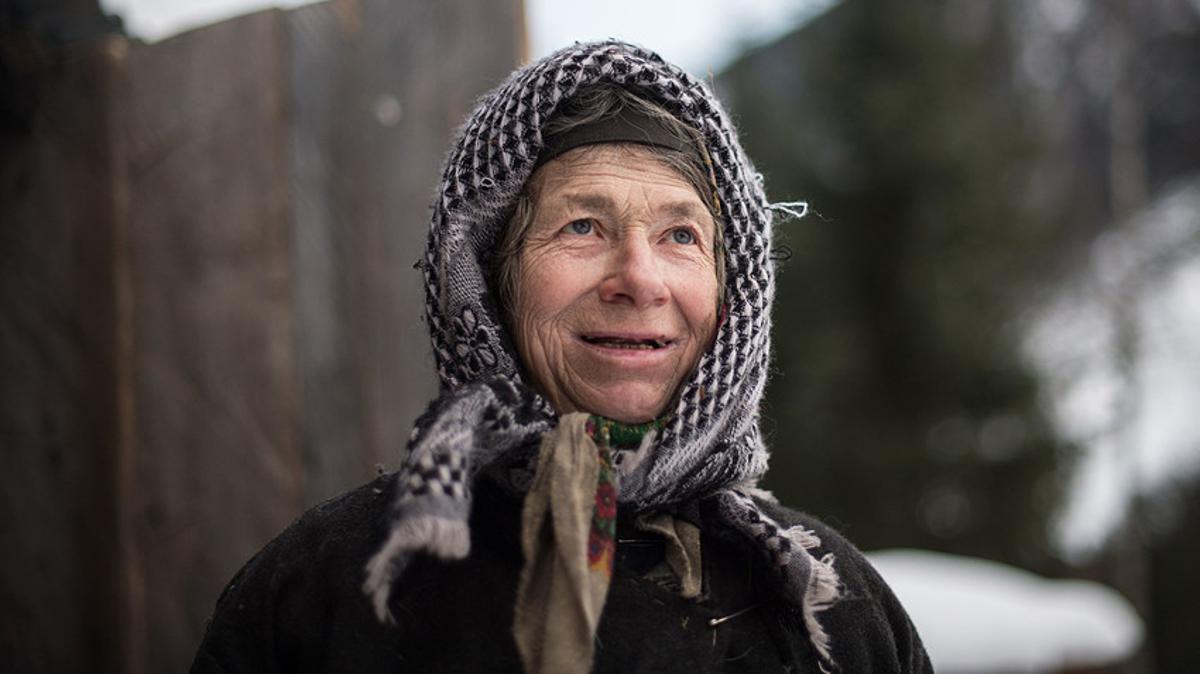


Agafya Lykova’s Trajectory Reveals How Growing Up in the Siberian Forest Shaped Her Survival for More Than 70 Decades, Despite Family Losses and Structural Limitations
Staying away from society for so long has always been part of the reality of Agafya Lykova, born in 1944 in the Siberian wilderness. She is the last member of the Lykov family, who retreated to the forest in the 1930s after religious persecution in the Soviet Union. As a result, she spent 35 cycles of her life without any contact with other people and without access to electricity, infrastructure, or basic services.
Religious Escape and Beginning of Reclusiveness in the Taiga
The Lykov family’s retreat occurred due to the persecution of the Old Believers, a dissenting group from the Russian Orthodox Church. After Agafya’s uncle was murdered by the Soviet police, her parents decided to build a small settlement hundreds of kilometers away from urban areas. For this reason, the entire family remained away from civilization for much of the 20th century. Soviet geologists recorded in the 1970s that Agafya was born and raised completely isolated from the rest of the country. Moreover, the dwelling had no electricity, modern heating, or any technological resources.
Daily Routine Without Electricity and Based on Survival
Agafya’s routine has always depended on manual tasks. She grows vegetables, cares for animals, and uses a wood stove to prepare food. In addition, she dedicates part of the day to prayer, a fundamental practice for her family. During the daytime, she only uses natural light. At night, she resorts to torches and candles. Soviet researchers who found her in the 1970s observed that she followed traditional survival methods, without any form of electricity.
-
At 73.8 meters tall, the world’s tallest teapot-shaped building has 15 floors, ensures stability, and impresses with an internal space of 28,000 cubic meters.

-
Ambev has planted over 3 million trees and restored an area equivalent to the coastline from São Paulo to Natal, and the result after 15 years of silent investment has finally appeared for all of Brazil to see.

-
A new AI collar technology for cattle eliminates physical fences, creates virtual barriers, monitors animals 24/7, and detects changes in behavior and health.

-
For a few weeks each year, an entire country blooms with billions of tulips, creating a mosaic of colors visible from the sky, while a single garden gathers more than 7 million flowers and attracts visitors from around the world to one of the most impressive shows in Europe.

Family Losses Over Decades of Reclusion
Agafya was the youngest of four siblings. Her mother died from lack of food in 1961, which further aggravated the family’s situation. Her siblings died about twenty cycles later, due to kidney failure and pneumonia. In 1988, with her father’s death, she became completely alone in the settlement. These facts were reported by journalist Vasily Peskov in the book Lost in the Taiga, published after reports produced in the 1970s.
Discovery of the Family by Geologists in the 1970s
The family’s presence remained unknown until the 1970s when geologists flew over the area and spotted the cabin. The discovery generated newspaper reports in Soviet publications, which sparked significant public interest. Additionally, Agafya participated in a month-long trip across the Soviet Union, during which she saw cars, airplanes, and money for the first time. She also only learned about World War II around the age of 30.
Help from Volunteers and Physical Limitations in Old Age
With the passage of time, Agafya faced increasing difficulties in performing essential tasks. She reported having a “lump in her chest”, which limited some of her activities. For this reason, volunteers began to bring her food and assist her. It was also reported that Russian businessman Oleg Deripaska would cover the renovation of the cabin. Furthermore, the management of the environmental reserve stated in a May announcement that Agafya had basic knowledge of the Covid-19 pandemic and prayed for the population.







70 decades? That is 700 years