





 Portuguese
  English
  Spanish
  3 min of reading
  0 comments


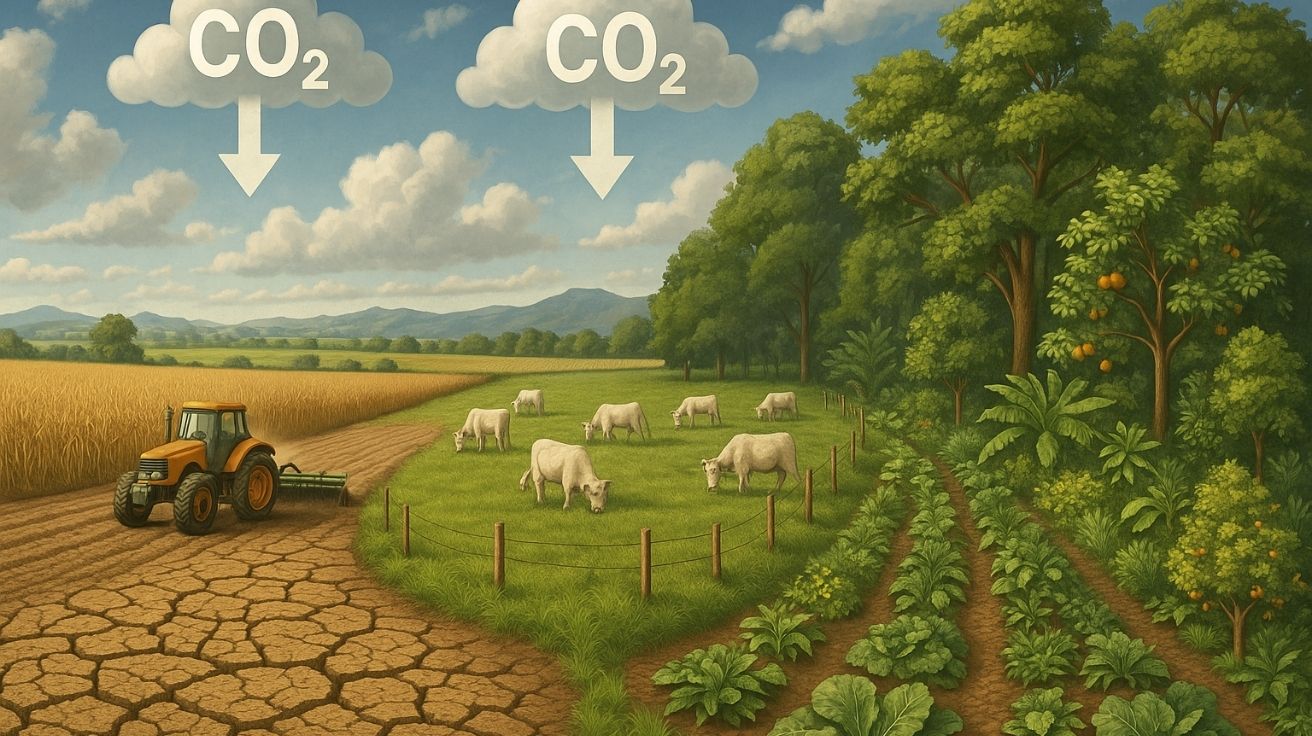
From Combating Desertification to No-Till Farming, Regenerative Techniques Gain Strength in Agriculture and Can Capture More Carbon Than Is Emitted, According to International Report
Regenerative agriculture is revolutionizing the global agricultural sector by replacing traditional farming methods with practices that restore soils, increase biodiversity, and sequester carbon. Initiatives spread across farms in the United States, Europe, Latin America, and Africa show that, in addition to environmental benefits, this model has a direct impact on the resilience of rural production in the face of climate change.
Unlike conventional agriculture, which often degrades soil through intensive tillage and excessive use of chemical fertilizers, regenerative agriculture is based on soil non-disturbance, use of cover crops, composting, and integration between crops and livestock. The goal is to create a self-sustaining agricultural ecosystem with fewer external inputs and greater long-term productivity.
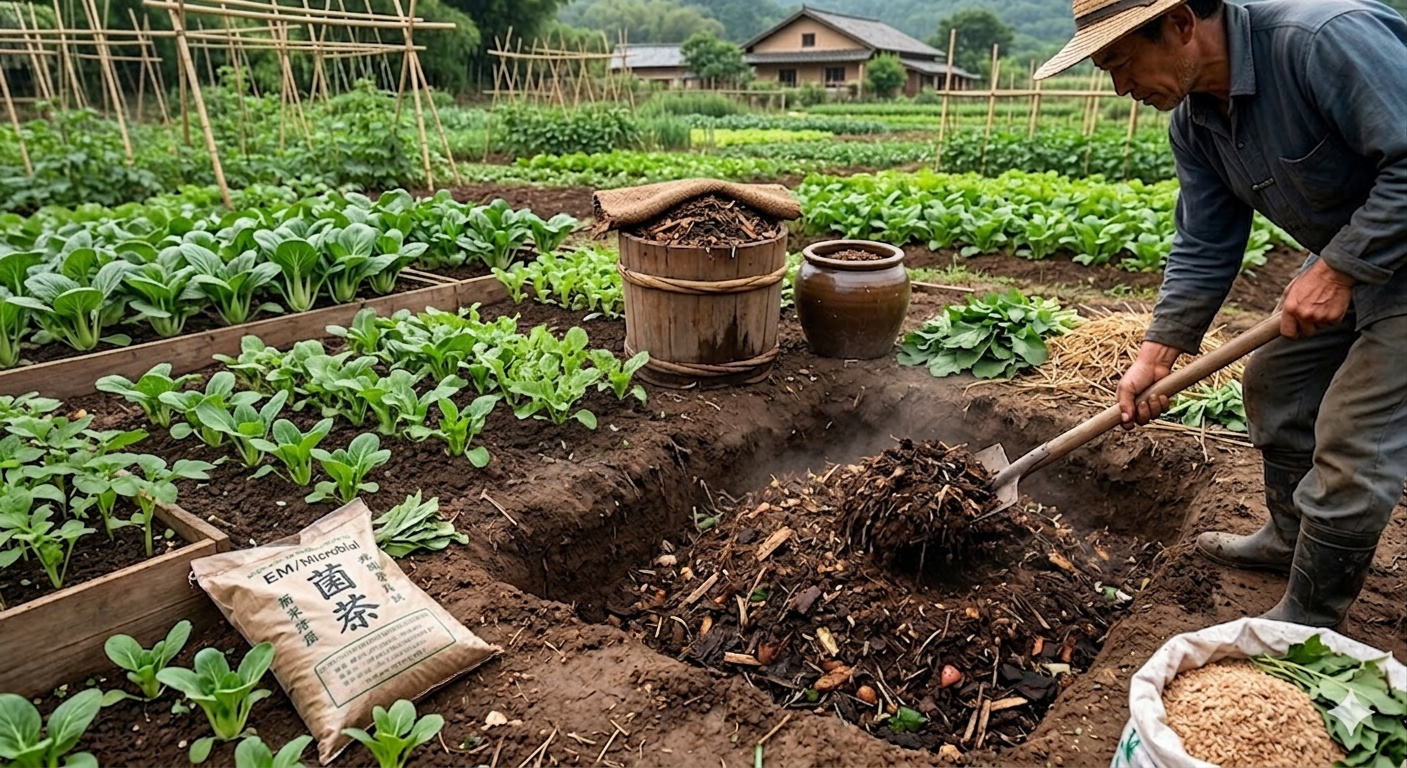
This approach includes various techniques, such as no-till, rotational grazing, agroforestry, and organic composting cycles. These practices stimulate soil life, increase organic matter, and help with water retention, which are essential factors for maintaining crops in the face of extreme climate events. In some cases, deserts have been transformed into arable land after just a few years of implementation.
-
Santa Catarina harvested 7.85 million tons of grains and exported 2 million tons of meat in 2025: a growth of almost 6% in the food industry, which is four times higher than the national average and drives the entire Brazil.

-
The expansion of greenhouses in southern Canada has become so intense that it has changed the appearance of the soil and even the nighttime glow of the region, transforming Ontario into one of the most visible agricultural hubs in North America from space.

-
Almost nobody imagines it, but farmers in Tunisia grow food in the sand and make the roots drink fresh water that floats on top of seawater in an agricultural system considered unique in the world.

-
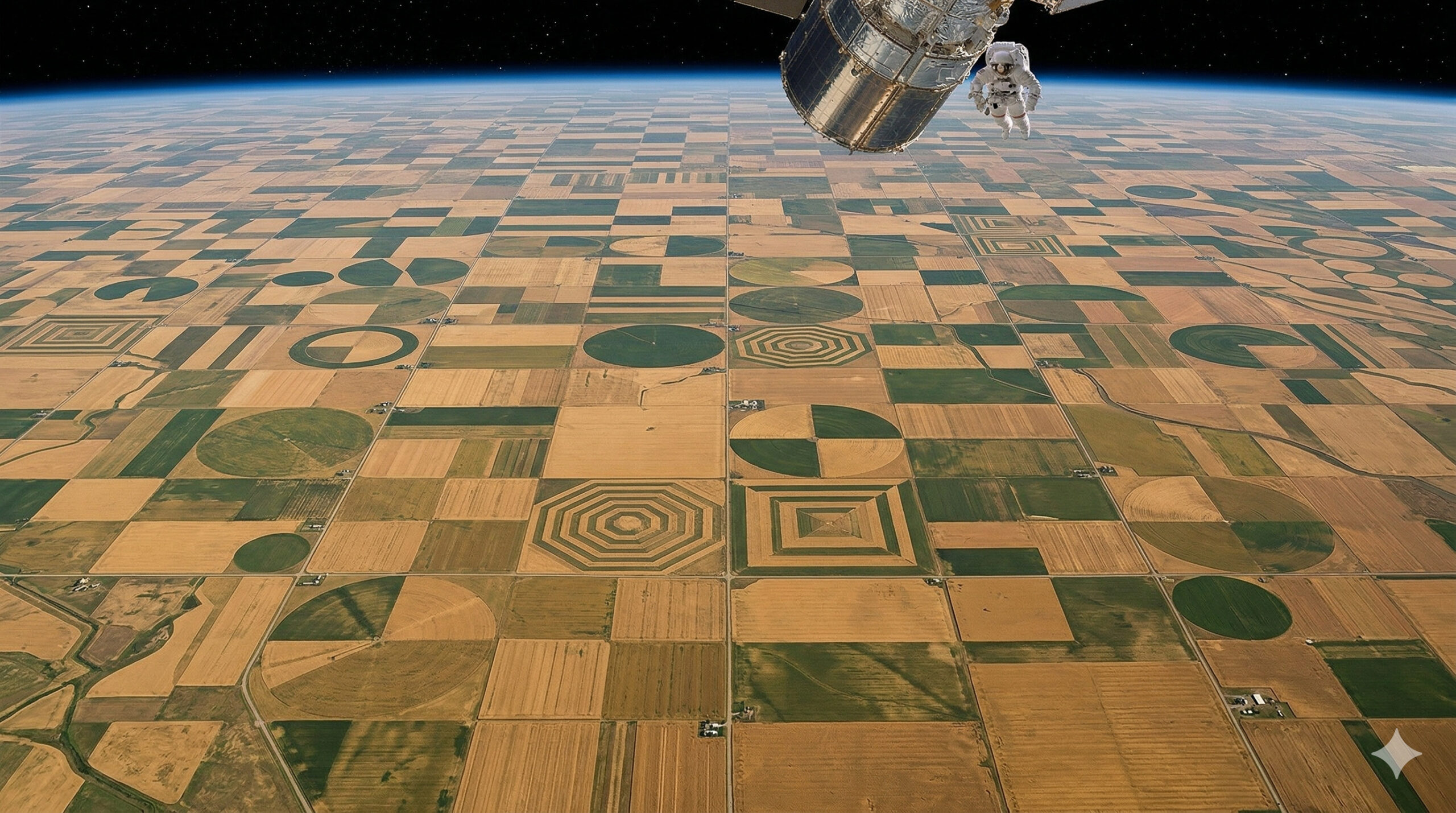
More than 20,000 km² of wheat fields form nearly perfect lines and geometric shapes in Montana, creating an agricultural pattern so symmetrical that the landscape looks like an abstract artwork visible from space.

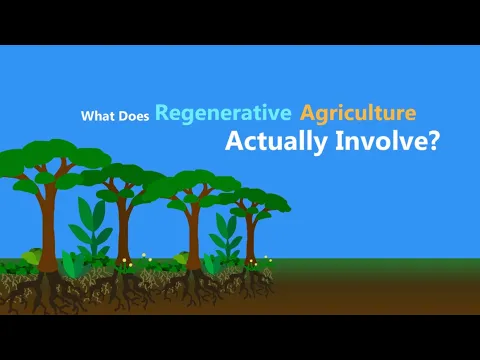

Regenerative Agriculture Gains Strength Among Large Corporations and Governments
In recent years, companies such as Nestlé, PepsiCo, Unilever, and General Mills have announced billion-dollar investments in regenerative agriculture programs. Nestlé alone has allocated US$ 1.8 billion to support producers in transitioning from conventional practices to regenerative methods, pledging to cut up to 95% of emissions from its supply chain.
Governments are also promoting initiatives in this direction. In the United States, the Department of Agriculture launched incentive programs for regenerative practices through Climate-Smart Commodities, with over US$ 2 billion in resources. The United Kingdom offers financial rewards for good soil practices, while Brazil encourages integrated systems through the ABC Program (Low Carbon Agriculture).
The environmental urgency and the search for sustainable supply chains explain the growing interest. A report released ahead of the 2022 Climate Conference, supported by the Sustainable Markets Initiative, warns that the current pace of adopting regenerative practices is too slow. To curb global warming, the rate of conversion must triple by 2030.
Evidence and Criticisms Regarding the Impact of Regenerative Agriculture
Scientific studies indicate that techniques such as no-till and crop rotation increase carbon capture in the soil. According to the Rodale Institute, a global transition to regenerative agriculture could sequester more than 100% of annual human-caused CO₂ emissions. The Project Drawdown organization estimates an annual removal between 0.46 and 0.70 gigatons of CO₂ with proper pasture management.
However, some experts criticize claims considered exaggerated. According to the Food and Climate Research Network, there are risks in overstating the potential for carbon sequestration without considering emissions associated with livestock management. Researcher Tim Searchinger points out that protecting forests and savannas is more effective for mitigating emissions than transforming productive systems without increasing productivity.
Even with disagreements on numbers, there is consensus that regenerative practices improve soil health, reduce erosion, and increase microbial diversity. The presence of beneficial bacteria and fungi, for example, facilitates nutrient absorption and reduces dependency on chemical fertilizers. This directly contributes to the sustainability of the agriculture sector in the long term.
From Farm to Table: How Farmers Can Adopt the Regenerative Model
Farmers interested in adopting regenerative agriculture need to begin with local ecosystem observations, according to experts. Understanding the natural water cycle, native biodiversity, and soil characteristics are the first steps to designing more resilient and climate-adapted systems.
Additionally, implementation can vary widely from one farm to another. Techniques such as polyculture, soil cover with permanent vegetation, use of organic fertilization, introduction of native trees, and consortiums between crops and animals are some of the most applied options. In all cases, the focus is on strengthening the relationship between the living elements of the system.
And you, do you believe that regenerative practices can be the future of agriculture and help the planet recover from environmental impacts?









Seja o primeiro a reagir!