Portuguese
  Spanish


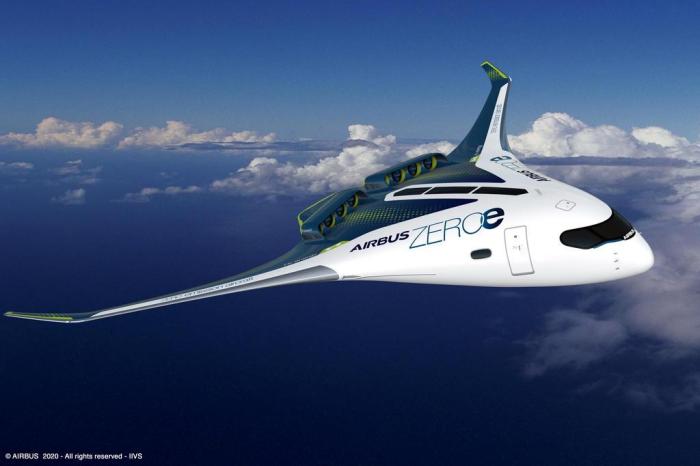

Airbus, The European Multinational Aerospace Company Revealed 03 Hydrogen-Powered Airplanes
The European airplane manufacturer Airbus revealed on Monday three concepts for hydrogen-powered commercial aircraft, stating that the world’s first zero-emission airplanes could take to the skies by 2035.
Read Also
- Samskip Shipping Company Will Build Two Fully Electric and Autonomous Ships
- The First Lithium-Sulfur Battery Cell Factory in the World Will Be Set Up in Minas Gerais
- Itapemirim Confirms That It Will Use The Airbus A320 for Flights in Brazil and Starts Selection Process for Job Openings This Week
- Alten Is Looking for Brazilians to Work in Europe: Deadline Ends Today at 11:59 PM
About The 03 Hydrogen-Powered Airplanes
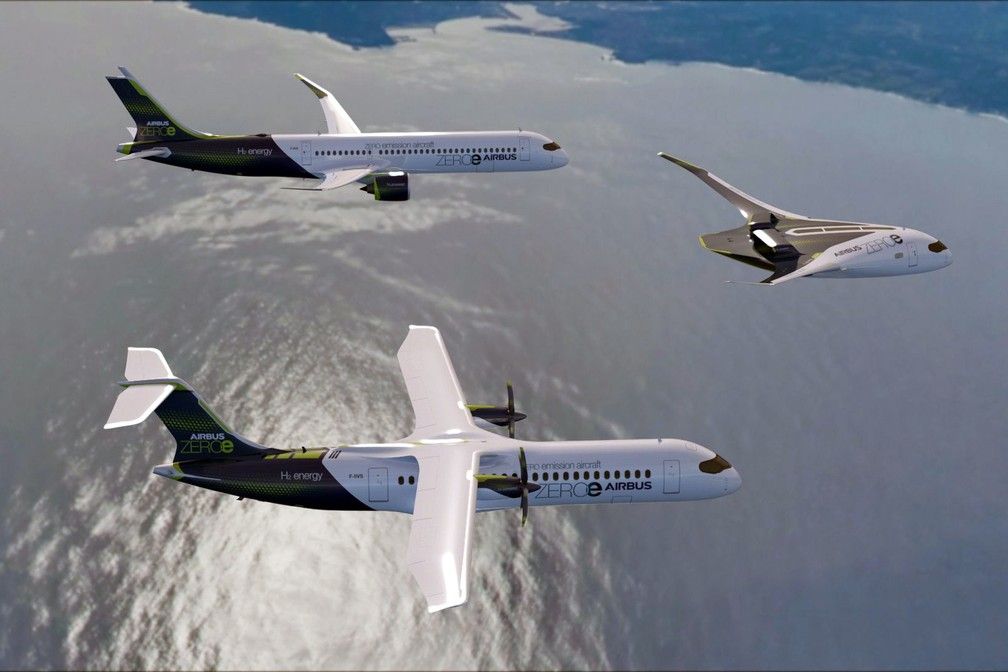
The three ZEROe concepts “offer the world a glimpse of our ambition to drive a bold vision for the future of zero-emission flights,” said Airbus CEO Guillaume Faury.
This ambition includes concepts for aircraft with a turbofan engine capable of carrying 120-200 passengers over 2,000 nautical miles (3,704 km / 2,302 miles) and a turboprop engine that can accommodate up to 100 passengers and travel over 1,000 nautical miles.
-
Qantas and Airbus Invest in Company Aiming to Convert Unsorted Household Trash into Jet Fuel

-
Brazil’s ANP Opens 86 New Oil Blocks in the Equatorial Margin, Expanding the Amazon River Mouth Frontier

-
OPEC+ Boosts Oil Supply by 188,000 Barrels per Day in July 2026, Leading to Price Drop from $112 to $89 per Barrel in Under Two Months

-
TotalEnergies Signs 20-Year Deal to Purchase 2 Million Tons of LNG from Alaska, Boosting Project Viability



The most impressive of the three is the third “blended wing body” design, which merges the wings with the main body of the aircraft. The plane would have the transcontinental range of the turbofan concept with capacity for up to 200 passengers.
When Will Airbus Implement and Sell It?
The next step for Airbus will be to validate these concepts and assess whether they can be transformed into viable future products. The jet manufacturer emphasized that the transition to hydrogen would require government support in the form of increased funding for research and technology, digitalization, and mechanisms that encourage the use of sustainable fuels and fleet renewal.
For the new type of airplane to gain traction, airports will need to be renovated to incorporate hydrogen transport and refueling infrastructure, while renewable energy and hydrogen production will need to be scaled up, the company said.
“The heart of an airplane’s engines is a gas turbine” in which vaporized kerosene is burned, explained the Director General of Civil Aviation (DGAC) in France, Patrick Gandil. And combusting with hydrogen, “almost as energetic as”, would only require, according to him, minor modifications.