





 Portuguese
  English
  Spanish
  4 min of reading
  0 comments


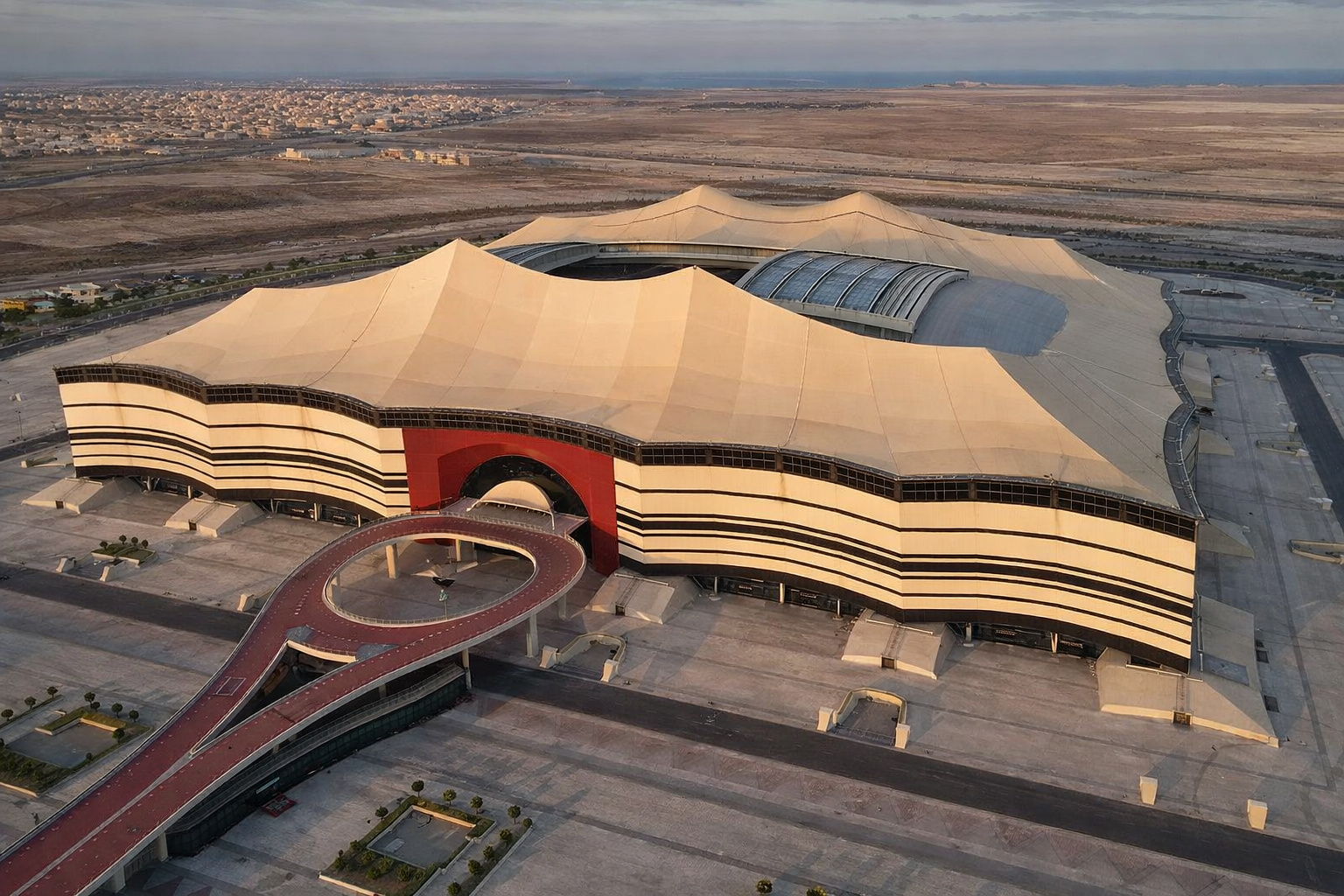
Al Bayt Stadium Used Approximately 190,000 m² of Textile Membranes and a Retractable Roof Synchronized to Close and Climate-Control a Nearly 70,000-Seat Arena in the Qatari Desert.
According to technical studies published in engineering journals, academic reports on textile structures, and documentation from the organizing committee of the 2022 World Cup, the Al Bayt Stadium was not designed merely as a stadium, but as a megaproject of architectural membranes, something normally limited to temporary pavilions and lightweight covers — never to a permanent arena of this scale.
Located in Al Khor, in northern Qatar, the stadium needed to address a central challenge: how to cover and climate-control a gigantic volume in a desert environment, maintaining thermal comfort for tens of thousands of people without resorting to a conventional rigid structure of steel and concrete for the entire cover.
Nearly 190,000 m² of Textile Membranes as Structural System
The most relevant technical data from the work is the total area of textile membranes used, estimated at around 190,000 m². This figure places Al Bayt among the largest textile architecture projects in the world, surpassing many industrial and airport covers in area.
-
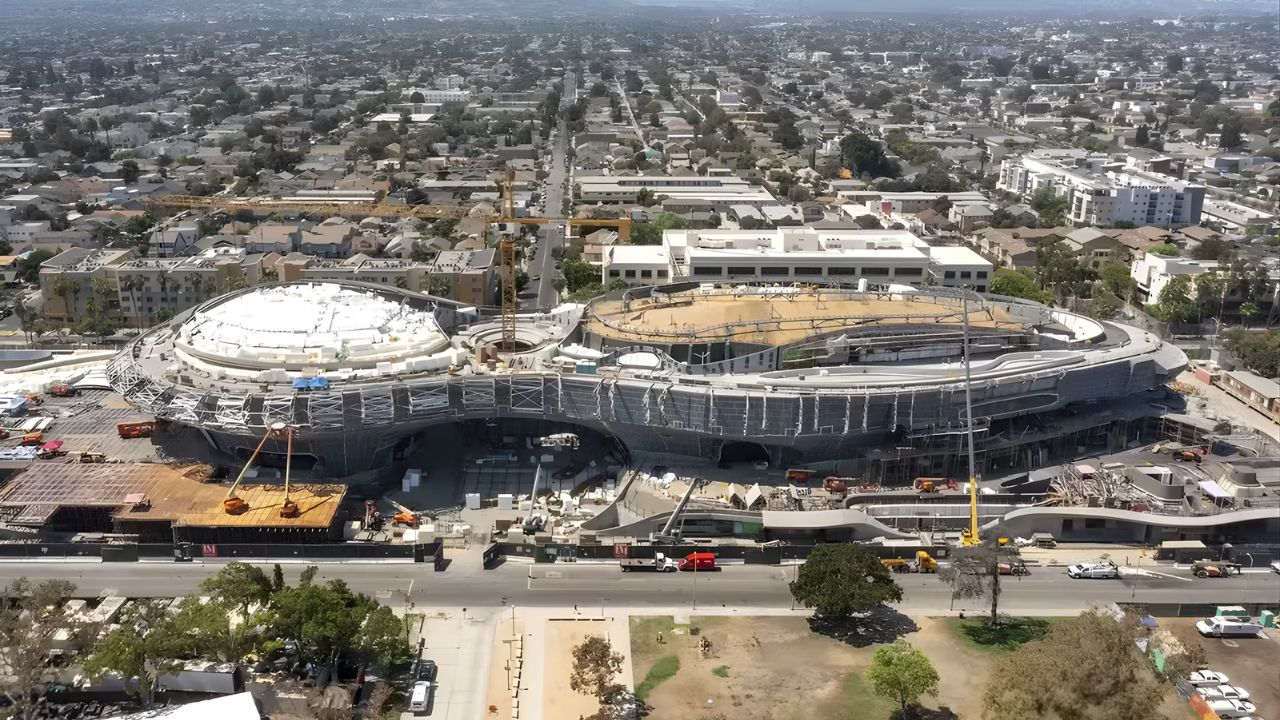
Created by George Lucas with over $1 billion, a futuristic museum in the shape of a spaceship with 1,500 curved panels is about to open in Los Angeles and will house one of the largest private collections of narrative art in the world.
-
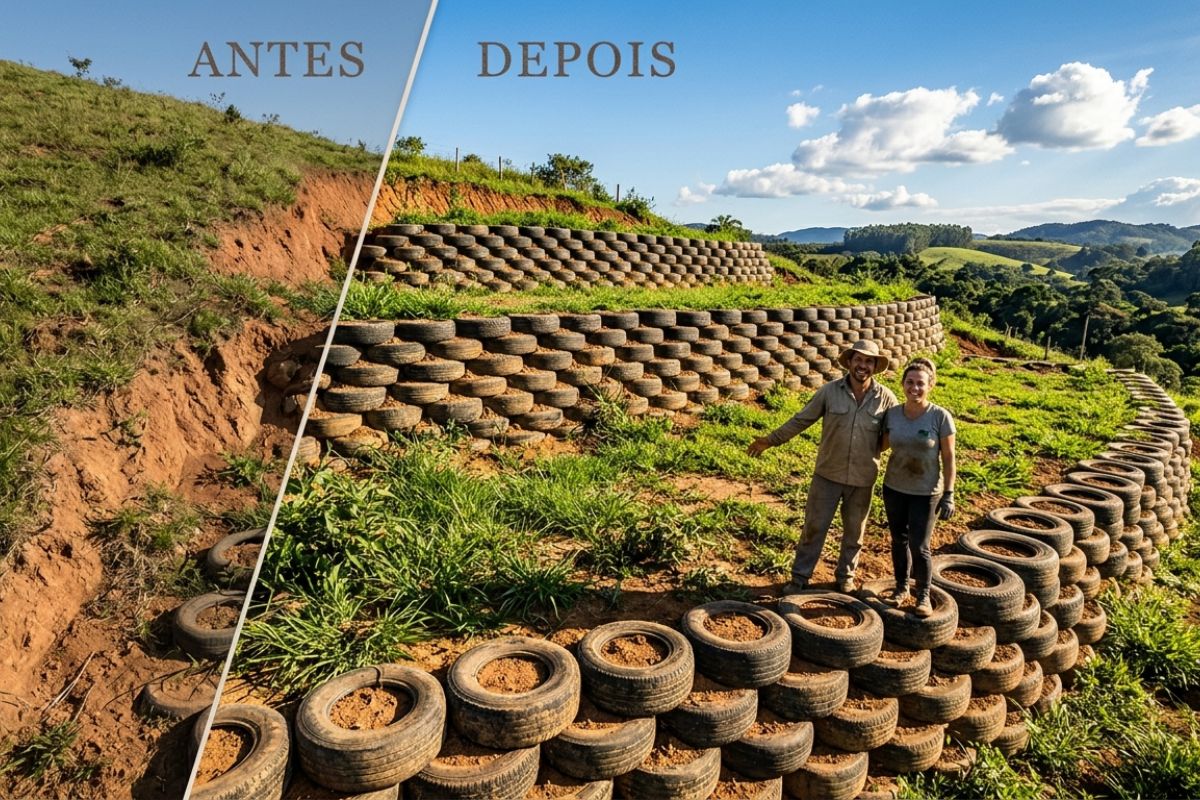
Couple shows how they built a retaining wall on their property using 400 old tires: sloped land turned into plateaus, tires are aligned, filled, and compacted with layers of soil, with grass helping in support and at almost zero cost.
-
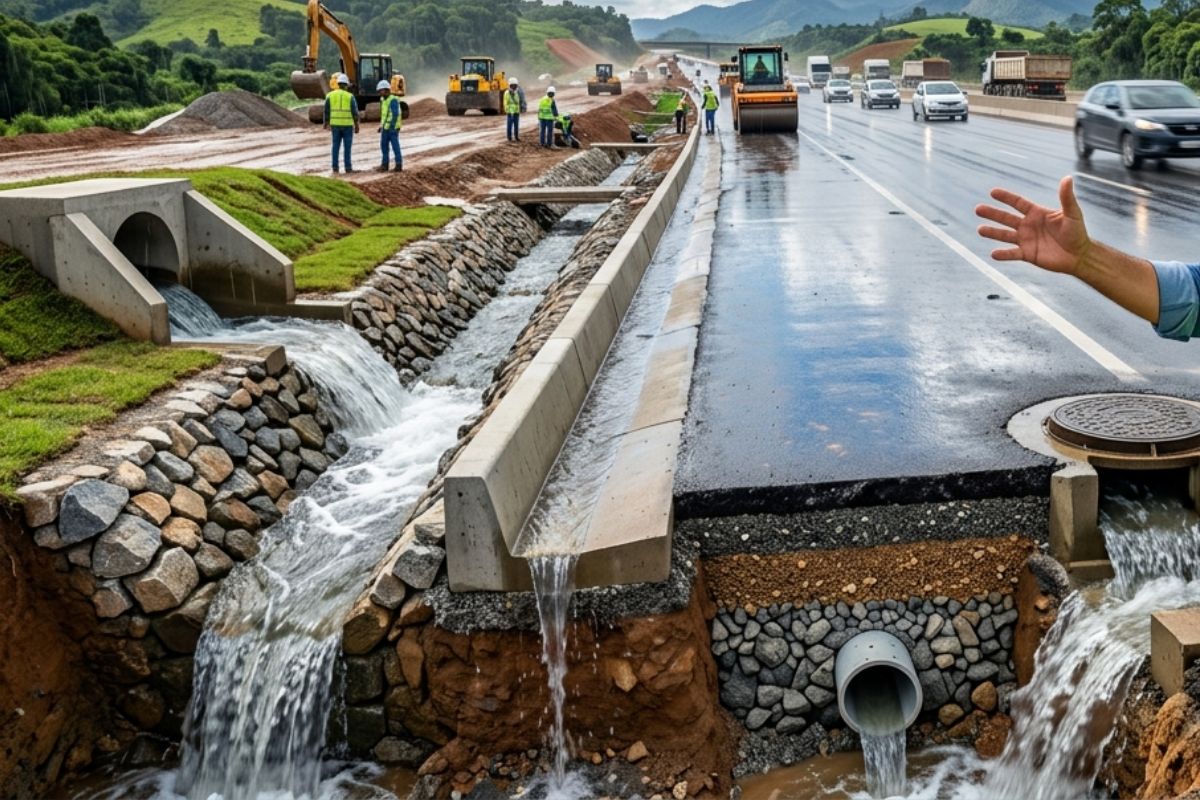
Engineer explains drainage during the rainy season: the difference between surface water and deep water, ditches, gutters, and water outlets on the road, as well as drains and drainage mattresses, to prevent erosion, aquaplaning, and flooding at the construction site today.
-
With 55 floors, 177 meters in height, a 15-meter walkway between the twin towers, ventilated facade, and 6,300 m² of leisure space, Ápice Towers already has one tower completed and another nearly at the top.

These membranes serve not merely an aesthetic function. They form:
- the main roof of the stadium,
- the external envelope inspired by Bedouin tents (bayt al sha’ar),
- and part of the thermal and solar control system.

It is a lightweight material compared to steel, but in such large volumes, it behaves as a structural system of great responsibility, requiring complex calculations for tension, fatigue, wind, and aging.
A Retractable Roof That Transforms the Stadium in Minutes
At the center of the system is the retractable roof, designed to open and close quickly, allowing the stadium to transition from an open arena to a fully enclosed and climate-controlled environment in a matter of minutes. Technical studies indicate that this roof is moved by dozens of synchronized electric motors, operating together to ensure uniform displacement of the membrane.
In construction terms, this means coordinating:
- loads distributed over large spans,
- simultaneous displacements at multiple points,
- and minimum tolerances to avoid wrinkling, local overload, or traction failures.
Few buildings in the world utilize retractable systems over such an extensive area, especially combined with textile materials.
Climate Control of a Gigantic Volume in the Desert
Covering the stadium was not enough. The main objective was to allow for efficient climate control of a huge internal space, something practically unfeasible in open arenas in Qatar’s climate.
By closing the roof, Al Bayt creates a controllable volume, reducing thermal exchange with the external environment. This allowed the use of targeted air conditioning systems, with air diffusion in specific zones, instead of trying to cool the entire space indiscriminately.
From an engineering perspective, the textile cover acts as an active part of the energy strategy, blocking direct solar radiation and reducing internal thermal loads.
Hybrid Structure: Apparent Lightness, Real Complexity
Although the appearance suggests a traditional tent, the stadium is supported by a hybrid structure that combines:
- large metal elements,
- compression and tension rings,
- and permanently tensioned membranes.
This combination allows for large spans without resorting to massive covers, reducing the self-weight and redistributing forces more efficiently. However, this required advanced wind simulations, especially critical in a region subject to gusts and sandstorms.
Construction in Extreme Environment and Material Durability
One of the biggest challenges was ensuring the durability of the membranes in an environment characterized by:
- high temperatures,
- intense UV radiation,
- dust and sand in suspension.
The chosen materials underwent rigorous testing for resistance to degradation, stretching, and loss of mechanical properties over time. Unlike temporary structures, Al Bayt required a lifespan compatible with a permanent arena, even when using materials traditionally associated with ephemeral installations.
A Stadium Treated as Heavy Infrastructure
Despite its lightweight appearance, Al Bayt Stadium behaves, from a construction perspective, as a camouflaged heavy infrastructure. The nearly 190,000 m² of membranes represent not only area but a complete industrial chain involving specialized manufacturing, transportation, assembly at great heights, and planned maintenance.
Each textile panel needed to be custom-made, numbered, tested, and installed with millimeter precision to ensure structural and aesthetic continuity.
When Textile Architecture Leaves the Niche and Enters Extreme Engineering
What makes Al Bayt a unique case is the fact that textile architecture, normally used in temporary pavilions or small covers, has been applied on urban and permanent scale, with safety, comfort, and durability requirements equivalent to those of a large conventional stadium.
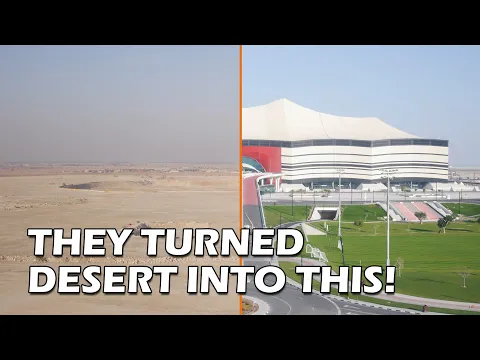

In this project, fabric ceased to be just architectural skin and began functioning as a critical structural component, something rare in constructions of this size.
A Precedent for Future Megaprojects in Extreme Climate
Al Bayt Stadium established an important precedent: it showed that textile membranes can be used on a colossal scale, even in hostile environments, as long as integrated into complex structural and mechanical systems.
More than a stadium, the work serves as a real engineering experiment, whose data and solutions have already been studied by universities and professionals worldwide.
It is this type of construction that redefines limits: not by the amount of concrete or steel, but by the ability to transform light materials into giant systems, capable of enclosing, climate-controlling, and protecting an entire urban volume under the desert sun.







Seja o primeiro a reagir!