





 Portuguese
  English
  Spanish
  6 min of reading
  0 comments


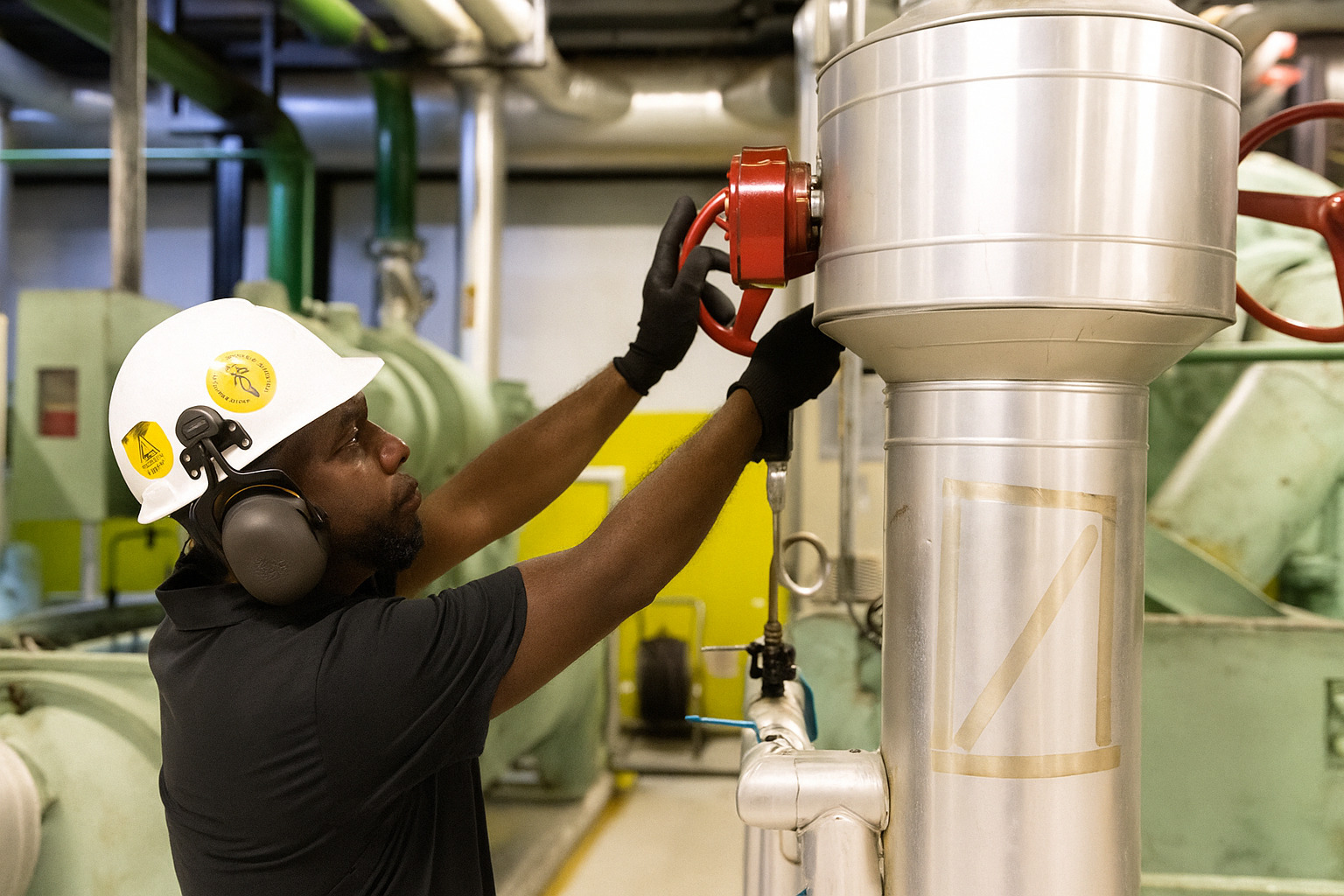
Alagoas Marks the Beginning of a New Era in the Energy Sector by Granting the First License for Natural Gas Storage, Becoming a Reference in Innovation, Safety, and Energy Transition in the Country.
The energy transition in Brazil has reached an important milestone, especially because the Institute of the Environment of Alagoas (IMA) granted the first license for natural gas storage. Although this practice is common in developed countries, Brazil has only now begun this movement.
The company Origem Energia leads the project, which predicts more than 1 billion reais in investments, with operations expected to begin in 2028. Thus, Alagoas enters the center of discussions about energy security and innovation in the sector.
Unlike previous initiatives that relied solely on continuous production, this decision represents a significant shift. Until now, no license of this kind had been authorized in the national territory.
-
A major turn in the Justice system suspends tax increases and directly impacts oil and gas companies in Brazil by affecting costs, contracts, and financial planning, leaving uncertain what could happen to the sector if these costs had increased.

-
Brava Energia begins drilling in Papa-Terra and Atlanta and could change the game by reducing costs in oil while increasing production and strengthening competitiveness in the offshore market.

-
Petrobras surprises the world again by announcing a new discovery in the pre-salt with excellent quality oil.

-
Offshore industrial demand in Macaé skyrockets with the recovery of oil and gas and could grow by up to 396% by 2026 in the Campos Basin.

As a result, even with the growing use of natural gas, the country still lacked a clear regulatory framework for strategic storage.
Therefore, the license for natural gas storage assumes a decisive role in the new national energy arrangement. In addition to representing a regulatory innovation, it brings Brazil closer to models that are already consolidated internationally.
Therefore, it is possible to say that the country is moving towards a more balanced, modern, and resilient matrix.
Furthermore, it is important to consider that this license arrives at a time when Brazil is undergoing a phase of economic growth and energy sector expansion. The demand for energy grows year after year, driven by industrial and technological advancements and by the greater electrification of sectors that were previously little dependent on electricity.
The storage project in Alagoas emerges, then, not only as a solution to specific problems but as a strategic response to energy security in the medium and long term. The ability to store natural gas represents a competitive differential for the country in the international scenario.
Dependence on Hydropower and the Role of Natural Gas
Historically, Brazil built its energy matrix with strong support from hydropower. For decades, this choice ensured a low emissions rate, but on the other hand, it also brought vulnerabilities.
In fact, the matrix depends on increasingly unstable rainfall patterns, which became evident in several crises, such as the one in 2001.
Since then, experts and authorities have been discussing alternatives. As a consequence, natural gas has come to be regarded as one of the most promising solutions.
With the advancement of production in the pre-salt, the country increased its internal supply. However, even with this advancement, there was a lack of infrastructure to store the fuel for critical moments.
At the same time, the growth of intermittent renewable sources, such as solar and wind energy, highlighted the need for complementary sources. This is because the sun and wind are not always available.
As such, gas storage emerges as a strategic tool to maintain the balance of the electricity grid and ensure continuous supply.
It is worth noting that energy security is not limited to generation capacity but also involves the efficient management of available resources. In this context, natural gas storage offers operational flexibility, allowing the electrical system to quickly adapt to variations in demand and weather conditions.
Alagoas as a Pioneer and the Origem Energia Project
While other states are still studying solutions, Alagoas has made progress. The Origem Energia project, inspired by international experiences, uses old depleted oil fields to store gas.
In this system, gas is injected during low-demand periods and extracted as needed. In other words, the underground reservoir functions as a large energy battery.
According to Luiz Felipe Coutinho, the company’s CEO, the goal is clear: to make Alagoas the “large battery of the Brazilian electric system”.
For this reason, the company is also studying the installation of thermal plants in the region, which, however, depends on success in capacity auctions planned by the federal government.
Furthermore, the project values existing infrastructures, which reduces environmental impact and accelerates its technical viability.
Thus, Alagoas stands out as a reference in sustainable energy solutions, attracting investments and strengthening its position in the national scenario.
Additionally, the installation of such projects can promote regional development, creating specialized jobs and stimulating local technical training. With this, Alagoas can become a hub for energy innovation, attracting even more investments in the near future.
Benefits of Storage and Waste Reduction
In this scenario, the license for natural gas storage brings benefits that go well beyond the territory of Alagoas. This is because Brazil, by storing excess gas that was previously wasted at sea, can better capitalize on its production.
A large portion of the natural gas associated with oil, as is well known, ends up being reinjected due to a lack of logistical alternatives. With storage, the country begins to operate more rationally.
This way, the sector gains flexibility, and the risk of shortages decreases. At the same time, prices tend to stabilize as supply becomes more efficient and predictable.
Moreover, experts point out that the model has high potential to reduce the price of gas in Brazil.
This happens because, by expanding supply at the right times, the system avoids fluctuations and offers security for both producers and consumers. Therefore, it is a national gain.
Another important point is that storage can help Brazil meet international commitments related to emission reductions. By making the matrix more flexible and efficient, the country contributes to a lower dependence on more polluting sources and increases its participation in the global clean energy landscape.
The New Generation of Oil Companies and the Energy Future
Alongside technological advancements, the license for natural gas storage also marks the strengthening of a new generation of companies in the sector.
Origem Energia, for example, has quintupled its production since taking over a Petrobras facility in 2022.
Additionally, it has expanded its operations to other regions such as Bahia, Espírito Santo, and Rio Grande do Norte, consolidating its presence in the Sergipe-Alagoas and Tucano Sul Basins.
With this move, the company demonstrates how the private sector can accelerate the energy transition. At the same time, it shows how it is possible to repurpose legacy structures, creating solutions with less environmental impact.
Therefore, storage aligns with more sustainable and smart practices of energy exploration.
Additionally, natural gas plays a fundamental role as transitional energy. Although it is not a renewable source, it emits fewer pollutants than other fossil alternatives.
Thus, while the country expands the use of sources like solar and wind, gas acts as support, ensuring stability until new technologies can sustain demand on their own.
A New Horizon for the Brazilian Energy Matrix
In summary, the granting of the license for natural gas storage represents a structural advancement in Brazil’s energy policy.
By adopting solutions already consolidated in other countries, Brazil not only modernizes its infrastructure but also improves its capacity to face future crises.
Consequently, if well regulated and replicated, the storage model could transform the sector.
With this, Brazil moves towards a more secure, sustainable, and efficient energy matrix.
Alagoas, in turn, takes the lead by opening this path. Therefore, it is now up to other states and national authorities to follow this movement and ensure that innovation becomes the rule, not the exception.






-

-

-

7 pessoas reagiram a isso.