





 Portuguese
  English
  Spanish
  4 min of reading
  0 comments



Mechanics Warn: Car Weight on the “Parking” Lock Wears Out and Damages the Automatic Transmission; Learn the Correct Way to Park.
The comfort of the automatic transmission has revolutionized the way we drive, but a common habit among drivers could be costing a lot and leading to severe damage. Using the “P” (Parking) position incorrectly, especially on hills, is causing premature wear and even breaking the transmission. The warning, highlighted by specialists and reported by InfoMoney, reveals that many drivers put all the weight of the vehicle on a small internal component of the gearbox, instead of properly using the parking brake.
The problem is not with the “P” function itself, but rather with the order in which it is applied. When parking on a decline or incline and moving the lever directly to “P” before engaging the parking brake, the vehicle “rests” on the transmission lock. This generates immense tension that, over time, can damage vital components, leading to complex and costly repairs.
How the “P” (Parking) Really Works?
Many drivers assume that “P” works like a super-strong brake, but its mechanics are fundamentally different. As detailed by specialized publications on transmissions, such as Street Smart Transmission, cited by InfoMoney, the “Parking” position engages a device called a “locking pawl” (or ratchet). This is a metal pin that fits into a toothed gear connected to the output shaft of the transmission, physically preventing the wheels from turning.
-
Six diseases that seem common but can prevent the renewal of the driver’s license for the elderly throughout Brazil and surprise experienced drivers — could any of them affect you without showing clear signs?

-
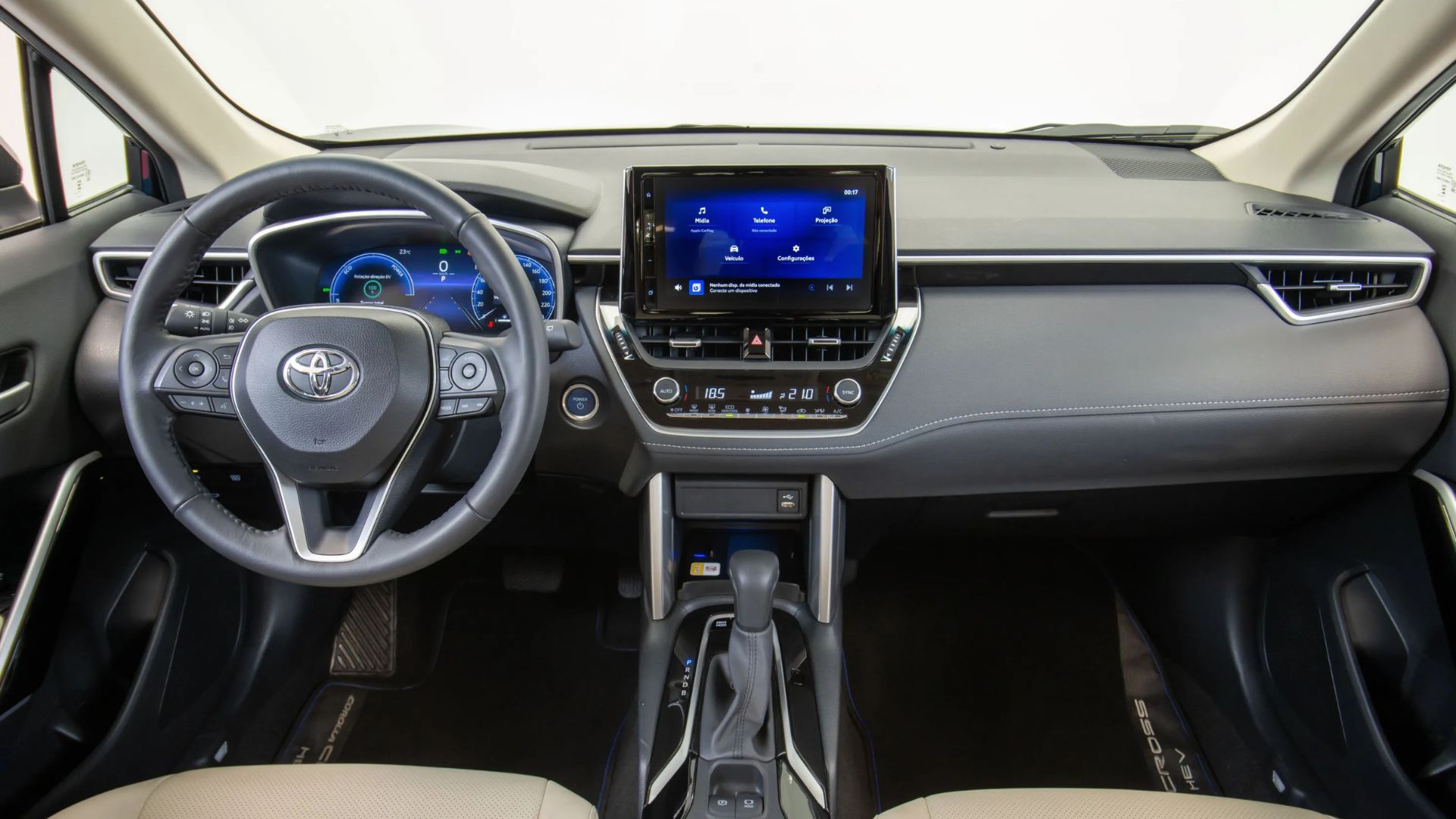
With 122 hp, fuel consumption of up to 17.7 km/l, and a trunk capacity of 440 liters, this hybrid SUV impresses even though it costs up to R$ 47,000 more than the Yaris — meet the Toyota Corolla Cross.
-
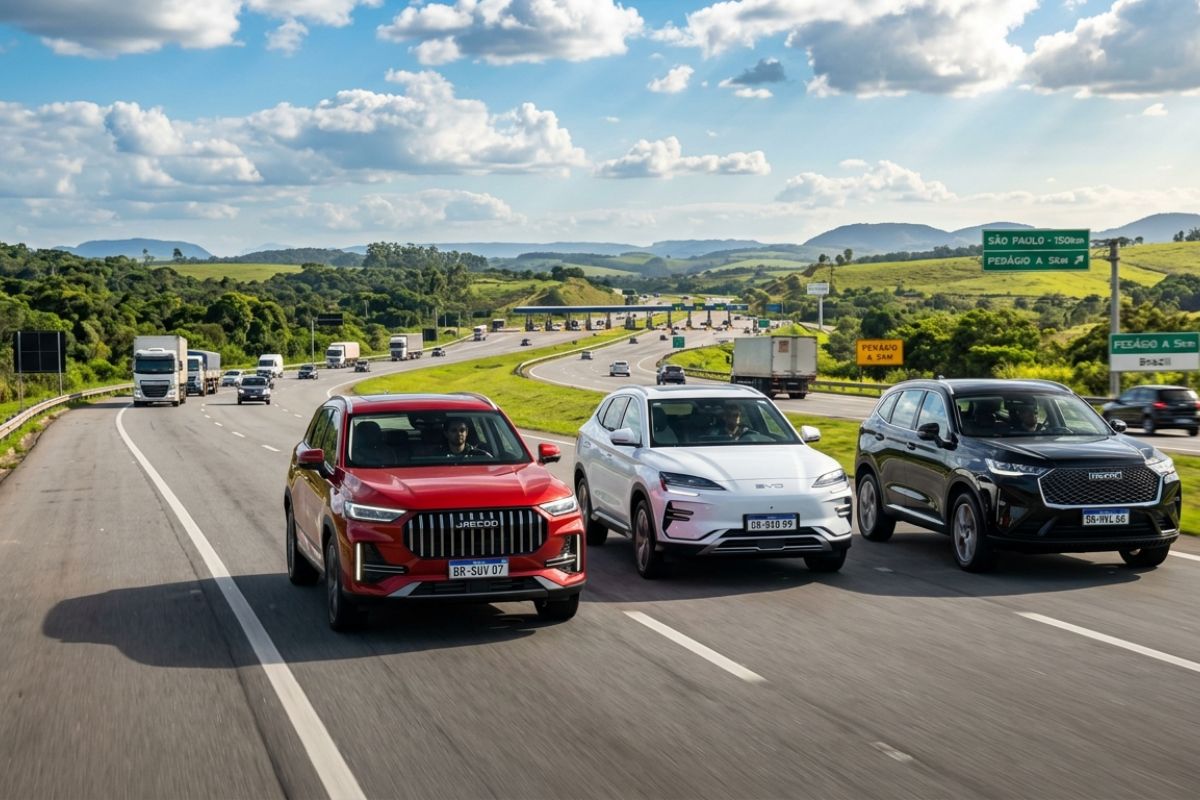
600 km with three Chinese plug-in SUVs, same mode and air conditioning on: Jaecoo 7, BYD Song Plus, and Haval H6 hit the road, and the pump reveals who was truly the most economical.
-
With a price almost R$ 100 thousand lower, the Haval H9 surpasses the SW4 for the first time in March, but Toyota still leads in the accumulated total for 2026; the Chinese SUV bets on technology and premium finishing to compete at the top.

It is crucial to understand that this lock was not designed to support the total weight of the vehicle, especially the inertia of a car stopped on an inclined surface. Its primary function is to ensure that the transmission does not accidentally engage a gear while the engine is off. It serves as an additional safety feature to the parking brake, and never as a substitute.
The Common Mistake That Wears Out the Transmission
Accelerated wear occurs the moment the driver stops on a hill, takes their foot off the service brake (the pedal), and the car moves a few centimeters until it “locks” into “P”. At that moment, the entire weight of the vehicle (which can easily exceed a ton) is being held only by that small metal pawl. Ford Mexico, in a statement also reported by InfoMoney, warns that this continuous practice causes severe wear on the pawl and the gear where it fits.
A classic symptom of this abuse is the difficulty in moving the lever out of the “P” position when trying to drive the car. The driver may notice a strong “jolt” or the lever being “stuck”, requiring unnecessary force to disengage. This happens because the weight of the car is pressing on the lock, making its release difficult and straining the entire mechanism. In extreme cases, the pawl may crack or break, leaving the car “loose” (even in “P”) or requiring the replacement of internal transmission components.
What is the Correct Sequence for Parking an Automatic Transmission?
To ensure the longevity of the automatic transmission and avoid damage, the correct sequence when parking is essential and should become a habit. Experts agree: the first step, with the car completely stopped and the foot still on the brake pedal, is to firmly engage the parking brake.
Only after feeling that the parking brake is effectively holding the weight of the vehicle (the driver can slightly relieve the brake pedal to confirm) should the lever be moved to the “P” position. By doing this, the “Parking” lock engages without tension, serving only as the safety redundancy for which it was designed. When leaving, the order is reversed: press the service brake, start the car, move the lever from “P” to the desired gear (D or R), and only then release the parking brake.
The proper maintenance of the automatic transmission is essential to avoid costs that can easily exceed four or five digits. A simple change of habit when parking can save the lifespan of your car’s transmission.
And you, were you already aware of this correct sequence? Do you usually use the parking brake before shifting to “P” or did you learn it differently? Share your experience and opinion in the comments below.







-

2 pessoas reagiram a isso.