





 Portuguese
  English
  Spanish
  5 min of reading
  0 comments


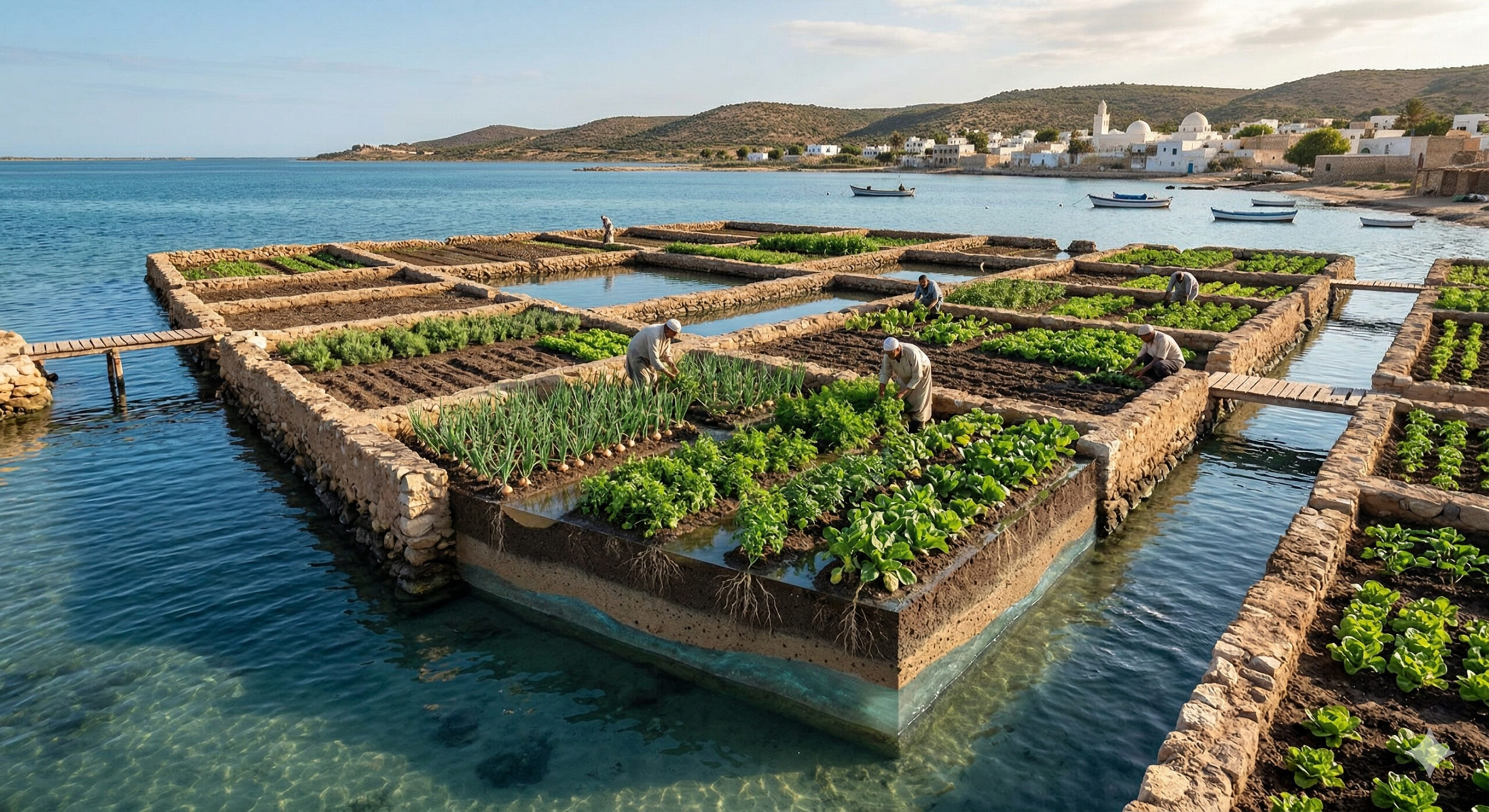
Agricultural system in Tunisia grows food in sand using freshwater over the sea and challenges traditional irrigation logic.
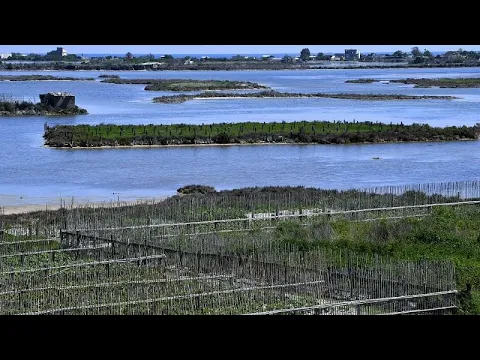
In coastal regions of Tunisia, especially in the area of Ghar El Melh, in the north of the country, farmers have been using a unique agricultural system for centuries: the Ramli system. Recognized by the Food and Agriculture Organization of the United Nations (FAO) as one of the Globally Important Agricultural Heritage Systems (GIAHS), this model allows for the cultivation of food directly in the sand, without conventional irrigation systems. According to the official FAO page about the Ramli system in Ghar El Melh, it is an agricultural practice in sandy substrate where the roots of the plants are fed by rainwater stored and floating over seawater, under the influence of tidal movements.
The basis of its functioning lies in a natural phenomenon: the formation of a lens of freshwater over the saline groundwater. This freshwater, coming from rain, infiltrates the sandy soil and remains above the seawater due to the difference in density. The roots of the plants can access this layer, ensuring the survival of crops even in coastal environments with high salinity. The FAO itself describes that farmers need to maintain the soil exactly at the appropriate level of this water, because if the ground is too low, the roots come into contact with saline water, and if it is too high, they dry out.
This mechanism transforms areas that would normally be considered unproductive into active agricultural zones, with continuous food production, and explains why the Ramli system is treated by the FAO as a unique agricultural heritage of Tunisia and the world.
-
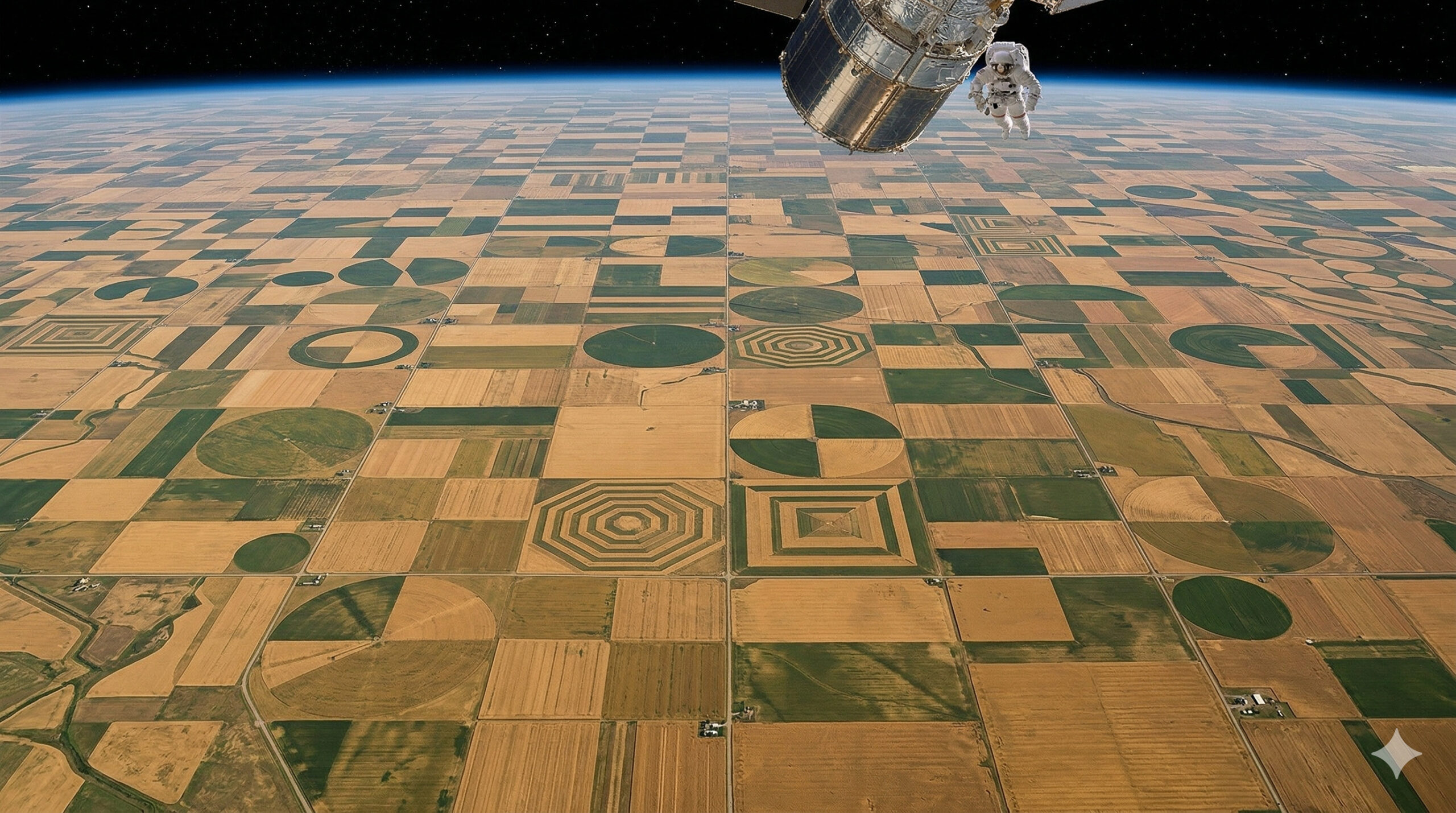
More than 20,000 km² of wheat fields form nearly perfect lines and geometric shapes in Montana, creating an agricultural pattern so symmetrical that the landscape looks like an abstract artwork visible from space.
-
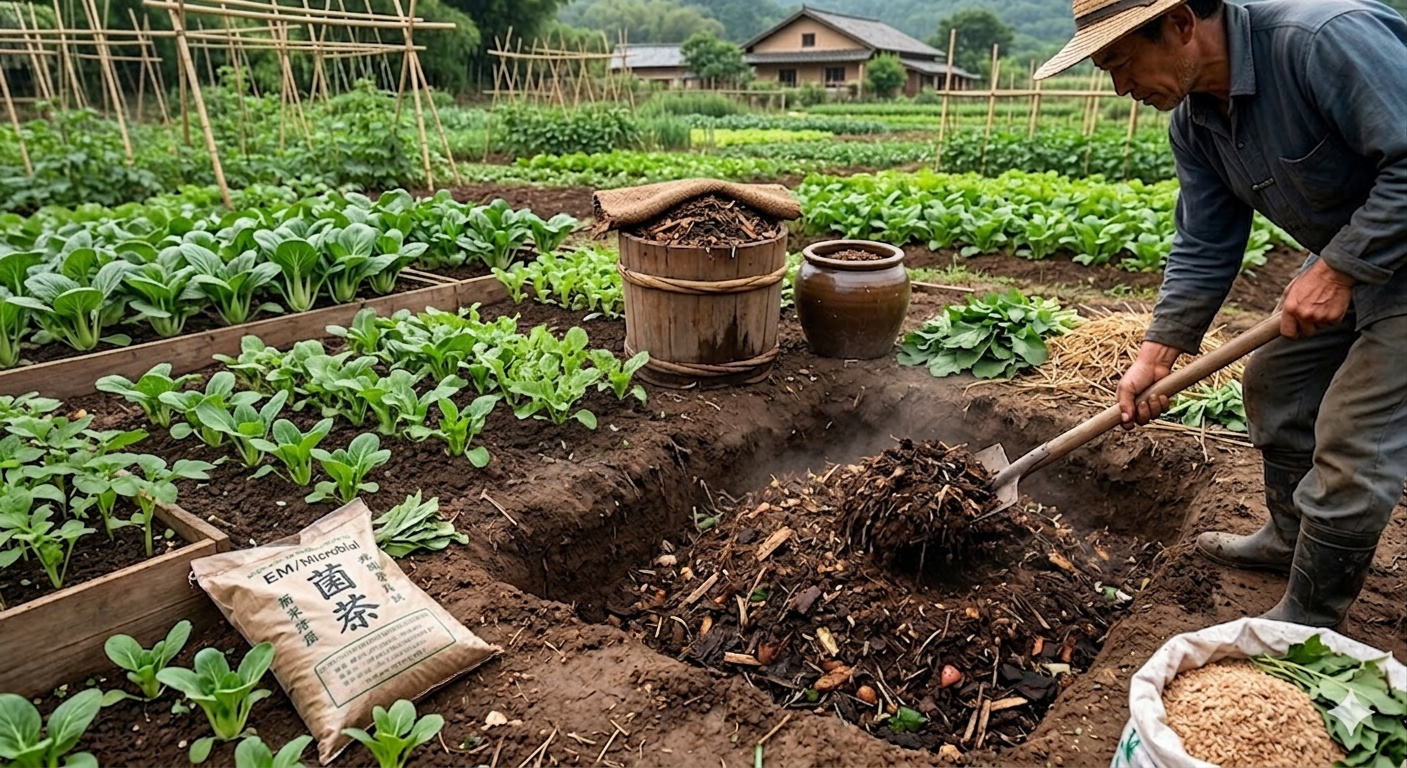
Bokashi, an Asian-origin fertilizer, is formed through the fermentation of husks, organic matter, and microorganisms, gaining traction in agriculture for strengthening beds and accelerating soil life.
-
Money with chickens: how much can 200 laying hens yield per month with eggs at R$ 12 per dozen?

-
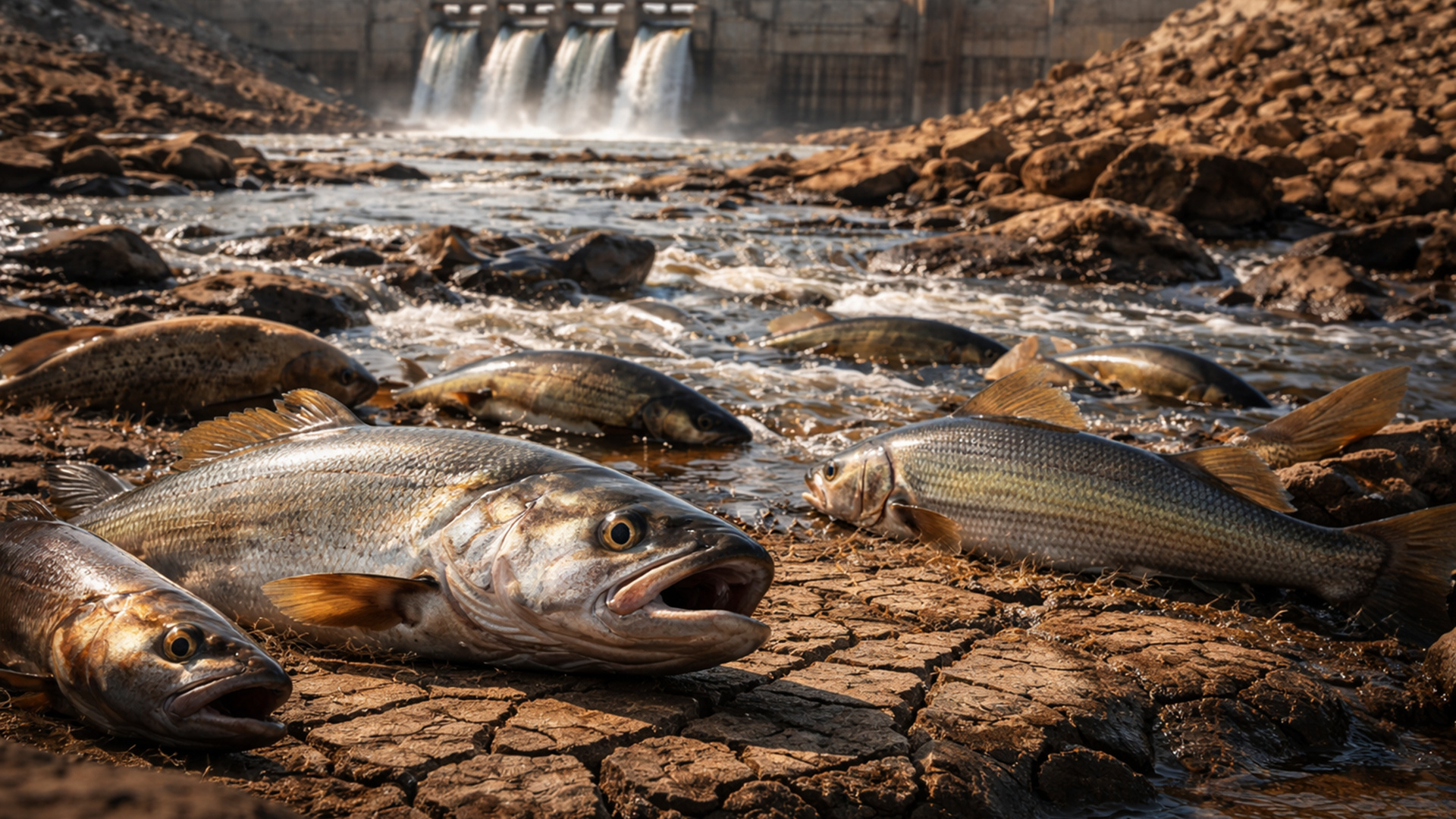
As dams and pollution advance, migratory freshwater fish are facing a silent global crisis that has already decimated populations, threatened fisheries, and raised alarms in major basins.

Cultivation in sand depends on the dynamics between rainfall, aquifer, and salinity
The functioning of the Ramli system requires a precise balance between natural factors. Rainwater quickly infiltrates the sand and forms a superficial layer of freshwater, while saline water remains at deeper levels.


Plants are cultivated in such a way that their roots reach this transition zone, where there is still sufficient availability of freshwater for absorption. If the level of rainfall decreases or salinity increases, the system can be affected, making management dependent on specific environmental conditions.
According to the FAO, this model represents an example of agricultural adaptation to extreme environments, where the scarcity of surface freshwater is compensated by efficient use of available natural resources.
Traditional techniques control planting depth and prevent contact with salt
Local farmers have developed specific techniques to ensure that plants access freshwater without coming into direct contact with saline water. Among these practices is the precise adjustment of planting depth.

If the roots grow beyond the layer of freshwater, they may reach the saline zone, compromising the plant’s development. Therefore, the traditional knowledge accumulated over generations is essential for the success of the system.
Additionally, soil preparation and the choice of cultivation areas take into account factors such as topography, proximity to the sea, and land use history.
System allows cultivation of vegetables and other crops in coastal environment
Even under conditions considered adverse, the Ramli system enables the production of various crops. Among the foods cultivated are:
- vegetables
- legumes
- some fruits
These crops are adapted to local conditions and the type of sandy soil, having been selected over time by the farmers themselves.
Production is aimed both at local consumption and regional markets, contributing to the food security of the region.
Ancient agricultural practice recognized as global agricultural heritage by the FAO
The Ramli system has been officially recognized by the FAO as a Globally Important Agricultural Heritage System (GIAHS), a status granted to traditional agricultural practices that combine sustainability, biodiversity, and cultural knowledge.
This recognition highlights:
- the adaptation of the system to specific environmental conditions
- the efficient use of natural resources
- the preservation of traditional techniques
According to the FAO, the system represents an example of how agricultural communities can develop innovative solutions based on environmental observation.
Agriculture in saline areas shows alternatives for regions with water scarcity
The interest in the Ramli system goes beyond Tunisia. Researchers and agricultural institutions have analyzed the model as a possible reference for other regions facing salinity and water scarcity issues.
Although it is not easily replicable in any location, due to dependence on specific geological conditions, the system demonstrates that it is possible to produce food in environments considered limiting.
This type of approach has gained relevance in light of global challenges related to water availability and the expansion of agricultural areas in coastal zones.
Environmental balance is essential for maintaining the system over time
The sustainability of the Ramli system directly depends on the preservation of the balance between freshwater and saline water. Changes in rainfall patterns, excessive exploitation of water resources, or changes in land use can compromise this delicate system.
Therefore, the continuity of the practice is linked both to the maintenance of natural conditions and to the preservation of traditional knowledge of local farmers.
The FAO emphasizes that systems like this represent not only an agricultural technique but an integrated set of cultural, environmental, and productive practices.

While conventional agriculture heavily relies on irrigation systems and artificial water control, the Ramli system operates based on natural processes, leveraging the dynamics between rain, soil, and salinity.
This characteristic transforms the model into an example of efficiency in the use of natural resources, showing that, in certain contexts, it is possible to produce food without resorting to large irrigation structures.
The system also reinforces the importance of solutions adapted to local conditions, rather than the application of standardized models.
Did you know about this agricultural system that grows food directly in sand using seawater as a base?
The Ramli system is one of the most unusual and efficient examples of agricultural adaptation ever recorded, but it is still little known outside technical circles.
In your view, could this type of solution inspire new forms of production in water-scarce regions? Share your opinion in the comments.







Seja o primeiro a reagir!