





 English
  Francês
  Alemão
  Italiano
  Japonês
  Norueguês
  Portuguese
  Spanish
  3 min of reading


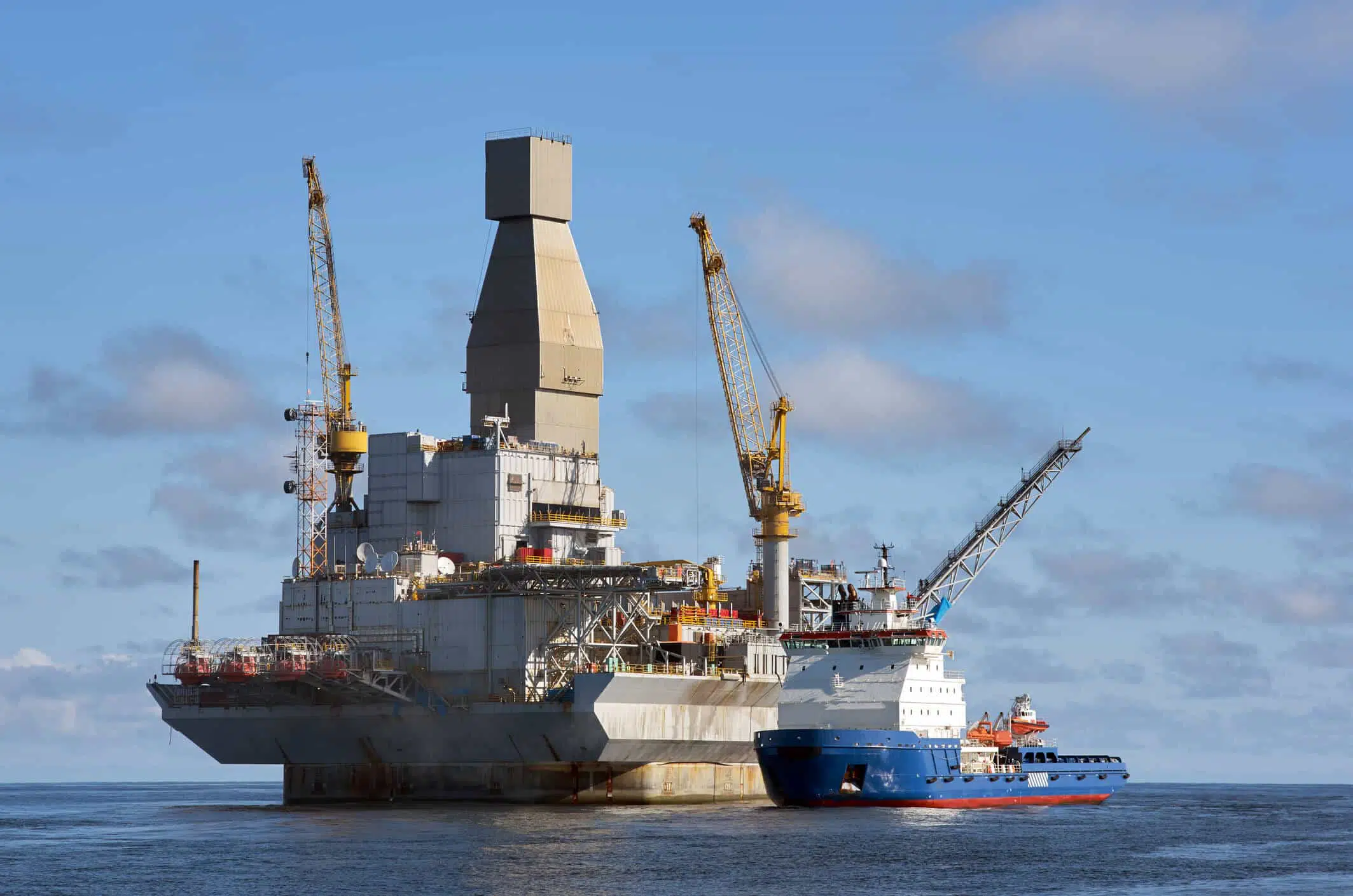
Mature Oil And Gas Production Fields That Do Not Add Value To Petrobras Are Receiving Investments For Revitalization
The recent increases in oil barrel prices have become an incentive for companies to invest in revitalizing areas of Petrobras whose peak production of oil and gas has passed, recognized as mature fields, which are those whose peak production has already been reached. However, these areas, even when revitalized, would not be able to make a significant contribution to the increase in national oil and gas production amid the war between Russia and Ukraine.
According to Anabal Santos Júnior, executive secretary of the Brazilian Association of Independent Oil and Gas Producers (Abpip), the current price level of oil barrels, over US$ 100, has raised speculations about offshore oil and gas platforms, which may allow certain actions to increase production that were previously not economically viable in these mature fields. “Some low-complexity revitalization projects, such as interventions in wells, are benefited in this scenario,” says the executive secretary.
Furthermore, Bento Albuquerque, Minister of Mines and Energy, stated that national oil production will grow by around 300 thousand barrels per day, even if the IEA recommendation is to reduce consumption, thus contributing to balance the international market, impacted by the decrease in exports from Russia after the onset of the conflict. According to Santos Júnior, there has been no contact with Abpip to assist in this task. The association includes 18 oil companies, such as Eneva and PetroRio.
-
Petrobras announces new oil discovery in the pre-salt of the Campos Basin and reinforces Brazil’s prominence with high-quality reserves that can increase production and energy revenues.

-
Alert in the fuel market: Analysts and a former director of ANP warn that oil prices may worsen in the coming months due to global instability.

-
Ocyan brings executives and digital solutions to Macaé Energy 2026 and highlights offshore expansion with Nexio and a new base in Macaé.

-
Petrobras advances 4.6% with rising oil prices and the dollar, reigniting the debate on macro risks, pricing policy, and fiscal impact in Brazil.

Indeed, the contribution of mature fields to the overall production of the country is not very significant, but the sector has been experiencing growth in extraction due to the sale of Petrobras assets – which had its president replaced – in recent years. Thus, small and medium-sized oil companies have been acquiring mature onshore and shallow water fields, corresponding to smaller assets that are no longer of interest to Petrobras, which has focused mainly on deep water oil extraction and pre-salt activities.
Production From Mature Fields
In total, according to data provided by the National Petroleum Agency (ANP), the mature onshore fields sold by Petrobras provided 34.7 thousand barrels of oil equivalent per day (boe/day) last month, nearly triple the total extracted in February 2021. On the other hand, extraction is only a fraction of the national total, which reached 3.75 million boe/day in February, of which more than 75% comes from pre-salt.
Onshore oil and gas production in Brazil primarily originates from northeastern basins. Production growth is seen in several companies that acquired Petrobras assets in recent years. For example, PetroRecôncavo recorded an average production of 13.6 thousand boe/day in Q4 2021, 21% more compared to the annual average. 3R Petroleum, in turn, produced 7.95 thousand barrels/day in the last quarter of last year, a 44% increase compared to 2020.
Santos Júnior states that there is a scenario of at least five years ahead of production growth. However, a hindrance for the oil companies that purchased these assets to increase production is the difficulty in accessing equipment and services, which have become more expensive and competitive in this context of oil barrel instability.
The Abpip executive emphasizes that the supply chain for this sector in Brazil had been demobilized for several years due to low investments in small fields. He states that, in this context, there is currently a significant demand in the country for drilling and completion rigs, for example. “What exists in the market today is practically contracted. It will be necessary to make an effort from the supply chain itself to make these inputs available,” he points out.
Additionally, Santos Júnior highlights that the areas with the highest production onshore among the assets included in the divestments of Petrobras’s mature fields have not yet finalized the transaction, such as the Potiguar (RN), Carmópolis (SE), and Bahia (BA) hubs. According to him, these fields are still experiencing production declines, a situation that may be reverted after other companies take over.








Seja o primeiro a reagir!