





 English
  Francês
  Alemão
  Italiano
  Japonês
  Norueguês
  Portuguese
  Spanish
 4 min of reading


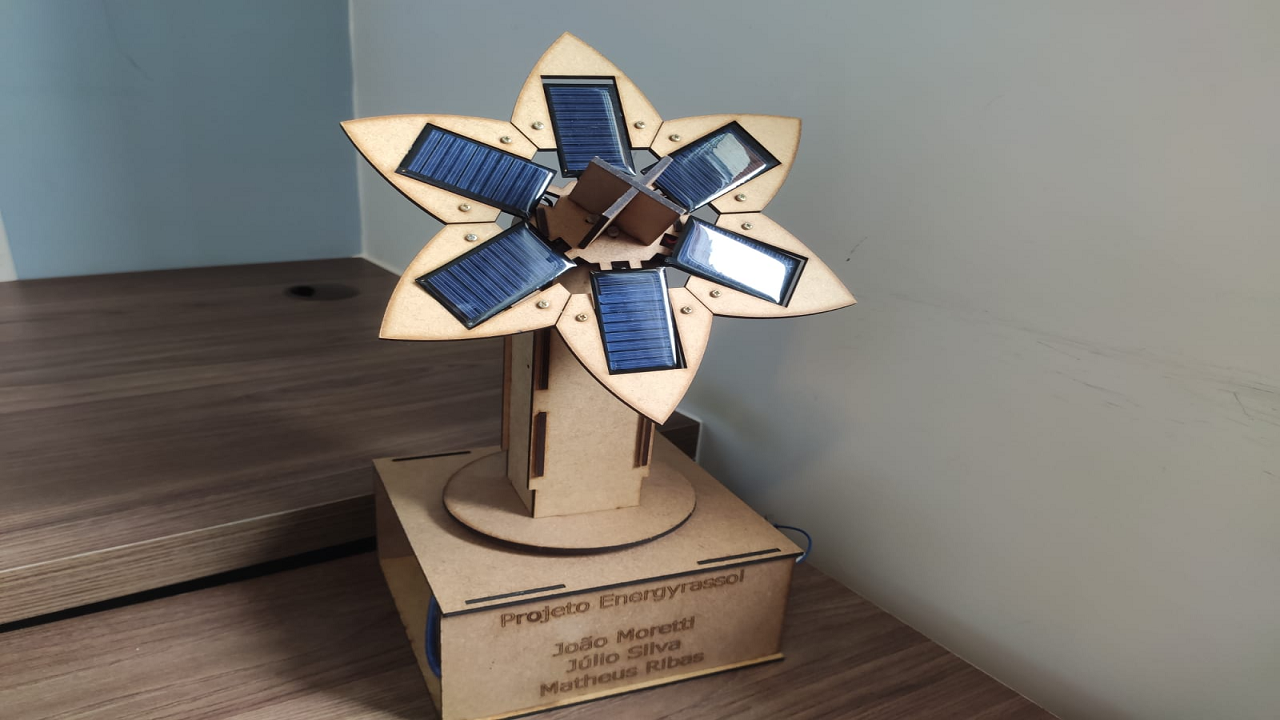
The Prototype With Photovoltaic Panels Inspired By The Shape Of Sunflowers Has Great Power And, According To The Students Of Etec, It Can Be Implemented On A Larger Scale, Despite The High Maintenance Cost
The students of the Bento Quirino State Technical School (Etec) in Campinas sought inspiration from nature to enhance their scientific project: the development of photovoltaic panels moved by an electronic system based on sunflowers. Student João Pedro, a representative of the team, explained that the idea came about while they were taking a course on Energy Efficiency and wondered if it would be possible to work on a theme that involved sustainability. According to João, after extensive research on clean energy generation, the team realized that solar energy provided the greatest potential for electrical generation.
Read Other Related News
Etec Campinas Creates ‘Energyrassol’
The project by Etec students has been named ‘Energyrassol,’ whose main objective is to demonstrate that mobile photovoltaic solar energy panels have the capacity to capture much more light and ensure that energy generation is higher. The group of Etec students was classified for the 20th edition of Febrace (Brazilian Science And Engineering Fair).
Friends João Pedro Vieira Moretti, Júlio Cézar Silva de Macedo Mota, and Matheus Eduardo Ribas da Silva, from the third year of the Technical High School course in Electronics, composed the team that developed the Energyrassol project. In this project, they applied concepts of Biomimetics, the science that seeks solutions and fundamentals existing in nature to enhance technologies and provide a foundation for projects.
-
Rio Grande do Sul accelerates energy transition: State invests in renewable technologies and consolidates decarbonization strategies and pathways to attract billions in new industrial investments.

-
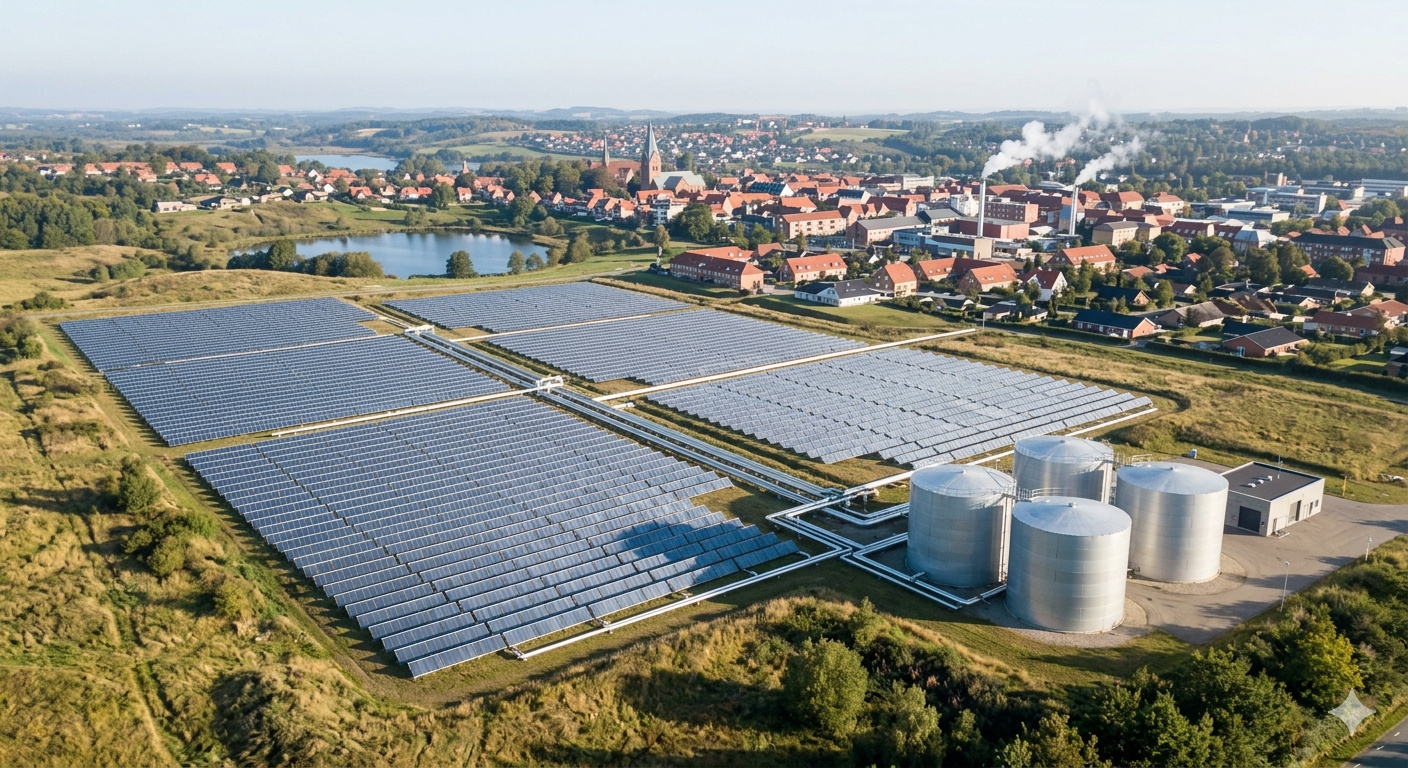
With 160,000 m² of collectors, an area larger than 20 football fields, Silkeborg, in Denmark, hosts a solar thermal plant that heats 19,500 homes and could become the largest solar heating plant in the world.
-
A study reveals the expansion of renewable energy procurement in Brazil and shows how companies are taking advantage of opportunities to reduce expenses, ensure energy efficiency, and strengthen strategic environmental commitments.

-
Roraima bets on the sun to escape high tariffs: Amid the energy crisis and price hikes, solar energy is growing in Roraima and transforming consumption in the North region.

Student João Pedro, the team representative, explained that the idea originated while they were taking a course on Energy Efficiency, considering if there was a possibility to work on a theme involving sustainability. According to João, after various research on clean energy generation, the team recognized that solar energy offered the greatest potential for electrical generation.
However, the variation of light throughout the day limited energy supply. Thus, the team decided to seek solutions and found inspiration in sunflowers by creating a mechanism resembling the flower. According to João Pedro, the sunflower-shaped mechanism will serve to enhance the efficiency of the electrical energy generation system through photovoltaic panels.
Tests Conducted By Etec Team
Using simulators available online and various mathematical calculations to verify approximate values, numerous tests were conducted on the project.
According to the Etec team, developing a real prototype will be better for studying and refining the mechanics of Energyrassol. Student research indicated an improvement of around 20 to 30% in the capture of mobile photovoltaic panels compared to a static panel project.
João Pedro emphasizes that even if the tests show that the mobile prototype based on sunflowers is very efficient in energy generation, unfortunately, it has a higher cost due to the constant maintenance required.
Other Attributes Of The Energyrassol Project
The Etec team also highlighted that the main part of the work was proving that mobile photovoltaic panels demonstrate a significant improvement in average daily power capture.
According to the team’s studies, initially, the structure was not designed for implementation in industry, residences, or rural areas. However, the implementation of the prototype is entirely feasible with a structural reformulation of the project, aiming for its implementation on a larger scale. The team intends to conclude tests so they can finalize their studies and present at the 20th Febrace, which will take place between March 14 and 25 of this year.






Seja o primeiro a reagir!