





 Portuguese
  English
  Spanish
  3 min of reading
  0 comments


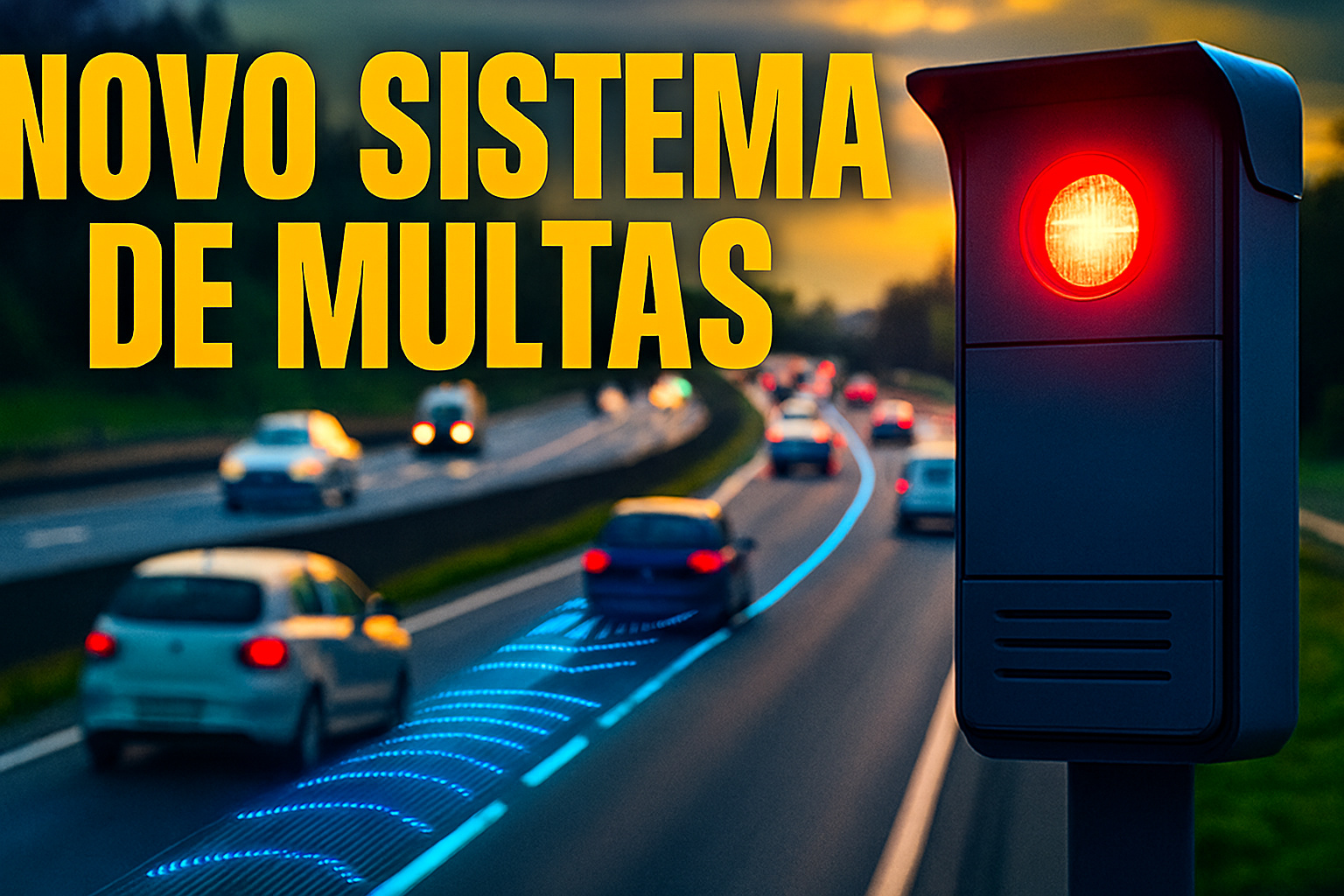
New Radar System in Brazil Will Fine for Average Speed; Braking at the Enforcement Point and Accelerating Afterwards Will No Longer Be Useful.
The traditional habit of many drivers to brake when approaching a fixed radar and then accelerate again is coming to an end. This is because a new electronic enforcement system, popularly known as the “little yellow radars”, capable of measuring the average speed of the vehicle over a certain stretch of highway and not just at a fixed point, is expanding in Brazil.
This technology records speed at least at two different points and calculates the time it takes for the car to cover the distance. If the driver exceeds the established limit, even if they have temporarily reduced speed at the radar, the infraction will be recorded and a fine will be imposed.
Average Speed and More Efficient Punishment
Unlike traditional radars that only check instantaneous speed, the new system works on the concept of average speed. In other words, even if the driver brakes at the enforcement point, if they compensate by accelerating immediately after and finish the stretch above the limit, they will be fined.
-
It surpassed the T-Cross, Creta, and Tracker: with nearly 8,000 units sold, the Volkswagen Tera was the best-selling SUV in March 2026.
-
Honda performs miracles in fuel consumption with a hatch that marks 13.2 km/l in the city and 15 km/l on the highway, leaving Polo, HB20, 208, and Onix behind and becoming a reference among compact cars without resorting to turbo or hybrid systems.

-
Six diseases that seem common but can prevent the renewal of the driver’s license for the elderly throughout Brazil and surprise experienced drivers — could any of them affect you without showing clear signs?

-
With 122 hp, fuel consumption of up to 17.7 km/l, and a trunk capacity of 440 liters, this hybrid SUV impresses even though it costs up to R$ 47,000 more than the Yaris — meet the Toyota Corolla Cross.

This method is already being used in several countries in Europe and Asia and has proven to be more effective in reducing accidents, as it prevents the so-called “accordion effect” — when drivers abruptly reduce speed only at the radar and then accelerate excessively right afterwards.
Where the New Radars are Already in Operation
The radars with average speed monitoring technology have already started to be installed on federal and state highways in different regions of Brazil. States such as São Paulo, Paraná, and Goiás are among the first to adopt the system in stretches with higher accident rates and heavy vehicle traffic.
The expectation is that the expansion will continue throughout 2025 and 2026, prioritizing roads that register high levels of recklessness. The goal is to reduce severe accidents and ensure smoother traffic, without the sudden braking that endangers drivers and passengers.
What the Brazilian Traffic Code (CTB) Says
According to the Brazilian Traffic Code (CTB), driving at a speed exceeding the maximum allowed for the road is considered a serious infraction. The penalties include:
- Fines ranging from R$ 293.47 to R$ 880.41 (depending on the excess).
- Increase of 7 points on the National Driver’s License (CNH).
- Possibility of suspension of the right to drive in cases of repeated offenses or speeds significantly above the limit.
With the new system, enforcement becomes harder to evade. This is because the driver can no longer claim that they reduced speed at the control point: the average of the stretch will be considered.
Impact on Brazilian Drivers
For drivers who still insist on exceeding the limit, the new system is a red alert. With the expansion of the little yellow radars, it will become increasingly risky to try to “fool” the enforcement.
On the other hand, traffic experts argue that the measure brings more safety for everyone. By enforcing a constant speed within the established limit, the trend is a reduction in collisions, pedestrian accidents, and fatalities on Brazilian highways.
The Future of Electronic Enforcement
With the implementation of the new radars, Brazil is taking a step to align itself with countries that have been using average speed measurement for years. In addition, authorities are studying the integration of the system with other technologies, such as automatic license plate recognition (OCR) and real-time traffic monitoring, creating a more efficient ecosystem for control and prevention of infractions.
The expectation is that, soon, smart radars will be present on practically all major highways in the country, transforming the way drivers behave in traffic.










Seja o primeiro a reagir!