





 Portuguese
  English
  Spanish
  3 min of reading
  0 comments


Recently Exposed Area in the Antarctic Peninsula Reveals Active Biodiversity, Possibly Unique Species, and Signs of a System That May Have Existed for Centuries
A significant scientific discovery has recently mobilized researchers in Antarctica and attracted international attention.
An iceberg approximately 600 km², comparable in size to the city of Chicago, has broken off from the Antarctic Peninsula and revealed an environment previously isolated under the ice.
According to the Schmidt Ocean Institute, the team accessed the area after the natural retreat of the ice sheet, which had kept the site hidden for decades or even centuries.
-
With hypersonic missiles priced like a Tesla, China is betting on a simple and devastating strategy to pressure the U.S.: mass production, saturating defenses, and turning cost into a weapon of military superiority.

-
Chinese torpedo-shaped underwater drone found by fisherman in strategic waters of Indonesia.

-
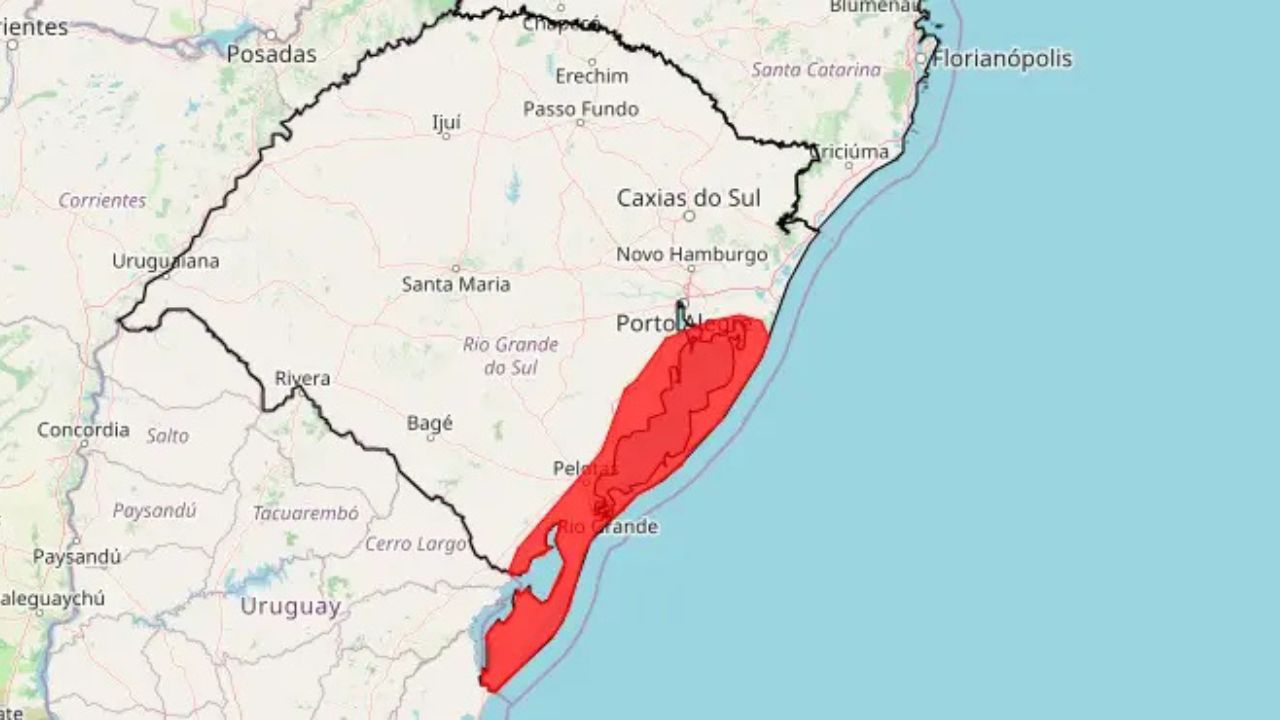
Red alert from Inmet for April 8, 2026 places 26 cities in the path of an extratropical cyclone with winds exceeding 100 km/h in southern Brazil and risks of destruction, power outages, and structural collapse.
-
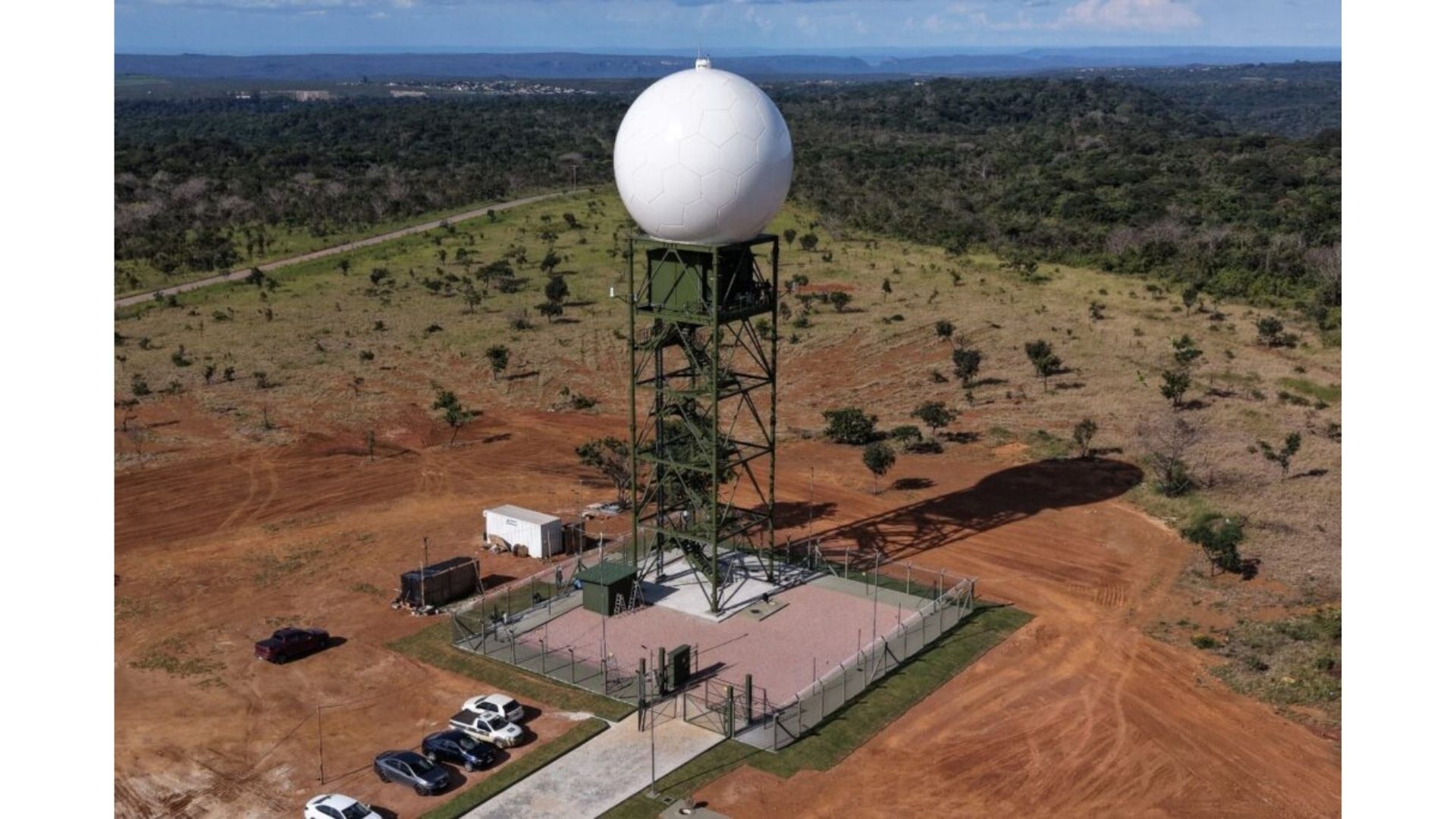
A new high-tech weather radar will be inaugurated in Mato Grosso to enhance the safety of Brazilian airspace.
This scenario exposes an ancient, active, and surprisingly diverse ecosystem, challenging expectations about life in extreme environments.
Discovery Reveals Living Community in Extreme Environment
The initial analysis points to a rich biological community adapted to severe conditions, such as low light and extremely low temperatures.
Researchers highlight that organisms develop specific adaptations that ensure survival in an environment considered inhospitable.
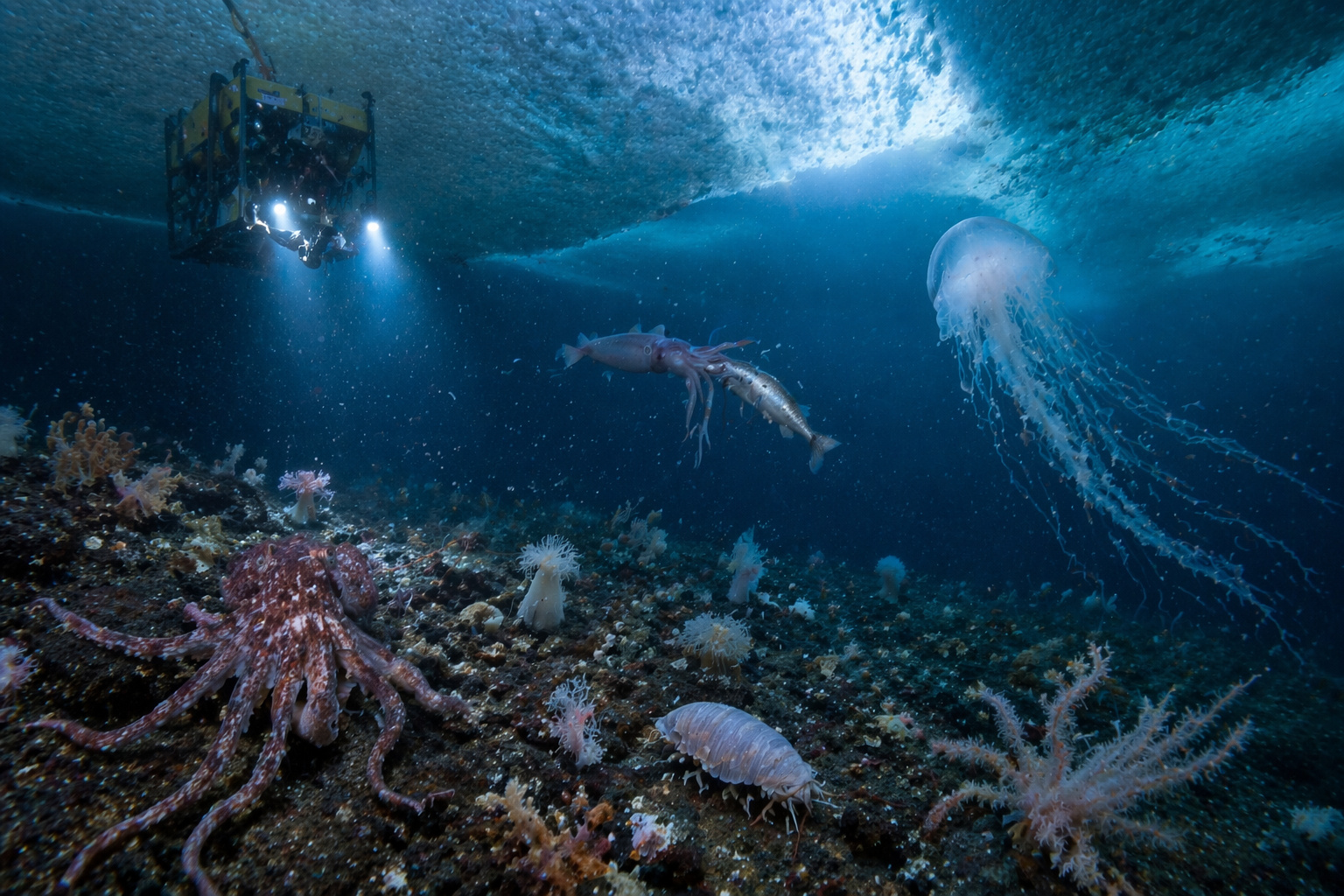
Among the most relevant findings, the team observes a large octopus, reinforcing the hypothesis of an ancient ecosystem.

Additionally, scientists identify a isopod that may represent a new species, expanding the scientific potential of the discovery.
Technical Investigation Reveals Unexplored Area Under Ice
According to the Schmidt Ocean Institute, the team is conducting the first comprehensive analysis of a newly exposed extensive region.
To do this, researchers are using a remotely operated vehicle (ROV), which reaches depths of up to 1,300 meters.
The images show a dynamic environment, with organisms actively engaged.
Among the records, a squid captures a fish, highlighting active ecological interactions at the site.
Biodiversity Includes Giant Species and Active Behavior
Another highlight of the expedition comes with the identification of the giant phantom jellyfish, which can reach up to 1 meter in diameter and tentacles up to 10 meters long.

According to scientist Patricia Escateto, co-leader of the mission, the level of biodiversity exceeds expectations.
She states that the ecosystem appears “beautiful and thriving”, even under extreme conditions.
Furthermore, the presence of active organisms confirms that the system functions continuously, despite prolonged isolation.
Sample Collection Expands Scientific Understanding
The team brings together experts from Portugal, the United Kingdom, Chile, Germany, Norway, New Zealand, and the United States.
During the mission, researchers collect samples of organisms, rocks, and water, allowing for more detailed analyses.
These materials help to understand the chemical and physical effects of glacial melting on the marine environment.
The data should also contribute to future studies on the evolution of these ecosystems.
Melting Reveals Systems Still Poorly Understood
Researchers emphasize that the increase in glacier calving may expose other similar environments.
However, the mechanisms that sustain these ecosystems remain unknown, which increases scientific interest.
According to the Schmidt Ocean Institute, understanding these systems is essential to assess environmental impacts in polar regions.
In light of this advancement, new questions arise about the origin and functioning of these isolated environments.
Are there other hidden ecosystems still preserved under the Antarctic ice waiting to be revealed?





Seja o primeiro a reagir!