






 Portuguese
  Spanish


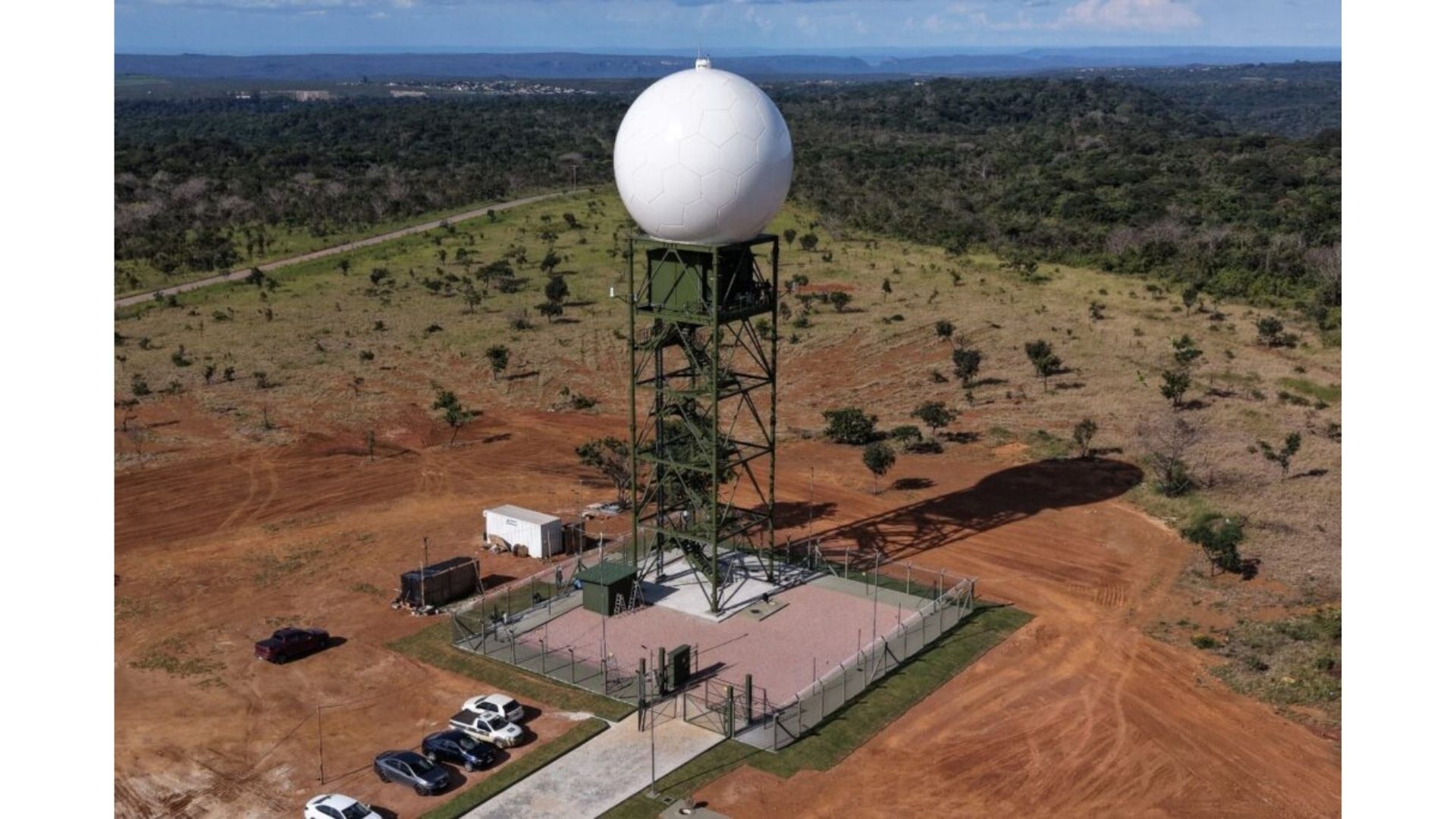

The equipment installed in Pontes e Lacerda integrates the SISCEAB network and provides real-time data on severe weather phenomena.
The Department of Airspace Control (DECEA) inaugurates, this week, a new weather radar in Pontes e Lacerda, Mato Grosso, aiming to strengthen the safety of air navigation in Brazil.
The equipment integrates the Brazilian Airspace Control System (SISCEAB) and significantly expands weather coverage in the central region of the country. This initiative is part of the technological modernization plan to optimize flight management and the accuracy of weather forecasts in strategic areas.
Expansion of coverage and technical accuracy
The new weather radar features cutting-edge technology, allowing for the detection of severe atmospheric phenomena in real-time and with high spatial resolution. The location in Mato Grosso was strategically chosen to fill monitoring gaps in a zone of intense aircraft traffic crossing the national territory.
-
China Develops Custom 140-Ton Electric Mining Truck with 770 kWh Swappable Battery, Deploys 290 Units in Xinjiang’s Largest Zinc Mine

-
Meta to Launch Arena, a New Prediction App Targeting 3.56 Billion Users, Competing with Polymarket and Kalshi

-
Scientist Challenges Famous Human Evolution Theory, Argues Homo Sapiens Evolved Gradually Over Thousands of Years
-
15-Year-Old American Builds Ocean Generator with PVC Pipe and 3D-Printed Propeller for $12, Wins National Prize, Presents at White House, and Makes Forbes 30 Under 30 List




With the operation of this system, air traffic controllers will have access to more detailed data on cloud formations, turbulence areas, and heavy precipitation.
The state-of-the-art infrastructure of the weather radar ensures that information is transmitted instantly to Area Control Centers (ACC). This allows pilots to receive advance guidance for necessary route deviations, increasing the operational efficiency of airlines. The accuracy of the collected data also helps save fuel by allowing safer and more direct routes, avoiding adverse weather conditions that could cause delays.
Integration into the defense and control system
The installation of the weather radar in Pontes e Lacerda reinforces national sovereignty by enhancing monitoring of borders and airspace under Brazilian responsibility. The equipment operates in conjunction with other surveillance sensors, creating a robust network that supports both civil aviation and missions of the Brazilian Air Force (FAB).
The maintenance and operation of the radar site are the responsibility of specialized technicians, ensuring continuous service availability.
In addition to traffic control functions, the weather radar plays a crucial role in protecting human life by issuing early storm alerts for Civil Defense. The collection of historical data from this new station will contribute to deeper climate studies in the Midwest region. The investment reflects the government’s commitment to maintaining Brazil as an international reference in the management and safety of global air transport.
Benefits for national airport infrastructure
The inauguration of this weather radar represents an advancement in logistical infrastructure, positively impacting the flow of products and regional connectivity.
The improvement in weather predictability reduces the incidence of airport closures due to bad weather, optimizing the flow of takeoffs and landings across the country. With the system in operation, Mato Grosso consolidates its position as a relevant nodal point for the safety of air traffic in South America.
The activation schedule for the weather radar includes final calibration tests before the official start of full operations. Authorities from the aviation sector and government representatives will participate in the ceremony, highlighting the importance of technological innovation for the development of the sector.
The expansion of the radar network is a continuous step to ensure that Brazilian airspace remains among the safest and most monitored in the world.
Click here to access the study.






