





 Portuguese
  English
  Spanish
  3 min of reading
  0 comments


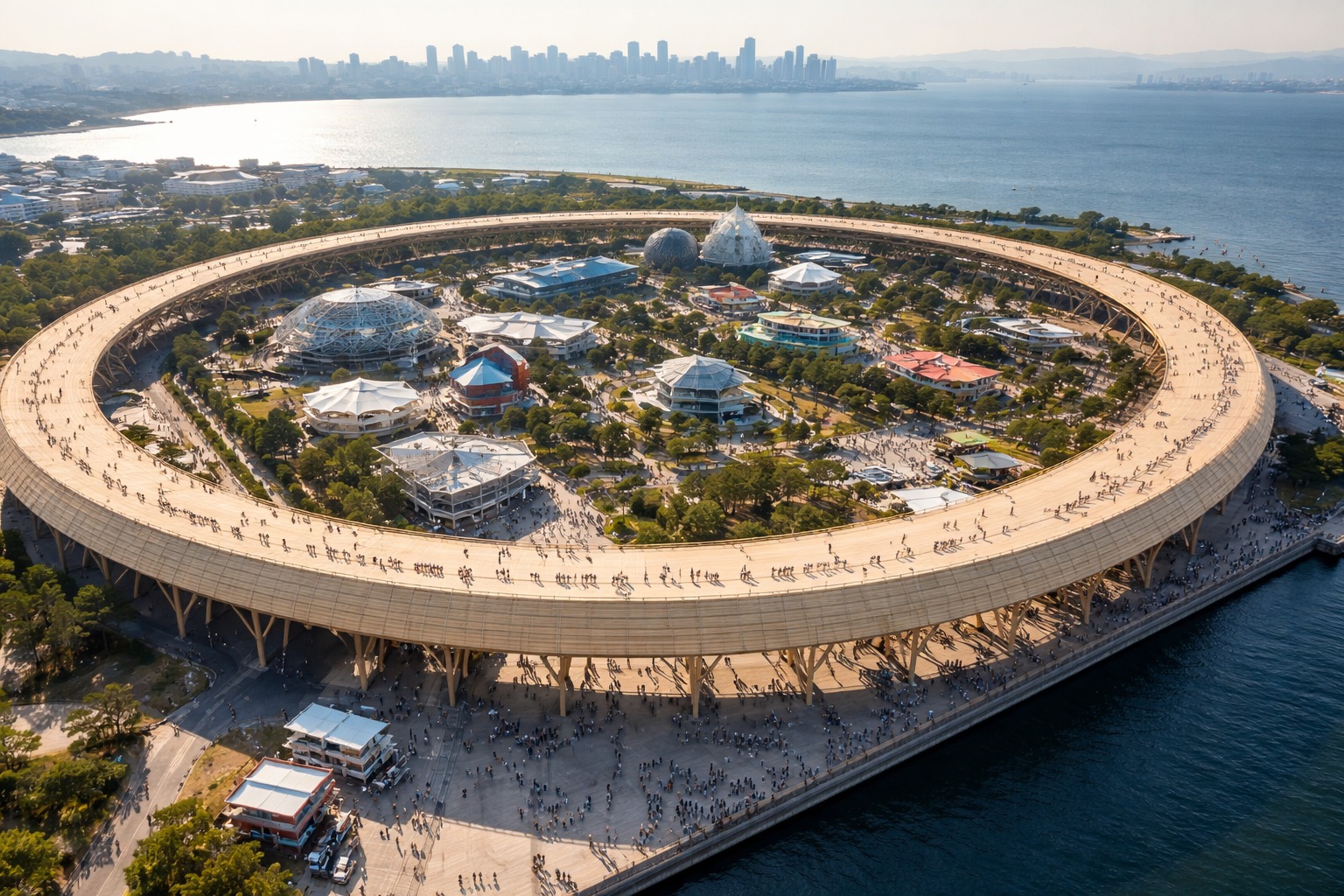
Great Ring at Expo 2025 in Osaka Occupies 61,000 m², Forms Circle of 2 Km and Is Recognized as the Largest Wood Structure in the World
The largest wood structure in the world, the Great Ring, was erected at Expo 2025 in Osaka, Japan, occupies 61,000 m², forms a circle of 2 km, and serves as an elevated walkway that protects visitors from the sun and rain throughout the day.
Largest Wood Structure in the World Enters the Record Book with 61,000 m²
The Great Ring is recognized as the largest wood structure in the world for covering an area of 61,000 m².
The project was designed by architect Sou Fujimoto and entered the record book for the size achieved.
-
A 68-year-old pizza delivery driver went off route to buy a soda that was missing from a visually impaired customer’s order, refused an extra tip, and now Dan Simpson has over R$ 546,000 in donations from people around the world who want to ensure he can retire peacefully on April 30.

-
Amateur archaeologists were searching a forest in Poland with metal detectors when they found a ceramic pot buried for over 1,500 years. Inside was a pure gold necklace weighing 222 grams, folded to fit in the vessel, and when experts examined the piece, they discovered it was the first Gothic torque ever found in Polish territory.

-
Millions of people have been eating pomegranates for centuries without knowing that this ancient fruit contains punicalagins, which scientists are studying for their possible effects on memory and vascular health.

-
Argentina patrols the South Atlantic with ships built in France and monitors over 1.1 million km² with 87 m OPVs, a range of 7,500 miles, 360° radar, and a 30 mm cannon against illegal fishing in the 200-mile zone.

The construction forms a perfect circle two kilometers long that encompasses the entire exhibition park.
The ring embraces the space with its continuous curves, creating an elevated corridor that completely surrounds the event area.
The free space of the corridor can accommodate about eight football fields side by side. The dimension of the set reinforces the title of largest wood structure in the world, consolidating the ring as the central element of the Expo held in Osaka.


Engineering Combines Glued Laminated Wood and Traditional Nuki Technique
The structure was built with modern glued laminated wood combined with the traditional Japanese technique called nuki.
This method strategically crosses thick beams, allowing the walkway to remain stable without the use of steel nails.
The application of the nuki system completely dispenses with conventional metal fasteners. The pieces fit together through structural intersections, ensuring stability even under winds from Osaka Bay.
According to the design, this choice values traditional practices and ensures a clean and quick assembly.
The structural resistance meets local climatic conditions, maintaining the integrity of the largest wood structure in the world.
Materials Include Cedar, Cypress, Fukushima Wood and 30% of Imported Pine
The construction utilized pieces sourced from Japan to stimulate the local economy. Cedar and cypress pieces from Japanese forests were used, in addition to wood from the Fukushima region to support the city’s recovery.
About 30% of the material used corresponds to imported pine from neighboring countries. The division of supplies prioritized domestic resources to reduce shipping costs and decrease polluting smoke emissions.
After the conclusion of Expo 2025, the pieces will be dismantled and reused in other projects in Japan.
The reuse integrates the planning of the largest wood structure in the world, avoiding the permanent disposal of materials.
Wood Structure Contrasts with Concrete Buildings
The use of wood presents direct differences compared to common concrete buildings. While cement blocks require water and generate pollution in the atmosphere, wood absorbs carbon during the natural growth of trees.
In the Great Ring, the pieces are joined by nuki joints. In concrete buildings, the traditional method employs nails, iron, and cement.
At the end of their useful life, the boards can be reused, while concrete usually becomes rubble.
This model reinforces the environmental proposal associated with the largest wood structure in the world. The comparison highlights distinct methods of joining, environmental impact, and the final destination of materials used in construction.
Walkway Reaches 20 Meters in Height and Serves as a Viewpoint
The upper part of the ring operates as an open viewpoint. The height reaches twenty meters off the ground in the outer area, allowing for broad views of the park and the ocean surrounding it.
The elevated path offers a continuous walk along the two kilometers of the circle. Visitors can traverse the entire length observing the pavilions of the Expo from above.
Below, the canopy protects against intense sun and rain. The wide roof creates constant shade and allows thousands of people to circulate side by side under the same covered space.
The combination of the upper walkway and the shaded lower area defines the public experience of the largest wood structure in the world, consolidating the Great Ring as the central element of the Expo in Osaka and a reference in large-scale structural engineering.
With information from BMC News.







-

-

-

-

-

10 pessoas reagiram a isso.