





 Portuguese
  English
  Spanish
  3 min of reading
  0 comments


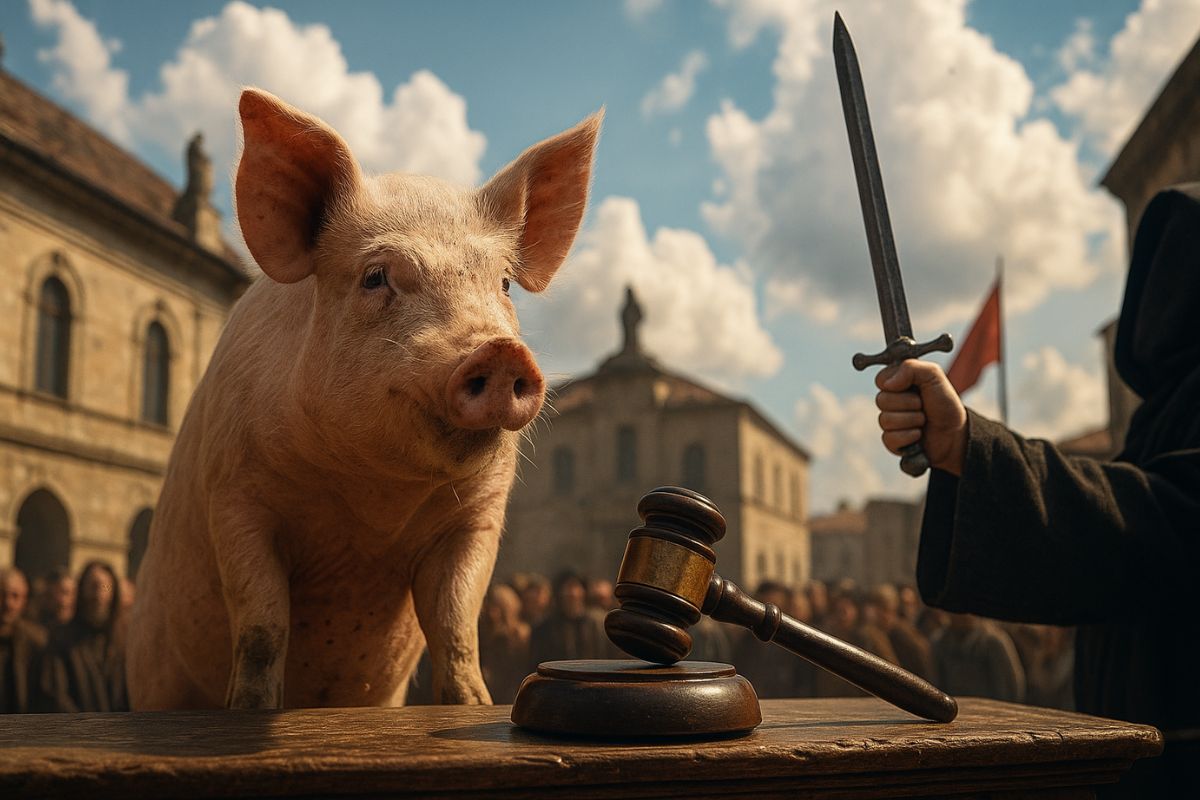
During The Middle Ages, Animals Could Be Formally Accused, Tried And Even Executed For Human Crimes, Reflecting A Worldview In Which Justice Was Divine And Applied To All Creatures Of The Earth
In The Middle Ages, the boundary between the divine and the earthly was so thin that even animals could be taken to court. Pigs, horses, bulls, and even locusts were formally accused of crimes, received defense attorneys, and in some cases, were sentenced to death.
These trials, which today seem absurd, followed strict legal protocols and were attended by the public as public events. The practice revealed a conception of justice that transcended the human, where punishment was a way to restore cosmic order and reaffirm the power of the Church and the State.
When The Law Reached Animals
Animal trials were common in Europe between the 13th and 17th centuries, especially in countries like France, Switzerland, Germany, and northern Italy.
-
Meta’s new smart glasses are not just for seeing; they use artificial intelligence, analyze your food, summarize messages, and can even change the way you work in professions like engineering.

-
According to an analysis by NASA, only one human-made structure is visible from space, and it is not the Great Wall of China or the Pyramids of Egypt.

-
After 377 years of history, the Brazilian Army will have its first female general: Colonel Claudia Cacho has been promoted to brigadier general by Lula and will receive the sword and command baton this Wednesday in Brasília.

-
A Mercado Livre customer opened their package and found 32 resumes of people looking for jobs crumpled as protective paper inside the box, exposing names, addresses, documents, and phone numbers of dozens of candidates.


It was believed that every creature of God was subject to the same moral and spiritual laws as humans.
The most serious cases, such as homicides committed by domestic animals, were tried in secular courts.
On the other hand, plagues and crop destructions were the responsibility of ecclesiastical courts.
The formality was surprising: defense attorneys were appointed, witnesses provided testimony, and the defendant could be sentenced to severe penalties, including public execution.
The Case Of The Pig Of Falaise And Other Actual Trials
One of the most cited examples is the trial of the pig of Falaise, which took place in France in 1386.
The animal was accused of killing a child and was ultimately sentenced to death by hanging.
The execution was public, and the animal was even dressed in human clothes to symbolize the moral punishment.
Similar cases spread across Europe. In 1474, in Switzerland, a rooster was tried for witchcraft after laying an egg, something considered a work of the devil.
The animal was condemned and burned alive. Even cats, goats, and oxen faced trials under accusations of murder or “un-Christian” behavior.
The Judgment Of Plagues And The Excommunication Of Insects
Not only large animals were brought to justice. Plagues like locusts, beetles, and rats could be formally prosecuted in ecclesiastical courts.
Rural communities viewed these infestations as divine punishments, and the trial of animals was a symbolic attempt to restore spiritual balance.
There were even attorneys appointed to defend the plagues.
In a recorded case in the 16th century, an attorney requested that a group of weevils be granted their own piece of land, where they could live without attacking human crops.
When the request was denied, the insects were excommunicated in a public ceremony, with prayers and blessings symbolizing their expulsion.
Why The Middle Ages Judged Animals
These trials reflected a theological view in which justice was not just human, but divine. The punishment of an animal was understood as a way to appease God and demonstrate that the order of the world had been restored.
Another factor was the pedagogical nature. Public executions reinforced the power of institutions and served as a moral warning to the population, reminding them that sin and disorder—even from animals—would not go unpunished.
Superstition and fear of supernatural forces were central elements in medieval culture, and many believed that violent animals could be possessed by demons.
When Superstition Met The Law
The coexistence of faith and law led the legal system of the Middle Ages to incorporate religious elements into its practices.
Animal trials were symbolic rituals more than rational processes.
Judging a pig or excommunicating a plague was, at its core, an attempt to make sense of tragedies, plagues, and violence that science had yet to explain.
With the advancement of rational thought and the strengthening of civil laws in the 17th and 18th centuries, these practices began to disappear.
The law started to clearly distinguish between moral responsibility and animal instinct, closing one of the most curious chapters in the history of justice.









-

-

2 pessoas reagiram a isso.