





 Portuguese
  English
  Spanish
  4 min of reading
  0 comments


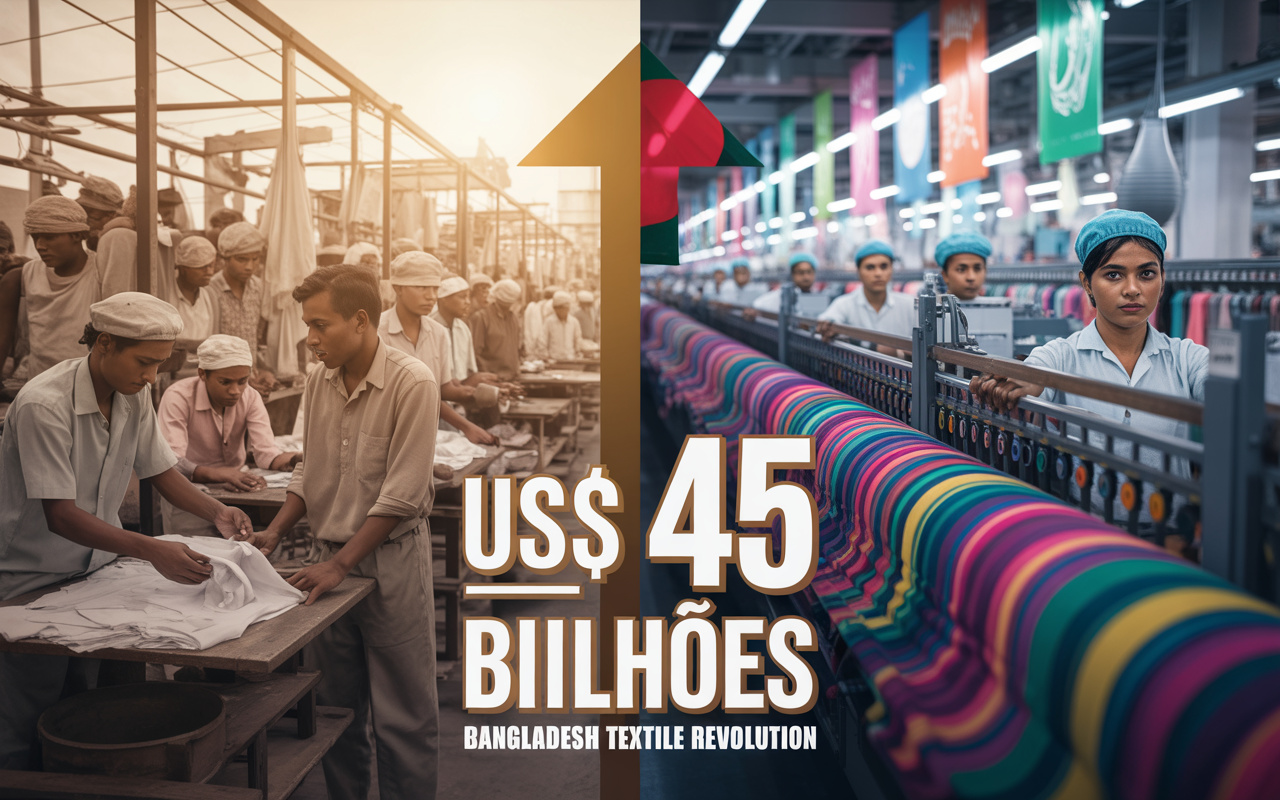
From A Country Dependent On Foreign Aid To A Global Textile Giant, Bangladesh Exports Over US$ 45 Billion A Year And Is At The Forefront Of One Of The Largest Industrial Transformations Of The Century.
For much of the 20th century, Bangladesh was cited almost exclusively in reports about extreme poverty, famine, natural disasters, and reliance on international humanitarian aid. After its independence in 1971, the country faced political instability, poor infrastructure, and a predominantly agrarian economy, with low productivity and little integration into global trade.
This scenario began to change quietly starting in the 1980s, when the country started to bet on a specific sector to break the historical cycle of underdevelopment: the textile and garment industry.
The Bet That Changed The Country’s Destiny
The turning point came with the gradual opening of the economy and the creation of export-oriented industrial zones. Bangladesh offered something that few economies could combine at that moment: abundant labor, competitive wages, and preferential access to markets such as the European Union and the United States.
-
“No one will make us change the Pix,” says Lula after the US report.

-
Lula responds directly to Trump and says that Pix is from Brazil and will not change under pressure from anyone, after a report from the United States pointed out the Brazilian payment system as an American trade barrier.

-
Amazon has just announced a new fee on all deliveries, and your online purchases will become more expensive starting April 17, including for those buying from the United States here in Brazil.

-
He sold his share for R$ 4 thousand, saw the company become a giant worth R$ 19 trillion, and missed the opportunity of a lifetime.



Global clothing brands began to shift part of their production to the country. This movement intensified in the following decades, transforming small workshops into an integrated industrial system capable of mass production.
Today, Bangladesh is the second-largest clothing exporter in the world, second only to China.
Numbers That Explain The Turnaround
The scale of the transformation is hard to overstate. Exports from the textile and garment sector exceed US$ 45 billion a year, representing over 80% of all exports from the country. Thousands of factories operate in industrial hubs like Dhaka, Gazipur, and Chittagong, supplying store windows and e-commerce sites around the world.
Large international fast fashion, sports, and casual brands rely directly on Bangladeshi production to maintain low prices and high volumes.
This machinery sustains millions of direct jobs, primarily for women, which has also had a profound social impact.
From Extreme Poverty To Women’s Inclusion In The Labor Market
One of the most striking aspects of Bangladesh’s economic turnaround has been the massive integration of women into the industrial workforce. In a historically conservative country, the textile sector opened up opportunities for millions of women to have their own income, greater autonomy, and access to education for their children.
This factor is often cited by international organizations as one of the pillars of extreme poverty reduction in the country over recent decades.
Critics, Crises, And The Pressure For Change
The rapid growth did not come without costs. Bangladesh became a global symbol of debates over working conditions after industrial tragedies, such as the collapse of the Rana Plaza building in 2013. The incident exposed severe failures in safety and oversight, provoking unprecedented international pressure.
Since then, the sector has undergone structural changes. Audit programs, investments in building safety, and international agreements have raised minimum standards for factories, although challenges persist.
Competitiveness In A Transforming World
Even facing growing competition from countries like Vietnam, India, and Ethiopia, Bangladesh maintains a competitive edge thanks to scale, accumulated experience, and logistical integration.
The country has ceased to be just a cheap supplier and has begun to offer short lead times, large volume capacity, and quick adaptation to global market demands.
Moreover, the textile industry serves as a foundation for a gradual diversification of the economy, with investments in spinning, technical fabrics, and greater added value.
A Turnaround That Redefined The Country’s Role In The World
In just a few decades, Bangladesh moved from being a chronic recipient of international aid to becoming an Indispensable Link In The Global Fashion Supply Chain.
The textile industry has not solved all of the country’s problems, but it has created something rare in the developing world: an industrial base capable of sustaining growth, employment, and international economic integration.
The Bangladeshi trajectory shows that, even starting from extremely adverse conditions, strategic decisions focused on industrialization and export can deeply alter the fate of a nation — even if the price of this transformation continues to be debated.








Seja o primeiro a reagir!