





 Portuguese
  English
  Spanish
  4 min of reading
  1 comment


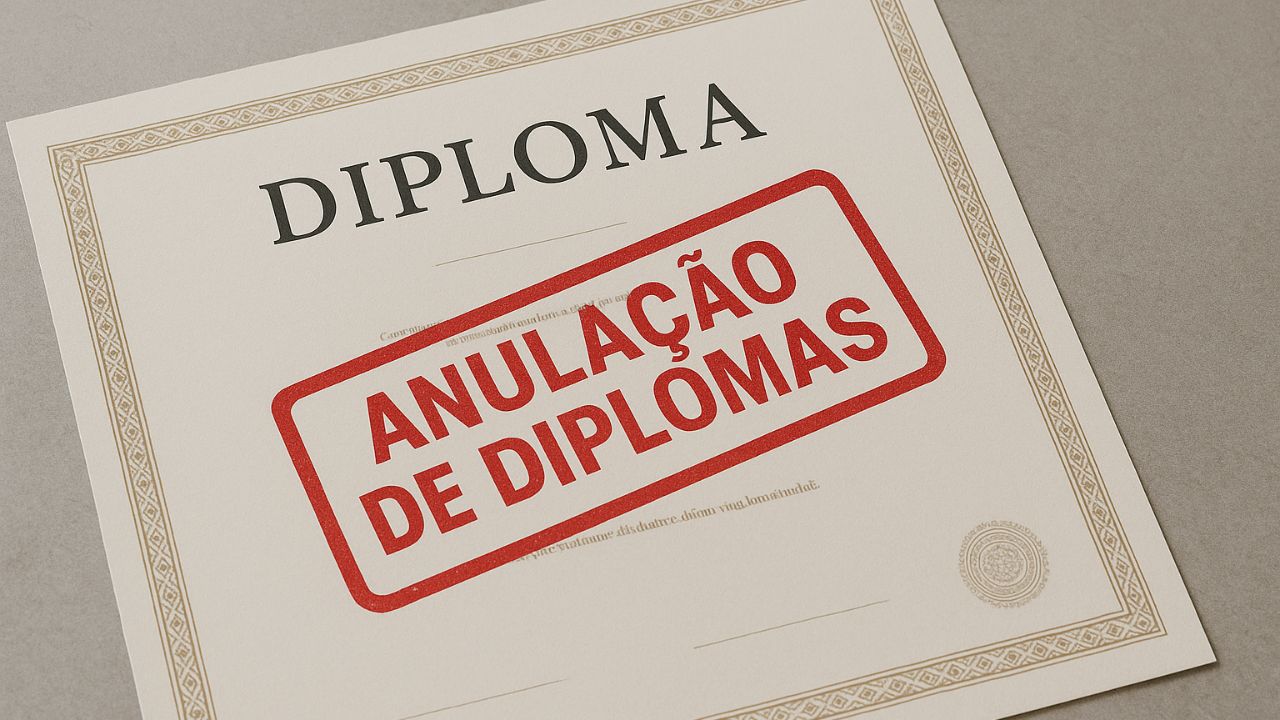


UFAL Confirms The Annulment Of 218 FICS Diplomas After Identifying International Fraud. Understand Why The Degrees Lost Validity And Who Was Affected.
The Federal University of Alagoas (UFAL) confirmed, in the Official Gazette of the Union on November 25, 2025, the annulment of 218 diplomas from postgraduate programs that had been recognized in Brazil.
The measure affects master’s and doctoral degrees linked to the Facultad Interamericana de Ciencias Sociales (FICS), based in Paraguay.
The university made the decision after receiving documents from the Federal Police indicating that the certificates were irregular, which led to an immediate reevaluation of the processes.
-
The oceans are darkening all over the planet – what is happening?

-
An engineer designs a solar plane to fly on Mars at an altitude of 1,000 meters and a speed of 300 km/h, covering 16,000 kilometers in a Martian year, 900 times the distance traveled by the Ingenuity helicopter in three years on the planet before experiencing a rotor failure, and NASA is already funding the feasibility study.

-
A new phenomenon of contactless magnetic friction intrigues scientists and questions a theory that has been valid since the 17th century.

-
An impressive phenomenon in Northern Brazil causes rivers of different colors to flow side by side, revealing secrets about sediments, currents, and biodiversity.

The annulment was declared because FICS did not have official authorization to issue this type of diploma in its home country.
Why Were The Diplomas Annulled By UFAL?
The decision did not arise in isolation. The Federal Police sent a letter to UFAL requesting clarifications regarding the large volume of foreign diplomas submitted for revalidation.
In the document, the Federal Police informed that Paraguayan authorities had pointed out inconsistencies in FICS’s operations. Thus, UFAL initiated a detailed verification.
During the analysis, the central finding emerged: FICS was only permitted in Paraguay to offer undergraduate courses and a specific master’s program in International Relations.
Any other diploma issued—especially doctoral degrees—lacked official validity in its home country. Therefore, it could not be recognized in Brazil.
This point was decisive for the annulment: if the diploma is invalid at the issuing institution, it is also invalid for revalidation in Brazilian territory.
Investigation Suggested Possible Institutional Cloning
Another point that raised suspicions was the discrepancy in documentation between FICS and the Instituto Superior Interamericano de Ciencias Sociales (ISICS).
Paraguayan authorities sent information indicating that the data presented in the revalidations in Brazil did not match what was officially registered.
This discrepancy led UFAL to conclude that there could be an attempt at “institutional cloning,” when one entity improperly uses the name or structure of another to simulate legitimacy.
This practice increases the risk of fraudulent diplomas circulating as if they were legitimate.
How Was The Decision Formalized?
The measure was formalized through Ordinance No. 119, signed by UFAL.
The university adopted the principles of legality and administrative morality as a basis, in addition to Summary 473 of the Federal Supreme Court, which ensures that public administration has the right to annul illegal acts.
Law No. 9,784/1999, which regulates the federal administrative process, was also used as a basis to nullify the recognition acts. Thus, the annulment of the diplomas ceased to be merely a recommendation from the Federal Police and became a formal and definitive decision.
Who Lost The Diploma Recognized In Brazil
The 218 diplomas annulled were issued between 2023 and 2025 to Brazilians from various regions of the country.
Before this final decision, UFAL had already canceled 105 degrees and placed another 113 in preventive suspension while seeking responses from Paraguayan authorities.

Now, all integrate the same result: the complete annulment.
As a result, the holders of these diplomas cannot use them for public competitions, career advancements, academic credit, or to enroll in new postgraduate courses that require prior qualifications.
The decision not only directly impacts professionals seeking academic recognition but also reignites a growing debate in the country: the increase in reports involving “diploma mills” in Latin America.
Since mid-2025, reports and investigations have been revealing international schemes promising master’s and doctoral degrees without real requirements for research or attendance.
FICS has become one of the most emblematic cases in this scenario, especially after the confirmation that diplomas were issued without legal authorization.
What UFAL Says About The Case
UFAL asserts that the decision aims to protect Brazilian academic integrity.
According to the institution, the annulment is necessary to ensure that only regular diplomas issued within international educational standards are accepted in the country.
The university emphasizes that it does not act merely as a validator but as a guardian of legality.
Therefore, when it identifies irregularities, it must annul them—even if the measure impacts part of the academic community.
Alert To Students: How To Avoid Fraud In Foreign Diplomas
With the repercussions of the case, experts advise that those intending to pursue postgraduate studies abroad should verify:
- Whether the institution is officially recognized in its country of origin.
- Whether the courses offered are authorized.
- Whether there is registration of the diploma with local regulatory bodies.
- Whether the course is accepted in the Brazilian revalidation system (Carolina Bori Platform).
The annulment of these diplomas serves as a warning: degrees obtained without official backing end up canceled in Brazil, resulting in financial, professional, and emotional losses.









A ufal e a Fics deveriam devolve r o $ dos requerentes