





In Wrocław, Poland, about 20 public refrigerators are on the sidewalks with free food for anyone who wants it. The model has spread across the country and reached nearly 1,600 units, maintained by donations from residents, supermarkets, and volunteers, without registration or proof of income.
There is no line, no form, and no one asks anything. The refrigerators installed on the sidewalks of Wrocław, Poland, hold free food that anyone can take, without needing to identify themselves or justify the need, according to a report on the project published by DW Brasil.
The most surprising detail of the model is the reverse flow. A good part of those who stop in front of these appliances do not go to take food, but to leave it, turning the appliance into a point of exchange between neighbors. The network already has about 20 units in the city and approximately 1,600 across the country.
How it works in practice
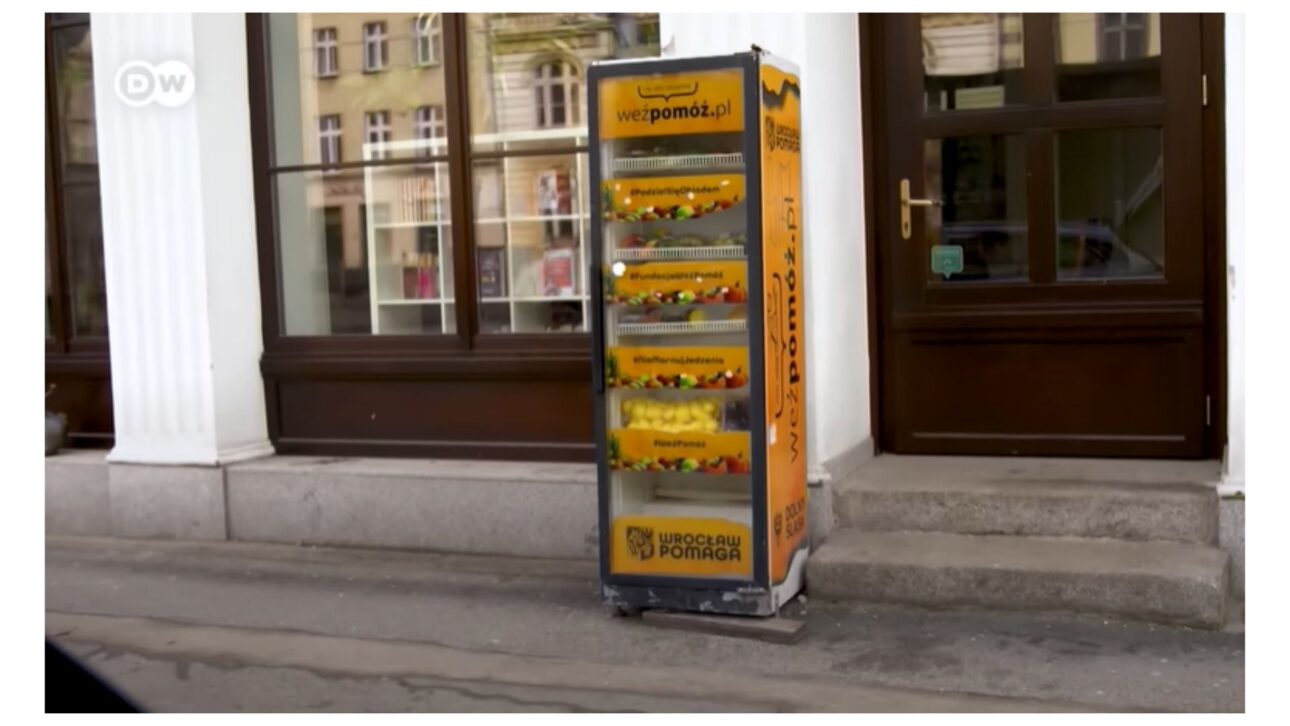
The system was designed to eliminate any embarrassing steps. The person arrives, opens the door, takes what they need, and leaves, without registration, password, or presenting a document.
-
Exporting 348.7 billion dollars and recording a surplus of 68.3 billion, Brazil’s trade balance closed 2025 with the third largest balance in the historical series, with the trade flow exceeding 629 billion.

-
Few people know, but the Morning Star is not a star but the planet Venus: See why the brightest planet in the sky is hotter than Mercury, rotates in the opposite direction, and has intrigued astronomers for centuries.

-
Apollo 11 pen used by Buzz Aldrin to activate broken circuit breaker is auctioned with fragment for $857.6 thousand, 57 years after improvised solution helped lunar module lift off from the Moon and reunite with orbiting spacecraft, preventing astronauts from being stranded on the lunar surface.
-
Instead of demolishing a 23,000-ton building that was blocking the widening of a central street in Moscow, engineers separated the structure from its foundation, moved it 50 meters on tracks, and kept residents sleeping while the building’s networks continued to operate.


The absence of screening is intentional. There is no proof of income or evaluation of who does or does not have the right to the food, which eliminates the bureaucracy that often deters those most in need.
The same goes for those who donate. Anyone who wants to leave food simply places it inside the refrigerator, without an intermediary and without needing to find an institution.
Who is behind the network
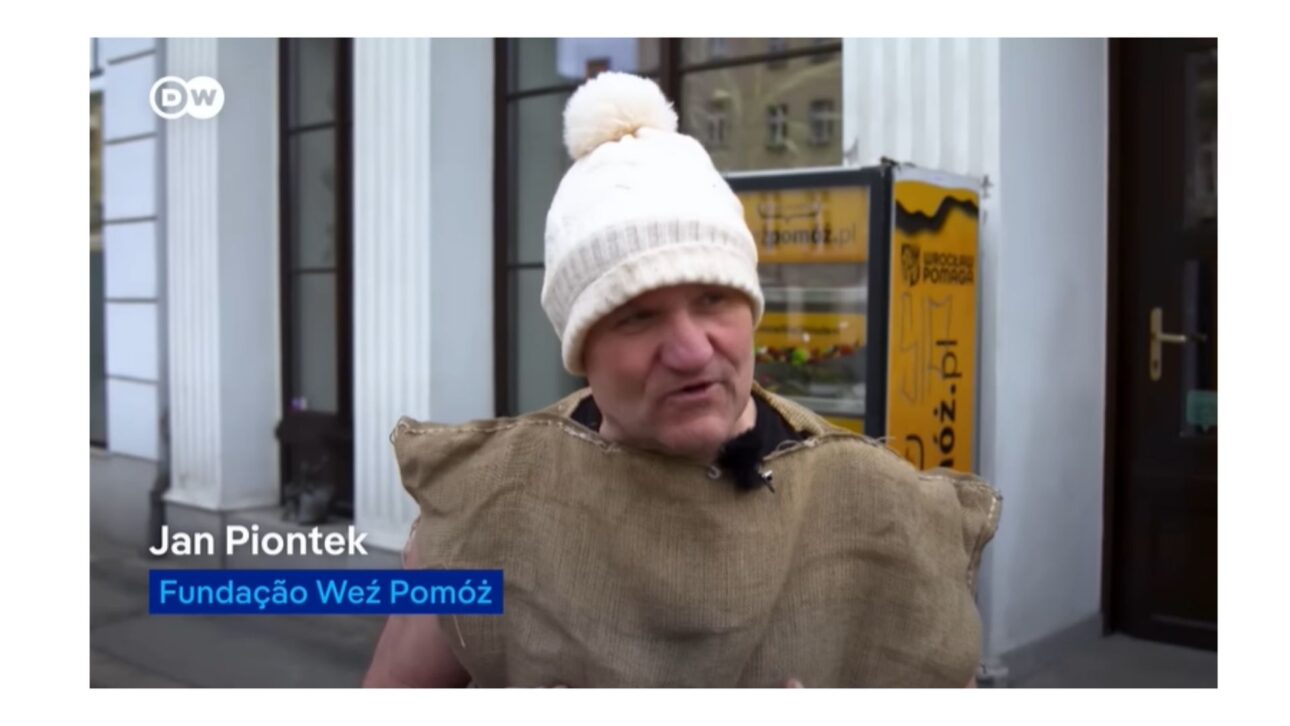
The project has organized coordination and its own name. Jan Piątek, whose last name is pronounced “Piontek”, presides over the foundation responsible for the initiative and is the one who installs new units throughout the city.
He sums up the project’s logic in a reversal. “What matters is not receiving, but giving. That’s what makes us feel good”, stated the coordinator.
The attitude is evident even in the way he presents himself. “People are not defined by the clothes they wear”, he said, linking appearance to the same idea that supports the project.
The fridge that teaches
Residents interviewed highlight an effect that goes beyond food. One of them described the equipment as an educational fridge, teaching the value of sharing.
This learning appears concretely among the younger ones. School-aged children pass by the place, some leaving cookies and taking potatoes or a sandwich.
The small exchange is precisely what impresses observers. “It’s fantastic to see that they are learning to share. This is education”, commented a resident.
The couple that leaves more than they take
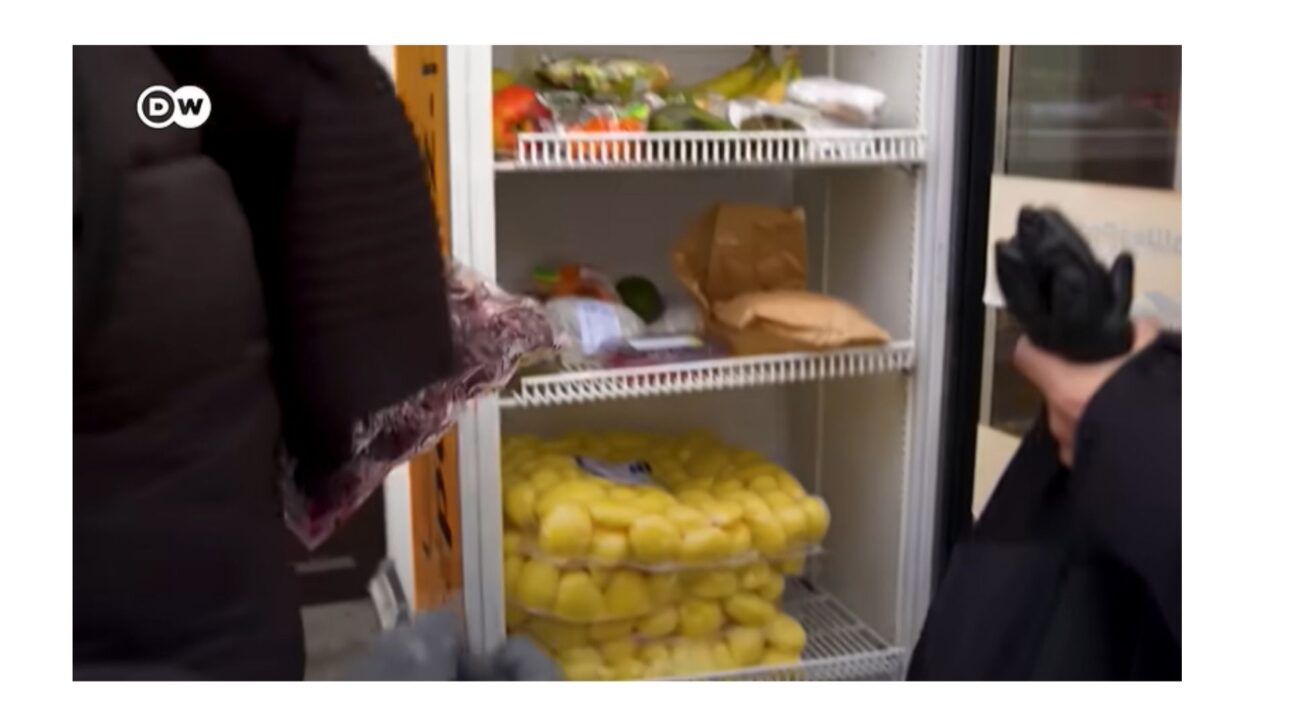
An example cited in the report shows the daily operation. The couple takes some bananas and leaves beets, bread, and soup for others.
Their routine is one of frequent donation, with occasional withdrawal. “Almost every day we leave something here. We don’t always take”, they said.
When they do take, it is for convenience. “But, of course, sometimes we take something for lunch, it’s very convenient”, they added.
Fighting waste before hunger
The project tackles two problems at once, and one of them is waste. The alternative to sharing would simply be to discard still good food.
Residents see the fridge as a better destination than the trash can. “We prefer to leave food here so that others can enjoy it, rather than it going to waste”, said one of them.
The coordinator shares the same view. “We waste a lot of food. And many people are ashamed to ask for help”, he said, pointing out the two sides that the equipment tries to connect. In Brazil, food security policies are conducted by the Ministry of Social Development and Assistance.
Where the food comes from
The supply does not depend solely on passersby. The coordinator travels to locations bringing received donations, including from supermarkets.
This flow provides predictability to the system. Donations from businesses often involve products close to their expiration date or with damaged packaging, items that would be removed from circulation even though they are fit for consumption.
The demand, however, exceeds the supply. The refrigerators become empty quickly, according to the daily operation report.
The shame that still keeps people away
Even without requiring anything from those who arrive, the model hits an invisible barrier. Many people still feel ashamed to approach the equipment.
It is precisely this embarrassment that the format tries to reduce. A refrigerator on the sidewalk has no attendant, no queue, and no operating hours, which reduces the exposure of those in need.
The difficulty exists in a country with a relatively stable economy. Even though the Polish economy is not bad compared to Europe, part of the population faces difficulties, according to the report.
The network’s numbers
The scale of the project is what separates the initiative from a one-off action. There are almost 20 refrigerators distributed in Wrocław and about 1,600 throughout Poland.
And the expansion continues. New units are already on the way, according to those responsible for coordination.
The waiting list is formed by volunteers, not beneficiaries. There are already almost 60 locations where people have offered to install new refrigerators, indicating that the demand to participate grows along with the network.
Why so many people want to help
The coordinator attributes this interest to the visibility of the result. “Many kind-hearted people contact us”, he stated.
The convincing argument, according to him, is practical proof. “They see that the project works and really helps those in need”, he added.
This is a trait that differentiates the model from traditional campaigns. Those who donate see the effect on their own street, without the intermediation of an administrative structure.
Public support and the rules that come with it
The initiative is not sustained solely by spontaneous donations. The city hall provides financial support to the project but imposes conditions for it.
The requirements involve accountability and food safety. According to the municipal administration, the use of public resources requires total transparency, and the quality of the food and storage conditions must meet strict standards.
The public authorities also advocate for the expansion of the network. The official position is to have as many refrigerators as possible in the city, to reach more people.
The friction between helping quickly and following the rules
There is a declared tension between the two logics, and it appears in the report itself. For the project coordinator, the essential thing is to offer as much help as possible.
This priority does not always coexist well with the regulations. The quest to serve more people can conflict with official rules, as pointed out in the report.
The impasse is common in initiatives of this type. Sanitary control protects consumers but creates steps that reduce the agility of a system designed precisely to be immediate.
The unexpected effect on the menu
There is an almost comical detail in the operation of the network. Those who take food do not choose what they will find, as the content depends on what others have left.
This changes the routine of those who use the service. The couple mentioned in the report took potatoes and will probably try various recipes with the ingredient, adapting the menu to what was available.
It is a direct consequence of the open model. The public refrigerator functions as a collective pantry without a shopping list, where improvisation in the kitchen is part of the experience.
And you, would you place one of these refrigerators on your street?


Almost 1,600 refrigerators on sidewalks across an entire country, about 20 of them in a single city, and only one rule: open the door and take what you need, without explaining anything to anyone. What stands out the most is that many people stop there to leave food, not to take it.
And you, do you think a project like this would work in your city, or would people here take everything at once? Have you seen any similar initiative in your neighborhood? Share your opinion in the comments and tag that person who always agrees to help when someone needs it.


