





 Portuguese
  English
  Spanish
  6 min of reading
  0 comments


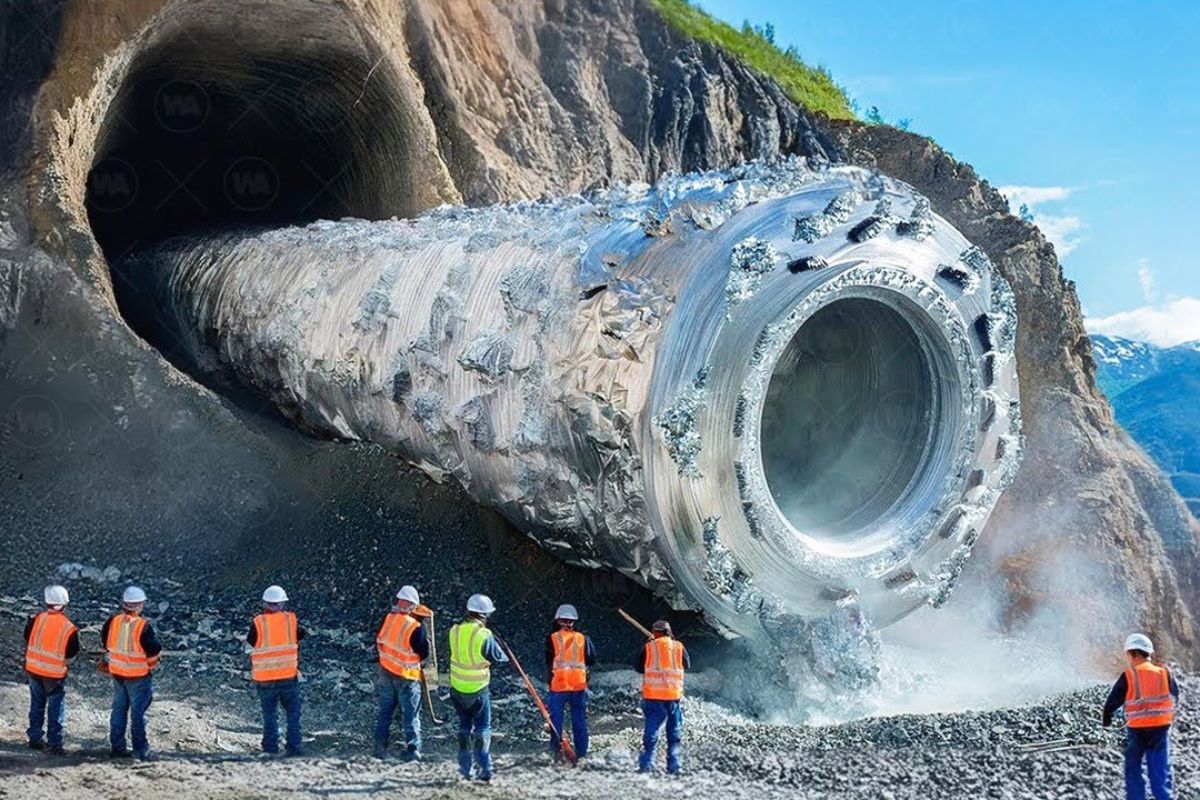
When Expanding The Depth Of The Bingham Canyon Mine In Utah, The United States Began Recovering The Metal Eight Times More Rare Than Gold From Copper Refining, Targeting Cadmium Telluride Solar Panels, Ultra-Pure Semiconductors, And Less Chinese Dependence In The Global Supply Chain.
The metal eight times more rare than gold has entered the center of an industrial dispute because it has been treated by the U.S. government as one of the most important minerals for the economy and for energy security. The substance, whose name is linked to the Latin word for “Earth”, appears in extremely low concentrations, with a reference of 0.00003 in a ton and, in analyzed rocks, an average of about three parts per billion.
The shift happens because, in addition to industrial uses already mentioned such as copiers, ceramic coloring and glass, and durable rubber manufacturing, the metal eight times more rare than gold has begun to be associated with advances in thin-film solar cells, particularly the cadmium telluride technology, along with materials for ultra-pure semiconductors.
What Is The Metal And Why Did It Become “Critical”

In the presented survey, the element is described as a metalloid, a group of seven elements with properties between metals and non-metals.
-
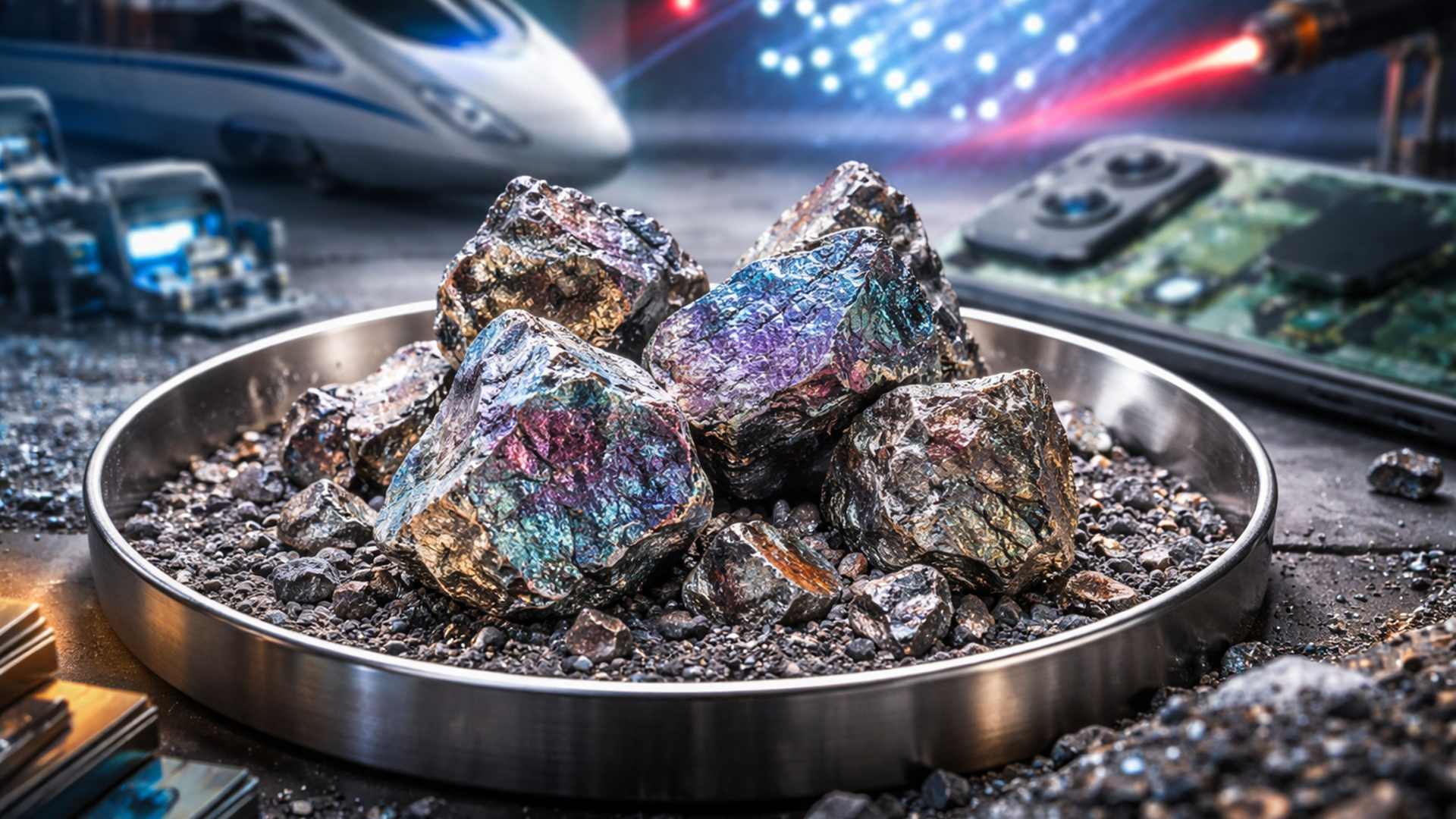
Rare earths are in everything, from cell phones to bullet trains, and what almost no one realizes is why they have become the target of such a delicate global war.
-
Brazil extracts 26.3 million tons of ore from what was previously treated as waste, transforming residues into wealth, producing over 3 million tons of sand, and demonstrating how national mining is relearning to generate value.

-
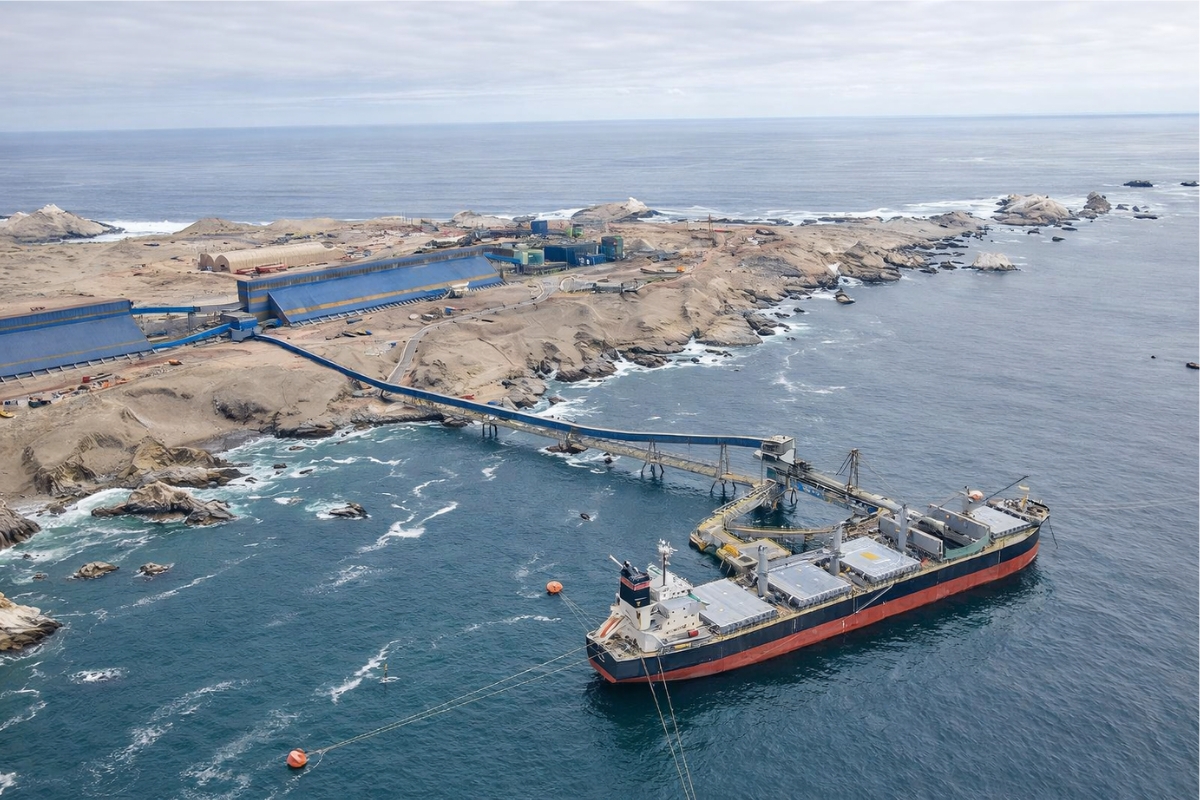
A $3.5 billion megaproject in Latin America pumps desalinated seawater at 1,050 liters per second over 194 km to keep a copper supermine in the Andes operational for another 20 years.
-
A hidden mine in the Andes valued at nearly R$ 1 trillion is starting to attract global attention, containing copper, gold, and silver, and raises an intriguing question: why do Argentina and Chile need to act together to exploit this gigantic wealth?
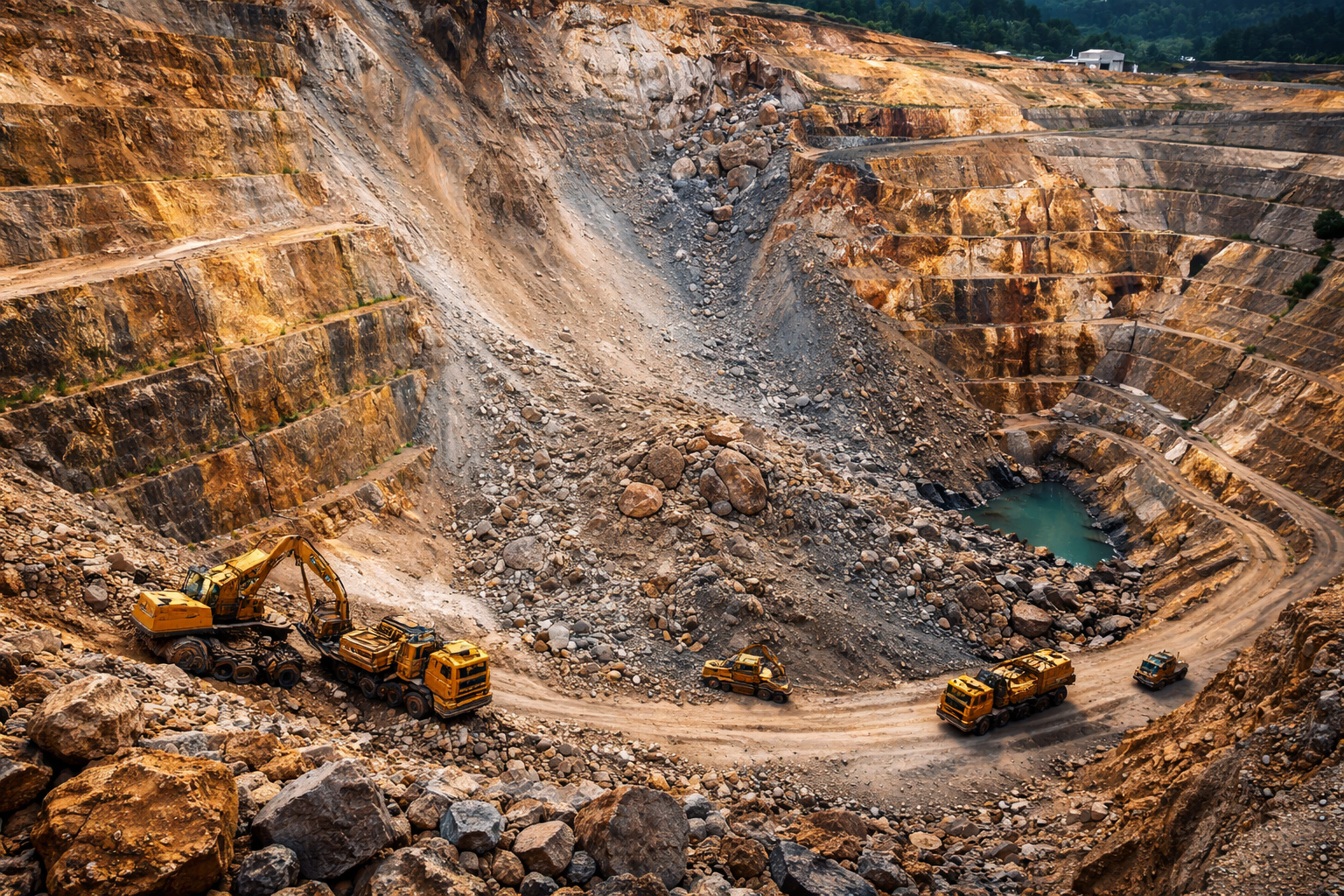
The rarity is treated as a central piece of data: the material is pointed out as one of the least common elements on Earth, with such a low presence that measurements become difficult.
The origin of this scarcity is attributed to the planet’s formation process: during the hot nebular formation, the element would have formed a volatile hydride, escaping as gas, which would explain why there is less of it on Earth than “anywhere else in space”.
The practical consequence is direct: the metal eight times more rare than gold is now contested not out of chemical curiosity, but as an input for a sensitive industrial chain.
The Bridge With Solar Energy And Semiconductors

The sudden interest is linked to the growth of thin-film solar cells.
The mentioned technology, based on cadmium telluride, is described as capable of offering fast generation, high conversion rates, low temperature coefficients, and high stability.
The market for this segment is pointed out as accelerated: the mentioned forecast is that the thin-film solar cell market will exceed US$ 10 billion by 2027, more than double the size recorded in 2021, when it was around US$ 4 billion.
In parallel, there is a projection that the market for the material itself will grow by US$ 315 million, with a compound annual growth rate of 9.84% between 2023 and 2028, driven by the popularity of clean energy.
There is also an industrial argument: cadmium telluride modules could be produced in less than 4.5 hours, emitting six times less carbon dioxide than silicon, with over 90% being recyclable after deactivation.
This is within a package where the metal eight times more rare than gold is treated as a piece of “energy security”.
Who Controls Production And Why China Matters
The described scenario indicates concentration: a report cited as published in early 2024 attributes to China about two-thirds of global production in 2023.
Numbers associated with 2022 also appear, with Japan cited at 68 tons and Russia at 40 tons, while global production would be greater than in 2016 by about 1.6 times.
The Chinese leadership is explained by mineral structure and mining capacity: Sichuan province is cited as home to the only registered independent primary deposit, and there is reference to almost 14,000 tons of reserves spread across 16 provinces.
In the sea, the material is described as 50,000 times more concentrated on the ocean floor than on land, and a drilling vessel capable of operating at 33,000 feet is mentioned as part of this advancement.
In this context, the political point appears: when one country concentrates the production of a resource deemed important, others become vulnerable.
The study describes that, in 2019 and 2021, 95% of the metal used by the U.S. was reportedly purchased from China, at a time when the global solar energy market was growing and renewable electricity already accounted for a significant share of the American system.
The Largest Open-Pit Mine And The U.S. Turnaround In Utah
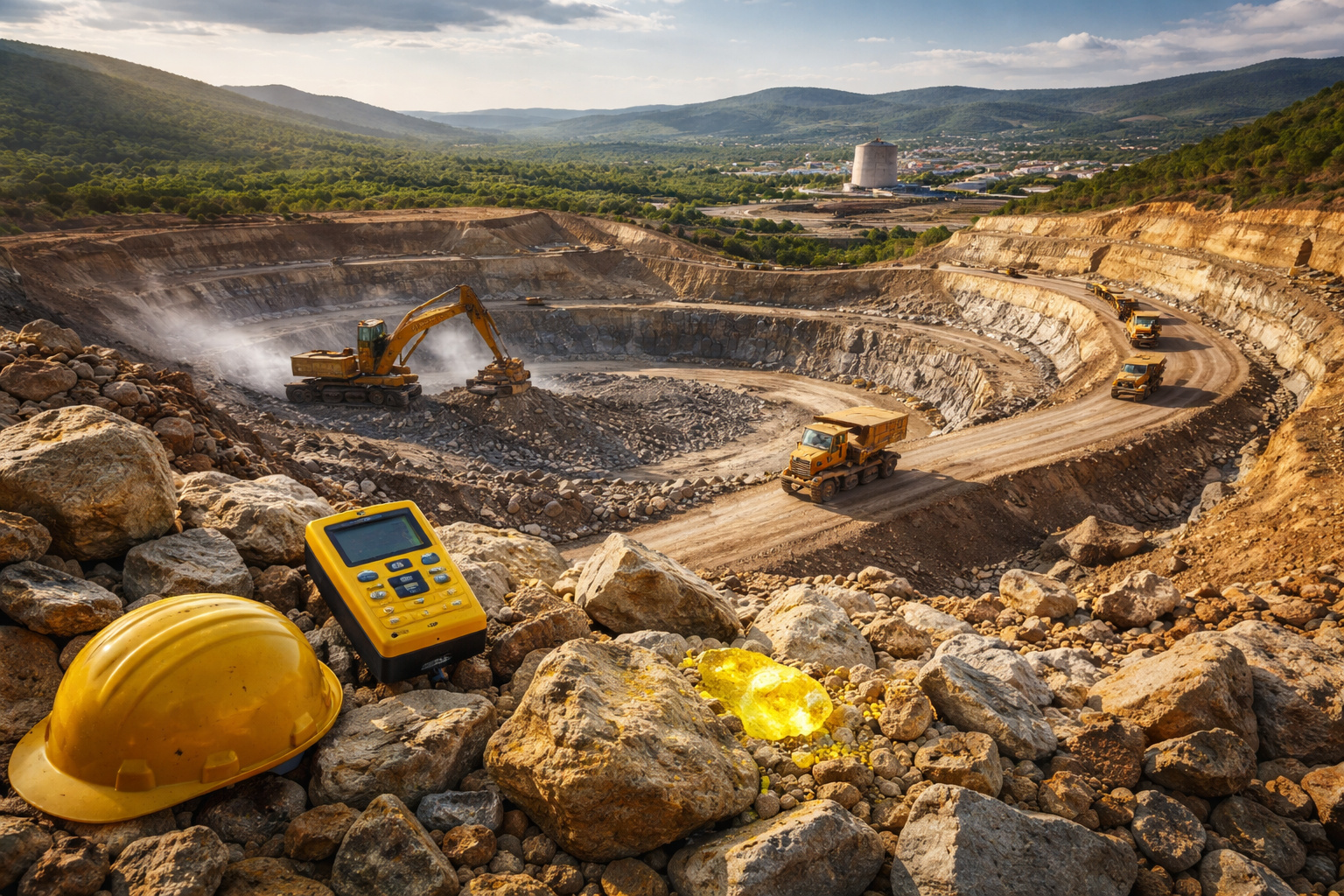
The American reaction is tied to a place: Bingham Canyon, in the state of Utah, operated by Kennecott.
The mine is described as active since 1903, with a history of extracting over 17 million tons of copper.
The scale is treated as a differentiator: depth greater than 3,970 feet, width of 2.5 miles, and a total area of about 1,900 acres, in addition to having been declared a National Historic Landmark in 1966.
The mining industry in Utah is pointed out as a relevant sector, with revenue of about US$ 4 billion, with copper as the most valuable product.
In this backdrop, the conglomerate Rio Tinto reportedly invested US$ 1.9 billion to extend the operation’s lifespan until 2032, with a plan to produce about 1 million tons of “pure” copper during this period.
The central change comes in 2022, when the operation reportedly began the process of extracting the metal eight times more rare than gold associated with copper refining within its own production chain.
The logic is explicit: since a large part of the metal is described as a by-product of copper deposits, the mine becomes a shortcut to reduce external dependence.
Domestic Production, Numbers, And The Bet On The Industrial Chain
The presented plan connects mining, refining, and industry: the material would be refined in North America by a producer described as a global leader in specialties, and delivered to consumers, with emphasis on First Solar, cited as the only American company among the top 10 solar panel manufacturers.
There are scale numbers: the country would receive about 20 tons per year, with an indicated value of US$ 2.9 million, and part of the metal would also be destined for ultra-pure semiconductor materials in a factory in St. George, Utah.
The study recalls that previous production in the U.S. was done at a facility in Amarillo, Texas, which sent copper sludge and oxygen to Mexico to extract the metal, reinforcing the narrative of external dependence even when domestic activity was occurring.
In April 2023, the company is cited as estimating that the operation would become the sixth largest producer in the world, covering about 3% of the global supply.
The reality gains weight when the market is described as small: in 2021, 580 tons were produced worldwide, which makes 20 tons a significant volume for the U.S. strategy with the metal eight times more rare than gold.
Why This Affects Employment, Price, And Solar Capacity
The economic impact appears in projections linked to the solar panel chain: by 2026, the production of these panels could bring over US$ 10 billion to the American economy and US$ 2.78 billion in labor income, referencing about 30,000 jobs that would be created by First Solar by 2026.
On the public policy side, there is mention of a US$ 20 million plan by the Department of Energy for studies related to solar cells and the material, with goals such as developing prototypes, reducing costs, decreasing emissions, and increasing efficiency and lifespan.
The price also serves as a thermometer: in 2022, the cited cost was US$ 70, and in 2023 it had risen to US$ 80.
In the solar expansion scenario, the cited report indicates that U.S. manufacturing capacity for modules exceeds 26 GW per year, and that in 2023 the country added over 40 GW of new solar capacity.
The share of solar energy is described as 64% of all new capacity in the system, with annual generation sufficient to power over 37 million homes, while Texas and Florida would lead installed capacity, and California would see a decline due to a combination of factors.
What To Watch In 2026 And Beyond
The narrative concludes with a dual movement: to increase domestic supply of the metal eight times more rare than gold and, at the same time, expand industrial capacity that consumes this input, especially in thin-film solar panels and semiconductors.
If internal production grows and sustains supply, external dependence may consistently decline, in a sector where supply chain disruptions are treated as strategic risk.
To monitor this topic without noise, it is worth tracking three practical points throughout 2026: effective annual production volume, industrial destination of refined tons, and pace of solar capacity expansion and semiconductors that depend on this input.
Do you think the strategy regarding the metal eight times more rare than gold will actually reduce the vulnerability of the U.S., or will the global supply chain just swap bottlenecks and create another type of dependency?









-

-

-

-

-

-

59 pessoas reagiram a isso.