





 Portuguese
  English
  Spanish
  4 min of reading
  4 comments


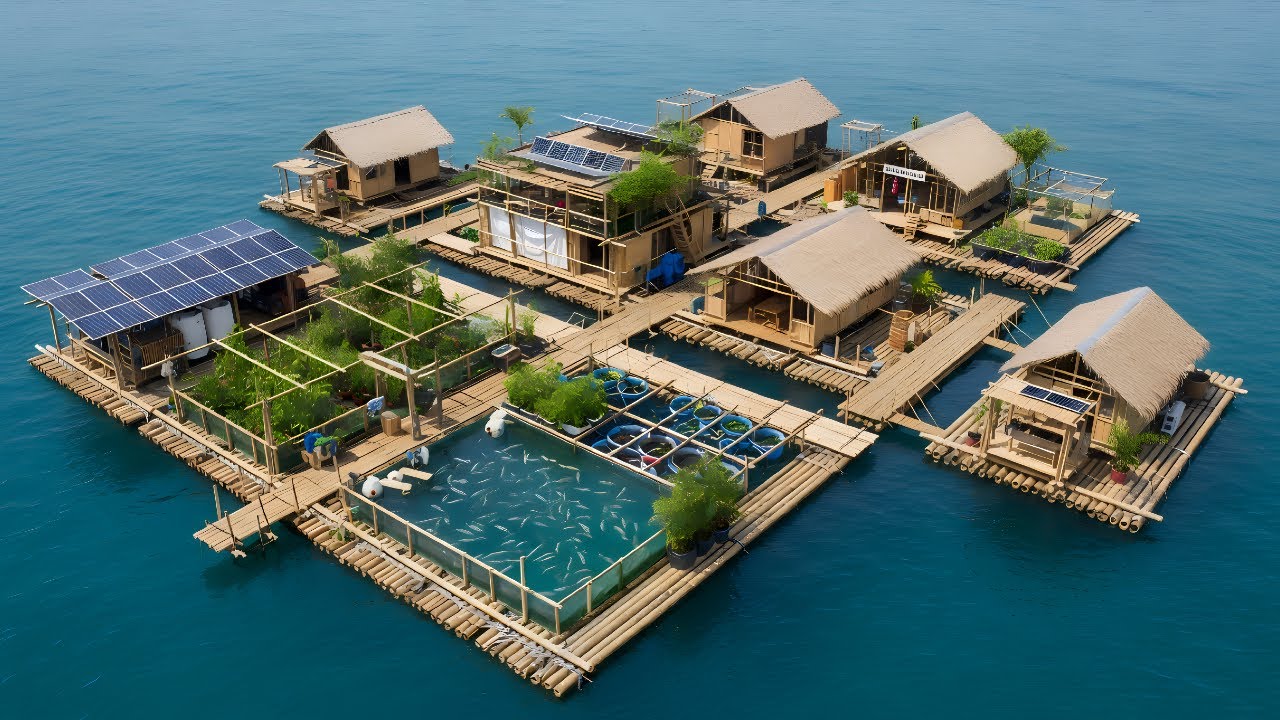


During 365 Days, Group Built a Huge Floating Bamboo House with Pool on the River, Using Only Primitive Tools and Ancestral Techniques.
For an entire year, far from any urban support, electricity, or modern machines, a builder decided to test the limits of primitive engineering and human survival. The project did not involve concrete, steel, engines, or industrial equipment. Only bamboo taken from the forest, stones from the riverbed, natural fibers, handmade ropes, and handcrafted tools. The result was one of the most impressive structures ever seen in the realm of primitive construction: a huge floating bamboo house, anchored on the river, with an integrated pool and functional systems created from scratch.
What draws attention right from the start is the scale. This is not an improvised raft or a small cabin on the water. The structure occupies a large floating area, with a reinforced base, bamboo pillars tied in multiple layers, an elevated floor, a slanted roof, and well-defined areas for living, resting, and circulation.
Everything was designed to withstand the current, variations in the river’s level, and the natural wear caused by water over time.
-
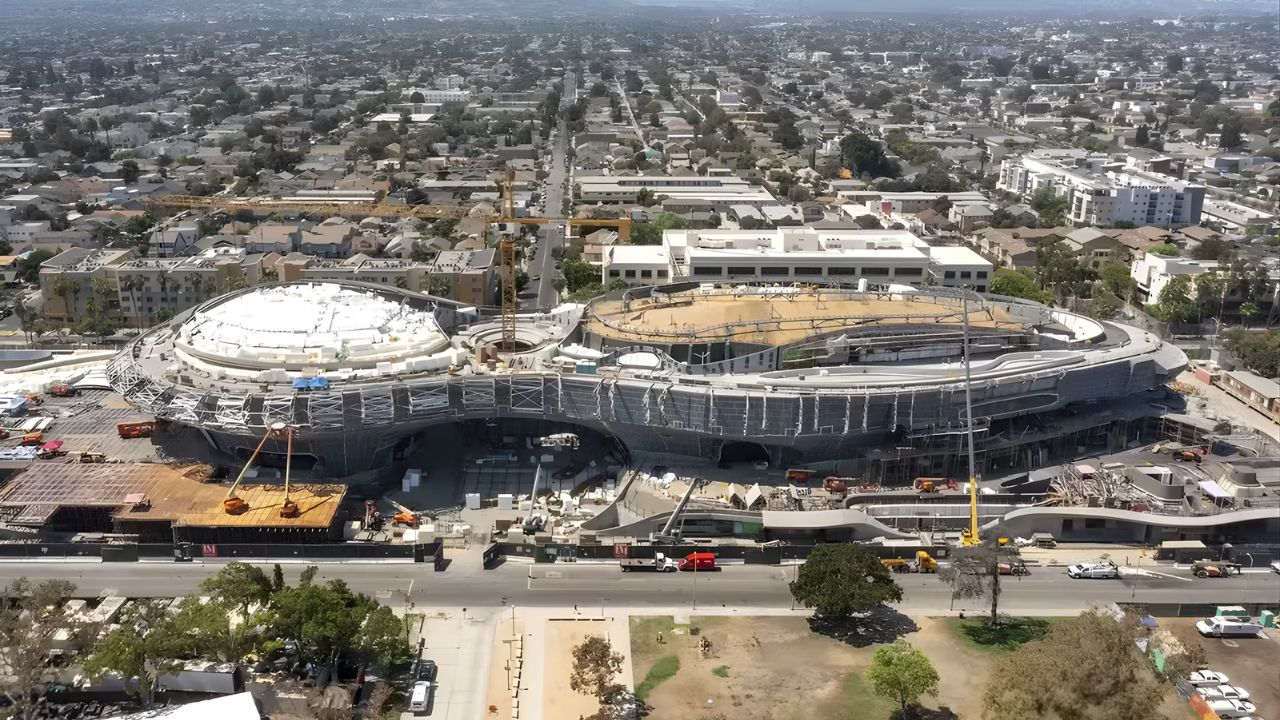
Created by George Lucas with over $1 billion, a futuristic museum in the shape of a spaceship with 1,500 curved panels is about to open in Los Angeles and will house one of the largest private collections of narrative art in the world.
-
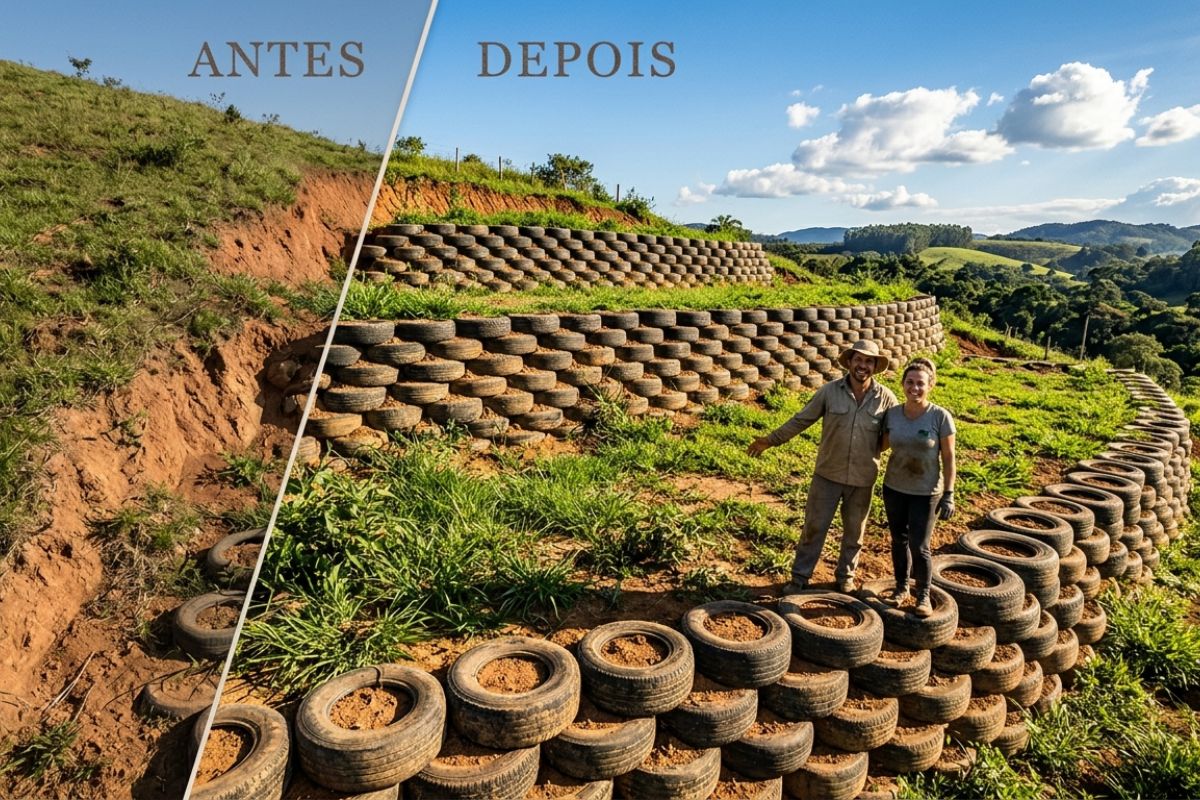
Couple shows how they built a retaining wall on their property using 400 old tires: sloped land turned into plateaus, tires are aligned, filled, and compacted with layers of soil, with grass helping in support and at almost zero cost.
-
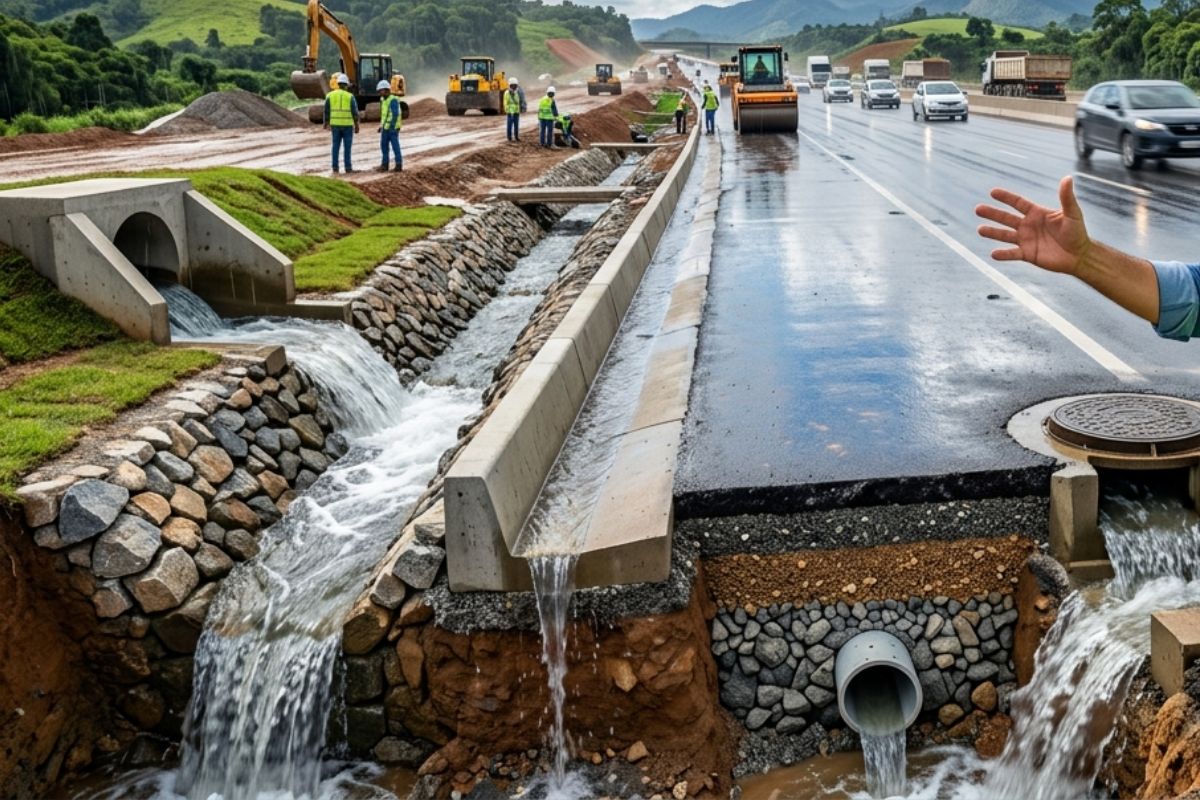
Engineer explains drainage during the rainy season: the difference between surface water and deep water, ditches, gutters, and water outlets on the road, as well as drains and drainage mattresses, to prevent erosion, aquaplaning, and flooding at the construction site today.
-
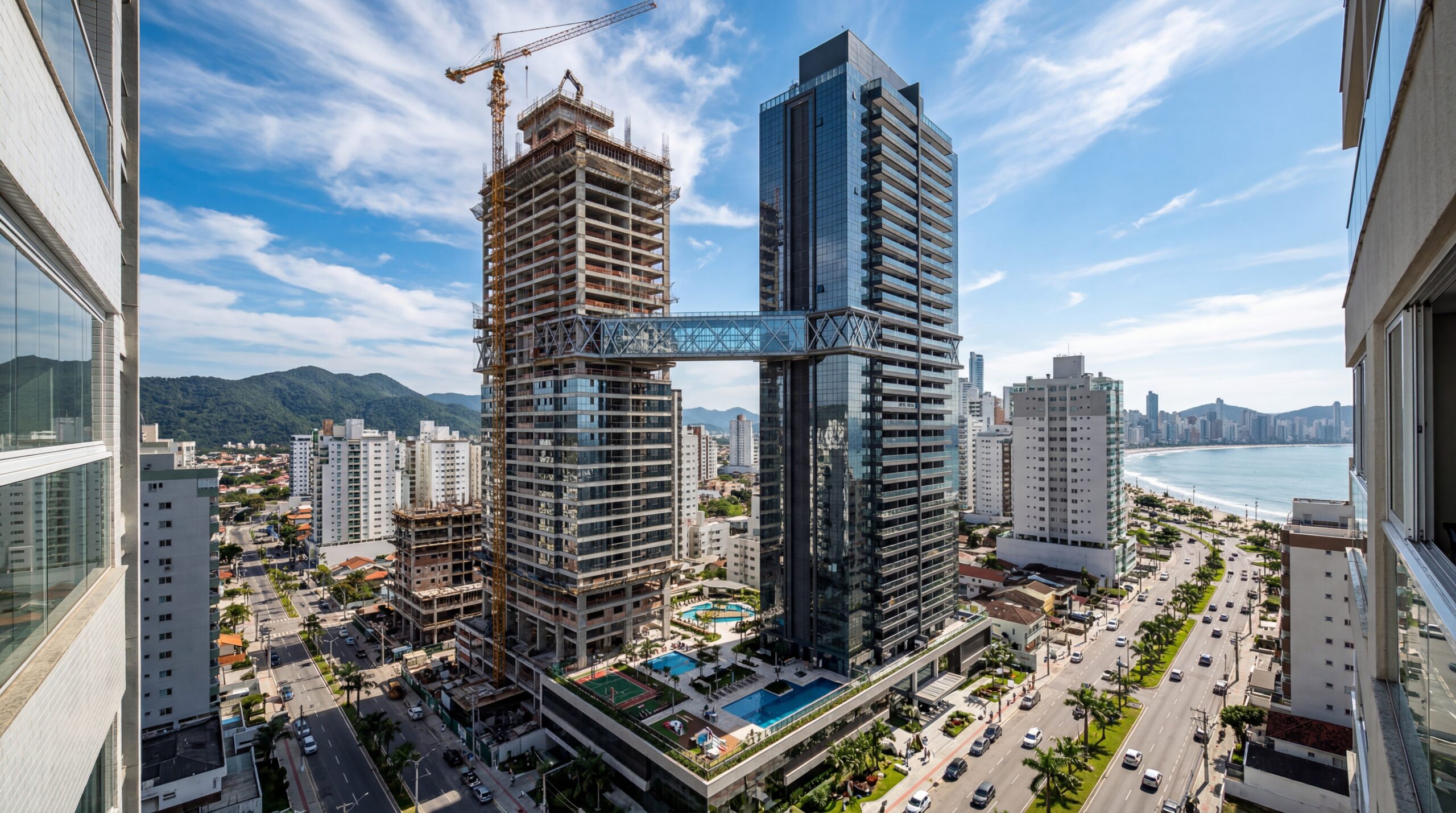
With 55 floors, 177 meters in height, a 15-meter walkway between the twin towers, ventilated facade, and 6,300 m² of leisure space, Ápice Towers already has one tower completed and another nearly at the top.

The Engineering Behind the Floating Bamboo House Built with Primitive Techniques
The heart of the project lies in the floating base. To ensure stability, the builder used bundles of bamboo tied into modules, creating a kind of “living platform” that distributes weight evenly.
Stones were used strategically as counterweights and ballast, preventing the structure from tipping or twisting with the river’s current.

Each joint was made with manual bindings, using plant fibers and traditional knots. There are no nails, screws, or welds.

This technique allows the structure to have some flexibility, which is essential in aquatic environments, where excessive rigidity often causes breakage.
The vertical pillars were anchored and tied to the floating base, creating an elevated frame that supports the roof and the sides of the house. The roof, made of bamboo and thatch, was designed to quickly drain rainwater, reducing weight and avoiding leaks.
One Year of Manual Labor: 365 Days of Step-by-Step Construction
Unlike accelerated videos that hide the real effort, this project makes clear the time involved. It took 365 days of continuous work, respecting the rhythm of nature, the river’s floods, the climate, and the availability of materials.

Each stage required prior planning. First, the collection and preparation of bamboo. Next, the assembly of the floating base. Then, the raising of the structure, the lateral closure, the roofing, and finally, the functional systems that transform the house into a livable space.
Nothing was done in haste. Each mistake cost days of rework. Each decision needed to consider not only the present but also the durability of the construction over months submerged or partially submerged.
Pool in the River: How the Water Was Integrated into the Floating Project
One of the most impressive elements is the pool integrated into the floating house. Instead of digging into the ground, the builder used the riverbed itself, creating a delineated area with bamboo structures, stones, and natural barriers.
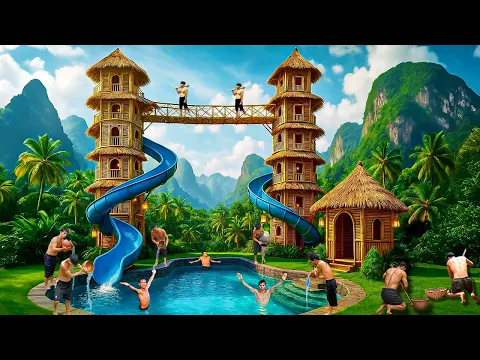

The water flow was controlled with channels made of cut bamboo, allowing for a constant influx of running water, which keeps the pool clean and oxygenated. Small waterfalls were created to assist with circulation, using only gravity’s force.
This system dispenses with any type of pump, industrial filter, or electrical energy. It is a clear example of how basic principles of hydraulics can be applied effectively even in primitive constructions.
Primitive Tools and Ancestral Skills Applied in Practice
The entire project was executed without modern tools. The main tools include rudimentary axes, handmade knives, wooden levers, woven baskets, and simple structures for transporting stones.
The use of these tools requires more than physical strength. It requires technique, precision, and a profound knowledge of natural materials. A wrong cut in the bamboo can compromise its strength. A poorly made binding can put the entire structure at risk.
Throughout the year, the builder demonstrates mastery of ancestral techniques that are now rarely seen, but that were responsible for sustaining human communities for thousands of years.
Real Sustainability: Minimal Impact and Integration with the Environment
Unlike many modern constructions that claim to be sustainable, this floating house practically generates no permanent impact on the environment. There are no concrete foundations, large-scale deforestation, or irreversible alteration of the river’s course.
The bamboo used is a fast-growing material, highly renewable, and with excellent structural resistance. The stones return to the river if the structure is dismantled. The natural fibers decompose over time, leaving no toxic residues.
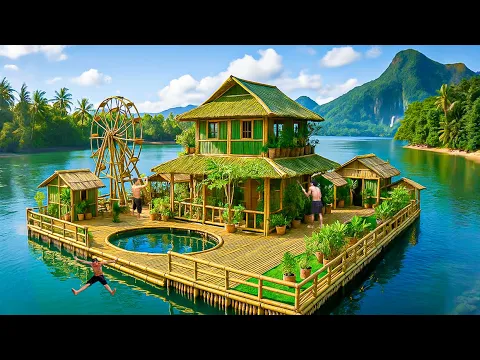
The house floats, adapts to the floods, and can be dismantled or modified as needed, respecting the natural cycle of the region.
Why This Type of Construction Attracts So Much Attention Worldwide
Projects like this spark global interest because they represent an extreme — and functional — alternative to traditional building models.
In an increasingly energy-dependent, technology-dependent, and complex industrial chain world, the idea of creating a complete livable space using only natural resources and basic human knowledge provokes curiosity and reflection.
It’s not just about housing. It’s about autonomy, resilience, and reconnecting with fundamental principles of engineering and survival.









Novamente uma capa de reportagem que não tem nada a ver com a realidade. Péssimo jornalismo.
Caganadái ou cabanobão
Como funciona o banheiro numa construção como essa?