





 Portuguese
  English
  Spanish
  5 min of reading
  0 comments


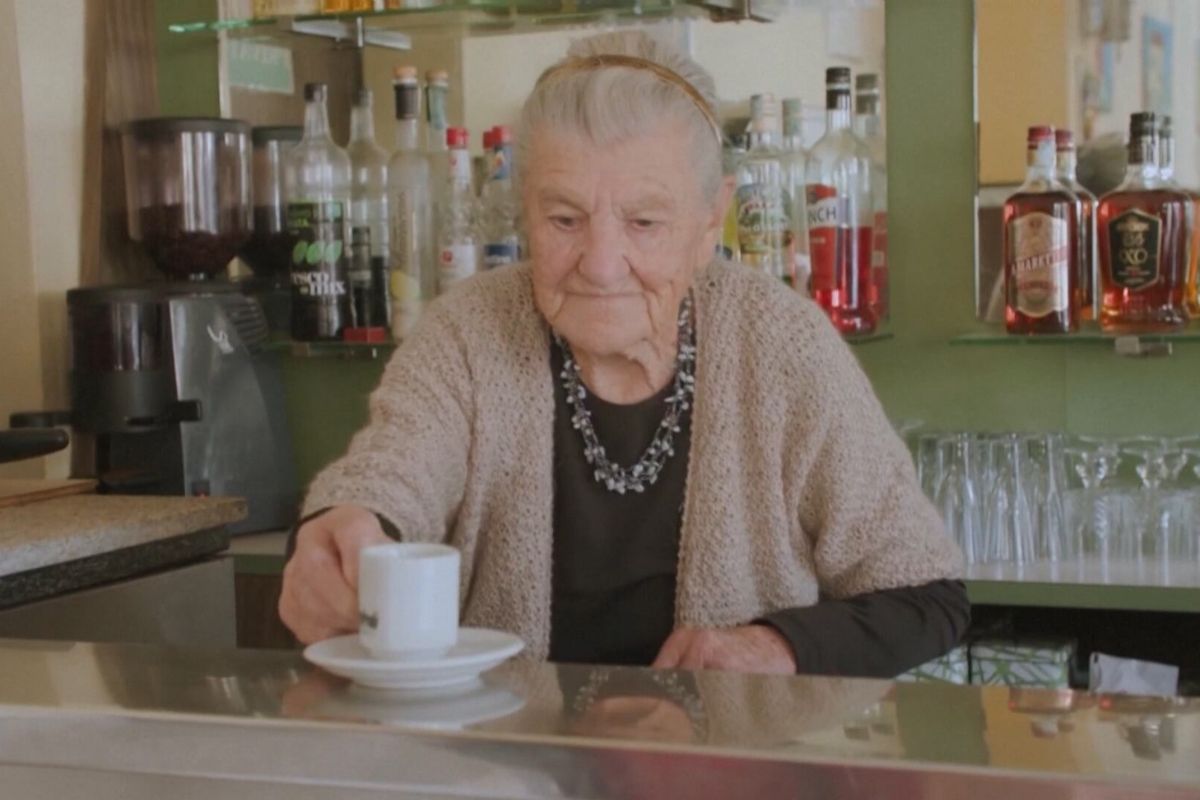
Anna, owner of Bar Centrale in Nebbiuno, in northern Italy, continues daily work at 100 years old, opens at 7 AM, closes at 7 PM, reads news, checks the stock market, and becomes a portrait of a long-lived society that remains active, exposed to the public, and connected to the rhythm of its own local market.
At 100 years, Anna Possi keeps Bar Centrale open in Nebbiuno, in northern Italy, from 7 AM to 7 PM, repeating a routine that started on May 1, 1958. The most striking fact is not just her age, but the continuity of work, sustained day after day behind the counter, without vacations and with the same discipline that made her the oldest barista in the country.
The story of Anna goes beyond local curiosity because it connects to a broader transformation of Italy. By the end of 2023, the country recorded 22,552 people over 100 years old, the highest number ever recorded, with a large female majority. In this scenario, Anna’s daily work becomes a symbol of a society that ages without leaving the stage, remaining active, visible, and in constant contact with public life.
A Routine That Spans Decades
Bar Centrale was opened by Anna and her husband in 1958, when the couple began serving espressos and cappuccinos to the customers of the small town facing Lake Maggiore.
-
Attracting around 250,000 people a year, a lighthouse 200 meters from the sea, on a 60-meter high cliff, on the North Sea coast in Denmark, becomes one of the most impressive examples of how nature can threaten historical buildings.

-
The narrowest house in the world is only 63 centimeters wide, but inside it can accommodate a bathroom, kitchen, bedroom, office, and even two staircases.

-
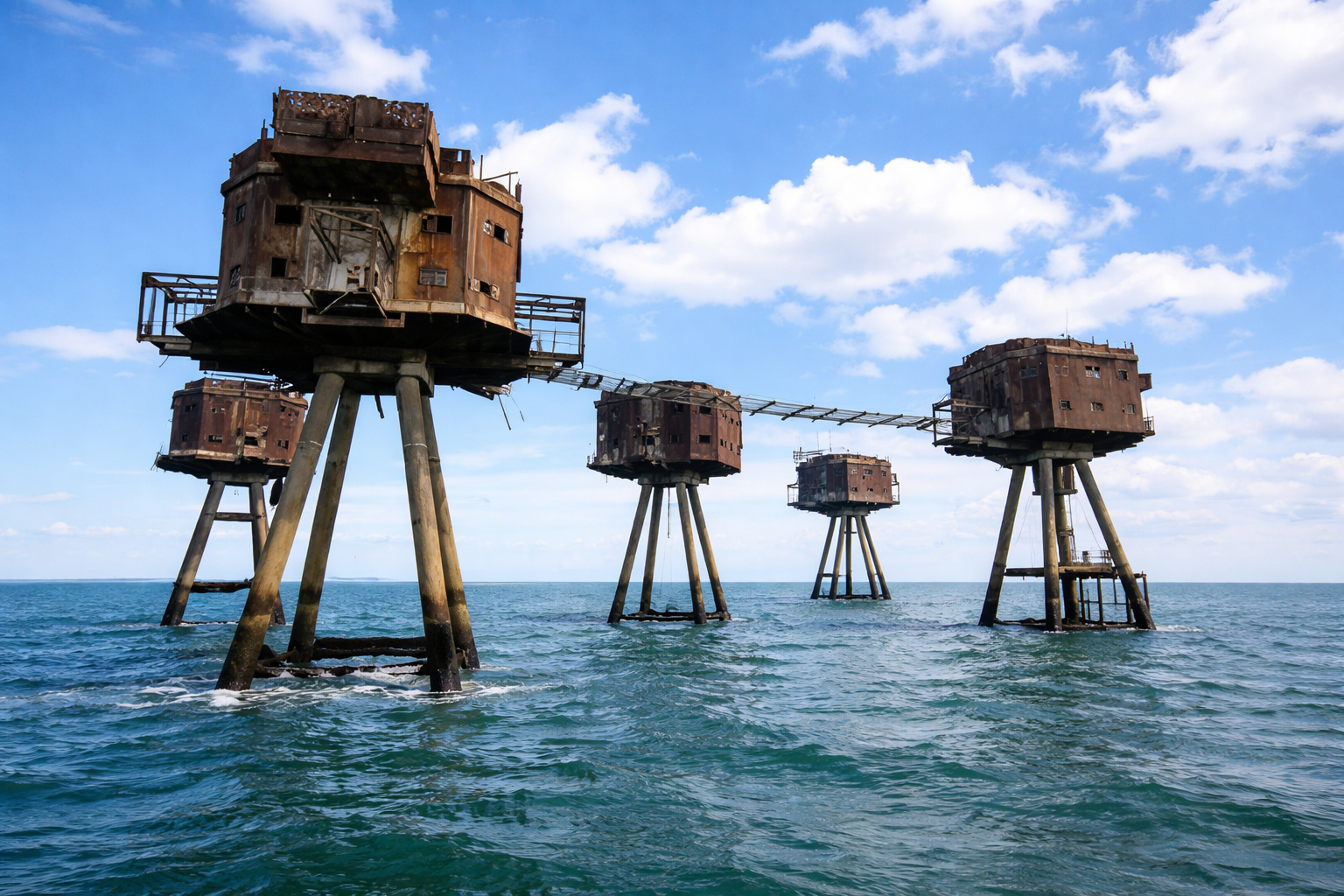
In the middle of the sea, these enormous concrete and steel structures, built by the British Navy to protect strategic maritime routes, look like they came straight out of a Star Wars movie.
-
For years, no one could cross a neighborhood in Tokyo because of the tracks, but an impressive solution changed mobility and completely transformed the local routine.


In 1971, alcoholic beverages were added to the menu with the purchase of a license, expanding the operation of the business and consolidating the bar as a local meeting point.
What started as a neighborhood shop turned into a continuous work routine that spanned more than six decades.
The stability of the routine does not mean absence of breaks. After her husband’s death in 1974, Anna focused her life on her two children and her work.
According to her daughter Cristina, she never wanted another relationship and directed all her energy to the family and the counter.
This fact helps explain why Bar Centrale stopped being just a commercial address and started functioning as the organizing axis of Anna’s own life.
From Modern Bar to Vintage Bar
In the decades of the 1960s to 1980s, a period Anna defines as the most beautiful years in the history of the business, Bar Centrale was seen as the most modern place in town.
The jukebox attracted patrons, the foosball table helped keep up the movement, and the environment brought together people who came to socialize and dance.
Among the well-known customers of that period were AC Milan players Gianni Rivera and Fulvio Collovati.
The bar grew as a space for coexistence, not just as a consumption point.
Today, the aesthetics have changed, but the social role remains.
The jukebox has disappeared, but Bar Centrale maintains a bookshelf for book exchange and reading, and on Sundays offers homemade apple pie.
With Anna still at the counter, the place has become known as a vintage bar.
The change in profile did not empty the business; it merely exchanged the image of immediate modernity for a permanence that now seems rare.
News, Market, and Curiosity at 100 Years
One of the most revealing traits of Anna‘s routine is the way she handles the present time.
Every morning, at Bar Centrale, she uses a computer to read news and check the stock market.
“I read everything,” she sums up, making it clear that longevity, in her case, is not associated with distancing from the world, but with a continuous attempt to understand what is happening around her.
At 100 years old, Anna does not appear as a figure frozen in the past, but as someone who still wants to understand the present.
Reaching 100 years, celebrated on November 16, increased public curiosity about her.
The repercussions attracted new customers from other regions, interested in meeting the centenary barista who continues her daily work.
According to Anna, many leave the place happy and revitalized after the visit. What attracts these people is not just her age, but the combination of vitality, routine, and real presence in the public space.
Anna and Italy Aging Without Withdrawing
For Anna, the key to longevity lies in living with other people. She states that she does not want to be melancholic and prefers to live among people, keeping herself surrounded by conversations, movement, and routine.
Her shop is mainly frequented by retirees from the city, many of whom just stop by to chat, even without buying anything.
This detail is central because it shows that work, for her, also serves as a form of social bond and permanence in the world.
Anna’s trajectory gains even more weight when placed alongside the demographic reality of Italy.
The growth in the number of centenarians shows an older country, and the story of Bar Centrale helps translate this into human scale.
It is not just about living longer, but about how one lives longer.
In Anna’s case, aging has not meant withdrawal, but rather continuity of work, reading, contact with customers, and daily exposure to ordinary life.
The Country Sees Anna as an Exception, but Also as a Signal
The honorary title of Commander of the Republic awarded to Anna reinforces that her story has already transcended the limits of Nebbiuno.
She has been transformed into a public figure precisely because she condenses several layers of present-day Italy: female longevity, continuous work, neighborhood commerce, and an idea of dignity linked to active permanence.
By opening Bar Centrale at 7 AM and closing at 7 PM, Anna ceases to be just a curious character and becomes a social synthesis.
At the same time, the image is not simple. It can be read as inspiration but also as a demanding portrait of a country that ages “on its feet,” without completely breaking from work and without disappearing from collective daily life.
That is what makes the story so powerful: it does not fit solely in the realm of admiration, for it also raises a question about the weight, meaning, and necessity of continuing to be active at an age that many associate only with rest.
Anna transformed 100 years into routine, not a pause. At Bar Centrale, in Italy, her daily presence organizes coffee, conversation, news reading, market monitoring, and a very particular way of facing time.
The case is striking because it shows longevity in motion, without isolation and without complete withdrawal from social life.
At the same time, the weight of this image goes beyond a singular biography. Anna represents both the strength of those who chose to continue and the portrait of a country where aging does not necessarily mean stopping.
In her view, is the story of Anna primarily an example of vitality or a harsh signal of a society that continues to demand work even at 100 years?





Seja o primeiro a reagir!