





 Portuguese
  English
  Spanish
  6 min of reading
  0 comments


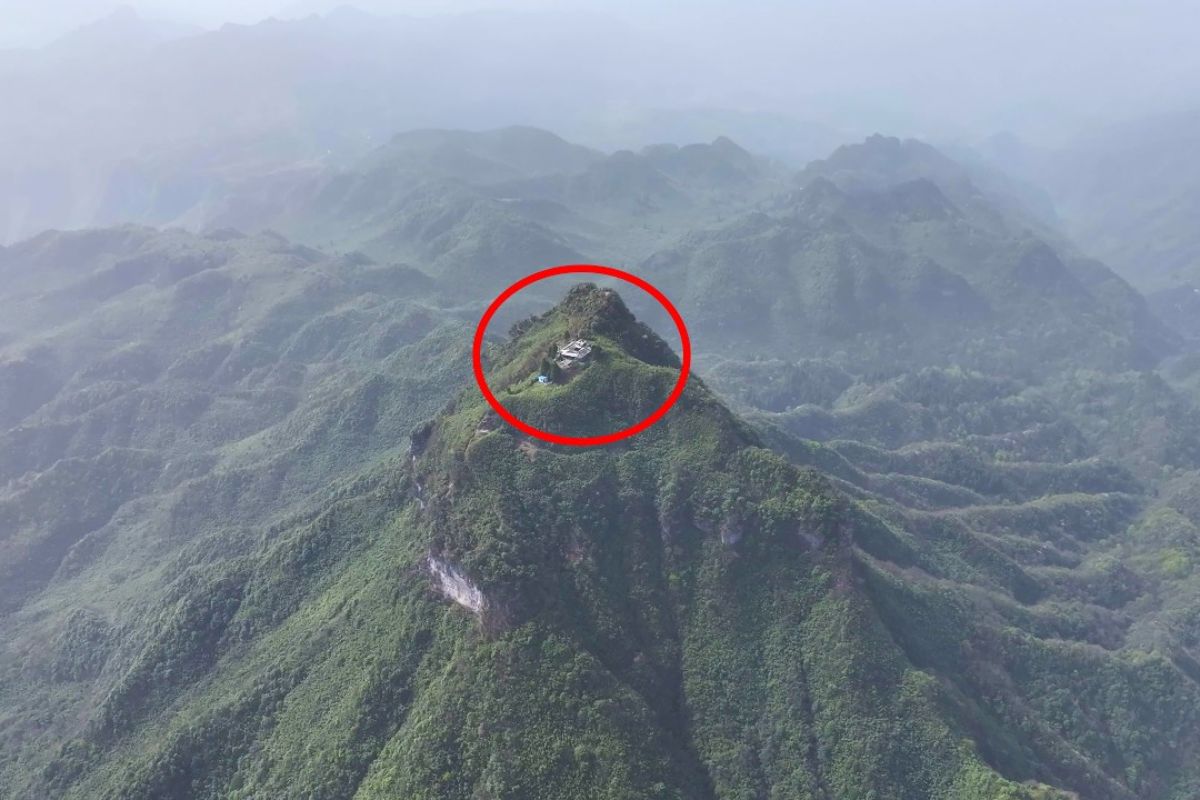
In Guizhou, an Elderly Man Transforms a 1,900-Meter Mountain Into a Permanent Home, Living Alone for Almost Three Decades in a Stone Temple, With No Road, No Neighbors, Difficult Access, Simple Routine, Few Possessions, A Lot of Faith, Family Memories, and the Horizon as Daily Companionship Every Morning and Night.
Living alone at the top of a 1,900-meter-high mountain, surrounded by pristine forest, mist, and silence, is not a legendary setting; it is the real life of an 89-year-old man who decided to stay up there nearly 30 years ago. Far from the city, away from the horns, and distant from any common routine, he has transformed an old, forgotten temple into a home, shelter, and personal universe.
While many dream of moving from the city to a countryside home, he went even further. He climbed the mountain, entered the dense forest, crossed steep trails and endless bamboo groves, and never came down again. The mountain became a border, temple, and mirror, where time passes slowly, and the world seems to exist only down there, distant.
The Mountain That Hides a Temple and a Solitary Resident

From above, the mountain seems to hide what exists at the top. From the drone, what is seen are layers of undulating mountains and a forest so dense that it erases any sign of a path.
-
Iceberg A23a, one of the largest in the world, is undergoing accelerated collapse and may disappear: what explains the end of the ice giant?

-
The simplest swap at home can reduce energy consumption by up to 90% without changing habits, using a technology that lasts up to 25 times longer and consumes only a fraction of the electricity.

-
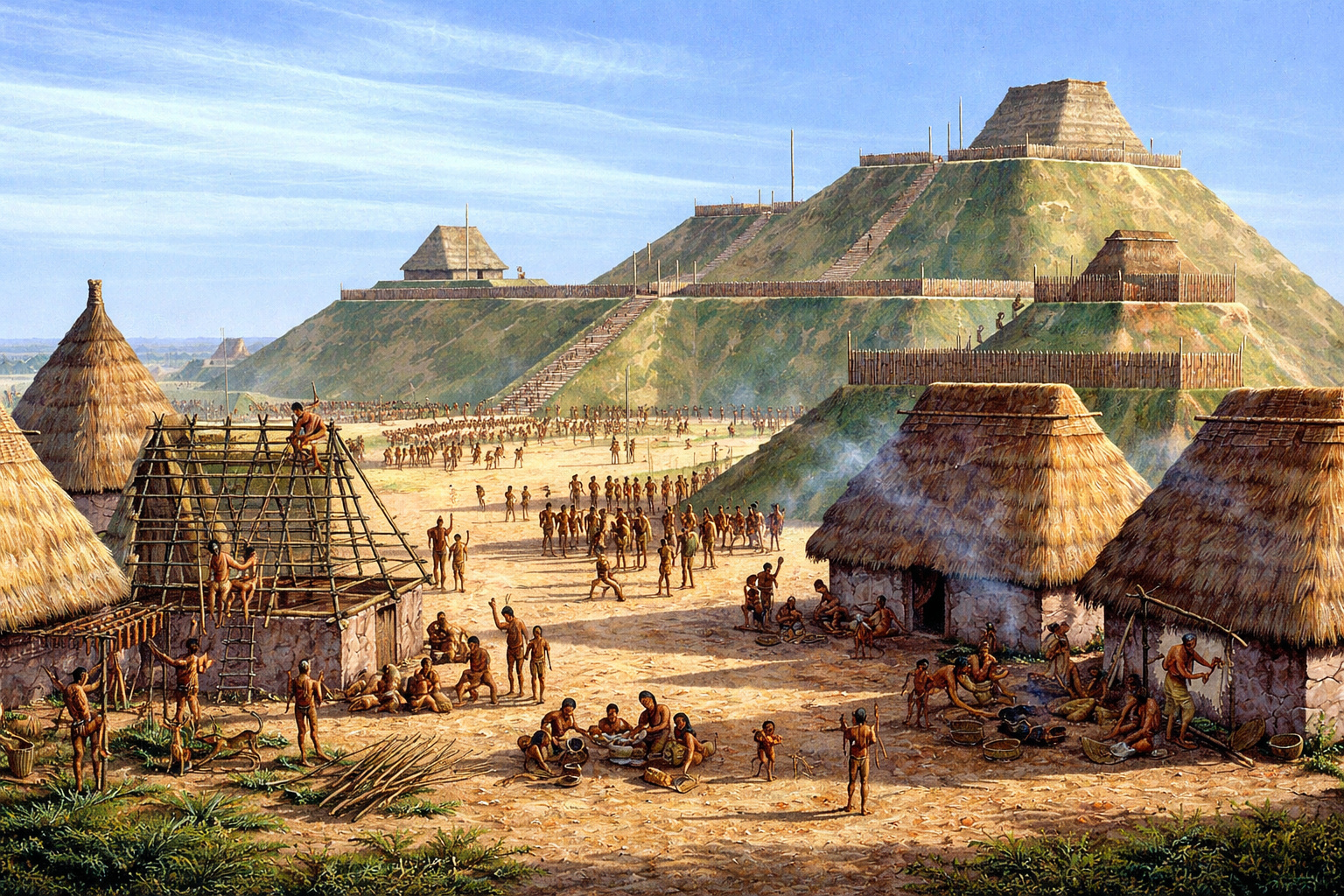
With over 14 million baskets of earth moved, an ancient North American metropolis built a monumental pyramid of 30 meters and established a city with 20,000 inhabitants nearly a thousand years ago.
-
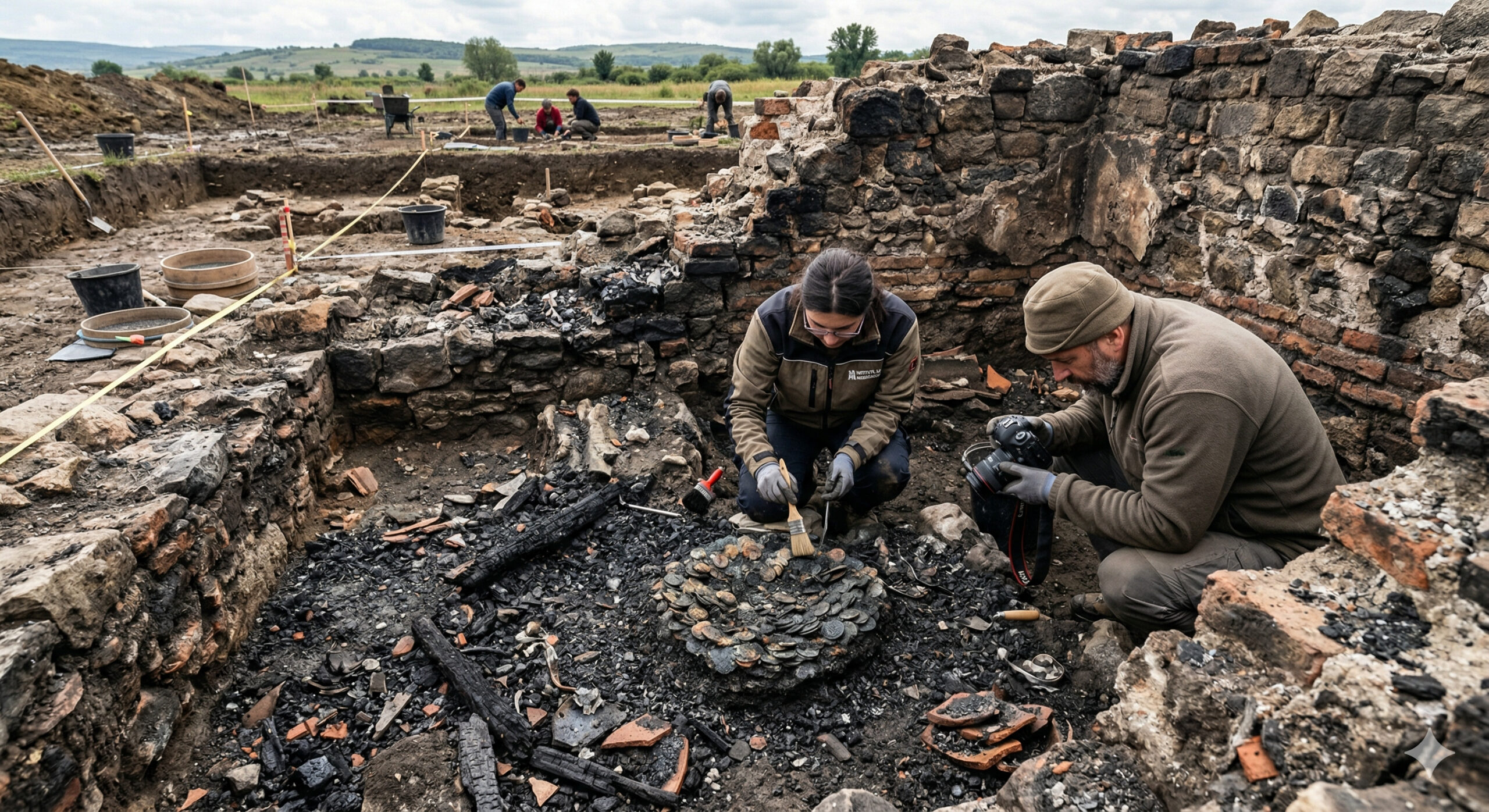
A 1,900-year-old treasure emerges from a Roman house destroyed by fire and sealed since antiquity in Romania, with coins and metals fused among the ashes.

In the midst of this scenery, a house and an ancient temple appear as a small, lost dot on high.
The region is isolated, with dense virgin forest, branches, and leaves overlapping as if they form a natural net to block passage.
There is no road, no sign, no easy access. The resident himself, almost 90 years old, lives there as if the rest of the world had remained in another era.
Steep Trail, Closed Bamboo Grove, and Three Hours to the Top

To reach the top of the mountain, one must start on a discreet trail indicated by local residents. No tourist stairway or signposted viewpoint.
The path crosses a bamboo forest, with wet ground, slippery sections, and a constant feeling of being in a green labyrinth.

Almost three hours of continuous climbing, with steep drops next to the trail, streams crossing the way, and sections where only bamboo can be seen on all sides.
On foggy days, visibility drops and the mountain seems even more closed in.

In the middle of the path, the feeling is of entering a forgotten mountain, where time is in no hurry.
There is no cell signal, no car noise, just wind, running water, and the sound of leaves. It’s the kind of path that deters the curious due to exhaustion, fear, or simply respect for the effort.
The Ancient Stone Temple at the Top of the Mountain

After hours of climbing, the trail opens up and the temple appears. A set of stone buildings, with an internal courtyard, walls marked by the rust of time, and columns carved with figures of animals and mythical beings.
In the center of the courtyard, a large pool collects rainwater that falls from the roof, draining through discreet ditches.

Everything there breathes antiquity. Stone walls with stains, cracks, and almost faded inscriptions, pillars built with jointing techniques and no modern concrete, and details that hark back to ancient historical periods.
The resident says the place is the Sanjie Temple, on Sanjie Mountain, linked to stories that cross dynasties and legends.

Inside, there is a main hall with statues of deities, where he asks for respect and prefers there to be no pictures taken.

A steep staircase leads to a second level, from where one can see the courtyard from above, the complete structure of the temple, and in the background, the outline of the mountain spreading in layers until it fades from view.
The Minimal Routine of Someone Who Chose to Stay

The man introduces himself as Grandpa Jia. He says he climbed the mountain around 64 or 65 years old and has lived in the temple since then.
This means almost three decades living alone at the top of the mountain, with no neighbors and no urban life.
The routine is simple and straightforward. He descends the mountain on average every two weeks to buy the basics. Each descent is an operation, and each ascent back is a test of endurance, often carrying food and supplies on his back for three or four hours of steep mountain climbing.

In the kitchen, the scene is one of extreme minimalism. A simple stove, a cabinet with bowls, some utensils, and a board with a piece of cabbage.
He laughs and says that sometimes he cooks a bowl of rice a day and cannot finish it, throwing the rest to the birds. For him, food has ceased to be a pleasure and has turned into mere sustenance.
He does not use a cell phone, does not spend the day on screens, has no digital distractions. His life boils down to the temple, small daily tasks, the garden he tries to maintain up there, and the constant gaze at the mountain and sky, which change a little each day but are always present.
Legend, Spirituality, and the “King of the Mountain”
Grandpa Jia speaks of the mountain as if it were a living being, almost a deity. He mentions that the temple would have origins linked to the Han Dynasty and that its current shape has existed for centuries, although many inscriptions can no longer be read.
For him, it is a kind of spiritual school, a place of practice and discipline.
Residents of the region treat him as an almost mystical figure, somewhere between guardian of the temple and “Bodhisattva King of the Mountain.” He laughs at this but also admits that he made a radical choice.
Instead of aging surrounded by family in the city, he preferred to stay atop the mountain, at peace with his own decision.
His family tried to bring him back. Relatives invited him to live in Guiyang or return to his hometown of Anchang, offering a house, care, and companionship.
He declined. He says he does not want to be a burden to anyone, that up there is his place, and that descending would mean abandoning the life he chose to build.
The View of Three Regions and a Balcony to the World

Behind the temple, there is a kind of natural platform, a stone lookout. From there, he explains that Sanjie Mountain marks the meeting of three regions: Nanchuan, in Chongqing, and Tongzi and Zheng’an, in Guizhou. It’s as if the mountain were a stitch connecting three different worlds.
From the lookout, the landscape is almost unreal. Layered mountains, deep valleys, dense forests, and a mist that, in the late afternoon, slowly rises, engulfing everything.
On clearer days, it is possible to see very far. On closed-in days, the feeling is of floating in a sea of clouds.
For someone who has lived there for decades, this view is not a stroll but a routine. The mountain is a window, a clock, and a calendar, marking the passage of the seasons by the way the mist forms, the sound of the wind, and the shine of light hitting the stones.

What remains is the image of an 89-year-old man who chose to live almost 30 years alone, in an ancient temple atop a remote mountain, with little material comfort, no luxury, and a peace that few would choose to seek at this level.
Between the city and the mountain, he chose the mountain without looking back.
Thinking about the life of this elder, do you see yourself climbing a mountain like this to live in silence and isolation, or do you believe you could never give up the life down below, full of people, noise, and movement?





-

-

-

5 pessoas reagiram a isso.