





 Portuguese
  English
  Spanish
  6 min of reading
  5 comments


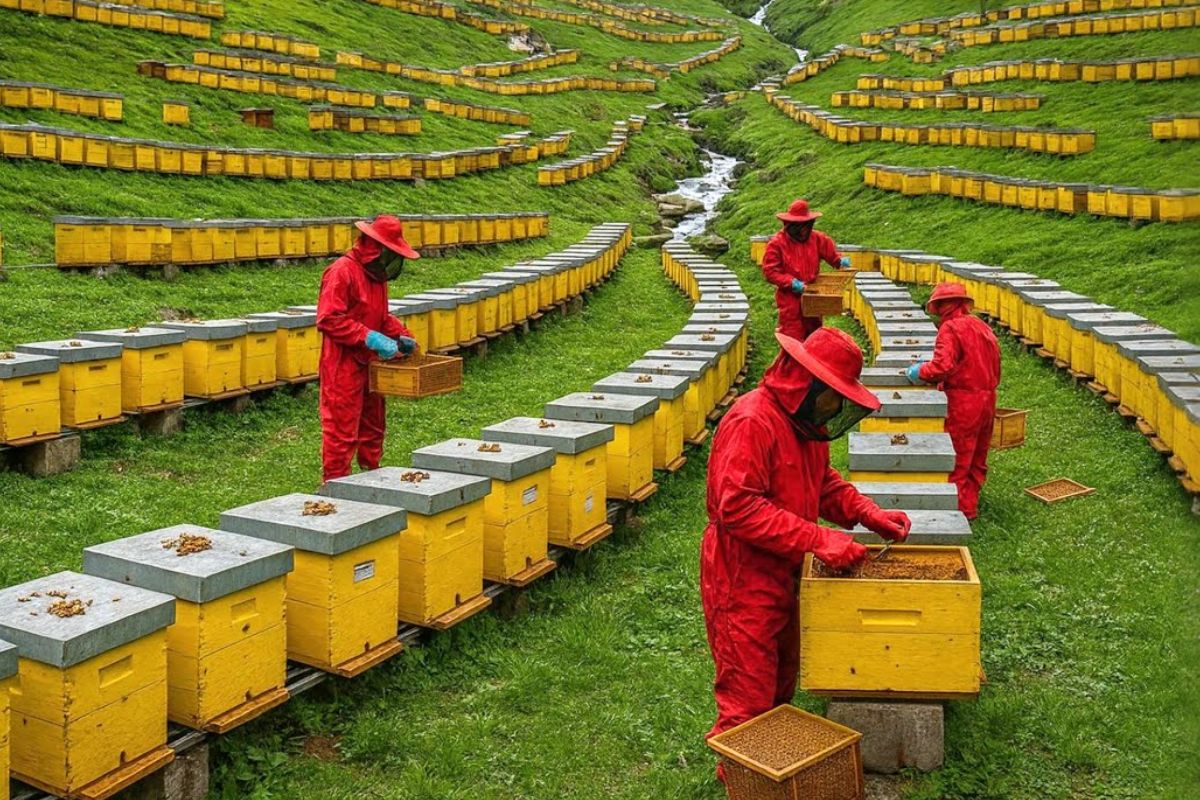


When The Nectar Is Sealed For 6 To 8 Weeks, Beekeepers Enter The Hives With Smoke, Remove The Frames, And Take Everything To The Factory. There, The Honey Goes Through Gentle Heating At 37 To 40°C, Uncapping, Centrifugation, Filtration, And Continuous Filling With Quality Control At 6,000 Per Hour.
When the nectar appears sealed and the period of 6 to 8 weeks is complete, the beekeeper’s work changes phases. The collection stops being a wait in the field and becomes a process of decision and execution: enter the hive with smoke, remove frames at the right time, and lead everything into a factory routine, where each step needs to happen in a strict order.
The plan is to transform what was stored in the hive into a final product at scale, but without aggressive shortcuts. In the factory, the honey is heated in a controlled manner to 37 to 40°C, goes through uncapping, is centrifuged, filtered, and continues to filling, with a capacity of 6,000 per hour and a repeated commitment throughout the process: avoid high temperatures and maintain quality control.
The Turning Point In The Hive: Sealed Nectar After 6 To 8 Weeks
The trigger for harvesting is not haste, but a signal. The process begins when the nectar is sealed and 6 to 8 weeks have passed.
-
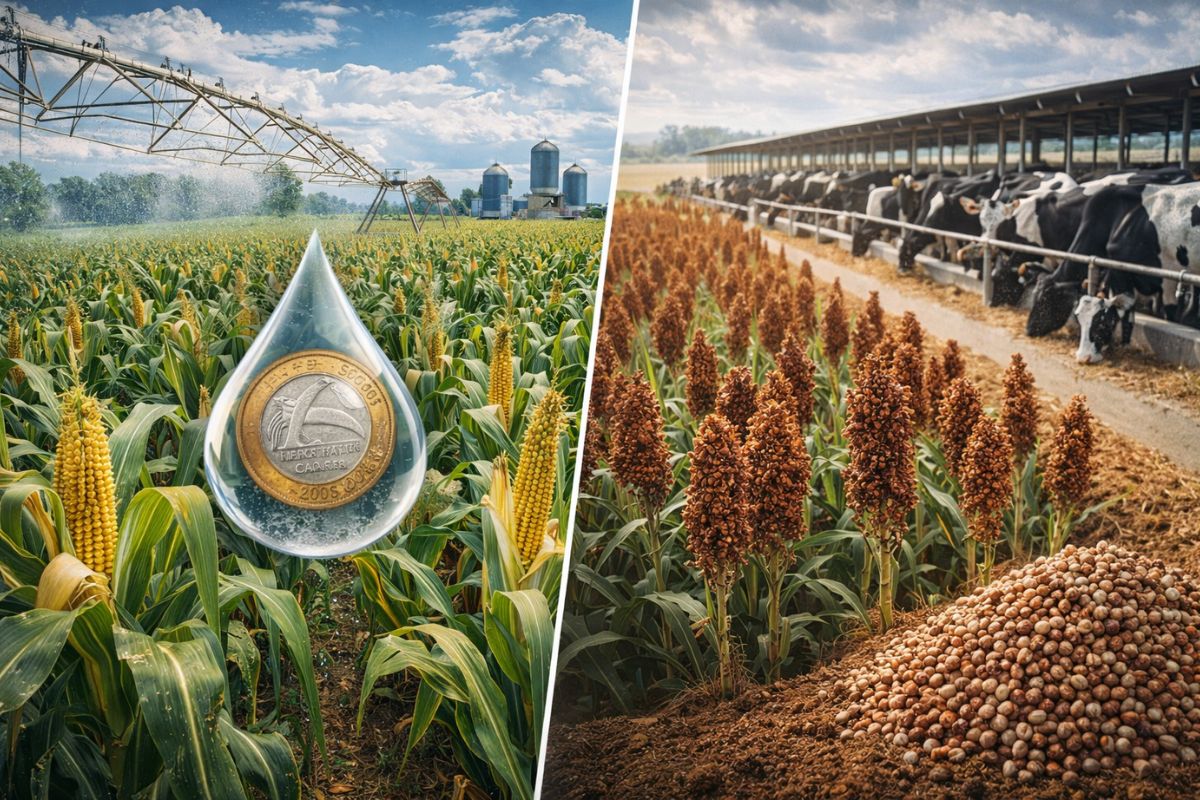
While corn requires rain and is expensive, sorghum produces almost the same volume per hectare at a cost up to 80% lower and uses less water, and it is revolutionizing dairy farming in the Triângulo Mineiro, where producers save hundreds of reais per hectare.
-
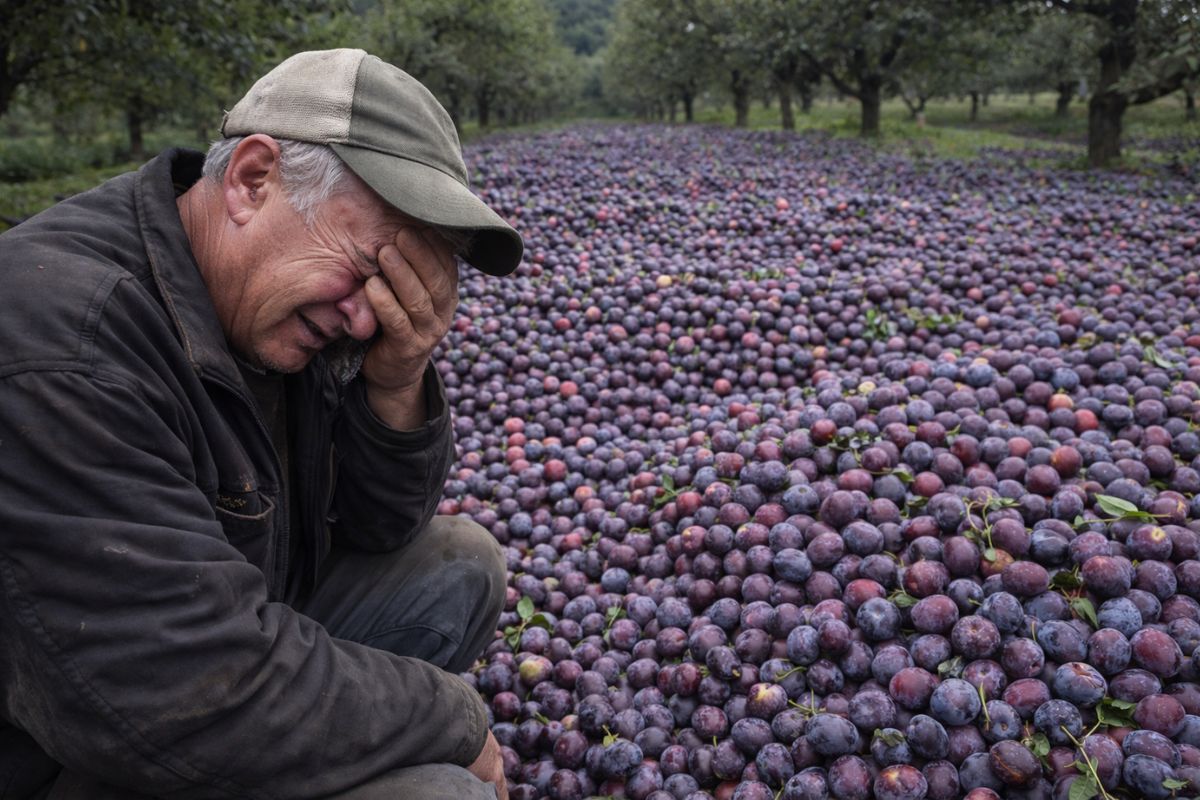
A rural producer from Urubici cries as he shows 50 tons of plums thrown on the ground because no one wanted to buy them, and in desperation, he records a video asking anyone to come to the property to pick the fruits before they rot.
-
Unable to pass through Hormuz, Brazil activated a plan B that uses Turkey as a gateway to the Middle East: the route through Gibraltar and the Mediterranean is longer and more expensive but ensures that chicken, beef, and corn continue to reach Arab markets.

-
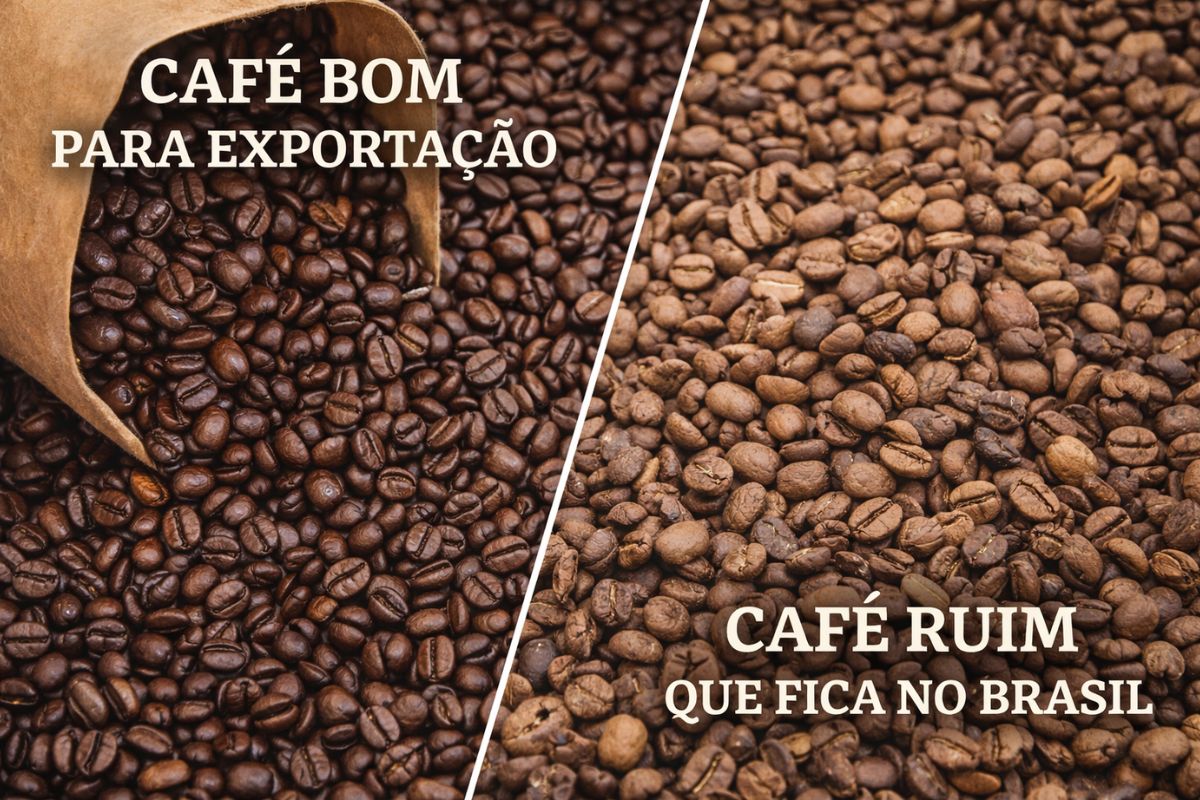
You grew up hearing that the good coffee from Brazil goes all abroad and the bad coffee stays for Brazilians, but this story has completely changed, and the numbers show that in the 1980s, thirty percent of the coffee sold here was adulterated with corn and barley.

This time marking serves as the operational criterion that defines “now yes”: the frames are ready to leave the hive and head to the factory.
Here, the important detail is the chain: sealed nectar is not treated as “any raw material.”
It is treated as a substance that must maintain the integrity of the path to the next stage. From this point on, every action aims to reduce losses and limit improvisation.
Smoke As An Access Tool: Entering Without Disorganizing The Hive
The description is straightforward: beekeepers “invade” hives with smoke. In practice, this means using a classic resource to make the handling possible without turning the opening of the hive into a scene of confusion.
The role of smoke, within its material, is functional: calming the hive so that the frames can be removed. Without this step, the removal loses flow, and the operation stops being a “process” to become a “trial.”
And when the goal is to take sealed nectar to a factory and run a continuous line, harvesting needs to be predictable.
Frame Removal: What Leaves The Hive Must Arrive Intact At The Factory
This is where the word “frames” becomes central.
It is not the honey alone that goes to the factory; it is the frames.
This preserves the flow of processing, as uncapping and centrifugation depend on the format of the material that arrives.
The First Industrial Stage: Heat To 37 To 40°C Without High Temperatures
Upon arriving at the factory, the step that paves the way for the others is controlled heating.
The plan is to heat to 37 to 40°C, clarifying that the intention is not to “cook” or accelerate by brute force, but rather to prepare the material for the next phases.
This point is crucial for the quality narrative: the temperature is specified, the range is narrow, and insists on the principle of no high temperatures.
In other words, heating is presented as a technical step with an explicit limit, not as a rush resource.
Uncapping: Open The Sealed Nectar To Release The Flow Of The Process
After controlled heating, comes uncapping.
This is a simple step to understand and critical for the remainder: the nectar that was sealed needs to be uncapped so that the content can exit the comb and be extracted.
The industrial logic here is sequence. Without uncapping, there is no efficient centrifugation. And without efficient centrifugation, there is no line of 6,000 per hour with consistency.
That is why uncapping is not a detail; it is the “door” of the process.
Centrifugation: Transforming Frames Into Volume Without Thermal Shortcuts
With the sealed nectar already uncapped, centrifugation enters as the extraction step. The plan includes centrifugation because that’s how the content exits the frames and becomes a continuous flow of processing.
The point of attention, again, is coherence with what you sent: the process is presented as mechanical and organized, not thermal.
The extraction is done by centrifugation, not by high heating. This reinforces the commitment to avoid high temperatures along the way.
Filtration: Standardization Before Filling
After centrifugation, the honey goes through filtration. The function here, within the chaining itself, is to prepare the product for bottling, removing what needs to be removed so that filling can occur continuously.
Filtering is also a step that relates directly to “quality control,” because it creates a clear point in the flow where the product undergoes a step of “adjustment” before becoming a final unit in the jar.
Bottling 6,000 Per Hour: Scale With Factory Rhythm
The ambition of the process: bottling 6,000 per hour. This datum is not decoration; it changes the way of operating.
To achieve this rhythm, the factory needs a sequence without long interruptions, with the nectar already converted into honey flowing through the expected stages.
Here, it’s worth noting what the plan itself suggests: the scale depends less on a “great secret” and more on a consistent chaining.
Heating within the right interval, uncapping without bottlenecks, centrifuging with continuity, filtering without stalling, and bottling at the promised rhythm.
Quality Control: What “Closes The Deal” Of The Process
Your material concludes with a requirement that acts as an umbrella: quality control. This appears as a condition of credibility of the method, especially since production is at volume and with a declared care not to use high temperatures.
Quality control here is presented as part of the plan, not as a marketing detail.
It enters to ensure that the process does not just become a fast line, but a fast line with standard, with verification, and with predictability of results.
Why The Nectar Is The Center Of The Story, From Start To Finish


The strongest point of the theme is that everything revolves around the nectar, and not just the final jar. The nectar starts in the hive, is sealed for 6 to 8 weeks, is removed with smoke, arrives at the factory in the form of frames, and passes through stages where the goal is to extract without thermal excess, keeping the process under control.
In the end, the story is not just “how to bottle honey.” It is how to transform sealed nectar into a final product at an industrial scale, maintaining a predictable technical path: heat to 37 to 40°C, uncapping, centrifuging, filtering, bottling 6,000 per hour, and sustaining everything with quality control.
Where The Process Can Fail And Why Each Step Exists
When the plan is described as a sequence, it becomes clear that the risk is not in an isolated step, but in any “break in rhythm.”
If the removal of frames is not organized, the factory receives material in waves. If the heating is not within the range, uncapping and centrifugation can become a bottleneck. If filtration stalls, filling loses cadence. If quality control doesn’t keep up, speed becomes a risk.
Do you trust more in honey made from nectar sealed for 6 to 8 weeks and processed at 37 to 40°C, or do you think that the scale of 6,000 per hour always compromises quality?









Did AI WRITE THID LOng WINDED Bullshit STORY? OMG could have told this entire prices in 100 words! Just wasted 6 minutes of my life I’ll never get back! Maybe you should actually interview a Beekeeper!
Tudo muito interessante mas onde é isso. Haja flor para tanta abelha. Parece fake news.
Este é um exemplo de como não se deve fazer uma reportagem sem conhecimento mínimo do assunto, os termos usados na reportagem não tem muito sentido, estão sendo usados de forma errada fora de contexto. O texto deveria ter sido passado para apicultores experientes lerem e corrigir os termos usados antes de publicar.