





 English
  Francês
  Alemão
  Italiano
  Japonês
  Norueguês
  Portuguese
  Spanish
 3 min of reading


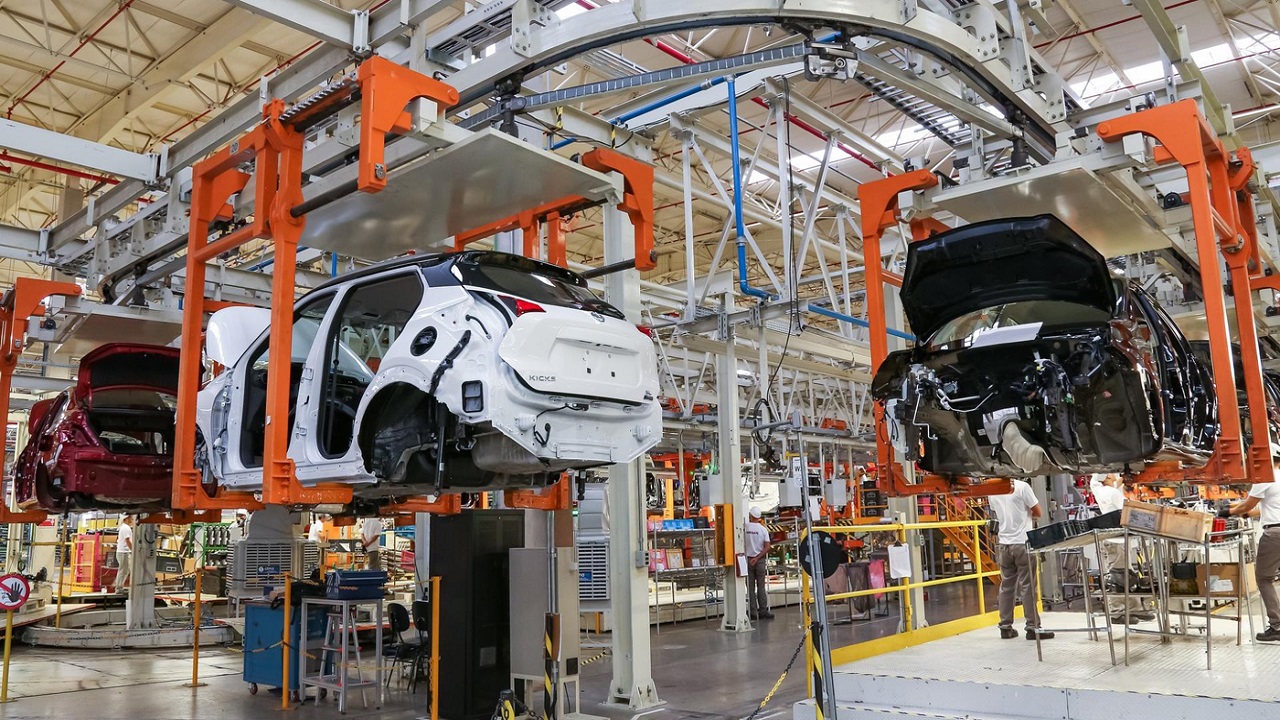
Nissan Had Previously Halted Activities at Its Factory in Resende (RJ) Due to the Pandemic, but Now the Reason Will Be the Semiconductor Crisis Affecting Automakers; Just Like General Motors Has Suspended Its Contracts, Nissan Plans to Stop Activities for Approximately 2,000 Workers, Including Contractors and Employees.
Two days after General Motors announced the suspension of work and the shutdown of its factory in SP, Nissan announced that it would also halt operations at its vehicle factory in Brazil for five days in June due to the lack of semiconductors. Nissan’s factory, located in Resende, Rio de Janeiro, has about 2,000 workers, including contractors and employees, and is currently operating with only one shift in vehicle production.
Read Also
According to Airton Cousseau, the new president of Nissan Mercosur, the halt in vehicle production at the factory will not be on consecutive days, meaning it could be on alternate days.
Nissan, General Motors, VW, Renault, and Many Other Multinationals in the Automotive Sector Are Halting Their Activities
Nissan had informed in March that it would implement collective vacations for its workers at the Resende factory from March 26 to April 9. However, the reason for halting vehicle production in March was the worsening of the pandemic.
-
Engineers propose a fourth traffic light for intersections – the change promises to affect crossings, queues, and waiting times.

-
Chevrolet Suburban Z71 lands in Brazil with a V8 engine, off-road design, air suspension, seven seats, and colossal size, a rare version imported for around R$ 1.3 million with luxury and exclusivity.
-
The Chevrolet Onix 1.0 turbo achieves 17.7 km per liter on the highway and ranks among the three most economical cars in Brazil in 2026, alongside two more expensive Toyota hybrids available at dealerships.

-
Little sister of the Hilux: Toyota launches Land Cruiser FJ with 4 radical versions, 2.7 engine with 166 hp and 4×4 traction with locking.

At the time, the company stated in a note that it was seeking to ensure the safety of its workers, help combat the impact of the pandemic, maintain business continuity, and adapt the company to the current landscape, filled with challenges for vehicle manufacturers.
Volkswagen, Ford, Chevrolet, Fiat, Yamaha, and Multinational General Motors Suspend Production
Volkswagen had also announced in March the suspension of vehicle production at its factories in São Bernardo do Campo (SP), Taubaté (SP), São Carlos (SP), and São José dos Pinhais (PR).
Mercedes-Benz also suspended operations at its factories in Juiz de Fora (MG) and São Bernardo do Campo (SP). The decisions by VW and Mercedes were made after negotiations with the Metalworkers’ Union of ABC, which was pressuring the companies in the region at the time.
Following Ford’s exit from Brazil, the global supply crisis and the pandemic led numerous automakers, such as Chevrolet, Honda, Audi (Volkswagen), Scania, Volvo, Mercedes-Benz, Renault, Nissan, Fiat, and Yamaha, to suspend vehicle production. Now chaos has also reached General Motors and the automotive industry in the country may collapse.
On 05/25, multinational General Motors (GM) informed its employees that it would completely halt vehicle production at its factory in ABC Paulista (SP). According to the automaker, the interruption will be due to a lack of parts and the need to adjust the assembly lines for the production of a new pickup.
The Semiconductor Crisis
The semiconductor crisis has affected not only Nissan but the entire automotive industry, and it is expected to persist until the end of this year. Even Tesla Could Not Escape the Semiconductor Crisis and had to postpone the delivery of some of its electric cars, Model S and Model X.
The semiconductor manufacturers have been trying to ramp up production and change their manufacturing processes; however, despite all efforts, the crisis is hitting hard and expectations are that a solution to the problem will only come next year.
This crisis is occurring for several reasons, including the trade war between China and the United States, as well as miscalculations that led manufacturers to stockpile production at the onset of the pandemic.








Seja o primeiro a reagir!