





 Portuguese
  English
  Spanish
  4 min of reading
  0 comments


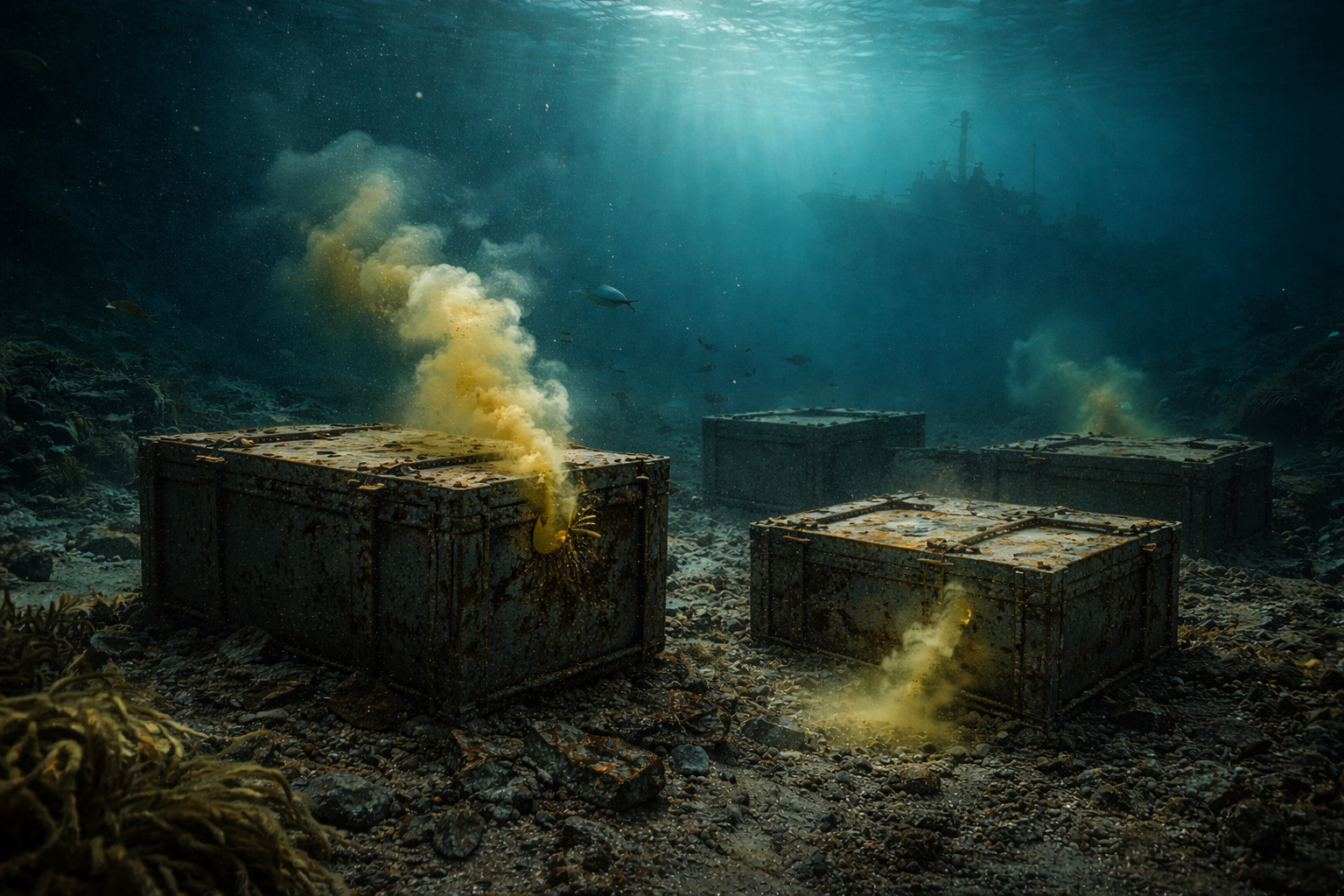
More Than 1.6 Million Tons Of Chemical Munitions Were Sunk In The Baltic Sea After World War II; Containers Are Corroding And Leaks Are Already Worrying Scientists.
When World War II ended, Nazi Germany had left behind one of the largest arsenals of chemical weapons ever produced. Bombs, artillery shells, mines, and barrels filled with agents such as mustard gas and lewisite needed to be eliminated quickly. The solution found by the Allies was not safe neutralization or controlled storage on land, but something much simpler — and today seen as a historical mistake: to sink everything in the sea.
Between the end of the 1940s and the early 1950s, more than 1.6 million tons of chemical munitions were deliberately dumped in the Baltic Sea, according to surveys by HELCOM (Baltic Marine Environment Protection Commission) and the German Federal Environment Agency (UBA). This is the largest recorded underwater chemical disposal in European waters.
What Type Of Chemical Weapons Were Dumped In The Baltic Sea
The majority of the dumped material consisted of captured German chemical weapons, mainly:
-
Archaeologists found in the desert an oasis 5,000 years old surrounded by giant walls, in a discovery that reveals a civilization much more complex, powerful, and organized than previously thought.

-
Giving your CPF at the supermarket has become routine, but in 2026 the rule will change: see how your data is used and when it is worth informing.

-
China has launched mysterious invasion barges into the sea with giant ramps that connect like Lego pieces and can form floating bridges of nearly 1 km to transport armored vehicles directly to the beach, in a kind of secret weapon for Taiwan.
-
Neither green in the fridge nor overripe forgotten in the fruit bowl: this is the correct way to store bananas.
- Mustard gas, a blistering agent that causes severe burns to the skin, eyes, and lungs
- Lewisite, a highly toxic arsenical compound capable of causing chemical necrosis and systemic poisoning
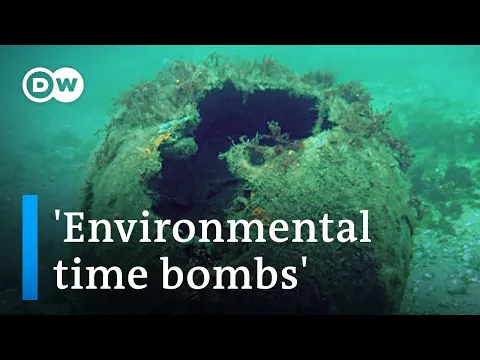

These substances were contained in metal projectiles, aerial bombs, and barrels, many of which were manufactured in the 1930s and 1940s, with no expectation of long-term durability in a marine environment.
Where Is This Chemical Waste Concentrated Today
The main identified dumping areas are:
- Off the island of Bornholm (Denmark)
- In the Gotland Basin
- In deep regions of the central Baltic Sea
These locations were chosen for their depth and relative distance from the coast, based on the assumption that the material would remain isolated from the human environment. The problem is that time has shown exactly the opposite.
Corroded Containers And Documented Leaks
Scientific studies published in journals such as Nature and technical reports from HELCOM confirm that the metal casings are corroding after more than 70 years submerged.
At various points on the floor of the Baltic Sea, sensors and samples indicate the presence of chemical residues in the sediment.
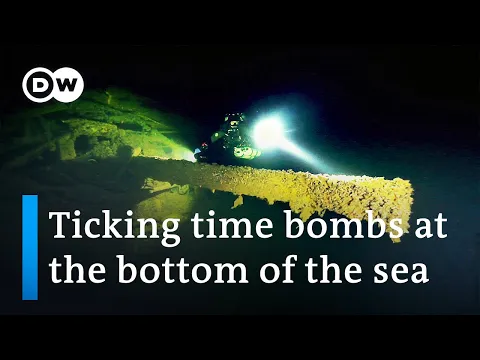
Cases of leaks of solidified mustard gas have already been recorded. In some situations, the substance — which can take on a waxy or resin-like appearance — was accidentally brought to the surface by fishing nets, causing chemical burns to fishermen.
The BBC documented episodes in which workers in the fishing industry required medical attention after direct contact with these residues.
Why The Baltic Sea Is Especially Vulnerable
Unlike open oceans, the Baltic Sea is a semi-closed sea, with limited water exchange with the Atlantic. This means:
- Low water renewal
- Longer residence time of contaminants
- Progressive accumulation of pollutants in the sediment
Additionally, the bottom of the Baltic has areas with low oxygen levels, which alters chemical reactions and can accelerate the release of certain toxic compounds.
Environmental Risks And Impact On The Food Chain
The greatest fear of scientists is not a sudden large-scale leak but rather a continuous and silent leak over decades. Small amounts of chemical agents can:
- Contaminate benthic organisms
- Enter the food chain through fish and crustaceans
- Affect entire ecosystems cumulatively
Reports from the German Federal Environment Agency indicate that removing these munitions today may be as risky as leaving them where they are, creating a technical and environmental dilemma without a simple solution.
Why Has Nobody Removed This Material Until Now
The removal of chemical munitions involves extreme risks. Any attempt to move them can:
- Break weakened containers
- Release large volumes of toxic agents
- Expose workers to lethal substances
Therefore, the strategy adopted so far has been continuous monitoring, detailed mapping, and restricting fishing activities in critical areas. Nevertheless, experts warn that this approach merely buys time, not solving the problem.
An Issue From The War That Still Threatens The Present
The disposal of more than 1.6 million tons of chemical munitions in the Baltic Sea was not an accident, but a political and logistical decision made at a time when the long-term environmental impacts were ignored. Today, this liability returns as an invisible, slow, and difficult-to-contain threat.
What lies at the bottom of the Baltic Sea is not just chemical waste but a toxic legacy of war, silently corroding containers and testing the limits of modern science.
And so the inevitable question remains: Has the world really learned to deal with the extreme waste it has created, or does it continue to push these risks to the bottom and into the future?







-

-

3 pessoas reagiram a isso.