





 Portuguese
  English
  Spanish
  5 min of reading
  12 comments


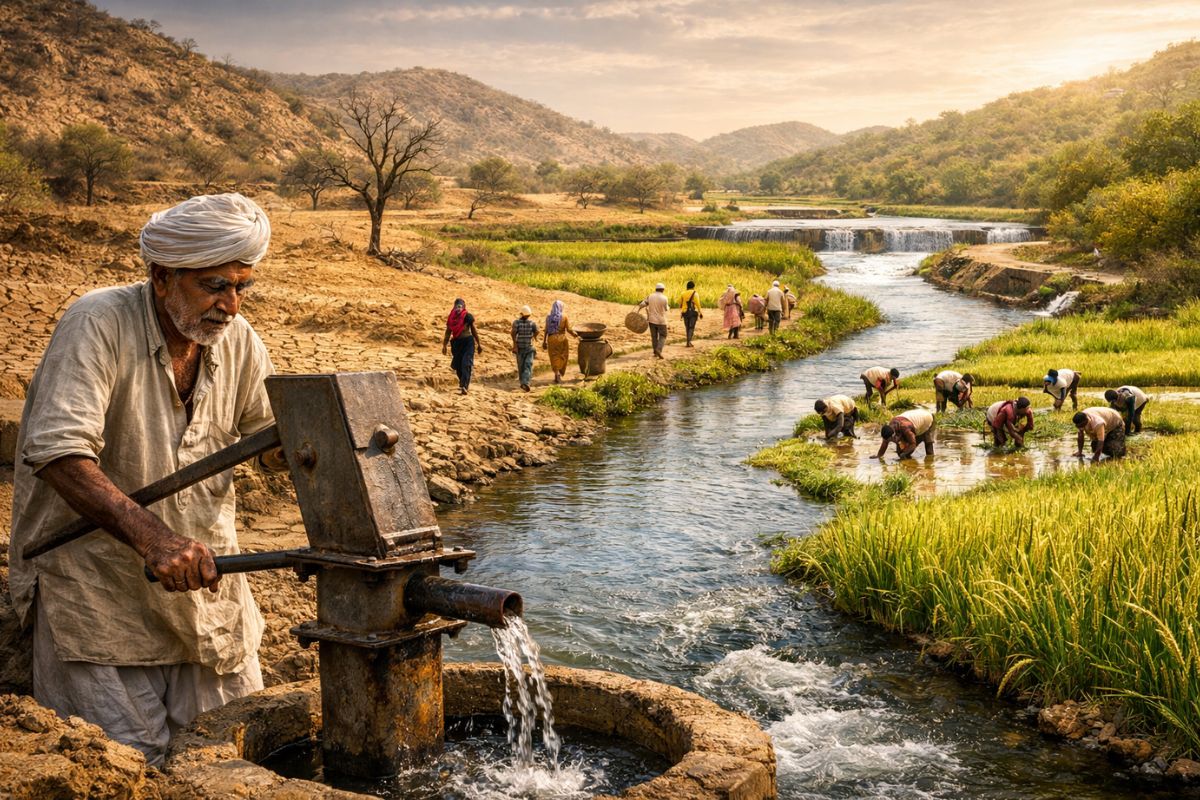


In A Region Of India Marked By Extreme Drought, 72 Villages Rebuilt Hundreds Of Johads, Reorganized Water Use And Made The Arvari Flow Again Year-Round After 60 Years, With Rising Groundwater, Agriculture Resumption And Return Of Families To The Territory Sustainably.
After decades of being told there was no way out, the villages of the Arvari basin in Rajasthan reversed a storyline that seemed definitive: dry river, empty wells, reduced crops, and mass migration. What began as survival became a collective strategy, with simple rainwater retention works and continuous community coordination.
The turnaround did not come from an external technological package, but from the combination of local knowledge, manual labor, and social governance. In just a few years, the region went from dependence on water tankers to a water recharge cycle that restored water, production, and stability to communities that had been classified as unviable.
The Diagnosis That Decreed The End Of The River
For about 60 years, the Arvari was treated as a closed case. Official reports described over-exploited aquifers, dry wells, and a basin without recovery capacity. In practice, this meant waiting in line for water, uncertain harvests, and gradual abandonment of the villages, with families sending young people to urban centers in search of income.
-
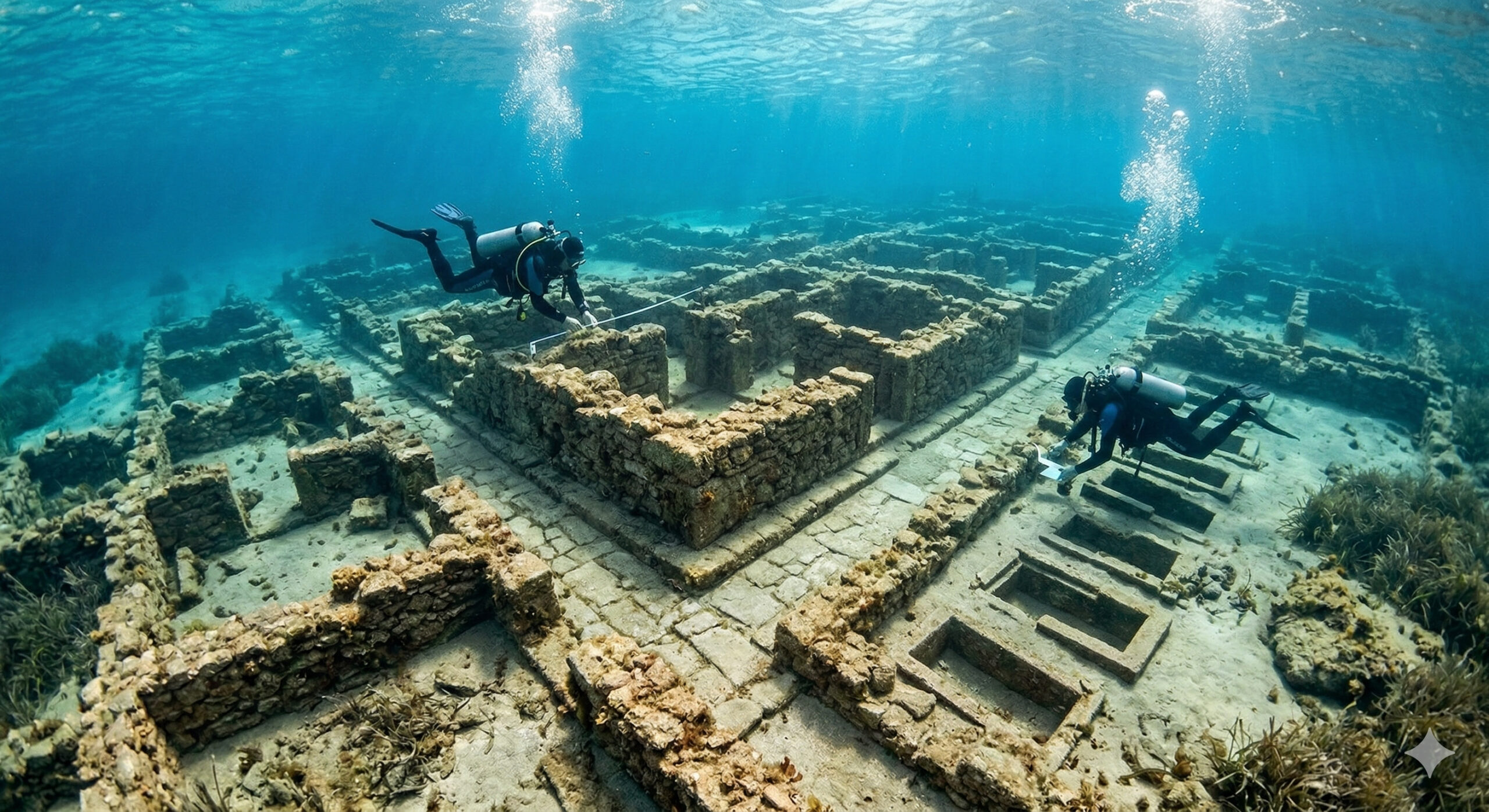
Discovered just 4 meters deep, a 5,000-year-old submerged city with streets, tombs, and trade signs with Crete reveals how one of the oldest civilizations in the world lived before disappearing beneath the sea.
-
The new “monster” submarine of the United States Navy weighs nearly 8,000 tons, is 115 meters long, does not require fuel, and can operate for long periods submerged; meet the USS Massachusetts (SSN-798), which arrives to strengthen the military power of the U.S. amid global tensions.

-
In Sweden, Embraer subjects the KC-390 to rigorous testing in extreme cold, conducts operations in the snow with 100% success, and expands its presence among NATO countries.

-
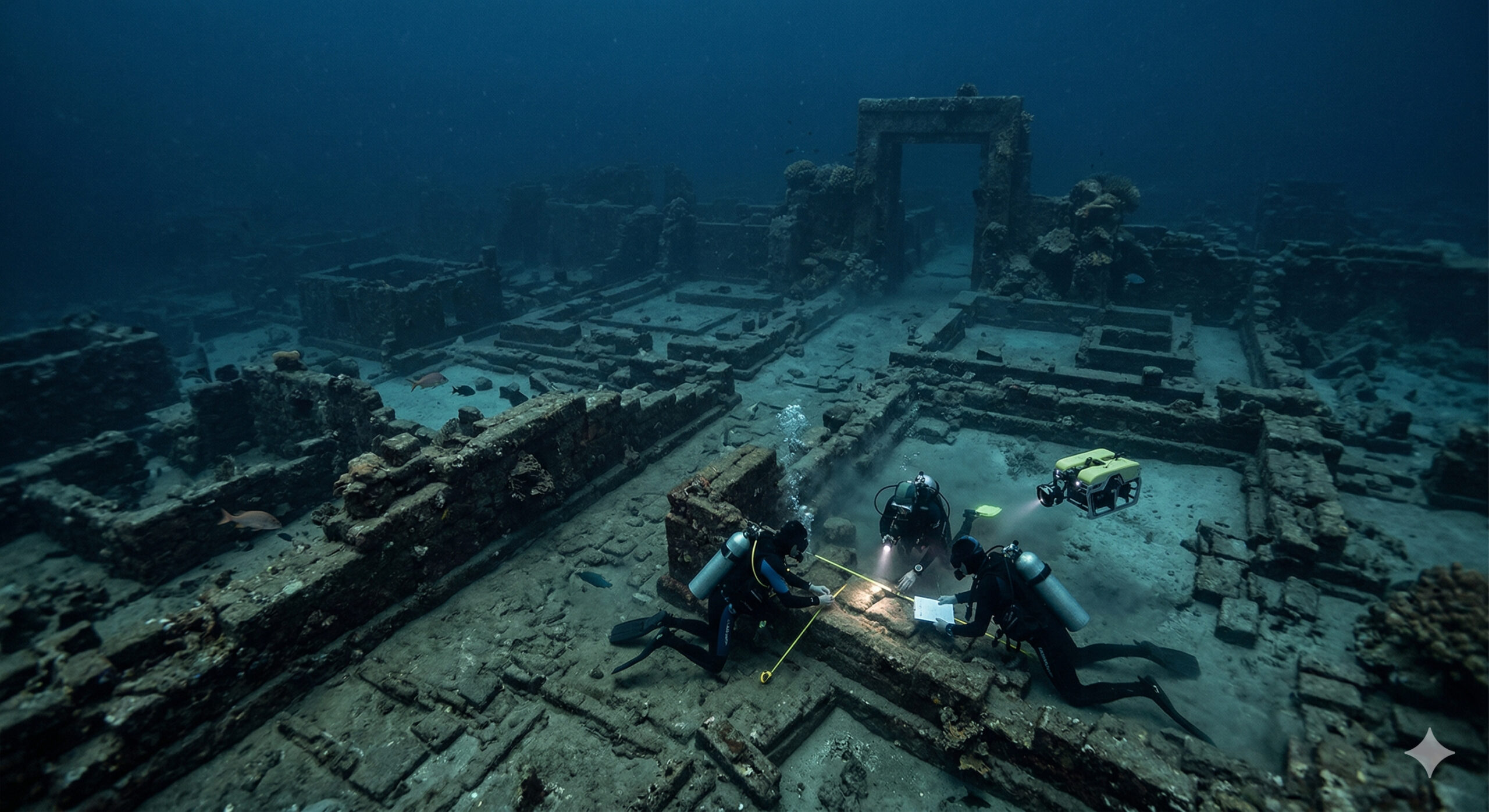
An 8-kilometer submerged city discovered 36 meters deep in the Arabian Sea may be 9,500 years old and, if confirmed, would be older than any known civilization and coincide with the legendary Dwarka described in Hindu texts.

In the villages, the consequence was felt in the most basic daily life: impoverished food, reduced livestock, interruption of agricultural activities, and population decline in some localities. The absence of the river ceased to be merely a hydrological fact and became a social, economic, and health crisis, marked by dependence on emergency assistance.
The Turnaround Of 1985 And The Reconstruction Of Local Knowledge

In 1985, Rajendra Singh’s arrival in Gopalpura coincided with a shift in methodology. Instead of starting with large structures, the proposal was to resume johads, earthen and stone dams historically used to hold rainwater from monsoons and allow slow infiltration into the soil. It was a human-scale engineering, adapted to the terrain and local rhythm.

Without heavy machinery and without a large initial budget, the villages organized work teams: women transported soil, children helped with stones, and the elderly guided construction points based on their memory of the landscape. When the first rains were retained, downstream wells began to respond. What seemed symbolic became practical evidence that the system could scale.

How 72 Villages Transformed An Entire Basin

The local experience spread quickly, and 72 villages began to act in a network. The restoration progressed with hundreds of capture and conservation structures, including 375 johads and 27 additional works. The territorial design formed a mesh of water retention throughout the basin, slowing surface runoff and converting passing rain into underground recharge.
The central point was social coordination. There was no “single contractor” dictating the same works for everyone. Each community core chose sites according to topography, soil type, and spring history. The execution was continuous, season after season, with adjustments made each monsoon. This adaptive nature explains why the outcome did not depend on a single work but on a system.
What The Numbers Showed Beneath The Soil

With the expansion of interventions, monitoring of wells indicated consistent recovery of the water level. In different areas of the basin, the rise of the water table was recorded between 6 and 15 meters. It was not a sporadic gain at a single point: the results appeared repeatedly in different localities, reinforcing that it was a regional hydrological process.
The technical logic is straightforward: by retaining rainwater for a longer time, the villages increased infiltration, reduced rapid loss through runoff, and created a more stable “subterranean stock.” The recharge of the aquifer restored predictability to agriculture, allowed wells to be reactivated, and reduced families’ vulnerability during extreme heat periods.
July 1995 And The Return Of The Arvari To Its Bed
The emotional and political landmark came in July 1995, when water flowed continuously through the Arvari channel, reaching about 45 km. For communities that lived with a dry bed for six decades, the return of the flow represented more than a hydrological event: it was the recovery of a collective reference of belonging and future.
From that point on, the villages moved from the phase of “making it return” to the phase of “making it last.” In 1998, representatives from the 72 communities created the Arvari River Parliament, a community body to negotiate rules for water use, fishing, and productive practices. Without relying on centralized command, local governance sought to protect the results against overuse and external pressure.
The Economic And Social Impact After The Water
With more stable water, the agricultural cycle expanded in various areas, production regained momentum, and part of the families that had migrated began to return. Where there was once only a survival strategy, crop planning, labor hiring for harvests, and local income restoration reappeared. The water restoration repositioned the rural economy.
The effect also changed community life. Schools and yards began to have activity again, harvest-related festivities reappeared, and food security improved with productive diversification. In parallel, the model exceeded the Arvari: more than a thousand villages in Rajasthan adopted similar approaches, with reports of revitalization of other rivers through capture and recharge techniques.
Why This Experience Became A Practical Reference
The case of the Arvari villages draws attention because it combines three dimensions that rarely come together for long periods: simple technical solution, persistent social organization, and governance of use. It was not just about building earthen dams; it was about maintaining rules, monitoring results, and adjusting decisions according to the territory’s response.
There is also an important political learning: when water returns, disputes over access and benefit arise. Therefore, the community institutional design was as relevant as the physical works. Restoration gained scale because each stage answered a concrete question: where to capture, how much to infiltrate, how to distribute, how to avoid a new collapse.
The story of the Arvari shows that when villages treat water as a common asset and not as a short-term resource, recovery can move from speech to routine. What seemed irreversible changed with continuous work, local decision, and clear coexistence rules with the territory.
In your view, if a group of villages managed to reverse 60 years of drought with local knowledge and coordination, what would be the most viable first step for your region: restore springs, create community water use rules, or start with small rain retention structures?








Deberíamos tomar como ejemplo muchos pueblos de la provincia de La Rioja y del norte Argentina donde por ejemplo los políticos corruptos de turno realizan perforaciones en sus campos mal abidos con recursos del estado y contribuyen a el descenso de las napas como el caso del gobernador de La Rioja
Me alegra y felicito a la comunidad del río Arvari, por la recuperación y restauración del recurso hídrico. Se demuestra que, con constancia y unión de fuerzas y voluntades se consigue todo. El conocimiento técnico debe ir de la mano del saber ancestral, así hay un mejor complemento y aprovechamiento de los recursos, demostrando que con prácticas sencillas se logran.los mejores resultados.
Esto demuestro que nuestro presidente tiene razón; ya que donde se remplaza al estado burócrata por las manos y mentes privadas yodo florece y los políticos desaparecen
🤣🤣🤣🤣