





 Portuguese
  English
  Spanish
 5 min of reading
  0 comments


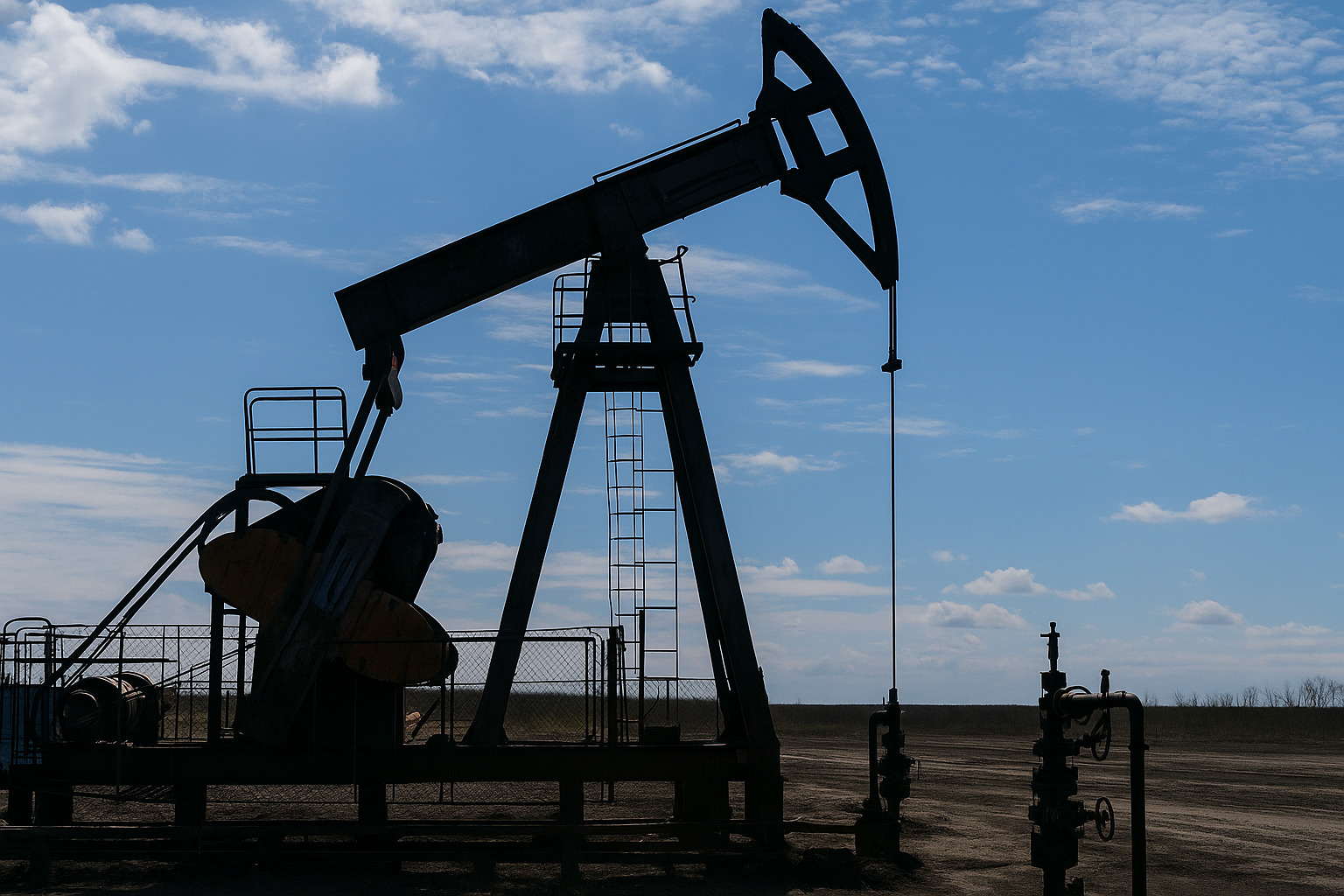
After Sequence Of Gains, Oil Closes Lower With OPEC And IEA Forecasts Pointing To Global Supply Surplus.
The energy market has always been subject to intense movements. Therefore, when oil closes lower after three days of gains, this scenario draws the attention of investors, governments, and consumers. Price fluctuations do not happen by chance. They result from forecasts, reports, and also from historical factors that shaped the relationship between supply and demand.
On Thursday, September 11, 2025, futures contracts for oil fell after three consecutive sessions of appreciation. WTI crude for October dropped 2.04%, while Brent for November registered a decrease of 1.65%. This movement directly reflected the analyses released by the Organization of the Petroleum Exporting Countries (OPEC) and the International Energy Agency (IEA).
The OPEC maintained its projection for global demand growth at 1.3 million barrels per day. However, the IEA brought a piece of data that worried industry players: the supply surplus is expected to be larger than previously anticipated. This alert added to concerns related to the U.S. economy and geopolitical tensions in key regions, such as the Middle East and Russia.
-
The rise in oil prices could ensure an extra revenue of R$ 100 billion for the Federal Government, indicates a recent economic study.

-
Naturgy begins an investment of R$ 1.6 million to expand the gas network in Niterói and benefit thousands of new residences and businesses.

-
A major turn in the Justice system suspends tax increases and directly impacts oil and gas companies in Brazil by affecting costs, contracts, and financial planning, leaving uncertain what could happen to the sector if these costs had increased.

-
Brava Energia begins drilling in Papa-Terra and Atlanta and could change the game by reducing costs in oil while increasing production and strengthening competitiveness in the offshore market.


The Historical Influence Of OPEC In The Market
Since its creation in 1960, OPEC has played a decisive role in balancing oil production and prices. The organization was born in a context of dispute for greater control over natural resources. Thus, whenever OPEC revises its projections, the market reacts immediately.
Throughout history, various energy crises have shown how small changes in supply or demand can generate global impacts. The oil shock of 1973 is a classic example, when production restrictions caused prices to surge and resulted in recession in various economies. Today, even though market dynamics are more complex, the basic logic remains the same.
Therefore, the fact that the IEA forecasts a larger surplus reinforces expectations of pressure on prices. After all, when there is more oil available than necessary, the natural trend is for prices to fall.
The Relationship Between Supply, Demand, And Geopolitics
Oil prices are not determined solely by the mathematics of supply and demand. Geopolitics plays a decisive role. Conflicts in the Middle East, economic sanctions imposed on Russia, and changes in policies of major consumers, such as China and the United States, influence the market daily.
In this scenario, investors closely monitor every statement by political leaders. The possibility of new sanctions on Russia, mentioned by the U.S. president, shows how diplomacy can alter expectations in a matter of hours. If restrictions are imposed, the flow of exports could diminish, increasing instability.
However, the projected surplus announced by the IEA currently weighs more in this moment. This is because the surplus of oil weakens the impact of potential cuts or disruptions in supply. The balance between excess and scarcity becomes the true driver of daily variations.
The Reflections In The United States And Global Consumption
The United States represents one of the largest consumption and production hubs in the world. When signs of slowdown arise in its economy, the energy market feels the effects immediately. A drop in demand for fuels directly impacts the international price.
Furthermore, the shale gas and shale oil revolution transformed the country into a major exporter. This change altered the balance that existed until the early 2000s, when the U.S. heavily depended on imports. Today, any fluctuations in domestic production or consumption directly influence the rest of the world.
Therefore, when oil closes lower, it is not just linked to technical reports. The decisions of American consumers, strategic reserves, and even the speeches of government officials can define new paths.
The Role Of Alternative Energies In The Current Scenario
Another factor that explains the volatility is the expansion of renewable energies. Countries are increasingly investing in sources such as solar, wind, and hydroelectric power. This means that, although oil is still essential, its dominance is no longer absolute.
The energy transition, driven by environmental concerns and the pursuit of greater independence, influences OPEC and IEA projections. If demand for oil grows less than expected, prices tend to reflect this behavior. In this context, each report begins to indicate not only the present but also the future of the sector.
Still, history shows that oil maintains strategic importance. It continues to be an indispensable raw material for transportation, industries, and even for fertilizer production. Thus, even as alternatives gain ground, the impact of price drops or spikes remains enormous.
How The Market Reacts To Excess Supply
The concept of surplus may seem technical, but it has clear practical effects. When there is an abundance of oil, stocks increase and prices fall. Companies in the sector face lower margins, governments collect less revenue, and exploration projects become less viable.
This movement creates a cycle of adjustments. With low prices, some producers reduce activity. This reduction, in turn, can rebalance the market again. Therefore, declines and increases alternate in a process that historically repeats itself.
However, what makes the current moment relevant is the combination of excess supply with political and economic uncertainties. This creates a scenario in which prices can fluctuate even more unpredictably.
The news that oil closes lower after three days of gains should not be read merely as a standalone data point. It reflects a complex web of historical, geopolitical, and economic factors that shape the energy sector.
By observing OPEC’s actions, IEA reports, and the movements of major economies, it is possible to see that oil continues to play a central role in the world organization. Even amid the energy transition, its strategic weight remains.
Thus, understanding the reasons behind these drops and rises is essential for anyone seeking to interpret not only the present but also the paths of the future. After all, as long as the world remains dependent on this energy source, each report and each decision will have a direct impact on the global market.










Seja o primeiro a reagir!