






 Portuguese
  Spanish


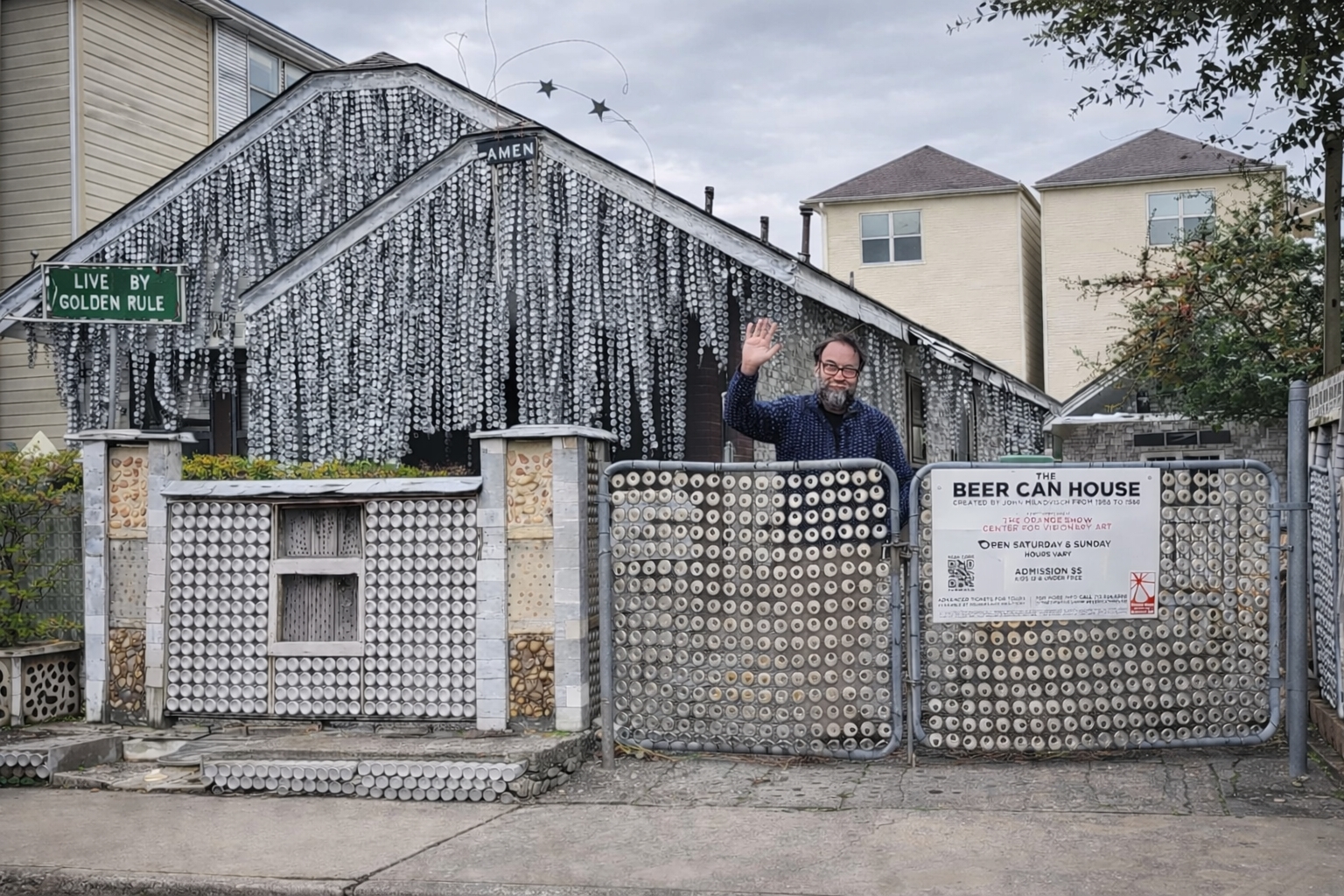


A Retired Man In Texas Covered His House With More Than 50 Thousand Beer Cans Over The Course Of Almost 18 Years, Creating A Real Experiment In Aluminum Reuse That Is Now Catching The Attention Of The Industrial, Engineering, And Energy Sectors
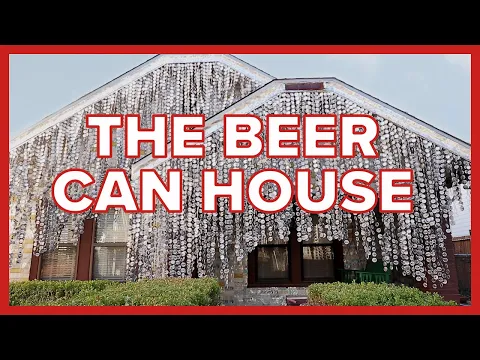
More than 50 thousand beer cans cover a single house in Houston, Texas, and challenge building standards worldwide. It is not a temporary installation nor a project funded by an energy company. It is an ordinary residence that gained a manually constructed metallic “shield” over nearly two decades.
The mastermind behind it was John Milkovisch, a retiree who, starting in the late 1960s, decided to use crushed cans as cladding. What began as a hobby ended up transforming into one of the most emblematic examples of aluminum reuse seen in the United States.
Today, the so-called Beer Can House attracts tourists, curious onlookers, and even construction professionals interested in understanding the energy impact behind an apparently simple gesture.
-
21-Year-Old Moves Back to Parents’ Home in Arizona, Finds New Private Apartment in Converted Garage as Families Tackle U.S. Housing Pressures

-
Innovative Container Studio in Brazilian Beach Town Thrives with High Demand and Plans for Expansion
-
30-Square-Meter Container Home with 2 Bedrooms, Living Room, Kitchen, and Bathroom Sold for $12,000 in Brazil, Tour Reveals Project Details

-
Brazilian Couple Builds Eco-Friendly Brick House, Saves 41%, and Shares Simple Test to Check Soil Suitability



The Silent Challenge Of Aluminum, One Of The Most Energy-Intensive Metals On The Planet, And The Improvised Solution That Birthed In A Houston Backyard
Producing new aluminum requires high energy consumption. The extraction of bauxite, refining, and casting demand large amounts of electricity. According to industry experts, it is one of the most energy-intensive industrial chains in the world.

This is where the story of the Beer Can House gains technical weight. Instead of discarding beer cans and encouraging the production of new cladding materials, Milkovisch reused what already existed.
Each recycled can consumes about 5 percent of the energy needed to produce primary aluminum. The impact doesn’t directly appear on the household electricity bill but resonates throughout the global production chain.
The inevitable question remains: how many buildings could reduce pressure on the industry if they adopted similar solutions?
From Eccentric Hobby To Practical Reuse Laboratory, The Technical Backstage Behind The Metal Walls That Shine In The Sun
Milkovisch didn’t just glue cans on the facade. He dismantled, cut, crushed, and rearranged each piece. He even used the pull tabs to create movable panels that produce sound when the wind blows.
The result goes beyond aesthetics. The metallic surface reflects sunlight and creates an additional layer over the original structure of the house. There is no evidence of significant thermal reduction, but the whole serves as an informal experiment in folk engineering.
Over about 18 years of work, estimates indicate that more than 50 thousand cans were incorporated into the project. Some came from personal consumption, and some from neighbors. The entire neighborhood participated, albeit indirectly.
The secret was not in sophisticated technology. It was in persistence and the logic of reusing before discarding.
When An Ordinary Residence Transforms Into A Cultural Asset And Sparks Interest From The Energy And Sustainability Sector
After John’s death in the 1980s and his wife’s in the 1990s, the house went through a preservation process. It is now managed by the Orange Show Center for Visionary Art and offers guided and self-guided tours.
What was once seen as eccentricity is now treated as a piece of American visionary art heritage. Architecture and sustainability blogs in Brazil and abroad cite the case as an early example of upcycling applied to construction.
The movement draws attention because it anticipates current debates on circular economy, reuse of industrial waste, and reduction of energy consumption in material production.
At a time when the construction sector is seeking more efficient alternatives, the Beer Can House emerges as a symbol of an uncomfortable provocation: are we ignoring simple solutions while investing billions in new technologies?

The Domino Effect Of Recycled Aluminum And What This Story Teaches The Heavy Industry In A Scenario Of Pressure For Energy Efficiency
The aluminum industry operates under significant pressure to reduce emissions and energy consumption. Each ton produced requires a robust electrical infrastructure and high investments.
By reusing existing cans, Milkovisch reduced the indirect need for new materials. It was not an industrial project, but the principle is the same that today guides large corporations: reuse to consume less energy at the source.
According to industry estimates, aluminum recycling represents significant energy savings on a global scale. Multiply that by thousands of tons reused annually, and the impact ceases to be symbolic.
The Beer Can House did not change the market by itself. But it visually and provocatively exposed the invisible cost behind each discarded can.
Ultimately, a house covered in beer cans highlights a discussion that moves billions in the energy industry: produce more or reuse better.
And you, do you believe that simple solutions like this could gain scale in the construction industry or is it just a historical curiosity? Leave your opinion in the comments.







Ficou a dúvida se a casa não teria se tornado mais quente em dias de sol e se atrairia raios em dias chuvosos… Curioso,é a harmonização das cores e as medidas padronizadas para cada corte das latas.No mínimo,inovador sob o ponto de vista decorativo…
Deu um belo para raios gostei só tem que tomar cuidado pra não ser atingido por um raio em dias de chuva 🌧️ ok mas tá engraçada a casa.
A reciclagem eficaz de alumínio transforma sucatas (latinhas, peças automotivas, embalagens) em novo metal com apenas 5% da energia original, emitindo 95% menos gases de efeito estufa.