





 Portuguese
  English
  Spanish
  9 min of reading
  4 comments


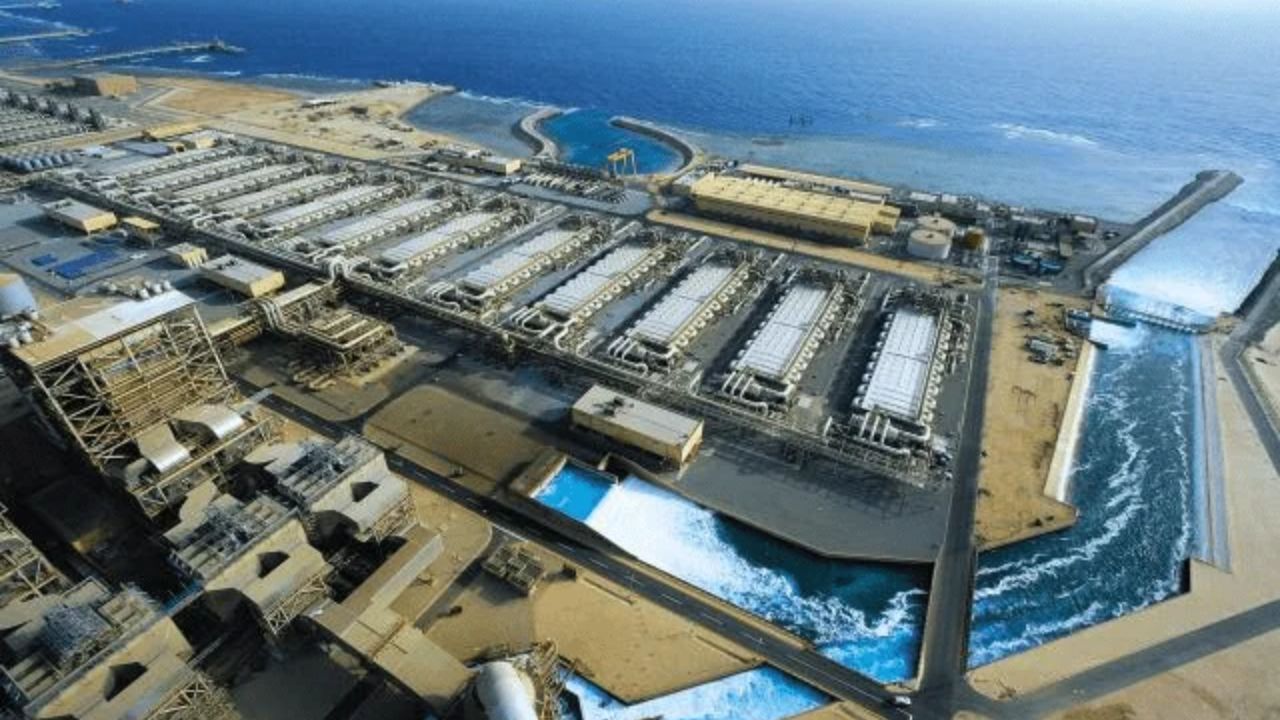


Desalination Turned the Lifeline of Saudi Arabia, Transforming Seawater into Potable Water and Keeping Whole Cities Alive in the Sand, at the Cost of Huge Energy Consumption and a System That Cannot Fail.
Saudi Arabia is a place where nature never wanted a river. Before oil, life depended on small oases and ancient aquifers that took thousands of years to form. Today, it is desalination that sustains metropolises like Riyadh and Jeddah, pushing water through mountains and plateaus on a scale that seems impossible.
At the same time, the country is trying to correct past mistakes. The intensive use of groundwater to grow wheat in the middle of the desert drained non-renewable reserves and left deep scars on the soil. Now, Saudi Arabia depends on desalination and a giant pipeline system to continue growing, while racing against time to make this model less costly and less harmful to the environment.
When the Desert Turned into a Wheat Field and Water Disappeared
Before desalination dominated the scene, the main source of water in Saudi Arabia was fossil aquifers, layers of groundwater accumulated since the end of the last ice age. This water was non-renewable, a water vault that took tens of thousands of years to fill.
-
Created by George Lucas with over $1 billion, a futuristic museum in the shape of a spaceship with 1,500 curved panels is about to open in Los Angeles and will house one of the largest private collections of narrative art in the world.

-
Couple shows how they built a retaining wall on their property using 400 old tires: sloped land turned into plateaus, tires are aligned, filled, and compacted with layers of soil, with grass helping in support and at almost zero cost.
-
Engineer explains drainage during the rainy season: the difference between surface water and deep water, ditches, gutters, and water outlets on the road, as well as drains and drainage mattresses, to prevent erosion, aquaplaning, and flooding at the construction site today.
-
With 55 floors, 177 meters in height, a 15-meter walkway between the twin towers, ventilated facade, and 6,300 m² of leisure space, Ápice Towers already has one tower completed and another nearly at the top.
In the 1970s and 1980s, fueled by the oil boom, the government decided to pursue food self-sufficiency. In the middle of the desert, it bet on something radical, growing wheat on a large scale, using thousands of high-capacity pumps to suck water from underground.
The strategy worked in productive terms. Saudi Arabia even became the sixth largest wheat exporter in the world, an impressive feat for a country with almost no rivers.
But the price was high. Hydrologists estimate that about four-fifths of the precious underground reserves were drained mainly for agriculture, leaving the region more vulnerable.
As the aquifers emptied, sinkholes began to appear in the desert, swallowing stretches of soil and even agricultural equipment. The land became more arid, wells dried up, and the model showed its limits.
By 2016, the situation was so critical that the government had to suspend wheat cultivation. But the demand for water did not stop growing. The population was increasing, cities like Riyadh and Jeddah were expanding, and groundwater was no longer sufficient to sustain this advance. The only solution was to look to the ocean and fully commit to desalination.
Industrial-Scale Desalination: Plants That Function Like Military Bases
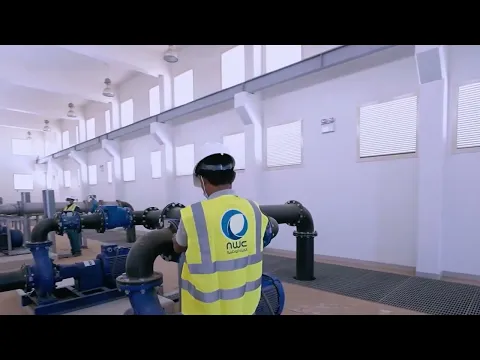

While distilling water may seem simple in theory, the reality of the Saudi complexes tells another story. In places like Ras Al Khair and Jubail, huge industrial parks are dedicated to a single mission: transforming seawater into potable water that can be sent hundreds of kilometers away.
Today, Saudi Arabia is a global leader in desalination, accounting for a significant share of desalinated water in the world. Plants like Ras Al Khair are true technological monsters, combining thermal systems and filtering membranes on a colossal scale.
This plant alone consumes enough steel to build dozens of skyscrapers and is protected with nearly military rigor, as any interruption directly threatens the supply of millions of people in Riyadh.
For decades, the dominant method was multi-stage distillation. Seawater is heated in pressurized boilers, evaporates, leaves the salt behind, and is then condensed into fresh water. It is efficient in terms of quality, but consumes enormous amounts of energy.
Therefore, in recent years, the country has accelerated the adoption of reverse osmosis desalination, which is more efficient in energy consumption. In this process, seawater is forced through a membrane with such small pores that only water molecules pass while salt and impurities are retained.
For this to work, pumps that generate pressures that can reach dozens of bars, similar to those at great ocean depths, are required. The membranes must resist the corrosion of saline water and continuous mechanical stress. If the pressure drops, desalination loses efficiency; if it rises too much, the membrane can rupture. It’s a delicate balance that requires constant control.
Despite all this technology, the weak points are curious. At certain times of the year, swarms of jellyfish can be sucked in through the seawater intake, blocking filters and forcing some plants to shut down emergency. At those moments, a gelatinous marine organism becomes a direct threat to the water supply of an entire city.
How Desalinated Water Wins Over 14,000 km of Pipes and 3,000 m of Altitude
Producing water through desalination is only half the battle. The other half is delivering that water from coastal plants to cities that are hundreds of kilometers inland, often at high altitudes.
Riyadh is the best example. The Saudi capital is about 400 km from the sea, on a rocky plateau. For desalinated water to reach there, the country built a gigantic pipeline system. Today, the total length of the pipelines exceeds 14,000 km, more than the circumference of the Earth, connecting coastline, plateaus, and large urban centers.
The biggest challenge, however, is not just the distance; it is the altitude. On the route that carries water from the Red Sea to cities like Taif and Mecca, the pipelines must overcome elevations of 2,000 to 3,000 meters while crossing the Sarawat mountain range. Instead of the water descending naturally, it needs to be pushed up steep slopes by high-powered pumping stations.
These stations are distributed along the slopes and need to operate in perfect synchronization. If one of them stops suddenly, a phenomenon known as water hammer—a pressure shock wave—can travel back through the pipeline and rupture entire sections of the pipe.
The physics is simple and relentless. A cubic meter of water weighs a ton. Pushing millions of tons up every day requires energy, control, and robust equipment. Any rupture means not only loss of water but also huge damage to the surrounding infrastructure.
To reduce risks, the entire system is closed. Open channels would be unfeasible in the Saudi desert. Under temperatures reaching about 50 °C, exposed water would evaporate rapidly before reaching its destination. Additionally, it would be subject to contamination, sand, and constant losses.
Therefore, the pipes are made of steel coated with cement, receive layers of epoxy to reduce corrosion, and are protected with cathodic protection technology. Internal robots, known as Smart Pigs, travel the interior of these pipelines using ultrasound to locate cracks before they turn into leaks, ensuring that almost nothing is lost along the way.
Riyadh, Strategic Reserves, and the Fear of a Water Blackout
Riyadh, with about 7 million inhabitants, depends almost entirely on this desalination and pumping system. If the flow stops, the reserve in water tanks and reservoirs lasts only a short time. Estimates indicate that a three-day interruption would be enough to trigger the highest alert of a water crisis.
For this reason, water security is treated as a strategic issue. In Jeddah, a giant underground storage system has been built, considered one of the largest in the world. These reservoirs can store millions of cubic meters of potable water, enough to keep the city going for about seven days in case of an emergency.
These stocks work as a “safety cushion” against technical failures, extreme weather events, cyberattacks, or energy problems. In the Saudi context, desalination is not just technology; it is critical infrastructure, safeguarded with the same care as energy or oil facilities.
Expensive Energy, Expensive Water: The Paradox of Desalination
Behind all desalination lies an inevitable question: who pays the energy bill to move this gigantic system?
In practice, most of this energy still comes from fossil fuels. Saudi Arabia lives in a closed loop, where:
it exports oil to strengthen the economy, uses part of that money to build water plants, then burns its own oil to generate the electricity that sustains desalination and pumping.
Reports show that a huge portion of the country’s internal energy consumption is linked to the water sector. Estimates indicate that the desalination industry may consume between 15% and 20% of all national electricity production, an enormous figure for a single sector.
This creates an economic and strategic paradox. The country burns its main export product to produce a basic good. If the price of energy rises, the cost of water skyrockets. If fuel supply diminishes, the entire water system becomes vulnerable.
In the end, each cubic meter of potable water consumed in Riyadh invisibly carries an “icon” of oil and gas. If this cost were fully passed on to the consumer, water could become more expensive than gasoline.
Brine, Dead Corals, and the Silent Impact on the Sea
Besides energy, desalination generates another problem that is hard to ignore: saline reject. For every liter of fresh water produced, plants return about 1.5 liters of brine to the sea, a water that is:
more saline than normal, warmer, with residues from chemicals used in treatment.
Being denser, this brine tends to sink and form layers on the seafloor, creating zones low in oxygen. In these areas, corals and small marine organisms struggle to survive. In some points close to the effluent outlets, divers report real underwater deserts, with no visible life.
In the Persian Gulf, which is already naturally shallow and warm, this accumulation worries scientists. As salinity increases, the desalination process itself becomes more difficult. Saltier water requires higher pressures in reverse osmosis membranes, increases wear on equipment, and raises costs. It’s a vicious cycle where more desalination worsens conditions for future desalination.
To address this, researchers are exploring ways to harness brine instead of simply returning it to the sea. One avenue is the extraction of valuable minerals such as lithium and magnesium. If this technology becomes viable on a large scale, Saudi Arabia could turn part of the problem into a revenue source. But for now, brine mining is still a promise, not a consolidated solution.
Vision 2030, Solar Energy, and Daring Ideas for the Future of Water
Saudi Arabia knows it cannot rely forever on the combination of oil and intensive desalination. Therefore, under the Vision 2030 plan, the country has been announcing a shift towards renewable energies and more sustainable technologies.
One path is solar-powered desalination, with large-scale projects linked to initiatives like Neom. The idea is to use the desert’s abundant sunshine to reduce the weight of fossil fuels in water production.
The linear city The Line, for example, is presented as an urban laboratory that aims to operate with recycled water, more efficient desalination, and 100% renewable energy. Whether these promises will materialize in practice is still an unknown, but they show the direction the country claims to want to follow.
Among the boldest ideas is the so-called solar dome. In this concept, hundreds of mirrors would concentrate sunlight in a huge glass dome, heating seawater to extremely high temperatures to generate steam without burning fuel. The steam would then be condensed into fresh water. If feasible on a large scale, it could be a game changer, with desalination much less dependent on oil.
In addition to energy, the country speaks of planting billions of trees in the Saudi green initiative, using treated sewage water and even artificial rain induction techniques. Aircraft and ground generators release particles into the clouds to try to increase precipitation. Although there are controversies about effectiveness and regional impacts, Saudi Arabia continues to invest heavily in this technology.
Moreover, throughout recent history, even nearly cinematic ideas have been considered, such as towing huge icebergs from Antarctica to the Persian Gulf to melt and obtain fresh water. Logistical and climatic risks buried the plan, but it shows the level of urgency the water issue has in the country.
Desalination: Definitive Solution or Risky Bet?
The trajectory of Saudi Arabia is an extreme example of human capacity to reshape the environment to survive. In a territory with virtually no rivers, the country built a desalination and pipeline system that pumps millions of tons of water over 14,000 km and even 3,000 m in altitude, keeping whole cities alive in the midst of the desert.
At the same time, this model brings risks and dilemmas:
it consumes a huge slice of the national energy, relies on fossil fuels, pressures the marine environment with concentrated brine, and demands a system that simply cannot stop.
In short, desalination is both a masterpiece of engineering and a high-risk bet in a world that is already feeling the effects of climate crisis and water scarcity.
And you, looking at this combination of technology, cost, and environmental impact, how do you see Saudi Arabia’s desalination strategy, more as an extraordinary advance to survive in the desert or as a risky bet that could pay a high price in the future?






Porque os povos não se unem e abandonam essas regiões áridas e vão habitar regiões mais apropriadas ao invés de gastar bilhões de toneladas de matérias para transportar e dessanilizar água de mar? Como o ser humano é “desumano” e egoísta, né?????
Só observar a Europa hoje com os milhões de refugiados,árabes não sabem conviver com ninguém querem dominar pela força e fé
Vamos vender água do rio Amazonas para os árabes, eles mandam pegar aqui em grandes navios. Resolvido o problema, água em troca de petróleo.
This is a truly fascinating and insightful look into Saudi Arabia’s massive efforts to secure water for its growing cities. The scale of desalination and the engineering behind transporting water across mountains is absolutely impressive.
For those in Mecca who need practical solutions for local water access—especially for mosques—there are modern services that make the process much easier. Platforms like Qatarat provide reliable water delivery and are widely used across the region. If anyone needs water delivery to Mecca mosques, you can explore their service here:
👉 توصيل ماء لمساجد مكة
They also offer a streamlined and user-friendly water delivery application, which helps individuals and facilities schedule water quickly and efficiently:
👉 تطبيق توصيل مياه
Technology like this is becoming essential, especially in regions where water systems are so complex and energy-intensive. It’s amazing to see how innovation helps everyday people access something as vital as clean water.