





 Portuguese
  English
  Spanish
  5 min of reading
  0 comments


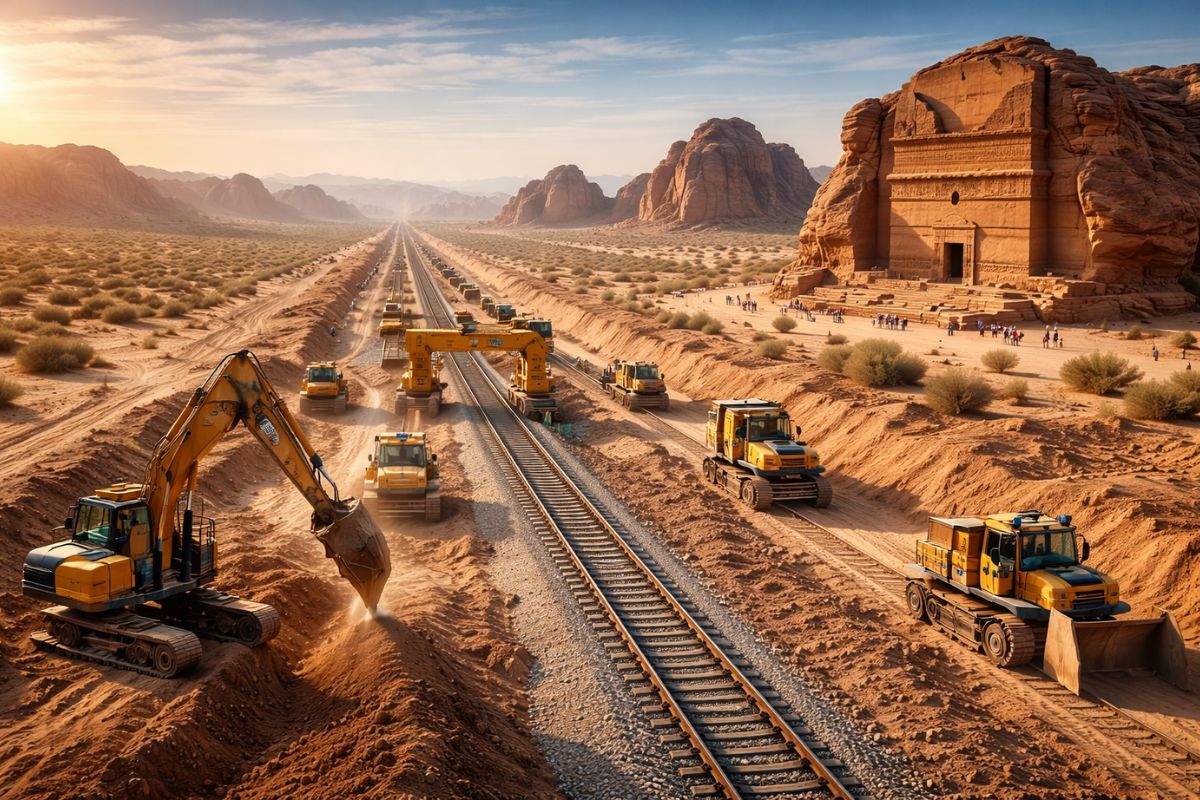
With an Investment of US$ 7 Billion, the Railway Connects the Red Sea and Gulf by Linking Jeddah, Riyadh, Dammam, Jubail, Yanbu, and King Abdullah Port, Promising a Maritime-Land Corridor, Seven Logistics Centers, 200,000 Jobs, and Deep Integration with Recent Chinese Investments Focused on Energy, Manufacturing, and Logistics in Vision 2030.
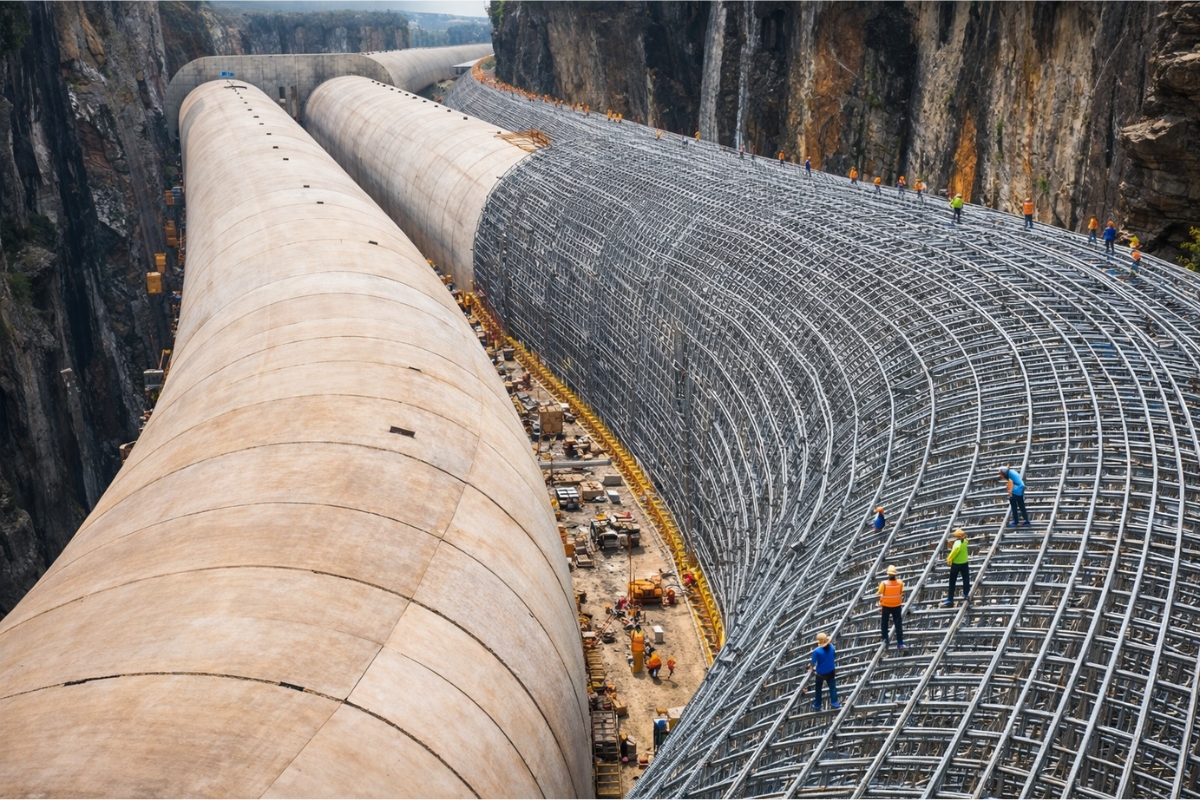
Announced in 2004 and interrupted in 2010, the mega project that is now taking shape in Saudi Arabia returned to planning in 2011 and finally came to fruition at the beginning of this year, when construction began on the Landbridge, a US$ 7 billion railway linking Jeddah, on the Red Sea, to Dammam, in the Persian Gulf. Designed as a central piece of Vision 2030, the railway connects the Red Sea and Gulf by linking ports, industrial hubs, and the desert itself in an east-west corridor for cargo and passengers.
With over 1,400 km of new and upgraded tracks, including 950 km between Riyadh and Jeddah and extensions to King Abdullah Port, Yanbu, Jubail, and King Khalid International Airport, the corridor promises to save up to US$ 4.2 billion per year in transportation costs and generate around 200,000 jobs in sectors linked to the new logistics network. In December 2023, companies such as Hill International, Italferr, and Sener were contracted to manage the project, while the partnership with China, strengthened by Xi Jinping’s visit in 2022, saw direct investment reach US$ 8.2 billion in 2024, in addition to commitments of US$ 16.8 billion for new energy, manufacturing, and logistics projects.
Landbridge Becomes the Railway Backbone of Saudi Arabia
The so-called first maritime railway corridor of Saudi Arabia is the heart of the country’s transport strategy.
-
Scientists transform sawdust into fire-resistant panels, stabilize the compound with an enzyme extracted from watermelon seeds, and turn waste into promising material for construction.

-
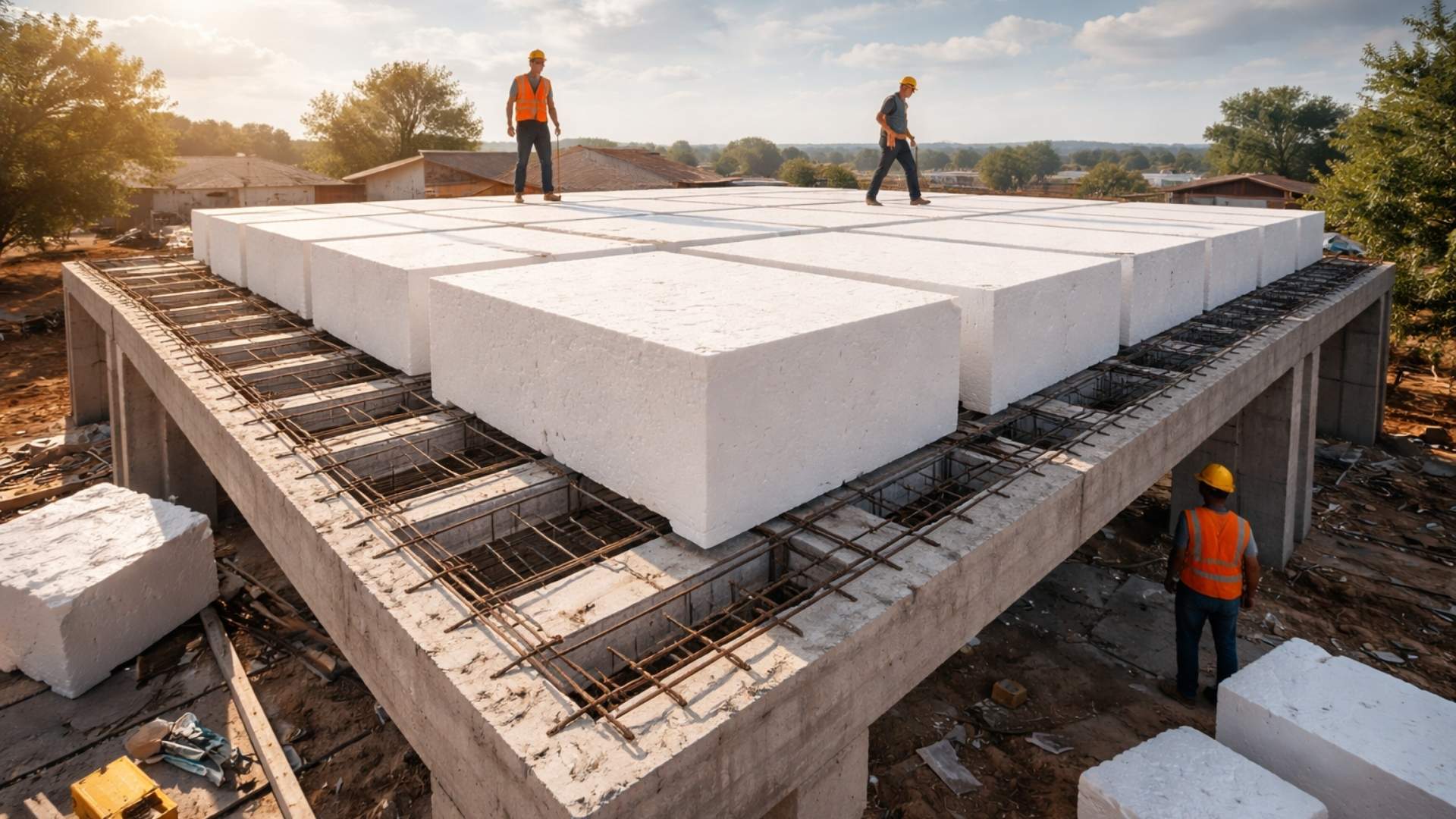
Forget concrete: architects are replacing tons of concrete with giant blocks of expanded polystyrene to build the roofs of houses and reduce structural weight by up to 50%, cut costs, improve thermal insulation, and speed up construction.
-
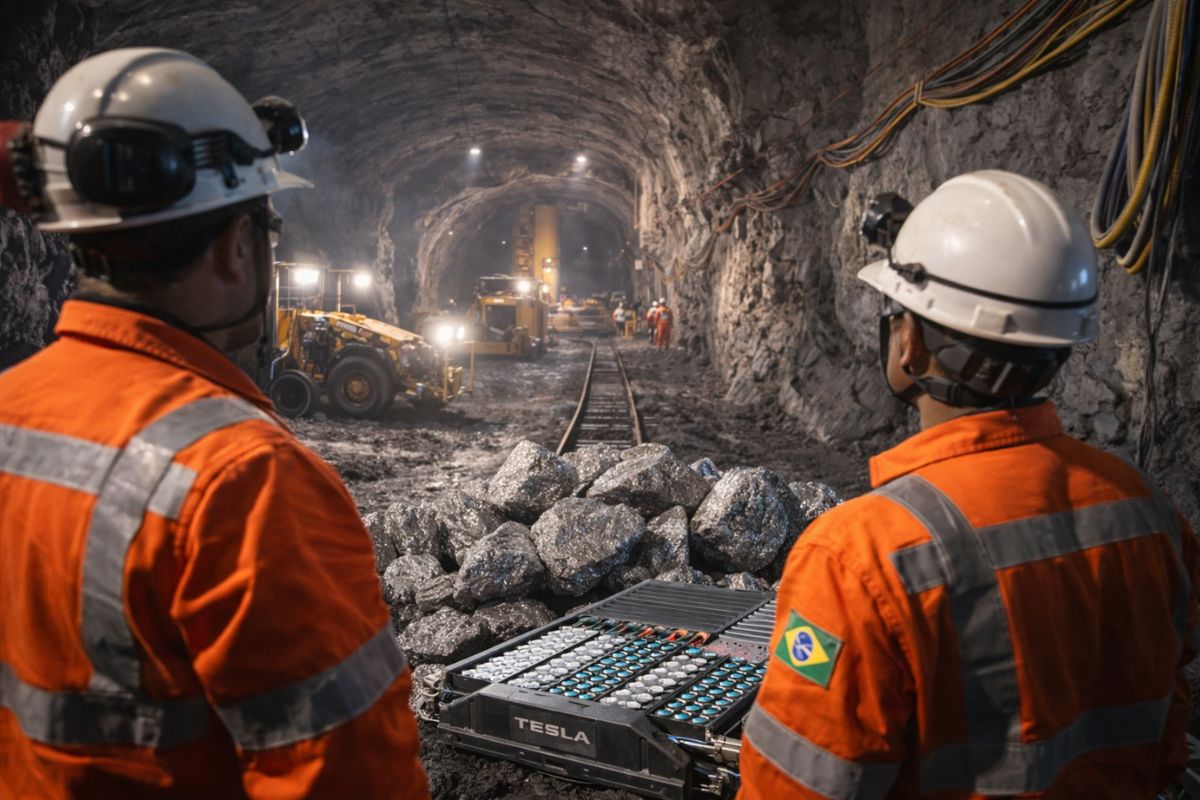
The Brazilian state enters the center of the global race for critical minerals by starting the construction of the largest underground nickel mine in Latin America, a mineral essential for electric car batteries that the entire world is competing for at this moment.
-
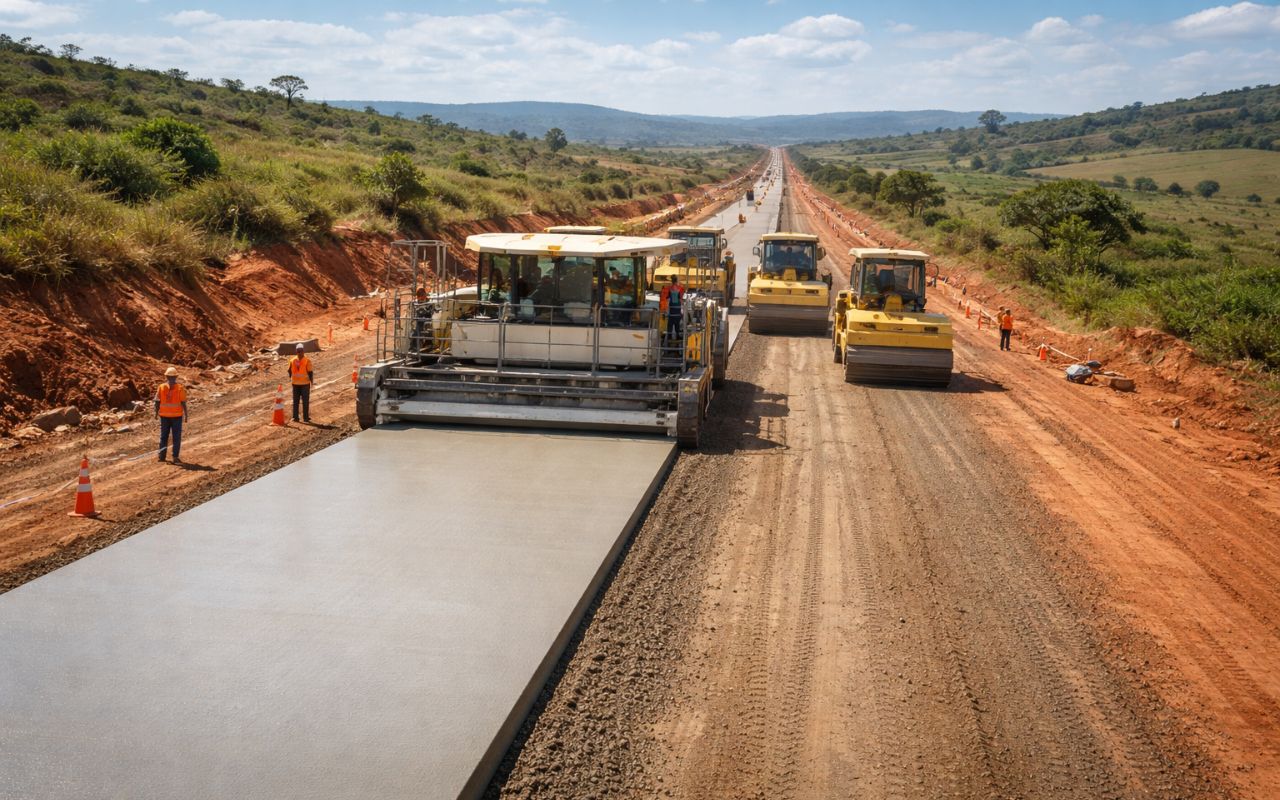
New CCR concrete paving technology promises roads up to 3x more durable, less maintenance, and cost reduction in Brazil.

The Landbridge combines about 1,500 km of new tracks with upgraded sections, creating a backbone that crosses the territory from west to east.
At the core of the project is a 950 km line connecting Riyadh to Jeddah, extended by another 146 km to the north to King Abdullah Port.
The network also includes 115 km between Dammam and Jubail, improvements to the Riyadh-Dammam link, a railway detour in Riyadh, and an extension of 172 km from King Abdullah Port to the Yanbu Industrial City.
In this way, the railway connects the Red Sea and Gulf by linking Jeddah, Dammam, Jubail, Riyadh, King Khalid International Airport, King Abdullah Port, and Yanbu in a single network, creating a new competitive axis for the flow of goods between the Mediterranean, the Persian Gulf, and Asian markets.
Riyadh Railway Link Unlocks Cargo Movement
A key phase is the Riyadh railway link, a 35 km line that crosses the capital from the north zone to the south zone.
This section will create the physical connection between the North-South Railway and the Eastern Railway Network, enabling goods from different regions of the country to access the new east-west corridor.
Saudi Arabia Railways invited major contractors to submit expressions of interest for this section, which includes the construction of viaducts, signaling systems, infrastructure, and civil works.
The goal is for the link to meet international safety and efficiency standards, functioning as a junction capable of streamlining the movement of goods throughout the network.
In practice, once the Riyadh link is integrated with the Landbridge, the railway connects the Red Sea and Gulf into a continuous system, linking the interior of the country to key ports and logistics terminals, with reduced reliance on long-distance road transport.
Seven Logistics Centers and a New Geography of Ports
In addition to the tracks, the plan includes seven new logistics centers along the main routes.
These hubs will concentrate warehousing operations, cargo consolidation, and connection with other modalities, increasing the flexibility of the system.
The expectation is that the movement between Jeddah, Dammam, Jubail, Riyadh, King Khalid International Airport, King Abdullah Port, and Yanbu will become faster and more predictable, reinforcing the country’s role as a transit point for goods between Europe, Asia, and Africa.
By integrating ports of the Red Sea and the Persian Gulf, the railway connects the Red Sea and Gulf into a corridor that can compete with routes currently dominated by traditional maritime routes, while also creating a land base to support supply chains for energy, petrochemicals, and manufacturing.
Saudi China Landbridge Consortium Leads Billion-Dollar Project
The execution of the Landbridge is in the hands of the Saudi China Landbridge Consortium, which brings together Saudi Arabia Railways and China Civil Engineering Construction Company, with local support from Al Ayuni Contracting.
The project also involves international companies such as Systra, Thales, WSP, Aldhabaan & Partners / Eversheds Sutherland, ALG Infrastructure, and Calx Consultancy, responsible for different fronts of engineering, consultancy, and projects.
In December 2023, American Hill International, Italian Italferr, and Spanish Sener were contracted to provide project management services, reinforcing the multinational nature of the initiative.
Cooperation between Saudi Arabia and China continues to accelerate, with companies from various countries vying for space in one of the largest infrastructure projects in the Middle East.
China Expands Presence in Saudi Arabia with Focus on Logistics
The Landbridge also symbolizes the new phase of relations between Saudi Arabia and China. Following Xi Jinping’s visit in 2022, the two countries committed to accelerating infrastructure projects and investments aligned with Vision 2030.
Since then, Chinese investment in the kingdom has grown significantly.
The stock of Foreign Direct Investment reached US$ 8.2 billion in 2024, an increase of 29 percent compared to 2023.
In 2023, China became the largest source of investment in new projects in Saudi Arabia, committing US$ 16.8 billion in energy, manufacturing, and logistics, much of it linked precisely to the corridor that makes the railway connect the Red Sea and Gulf and redesigns the country’s export routes.
With the Landbridge underway, can Saudi Arabia truly transform the desert into a cargo bridge between continents, or will the world still prefer traditional maritime routes?








-

-

-

-

-

-

28 pessoas reagiram a isso.