





 Portuguese
  English
  Spanish
  5 min of reading
  0 comments


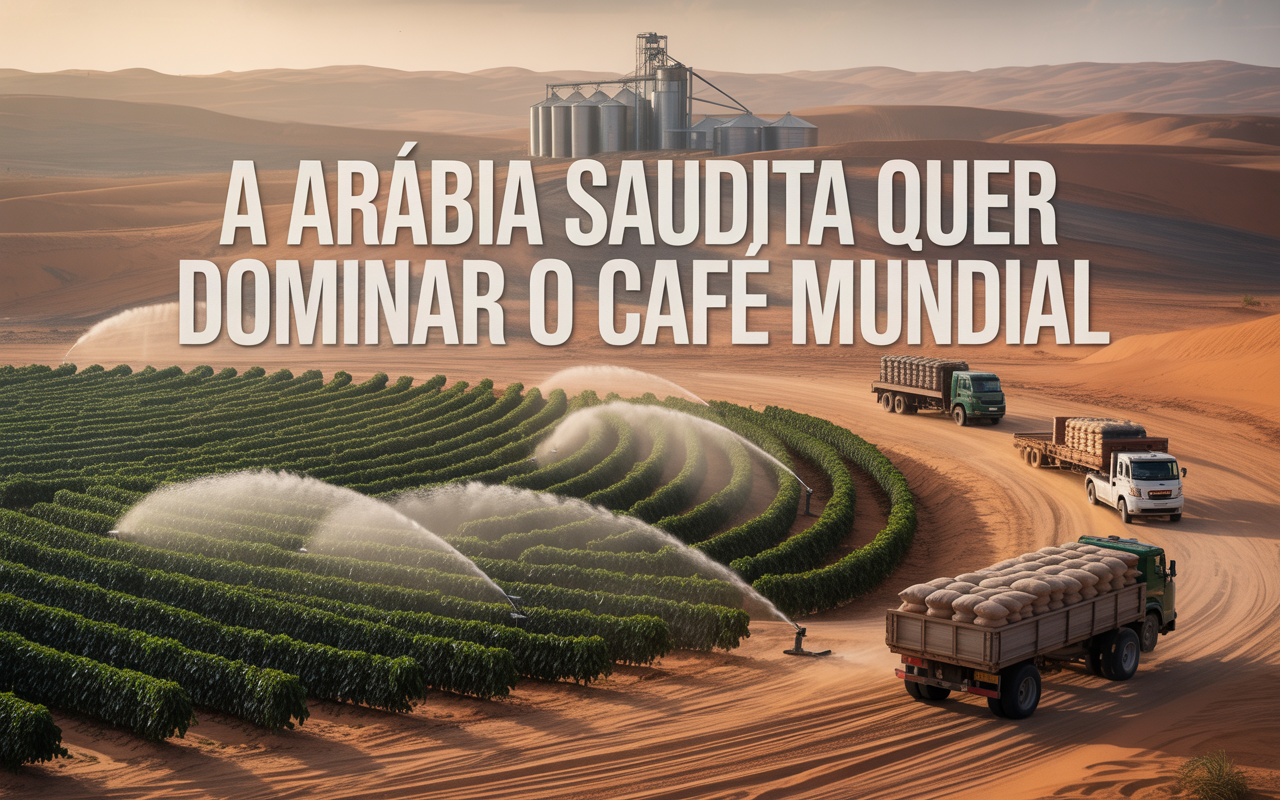
Saudi Arabia Invests Billions to Multiply Coffee Production by 10 by 2030, Expanding Irrigated Areas, Using Extreme Technology and Targeting the Global Premium Market.
Saudi Arabia, traditionally associated with oil and global energy power, is embarking on one of the boldest turns in its modern history: becoming a relevant coffee producer on an industrial scale. The movement, which could multiply national production from 800 tons to 7,000 tons by 2030, is part of the “Saudi Vision 2030”, the country’s most ambitious economic project to reduce dependence on oil and create new strategic pillars for development.
The Saudi government, supported by the FAO (United Nations Food and Agriculture Organization), is structuring an agricultural revolution in the heart of the desert. The goal is not only agronomic but also cultural, economic, and geopolitical. A country that consumes coffee on a massive scale but imports 95% of what it drinks now wants to build its own productive chain, generate jobs, standardize premium blends, and put its name on the global coffee map.
Production Multiplied by 10: The Billion-Dollar Plan to Create a New Coffee Power
The Saudi Reef program, the flagship of Saudi agricultural expansion, envisions an accelerated transformation of the coffee chain. Among the confirmed goals are:
-
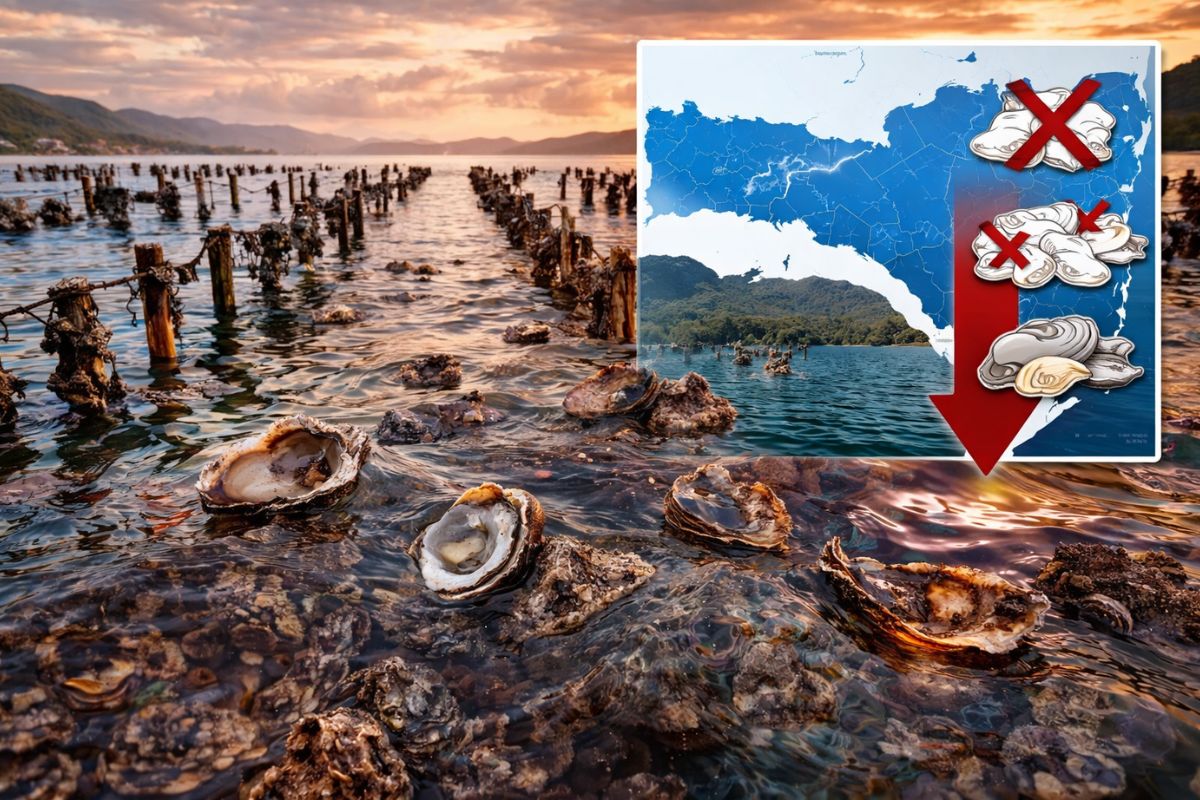
The sea water temperature rose from 28 to 34 degrees in Santa Catarina and killed up to 90% of the oysters: producers who planted over 1 million seeds lost practically everything and say that if it happens again, production is doomed to end.
-
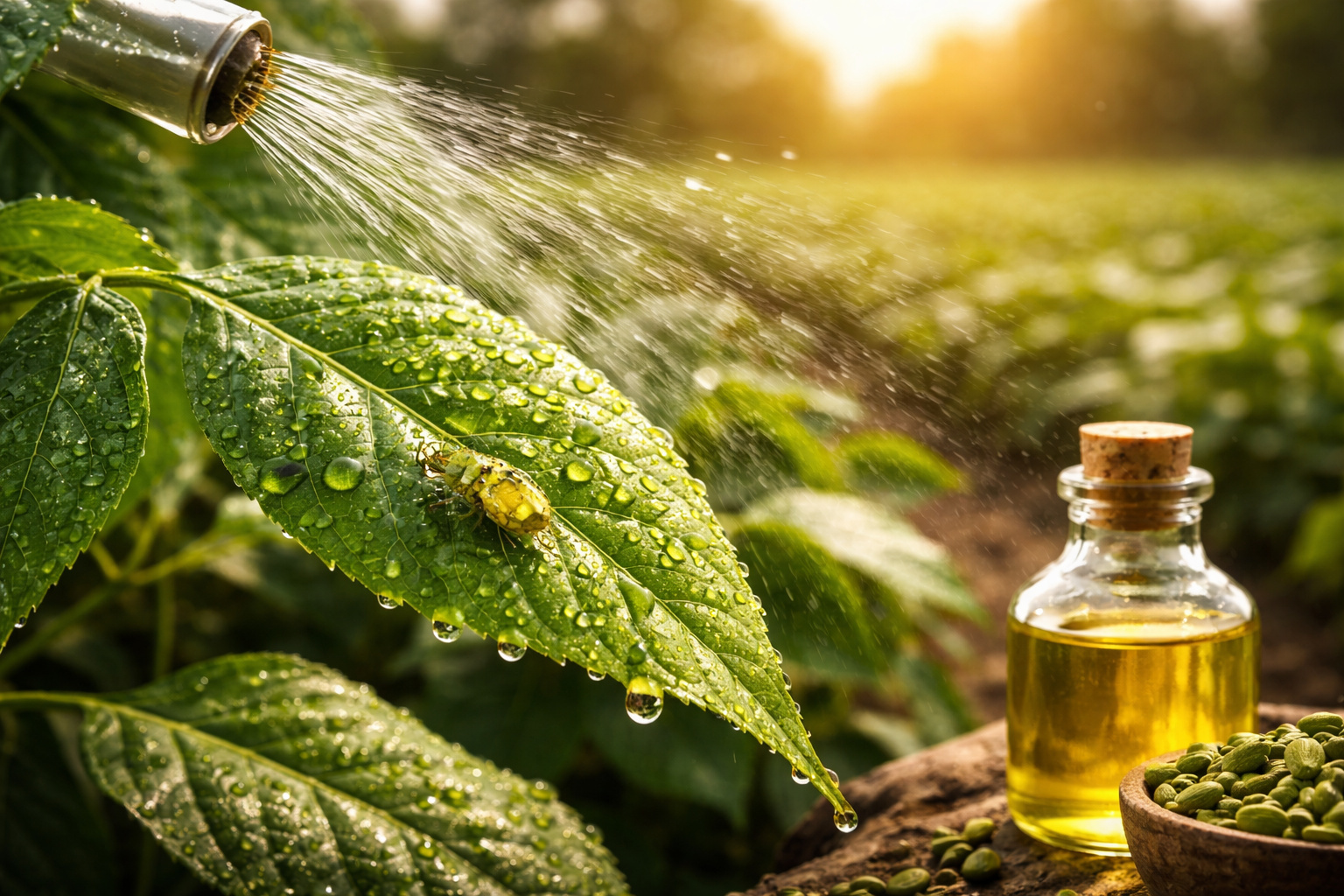
An Indian tree that grows in the Brazilian Northeast produces an oil capable of acting against more than 200 species of pests and interrupting the insect cycle, gaining ground as a natural alternative in soybean, cotton, and vegetable crops.
-
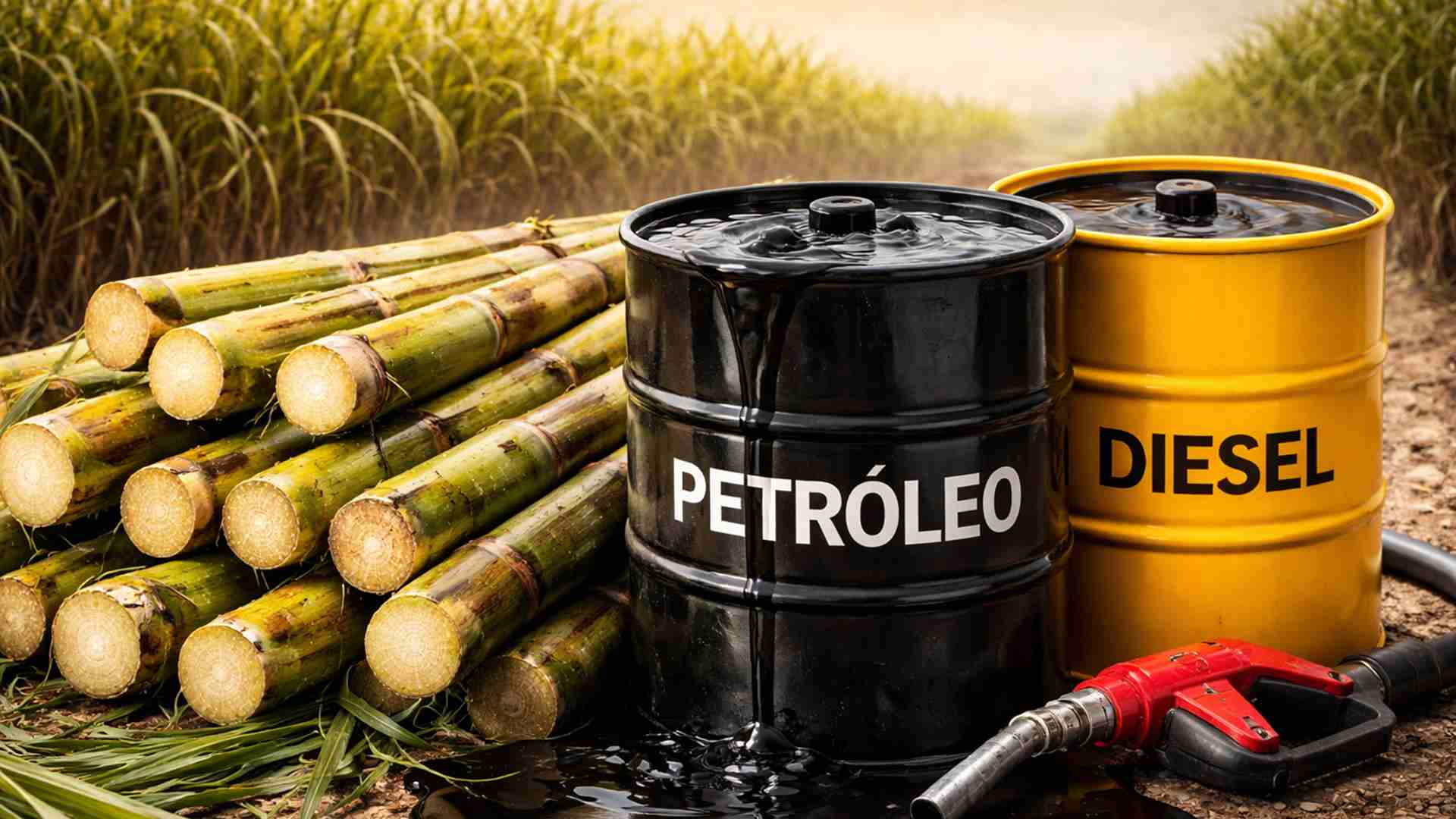
The rise in oil prices in the Middle East is already affecting Brazilian sugar: mills in the Central-South are seeing their margins shrink just as ethanol gains strength.
-
Rain gains strength in April, potentially exceeding 150 mm, placing the North, Northeast, and the coasts of the South and Southeast at the center of the heaviest forecast of the week.


• planting 50,000 new seedlings;
• increasing productivity by 30% by 2025;
• incentives for young producers to enter the activity;
• creating own roasteries and national certifications;
• expanding production in the mountains of Jazan, the birthplace of Khawlani coffee;
• international technical assistance and climate research in partnership with the FAO.
The bet goes beyond cultivation: the country wants to industrialize, package, certify, and sell “Saudi coffee” as a proprietary product, with identity and narrative, something essential to compete in the premium market.
Why Did the Kingdom Decided to Get Serious About the Coffee Game?
Saudi Arabia has always been a deep consumer of coffee, a symbol of hospitality, tradition, and religiosity. However, the country had almost no participation in global production.
Now, the government wants to completely change this dynamic. If the target is met, the country will rise from just 0.5% self-sufficiency to about 4.4%, a giant leap for a desert territory that needs extreme solutions to cultivate a delicate product like coffee.
Coffee in the Desert: Extreme Technology to Produce in Adverse Climate
To enable cultivation in hot and arid environments, the kingdom is investing in ultra-precision agriculture, with intensive use of:
• cutting-edge irrigation, with sensors and smart drip systems;
• strategic shading to reduce thermal stress;
• genetic improvement of heat-tolerant varieties;
• drones, automation, and artificial intelligence in management;
• specific research on physiological resistance of the plant in extreme environments.
The goal is not just to produce coffee; it is to prove that the desert can generate premium quality coffee, a feat that would have global repercussions.
Global Impact: How the Saudi Turn Affects Prices, Trade, and Even Brazil
The entry of Saudi Arabia into the sector does not threaten giants like Brazil or Vietnam, but it could reorganize important factors in the market:
The Demand for Specialty Coffees Is Set to Surge
The country wants to expand coffee shops, artisanal roasteries, and proprietary blends, and for that, it will need to import high-quality coffees. Brazil, the world’s largest supplier, stands to benefit directly.
The Kingdom Will Remain Highly Dependent on Imports
Even by multiplying its production, self-sufficiency will remain low, keeping Brazil as a key partner.
Brazilian Technologies Gain Space
Irriagation systems, bioinputs, management in high temperatures, and production models adapted to semi-arid conditions make Brazil a natural supplier of know-how.
4. The Arab Market Continues to Grow and Pay Well
With high income, strong cultural consumption, and the expansion of premium coffee shops, the Middle East is consolidating as one of the most profitable markets for Brazilian coffee.
Jazan and Khawlani Coffee: Centuries-Old Tradition as the Basis for “Saudi Coffee”
Saudi Arabia is reclaiming a forgotten wealth: Khawlani coffee, cultivated for centuries in the mountains of Jazan. It is one of the oldest coffees in the world, preserved by families who have maintained the cultivation for generations.


This story will be used as the basis for branding, rural tourism, and global marketing — a perfect narrative for the specialty coffee market.
The Challenges of Producing Coffee in the Desert and Why the Country Believes It Will Succeed
Planting coffee in Saudi Arabia is not simple:
• rainfall is scarce,
• irrigation is extremely expensive,
• agricultural labor is limited,
• initial productivity is low.
Even so, the country has something that many competitors do not have: money, technology, and long-term state planning.
The government is not improvising — it is building a new agro-industrial chain from the ground up, with a scientific basis, institutional support, and clear goals by 2030.
What to Expect by 2030: The New Geography of Coffee in the Middle East
If the plan is fulfilled, Saudi Arabia is expected to:
• multiply coffee properties,
• generate rural jobs,
• complete the industrialization of the chain,
• create its own certifications,
• enter the international circuit of premium coffees,
• reduce some of its external dependence,
• and become a regional reference in high-value-added coffee.
It will not be a rapid revolution, but it will be profound — and highly strategic.
The Kingdom of Oil Now Also Wants to Be the Kingdom of Coffee
In the coffee world, no one threatens Brazil. But some countries are entering the game board and few with such investment, ambition, and technology as Saudi Arabia.
The country is doing something rare: creating a new agricultural frontier in the heart of the desert, incorporating tradition, research, and long-term vision to occupy a space that until now did not exist.
And if the target is achieved, the kingdom will have built one of the most impressive turns in global agriculture.








Seja o primeiro a reagir!