








Study published in the journal Antiquity indicates that generic human figures represented multiple deceased and helped symbolize the passage between two worlds.
Decorated tombs built in Kyushu between the 6th and 7th centuries were not prepared to receive just one person, according to a new archaeological study.
The funerary chambers likely housed different individuals over time, which would explain the presence of simple, small human figures without any apparent identity.
Claudia Zancan, a researcher specialized in the subject, argues that this lack of detail was not accidental. The representations were made generically to include all the deceased buried in the same location.
-
King Charles III opens the gardens of his royal residence for the first time for a historic flower exhibition, arrives by carriage with Camilla, and is surprised by a toilet transformed into a sustainable planter.

-
Balcony immortalized by Michael Jackson in Pelourinho may change for good after 17 years, as merchant receives order to leave and the fate of the famous tourist spot remains surrounded by doubts.
-
Producing more than 15 billion liters and bringing together 1,954 registered breweries, Brazil’s beer production broke records in 2025, with exports reaching 218.4 million dollars, the highest value in the historical series.

-
Havan invests R$ 250 million, purchases a mega robotic system worth R$ 150 million to move goods at great heights, and expands the complex to the size of 35 football fields, in an operation of 1 million products per day aiming to become the largest distribution center in Latin America.


The study was published in 2026 in the scientific journal Antiquity, affiliated with the University of Cambridge. The research analyzed images preserved inside these ancient Japanese funerary structures.
Tombs could be reopened for new burials
The constructions belong to the end of the Kofun period, a phase marked by significant changes in the funerary customs of the Japanese elites.
Completely sealed burials began to lose space during that period. Horizontal stone chambers started to be used and could be reopened.
New bodies could be placed in the same tomb after the first burial. This reuse reinforces the interpretation that the paintings did not represent a specific person.
Zancan describes these structures as true dark chambers. The internal spaces were not designed for frequent visits, while the images remained hidden from most people.
Human figures in Kyushu had no identity
The decorated tombs of Kyushu show similarities with funerary structures found on the Korean Peninsula. The way of depicting human beings, however, presents striking differences.
Korean images used to show people larger than the surrounding objects. Japanese representations, on the other hand, placed humans in smaller dimensions.
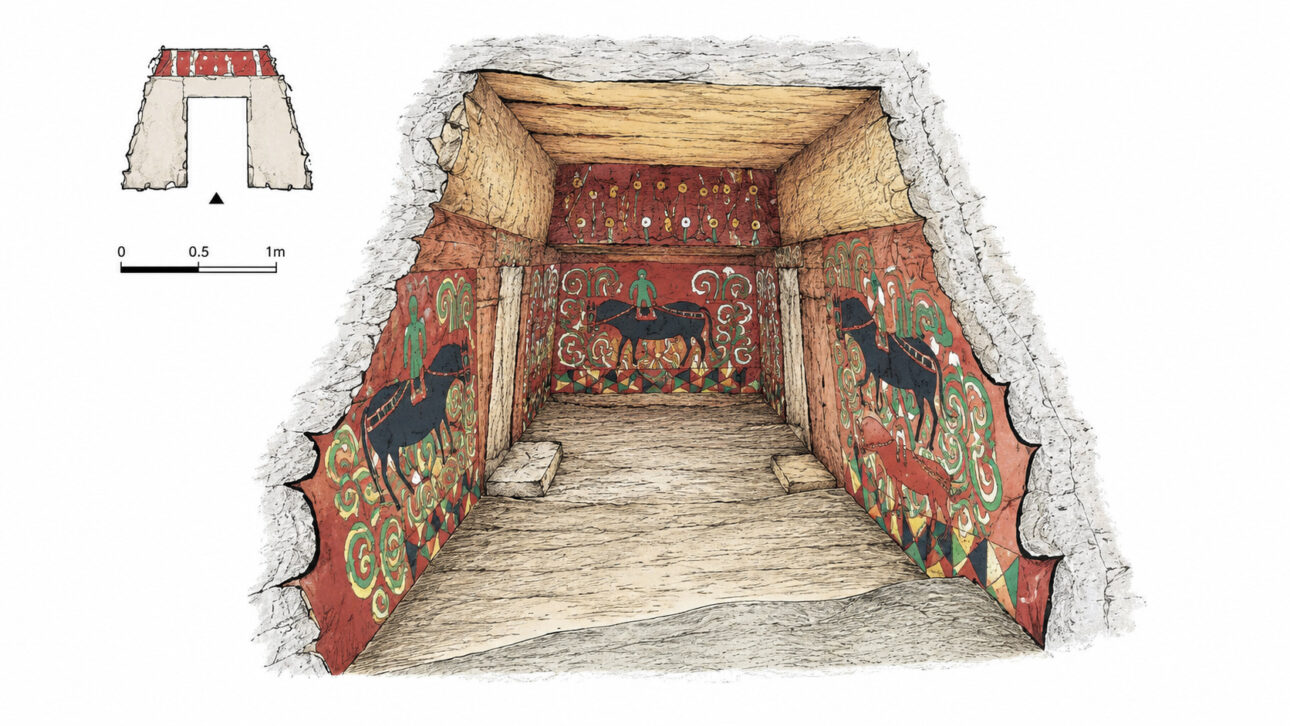
Faces, individual characteristics, and gender identification do not appear in these figures. The bodies were drawn in an extremely simple manner, similar to small stick figures.
The absence of identity would have allowed each drawing to represent any person buried in the chamber. The images would function, therefore, as collective symbols.
Detailed horses contrast with tiny riders
The Ōzuka tomb especially caught the researcher’s attention. Five horses and six riders are depicted near the funeral entrance.
The animals have ornate harnesses and carefully crafted features. Even the gender of some horses can be recognized in the paintings.
The riders, however, appear faceless and with very simple bodies. One of the human figures measures approximately four times less than the mounted horse.
The difference could initially be understood as a lack of artistic skill. The precision observed in the animals, however, shows that the creators knew how to produce detailed representations.
The simplicity of the humans would have been an intentional cultural choice, and not a technical limitation of the artists responsible for the paintings.
Paintings were divided into three groups
Claudia Zancan separated the human representations into three main sets. Each group appears in a different area of the funeral constructions.
- Armed guards appear at the entrances of rock-carved tombs.
- These characters have faces and show aggressiveness towards those who approach.
- Faceless people appear at the boundary between the world of the living and the dead.
- Even simpler figures occupy the deep parts of the funeral chambers.
The third group aroused the most interest during the research. These anonymous characters seem to follow a symbolic path through the interior of the tomb.
The paintings could function as a kind of guide for the souls, indicating the way during the passage to the world of the dead.
Collective images explain the absence of faces
The interpretation presented by the researcher changes the way of understanding these tombs. The figures without identity would not have been created to portray specific individuals.
The drawings would represent all the occupants of the burial chambers. Each character could symbolize people buried at different times.
The reuse of the tombs made this choice even more necessary. An overly individualized image would not adequately represent the new dead placed later in the location.
The paintings would also have fulfilled a spiritual function. The characters would show a collective journey, gradually crossing the boundary between life and death.
Research faces a race against time
The preservation of these images worries the specialists. Some paintings are at real risk of deterioration and may disappear completely.
Zancan states that he cannot dedicate the desired time to each work. The number of tombs and the threat of loss make the documentation process increasingly urgent.
The detailed recording of the walls can preserve information that still remains visible. The research also helps to understand the funeral customs of ancient Japanese communities.
The tiny and faceless humans have ceased to be seen merely as rudimentary drawings. The new analysis reveals a cultural language planned to represent various people.
The decorated tombs of Kyushu show, in this way, that even seemingly simple figures can hide a complex vision about death, memory, and spiritual passage.


