





 Portuguese
  English
  Spanish
  5 min of reading
  0 comments


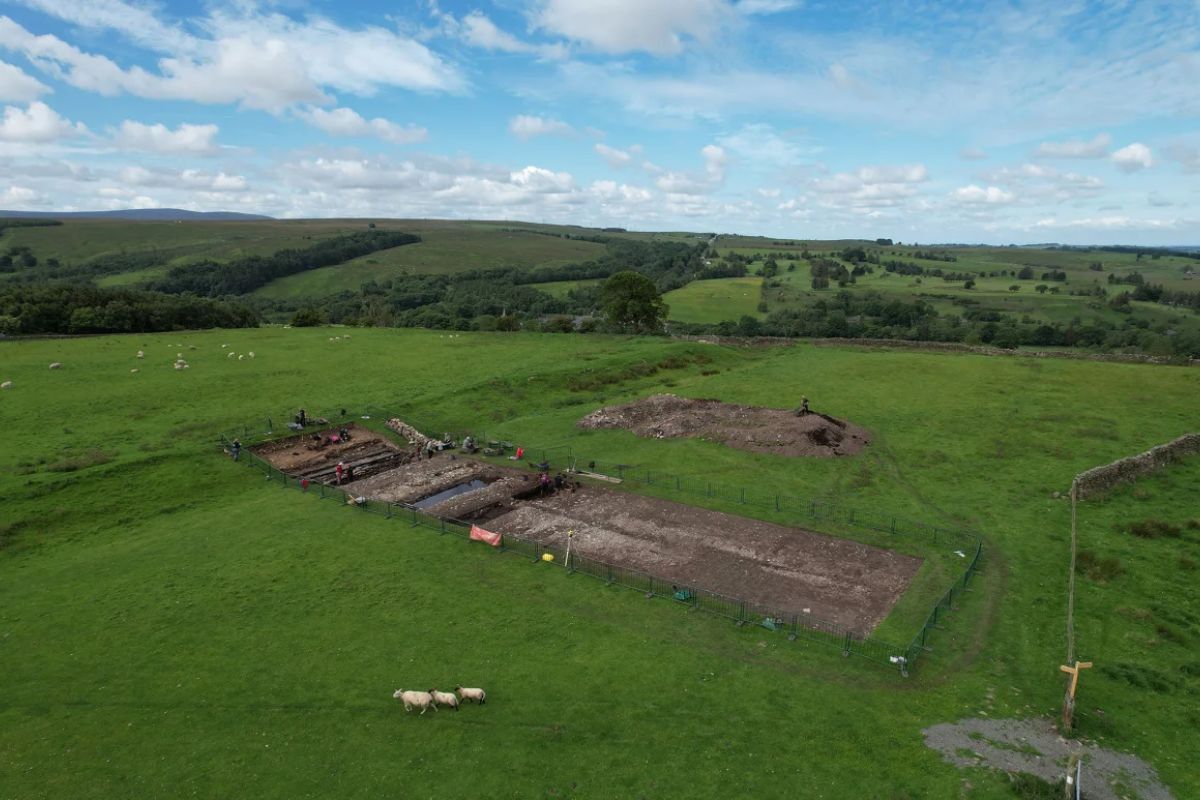
Excavations at Magna Fort, near Hadrian’s Wall in England, revealed 34 Roman shoes including giant shoes over 30 centimeters that survived nearly two thousand years thanks to low oxygen soils, and the unusual size raises questions about the origin and physical stature of the soldiers who lived at that garrison on the borders of the Roman Empire
Giant shoes over 30 centimeters were found by archaeologists at an ancient Roman fort near Hadrian’s Wall in England. According to a report in July 2025 from CNN, the excavation at Magna Fort revealed 34 pieces of footwear, among which were surprisingly large examples that deviate from the standard found at other Roman archaeological sites.
The giant shoes survived nearly two thousand years buried thanks to special soil conditions and now raise a mystery that intrigues researchers: who were these Roman soldiers with such large feet and why were they at that specific garrison. The contrast with finds from other Roman forts is what makes the giant shoes so intriguing.
At the neighboring fort of Vindolanda, the average shoe size found was much smaller, suggesting that the garrison at Magna Fort housed individuals physically different from most Roman soldiers in the region.
-
Meta’s new smart glasses are not just for seeing; they use artificial intelligence, analyze your food, summarize messages, and can even change the way you work in professions like engineering.

-
According to an analysis by NASA, only one human-made structure is visible from space, and it is not the Great Wall of China or the Pyramids of Egypt.

-
After 377 years of history, the Brazilian Army will have its first female general: Colonel Claudia Cacho has been promoted to brigadier general by Lula and will receive the sword and command baton this Wednesday in Brasília.

-
A Mercado Livre customer opened their package and found 32 resumes of people looking for jobs crumpled as protective paper inside the box, exposing names, addresses, documents, and phone numbers of dozens of candidates.


More than simple artifacts, the giant shoes serve as indirect records of the physical and cultural characteristics of a multicultural military population that lived on the fringes of the Roman Empire nearly two millennia ago.
What the giant shoes reveal about the soldiers who lived at Hadrian’s Wall

The giant shoes found at Magna Fort are not just everyday objects.
Shoes over 30 centimeters indicate individuals significantly taller than the Roman average of the time, raising the hypothesis that these soldiers came from specific regions of the Empire where height was greater.
The Roman army recruited men from all parts of the Empire, from the Iberian Peninsula to North Africa and the Middle East.
The variety of styles of the shoes found reinforces this diversity: there were standardized military shoes, women’s footwear, and even children’s shoes, indicating that entire families lived alongside the soldiers at the fort.
The giant shoes suggest that the garrison at Magna Fort was not composed solely of common Roman soldiers, but of a diverse population that included men of different backgrounds, physical builds, and roles.
This diversity was common on the frontiers of the Empire, where auxiliary troops of different ethnicities served alongside Roman legionaries.
How the giant shoes survived nearly two thousand years buried in England
The preservation of leather shoes for nearly two millennia is the result of very specific environmental conditions.
The soil at Magna Fort has low oxygen levels, which slowed the decomposition of organic materials and allowed the giant shoes and other footwear to reach the present day in recognizable condition.
In addition to the soil, ancient tanning techniques contributed to durability. The Romans used plant materials to tan leather, making it more resistant to moisture and heat.
This combination of anaerobic soil and treated leather created preservation conditions that are rare at archaeological sites.
However, recent climate changes threaten this natural preservation. Changes in groundwater levels and soil composition may accelerate the decomposition of artifacts that have survived intact for centuries.
The urgency of the excavations is real: the giant shoes that have endured for nearly two thousand years may not survive the coming decades if environmental conditions continue to change.
The hypotheses about who wore the giant shoes at Magna Fort
Researchers are investigating two main hypotheses to explain the presence of the giant shoes at Magna Fort.
The first hypothesis points to the geographical origin of the soldiers. Peoples from Northern Europe, such as Germans and Gauls, had a higher average height than Mediterranean Romans, and the army widely recruited from these regions to garrison distant frontiers.
If the garrison at Magna Fort was primarily composed of auxiliary troops from northern regions, it would make sense to find larger footwear than the Roman average.
The second hypothesis considers the possibility that the giant shoes belonged to individuals with specific roles that required a larger physical build, such as cavalrymen or heavy equipment carriers.
Both hypotheses reinforce the same conclusion: the Roman army on the frontiers of Britannia was much more diverse in physical and cultural terms than written records and artistic representations suggest.
The giant shoes are the material proof of this diversity.
Why the discovery of the giant shoes changes what we know about the Roman Empire
Finds like the giant shoes from Magna Fort help reconstruct aspects of daily life that rarely appear in written records.
The official history of the Roman Empire was written by urban elites living in Rome, far from the frontiers. The daily lives of the soldiers guarding the Empire’s borders appear almost exclusively in archaeological finds like these shoes.
Personal items like shoes offer a more human and detailed view of life on the frontiers: what they wore, how they dressed, whether they had families with them, where they came from.
Each pair of giant shoes found at Magna Fort is an individual story of someone who lived nearly two thousand years ago and who left, unwittingly, a literal mark on the ground.
The discovery also highlights the importance of preserving archaeological sites threatened by climate change, because artifacts like the giant shoes that have survived for millennia could disappear in decades if environmental conditions change.
Giant shoes, nearly two thousand years and a mystery that the soil has kept until now
Archaeologists found giant shoes over 30 centimeters at a Roman fort near Hadrian’s Wall.
The footwear survived nearly two thousand years thanks to low oxygen soils and Roman tanning techniques, and the unusual size raises questions about the origin and physical stature of soldiers that the Roman Empire sent to the far reaches of Britannia.
The giant shoes tell a story that no Roman text recorded: that of different soldiers, from distant lands, who wore leather and walked the frontier of an entire empire. And now, two millennia later, their steps have returned to the surface.
Did you know that the Roman army was so diverse? Did you imagine that shoes nearly two thousand years old could be preserved like this? What intrigues you more: the size of the footwear or the origin of the soldiers? Leave your thoughts in the comments and share with those who love history and archaeology.









Seja o primeiro a reagir!