





 Portuguese
  English
  Spanish
  5 min of reading
  0 comments


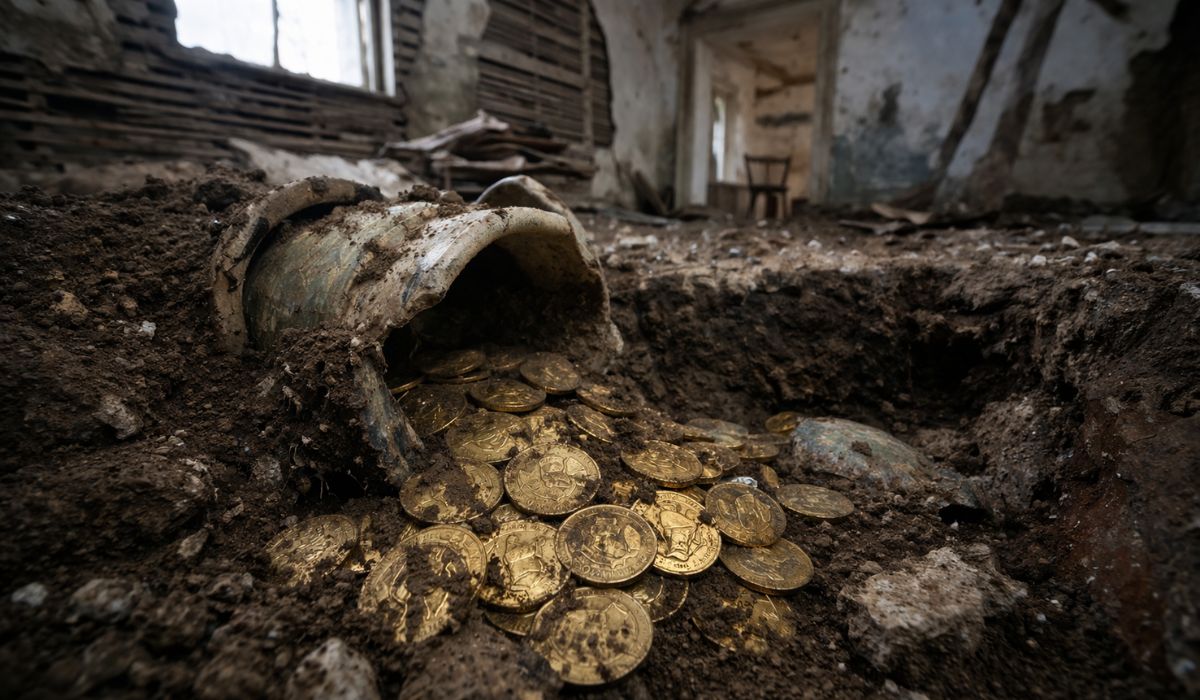
Discovery made under a historical house in Torzhok gathers hundreds of gold coins from the end of the Russian Empire and sheds new light on wealth protection strategies in a period of strong political instability.
Treasure of gold coins found in Russia
Archaeologists found under the foundations of a historical house, in the city of Torzhok, in northwestern Russia, a set of 409 gold coins from the final period of the Russian Empire.
The material appeared during preventive excavations conducted before new construction and includes pieces minted between 1848 and 1911, according to the Institute of Archaeology of the Russian Academy of Sciences.
The treasure was hidden inside the fragments of a candyushka, a vitrified ceramic container, buried in a well dug at the base of the property.
-
The Mediterranean has become the target of the largest underwater archaeological mission ever coordinated by UNESCO: eight countries have joined forces to map shipwrecks and protect a historic corridor.

-
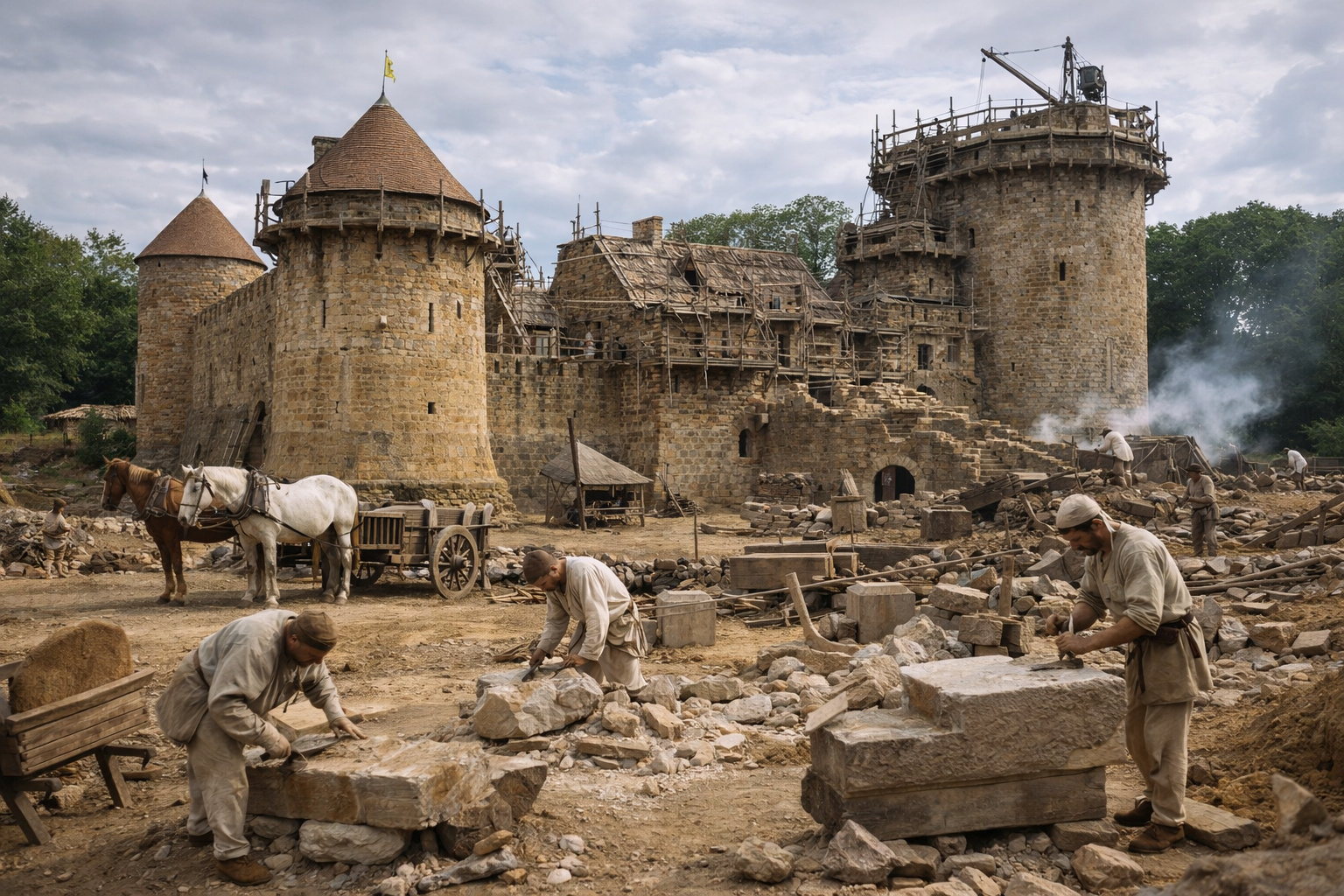
In France, a group of artisans spends 28 years building a medieval castle with 13th-century tools, without machines, without measuring tapes, and with almost zero carbon footprint, and the rediscovered techniques helped in the reconstruction of Notre-Dame.
-
Tourists on Everest were poisoned by guides who mixed substances in food to provoke false symptoms of altitude sickness while helicopter operators and hospitals charged inflated rescue fees to insurance companies.

-
Few people know this, but Neil Armstrong, one of the most famous NASA astronauts in history, survived the Korean War after jumping from the plane during his seventh combat mission aboard the USS Essex aircraft carrier of the United States.


According to the Russian institute, the find was recorded in 2025 by researchers from the institute itself and the Historical and Ethnographic Museum of All Russia, in an area of Sadovaya Street, in the historical sector of the left bank of Torzhok.
How many coins were in the hideout
The official report states that the set consisted of 387 coins of 10 rubles, 10 coins of 5 rubles, 10 coins of 15 rubles, and two coins of 7.5 rubles.
The majority of the pieces were issued during the reign of Nicholas II, the last Russian czar.
Among the exceptions, there is one 5 ruble coin from the period of Nicholas I and another of the same value minted during the reign of Alexander III.
The dates help to situate the lot at the end of the imperial era, although the concealment likely occurred later, according to the researchers’ assessment.

As the most recent coin was minted in 1911, experts state that the material was hidden years later, amid the political instability of the early 20th century.
In a statement, the Institute of Archaeology of the Russian Academy of Sciences describes the case as a “return treasure”, a term used for situations where the owner buries goods intending to retrieve them later but fails to do so.
Relationship with the Russian Revolution
The relationship with the Russian Revolution appears in the historical context in which this type of concealment became more frequent.
Nicholas II abdicated in March 1917, amid the crisis that led to the end of the monarchy, and he and his family were executed on July 17, 1918.
For decades, rumors circulated that Grand Duchess Anastasia had escaped.
Subsequent research, however, indicated that she died with the other members of the Romanov family, according to studies of the remains released by specialists and reference institutions on the subject.
This context helps explain why families hid reserves in backyards, basements, and foundations of houses during that period.
In the case of Torzhok, archaeologists state that the concealment likely occurred during the revolutionary events of 1917 or after them.
Still, the identity of who buried the coins has not been confirmed.
Archive documents cited in the disclosure of the case indicate that 24 families lived in that part of the city at the end of the 19th century and the beginning of the 20th century, but the comparison between the old and current numbering of the properties did not allow for associating the hideout with a specific name.
Value of the treasure and historical interest
The original value of the lot also draws attention.
According to the report from the Institute of Archaeology of the Russian Academy of Sciences, the sum of the pieces amounts to 4,070 rubles in gold.
At the time, this amount represented a significant financial reserve.
This data helps to gauge the economic weight of the set for the owner, although the main interest of the discovery, according to the researchers, lies in the historical and documentary value of the material.
Today, attention also falls on the value of the gold contained in the coins.

Estimates reported by the international press indicate that the lot could exceed US$ 500,000 considering the metal of the pieces, excluding any numismatic appreciation.
However, researchers emphasize mainly the potential of the find for studies on monetary circulation, savings methods, and heritage preservation strategies in a period of political transition.
In this type of discovery, the archaeological context is often considered as relevant as the objects found.
What the discovery reveals about Torzhok
Torzhok, located in the Tver region, is known for its architectural heritage and long historical occupation.
Salvage excavations like the one that revealed the coins are often conducted before construction in ancient areas to avoid the loss of archaeological remains.
In this case, the find shows how domestic structures can hold evidence of decisive moments in Russian history.
For the researchers involved in the excavation, the set helps document practices of protecting assets amid the political rupture of the early 20th century.
The container in which the coins were hidden is also considered an important part of the discovery.
According to the archaeologists, the use of a domestic ceramic object reinforces the hypothesis that it was a privately concealed reserve hidden discreetly.
There is currently no indication that the set was gathered for the purpose of collection or display.
Based on the elements disclosed so far, the material is treated as a buried savings not recovered by its owner.
Where the found coins will go
After scientific analysis, the collection will be transferred to the Historical and Ethnographic Museum of All Russia.
The institution will be responsible for the custody and preservation of the set, as well as allowing more detailed studies on the provenance, chronology, and conservation status of the coins.
The discovery also fits into a known pattern of urban archaeology.
Contemporary works often reveal traces of past crises, including goods hidden during periods of war, revolution, or forced displacement.
In the case of Torzhok, the set of coins offers a material record of a period marked by political uncertainty and profound changes in Russia.
The find, according to researchers, expands knowledge about daily life and the forms of heritage preservation adopted in that context.







Seja o primeiro a reagir!