





 Portuguese
  English
  Spanish
  3 min of reading
  1 comment


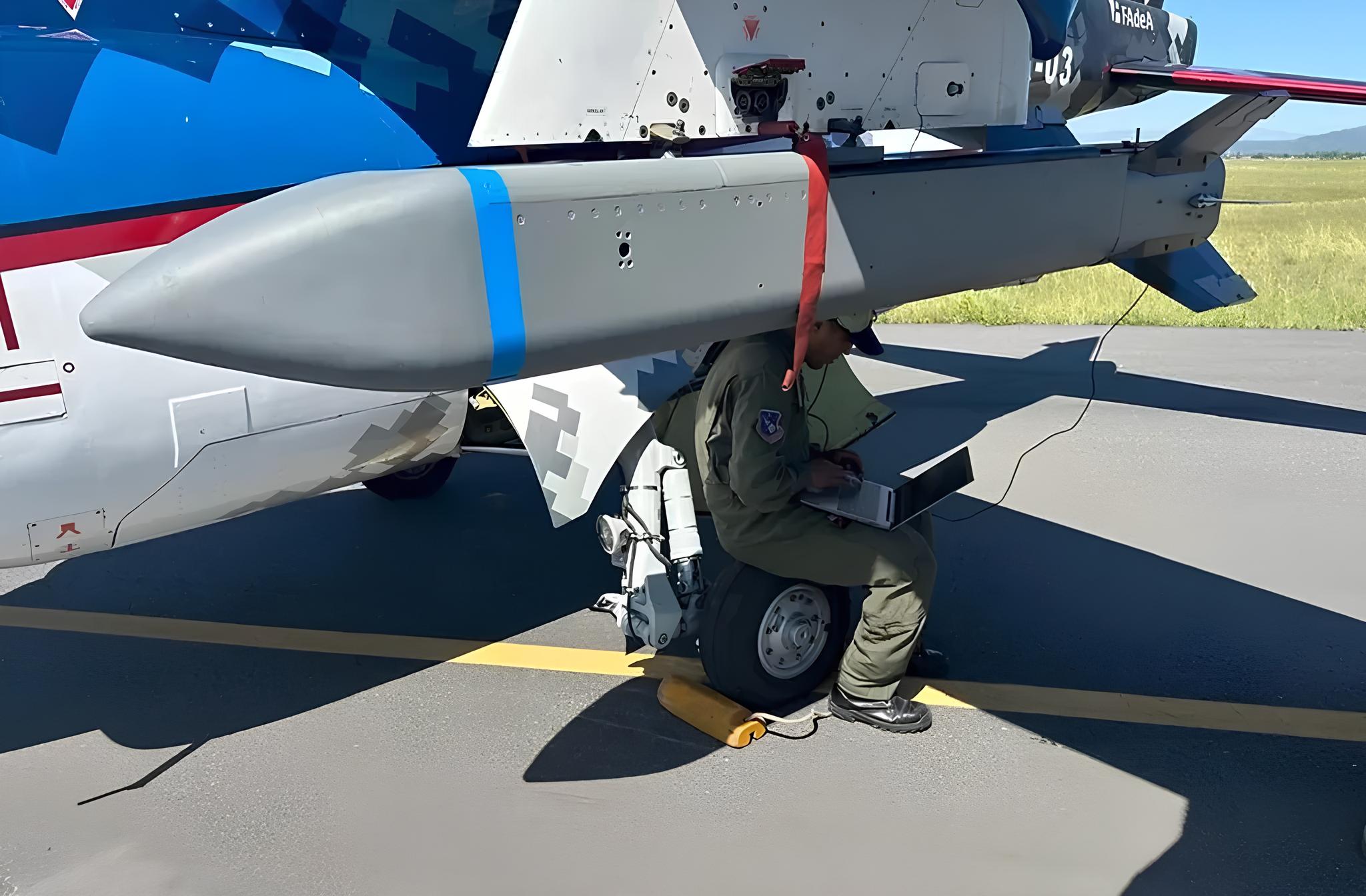


Argentine Air Force Reaches Historical Milestone in Strategic Arming by Resuming Tests of the Dardo Gliding Bomb, with Impressive 200 km Range and Maximum Precision, Revolutionizing Its Military Capacity.
The resumption of development of the Dardo FAS 850 gliding bomb by the Argentine Air Force (FAA) marks an important technological advancement for the country. Through its research and testing divisions, the project returns to the forefront after more than a decade almost stagnant. The Argentine innovation promises to transform the country’s long-range attack capability, ensuring greater precision and safety for military operations.
Learn How the Dardo Gliding Bomb Was Developed
The history of Argentine Air Force technology began in the 1980s with a conventional bomb equipped with a rocket motor for greater penetration. Although limited to a few prototypes, this version of the Dardo gliding bomb paved the way for the Dardo II, developed in the late 1990s.


Equipped with folding wings, a GPS guidance system, and a rectangular cross-section fuselage, the Dardo II achieved significant advancements. Initial tests were conducted aboard Mirage IIIC aircraft from the Armaments and Operational Systems Testing Center (CEASO).
-
The German “steel monster” weighing 55 tons fires up to 10 projectiles per minute at over 40 km and avoids counterattacks on the battlefield by moving quickly to escape enemy attacks; meet the Panzerhaubitze 2000.

-
USS Gerald R. Ford, the largest aircraft carrier in the world, returns to sea after a fire in the laundry in the Red Sea; repaired in Crete, it resumes missions of Operation Epic Fury against Iran.

-
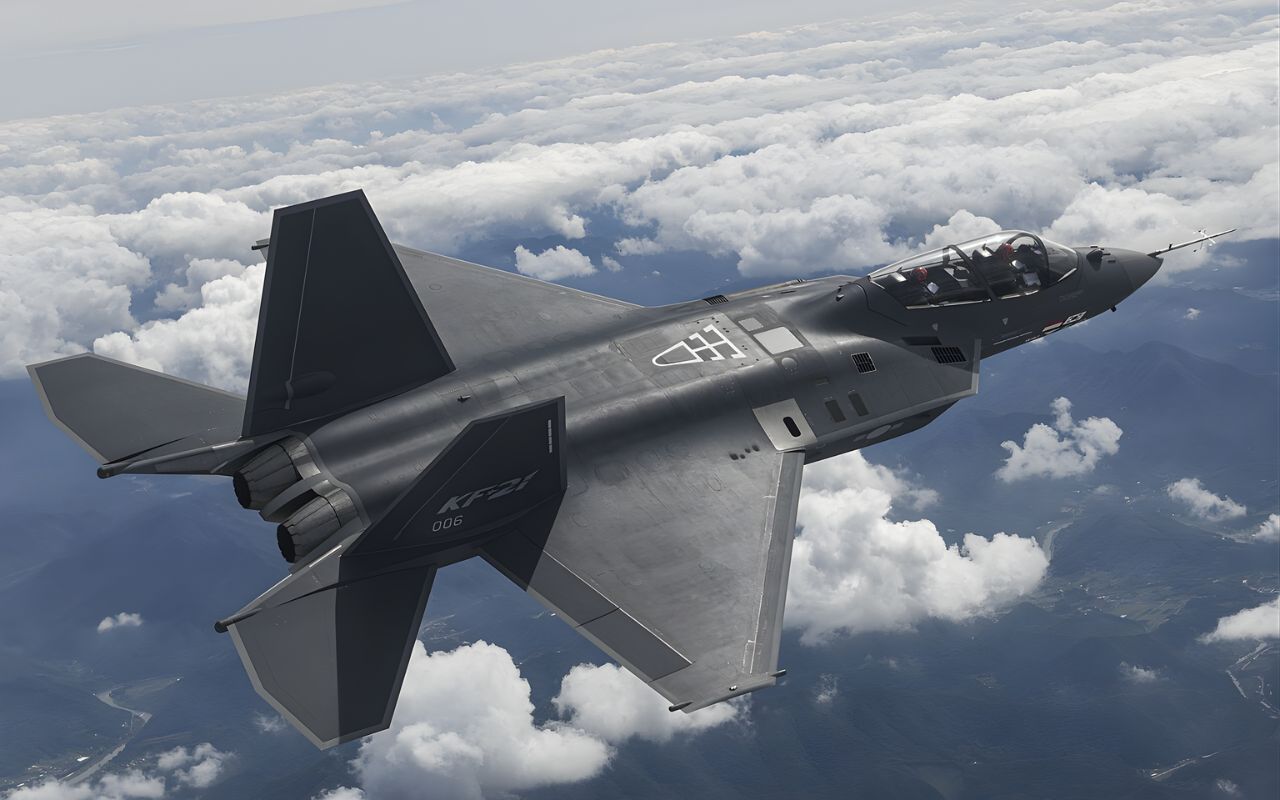
Military power: South Korea’s new KF-21 fighter jet will be a key component in replacing the aging aircraft of the air force, placing the country on the map of air military powers.
-
With 310 meters, 80 thousand tons, and capable of operating for 45 years, the new nuclear aircraft carrier France Libre will be the largest in France and will enter service in 2038.


In 2001, however, the Argentine Air Force project was suspended, only to resume in 2007 when integration was assessed in aircraft such as the McDonnell Douglas A-4AR Fightinghawk and the Dassault Super Étendard.
In 2011, an advanced prototype, the FAS-850 Dardo 2-B, brought new capabilities to the air force, including a range of up to 60 km, launch at 40,000 feet altitude, and speeds of up to Mach 0.9. Another variant of the Dardo gliding bomb is the 2-C, equipped with a small turbine and could reach an incredible 200 km range.
Equipment of the Argentine Air Force Will Undergo Tests in 2025
In 2023, the FAA resumed the project under the supervision of the Applied Research Center (CIA) and the Flight Test Center (CEV). The first step was to test the integration of the Dardo III in the prototype Pampa III EX-03, using an inert casing and cameras to assess stability during flight.
The continuation of tests for the Dardo gliding bomb in 2025 will include the launch of inert bombs, followed by motorized versions and, finally, those loaded with explosives.
Additionally, there are expectations that the system will be adapted for the F-16, awaiting approval from the United States. Despite potential diplomatic challenges, success in integration with the Pampa III already represents a major advance.
The equipment will provide the Argentine Air Force with the capability to strike targets with greater precision at long distances, reducing exposure to enemy air defenses.
Understand the Impact of the Production of the Dardo Gliding Bomb
If large-scale production is achieved, the Dardo III gliding bomb will position the Argentine Air Force on a strategic level in the military landscape of the region. The project symbolizes the strengthening of the country’s defense capabilities and the enhancement of the national military technology industry, bringing autonomy and innovation to air operations.
With the advancement of the Dardo gliding bomb’s development, the Argentine Air Force seeks to strengthen its position as a significant power in Latin America, betting on long-range and high-precision solutions to face modern battlefield challenges.
It is important to highlight that the country already has its first F-16 fighter. The aircraft, a F-16B Fighting Falcon Block 10 model, is being transported from Aalborg, Denmark, on a Lockheed C-130 Hercules aircraft. Currently, part of the fighter, including the engine, has been loaded onto the C-130H registration TC-66, while the remainder will follow on the KC-130H TC-69, which is already on its way to the European country.









JAJAJAJAJA..pero si es el mismo prototipo obsoleto que mostraban los K hace años ya!!!