





 Portuguese
  English
  Spanish
  3 min of reading
  0 comments


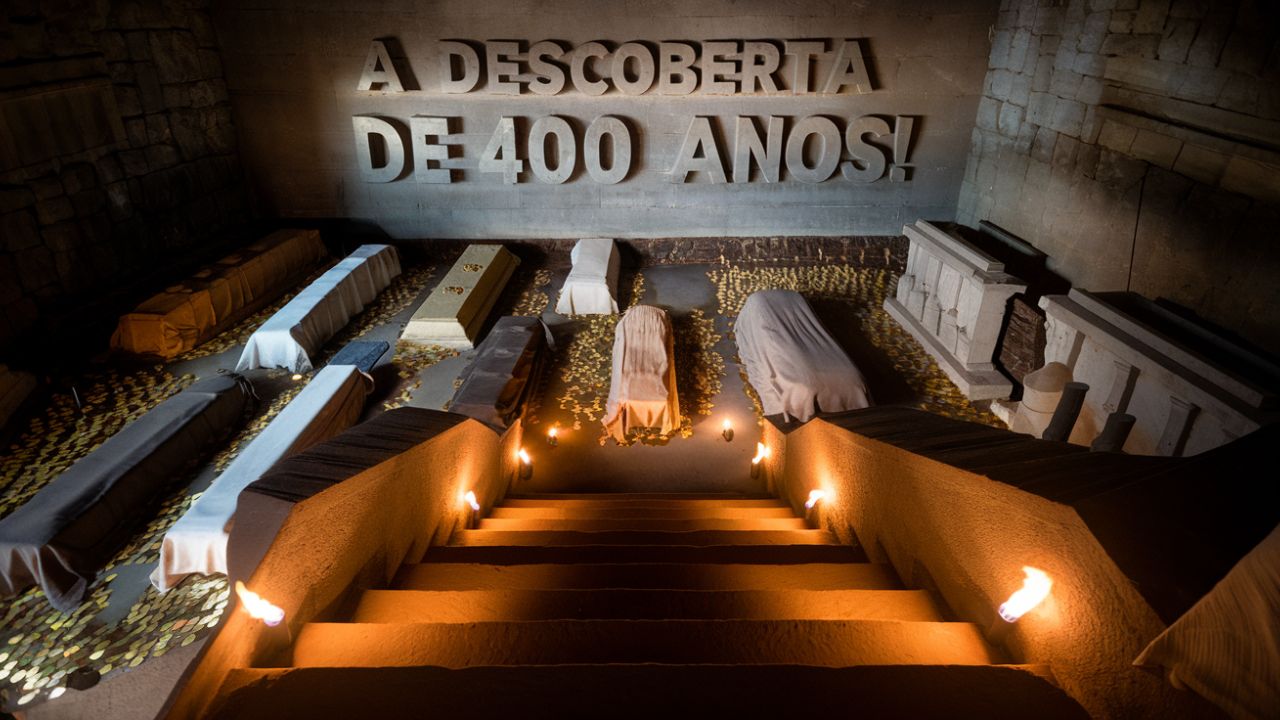
A Simple Restoration at the Church of Saint Philibert in France Led Archaeologists to a Forgotten Stairway That Revealed a 400-Year-Old Tomb, Ancient Coins, Rosaries, and Sixth-Century Sarcophagi, Transforming the Site Into a True Portal to History.
Imagine stumbling upon a forgotten stairway and ending up uncovering secrets from centuries ago. That’s exactly what happened at the Church of Saint Philibert in Dijon, France, where archaeologists discovered a 400-year-old tomb. This journey, which began as a simple restoration project, turned into an extraordinary trip through time.
The Church of Saint Philibert: A Treasure of Lost Stories
Built in the second half of the 12th century, the Church of Saint Philibert is a landmark of medieval architecture. Over the centuries, the site has accumulated stories and layers, each reflecting the social and cultural changes of the time.
During the 18th and 19th centuries, the church was used as a salt depot, causing structural damage that, decades later, would require urgent restoration. However, it was this very process that opened doors to new discoveries.
-
Attracting around 250,000 people a year, a lighthouse 200 meters from the sea, on a 60-meter high cliff, on the North Sea coast in Denmark, becomes one of the most impressive examples of how nature can threaten historical buildings.

-
The narrowest house in the world is only 63 centimeters wide, but inside it can accommodate a bathroom, kitchen, bedroom, office, and even two staircases.

-
In the middle of the sea, these enormous concrete and steel structures, built by the British Navy to protect strategic maritime routes, look like they came straight out of a Star Wars movie.

-
For years, no one could cross a neighborhood in Tokyo because of the tracks, but an impressive solution changed mobility and completely transformed the local routine.


An Irresponsible Decision in the 1970s

In the 1970s, a concrete slab was installed for heating, sealing the salt-rich soil. The heating caused damage, but also “concealed” a staircase that led to a forgotten world beneath the church.
As they explored the site, archaeologists encountered a staircase that no one knew existed. This stairway led to a tomb containing coffins of children and adults, wrapped in simple shrouds. Among the remains, ancient coins and rosaries were found, connecting the past and present in a surprising way.
Impressive Discoveries Underground by Archaeologists
The tomb revealed simple yet significant burial practices dating back 400 years. This discovery brought to light stories of lives that would have otherwise been forgotten forever.
Further down, archaeologists found sarcophagi from the Late Antiquity and Merovingian periods. One of the most impressive pieces included a sculpted lid, indicating the significance of the site as a burial center.
The Significance of the Discoveries
The evidence shows that the church served as an important burial site throughout various eras, from the end of the Roman era to the Early Middle Ages. This underscores its historical and cultural relevance.
The discoveries made so far are impressive, but the potential for finding more buried secrets is enormous. Who knows what else the depths of this church still hold?
The story of the forgotten stairway at the Church of Saint Philibert is a reminder of how the past can be hidden right beneath our feet. Discoveries like this not only reveal ancient secrets, but also connect us with our own cultural roots. After all, each layer of unearthed history is a new piece in the great puzzle of our past.








-

-

-

-

41 pessoas reagiram a isso.