






 Portuguese
  Spanish
  3 min of reading
  0 comments


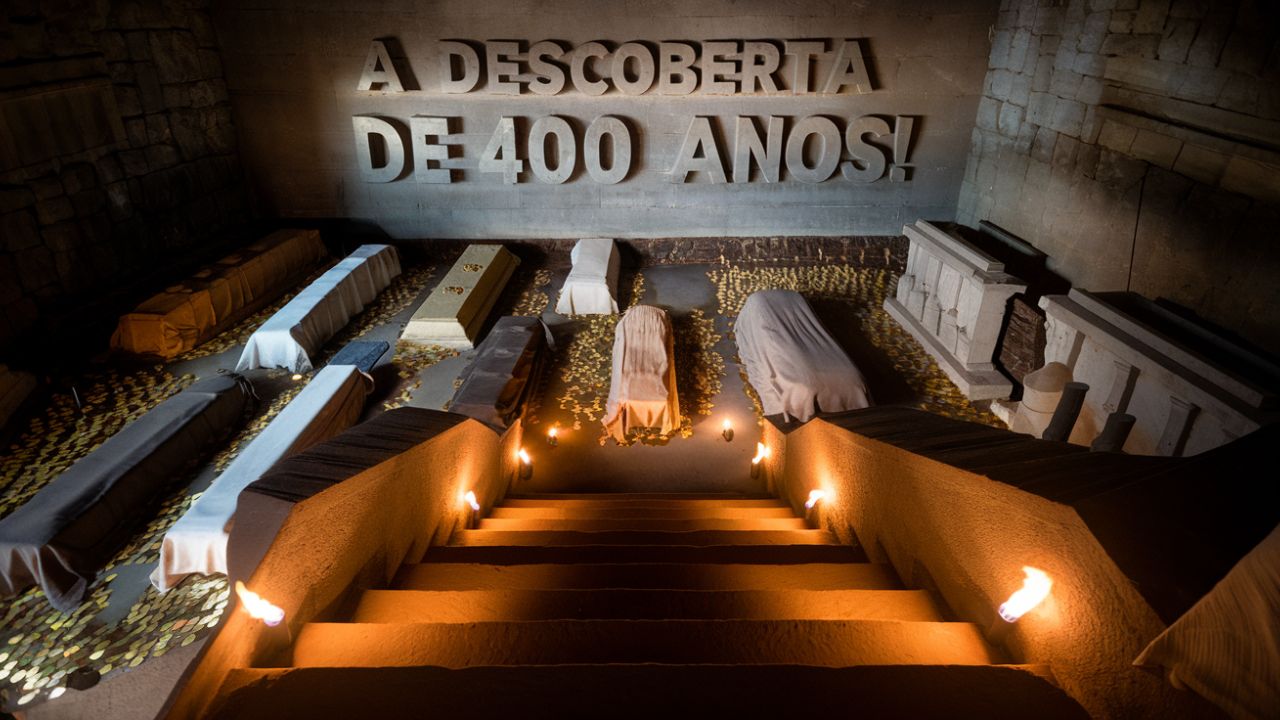
A Simple Restoration at the Church of Saint Philibert in France Led Archaeologists to a Forgotten Stairway That Revealed a 400-Year-Old Tomb, Ancient Coins, Rosaries, and Sixth-Century Sarcophagi, Transforming the Site Into a True Portal to History.
Imagine stumbling upon a forgotten stairway and ending up uncovering secrets from centuries ago. That’s exactly what happened at the Church of Saint Philibert in Dijon, France, where archaeologists discovered a 400-year-old tomb. This journey, which began as a simple restoration project, turned into an extraordinary trip through time.
The Church of Saint Philibert: A Treasure of Lost Stories
Built in the second half of the 12th century, the Church of Saint Philibert is a landmark of medieval architecture. Over the centuries, the site has accumulated stories and layers, each reflecting the social and cultural changes of the time.
During the 18th and 19th centuries, the church was used as a salt depot, causing structural damage that, decades later, would require urgent restoration. However, it was this very process that opened doors to new discoveries.
-
An 84-year-old mother wakes up before midnight in Japan, keeps a family bakery open for 55 years, and sells cheap handmade bread; the shop in Fukuoka produces up to 400 units a day with the help of her son.

-
Tired of seeing her salary disappear with the mortgage, a 24-year-old sells her £125,000 house, buys a van for £13,000, invests £6,000, transforms the vehicle into a home, and decides to live on the roads of Europe.

-
As the polar cold wave freezes the South this week, archaeology reminds us how the Kaingang dug underground houses on the Santa Catarina plateau to survive frosts millennia ago.

-
Federal Police involved in the case to identify the person responsible for hacking the Civil Defense system, which sent ten false alerts, frightened residents of different capitals, and turned messages about real risks into notifications with “misanthropy” and even alien attacks.





An Irresponsible Decision in the 1970s

In the 1970s, a concrete slab was installed for heating, sealing the salt-rich soil. The heating caused damage, but also “concealed” a staircase that led to a forgotten world beneath the church.
As they explored the site, archaeologists encountered a staircase that no one knew existed. This stairway led to a tomb containing coffins of children and adults, wrapped in simple shrouds. Among the remains, ancient coins and rosaries were found, connecting the past and present in a surprising way.
Impressive Discoveries Underground by Archaeologists
The tomb revealed simple yet significant burial practices dating back 400 years. This discovery brought to light stories of lives that would have otherwise been forgotten forever.
Further down, archaeologists found sarcophagi from the Late Antiquity and Merovingian periods. One of the most impressive pieces included a sculpted lid, indicating the significance of the site as a burial center.
The Significance of the Discoveries
The evidence shows that the church served as an important burial site throughout various eras, from the end of the Roman era to the Early Middle Ages. This underscores its historical and cultural relevance.
The discoveries made so far are impressive, but the potential for finding more buried secrets is enormous. Who knows what else the depths of this church still hold?
The story of the forgotten stairway at the Church of Saint Philibert is a reminder of how the past can be hidden right beneath our feet. Discoveries like this not only reveal ancient secrets, but also connect us with our own cultural roots. After all, each layer of unearthed history is a new piece in the great puzzle of our past.


-

-

-

-

41 people reacted to this.