





 Portuguese
  English
  Spanish
  4 min of reading
  0 comments


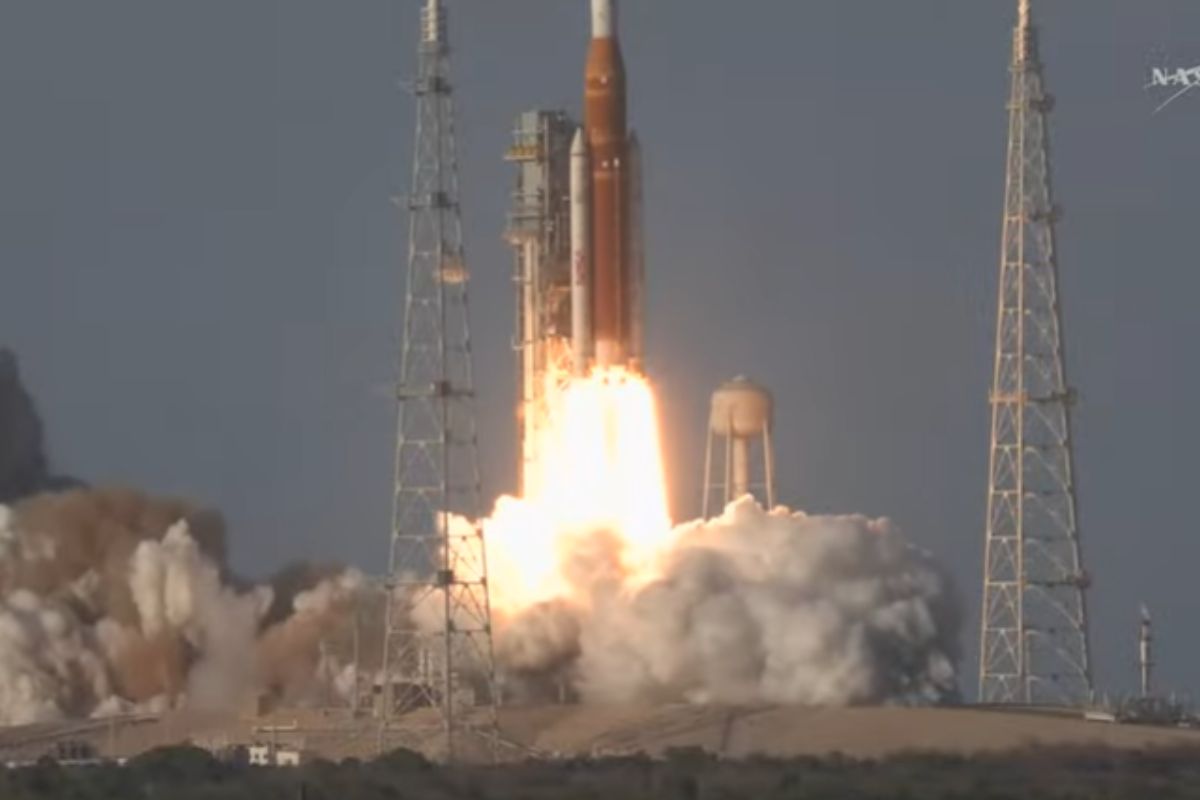
Artemis 2 departs from Florida on the SLS rocket, lasts 10 days, circles the dark side of the Moon and validates critical systems of the Orion capsule for more ambitious missions
Artemis 2 was launched at 7:35 PM Brasília time, carrying four astronauts back to the vicinity of the Moon after more than 50 years without a crewed mission in that orbit. The SLS rocket took off from Kennedy Space Center in Florida and set the Orion capsule on a path for a journey of about 10 days.
Even without a lunar landing, Artemis 2 carries an objective that marks a historic turning point: to test with humans on board the systems of Orion on a free-return trajectory, circling the dark side of the satellite and bringing the spacecraft back with the support of lunar gravity, reducing reliance on complex maneuvers.
Why Artemis 2 marks the human return to the vicinity of the Moon

Artemis 2 ends a hiatus that spanned generations. Since the end of the Apollo program, no crewed spacecraft had returned to conduct a mission around the Moon. The symbolism is strong, but the real value lies in what the mission validates in a deep space environment.
-
China is testing a train that will operate at 400 km/h in daily service, which is 80 km/h faster than the French TGV, and uses carbon fiber, magnesium alloys, and more than 4,000 sensors to become the fastest commercial train on the planet.

-
Forget about having an air fryer, electric oven, and steam pot taking up space in your kitchen because a 30-liter smart oven combines all these functions, automatically selects the ideal temperature, and even turns off by itself when cooking is done.

-
Engineers rewrote all the apps from scratch and bet everything on a buttonless screen: now the creator of the iPhone says that Apple needs to make the same revolution again because of AI.

-
Researchers in the U.S. have created a flying robot that transforms into a land vehicle while still in the air. The technology, based on aerodynamic transition, converts landing into a scene worthy of Transformers and redefines mobility between sky and ground.


The proposal is straightforward: confirm that Orion can sustain a crew, maintain reliable communication, navigate accurately, and operate vital systems under harsher conditions than those found in low Earth orbit.
Who is on board the Orion capsule
The crew of Artemis 2 includes four astronauts: Reid Wiseman, Victor Glover, and Christina Koch from NASA, along with Jeremy Hansen from the Canadian Space Agency, the first non-American to participate in a crewed mission around the Moon.
In addition to representation, the focus is operational. Each astronaut has a role in a test that needs to succeed, as this stage defines what is safe to repeat and expand in future missions.
What is the free-return trajectory and why is it so strategic
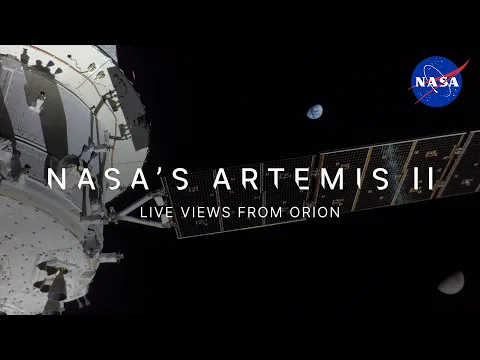

Artemis 2 will follow a trajectory described as in the shape of an “eight,” circling the dark side of the Moon. After two initial orbits around the Earth, Orion is propelled toward the natural satellite on a free-return trajectory, where lunar gravity helps ensure the way back.
This flight path serves as both a test and a safety measure. The mission trains the return with less reliance on complex maneuvers, while also evaluating navigation, communication, and decision-making in a scenario that approaches deep space.
Launch timeline and first flight milestones

The launch sequence of Artemis 2 had essential milestones. At 7:35 PM, the engines were ignited, and the SLS took off. A few minutes later, components of the rocket separated, until Orion continued its journey already separated from the main assembly.
One of the points of greatest attention was the shutdown of the four engines of the central stage after massive fuel consumption. From there, the upper stage takes over, responsible for bringing Orion to increasingly higher speeds, close to escape velocity.
The first days of Artemis 2 and what is tested before heading to the Moon
In the first one or two days, Artemis 2 keeps Orion in high Earth orbit to perform extensive checks. It is a survival and performance check, with tests of life support, propulsion, navigation, and communication, ensuring that the spacecraft is ready for the most demanding part of the mission.
This initial period acts as a safety filter. Before advancing toward lunar orbit, the crew validates that everything responds as planned, with room for corrections still in a more controllable environment.
What the crew should see when circling the dark side
The mission does not plan for a landing, but reserves a striking visual moment. At the point of closest approach, the astronauts will be able to observe the Moon at an apparent size comparable to that of a basketball seen from an arm’s length away.
This type of reference translates scale and proximity for those inside the capsule, reinforcing the historic nature of the human return to the lunar vicinity.
The central objective of Artemis 2 is to prove that Orion can handle what comes next
The heart of Artemis 2 is to test, for the first time with humans, the systems of Orion, including life support, navigation, communication, and the performance of the thermal shield during re-entry. It is a complete mission test, from launch to return.
If this package is confirmed in real flight, Orion establishes itself as a platform for bolder missions. Without this step, any subsequent advancement becomes a promise without operational basis.
Risks and challenges that accompany the mission
During Artemis 2, the crew faces typical challenges of missions beyond low Earth orbit: exposure to cosmic radiation and effects of microgravity, such as loss of bone and muscle mass and changes in fluid circulation.
That’s why the mission lasts 10 days: enough time to test routine, systems, and limits, without extending exposure too much in a flight that still serves as a major rehearsal.
In the end, is Artemis 2 more of a symbolic return or a technical test that truly changes the game for returning to the Moon regularly?







Seja o primeiro a reagir!