





 Portuguese
  English
  Spanish
  3 min of reading
  0 comments


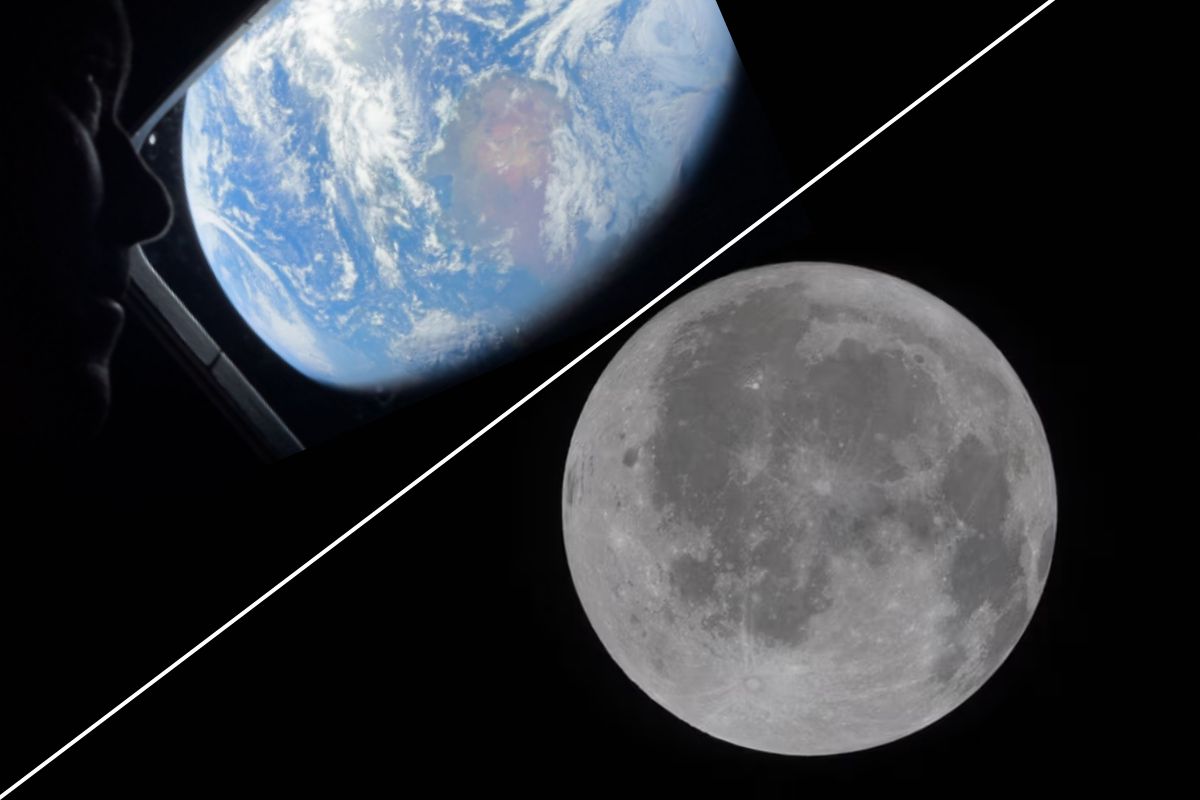
The Artemis II mission recorded the Moon with part of the Orientale Basin in the image, and according to NASA, the crew has already passed the halfway point to meet the celestial body.
Artemis II has once again put the Moon at the center of space news by releasing new photos captured by astronauts inside the Orion capsule. The images show the natural satellite with impressive details and also provide a direct glimpse into the crew’s routine during the journey.
The highlight of Artemis II is a photograph that includes a portion of the Orientale Basin, a lunar area that, according to NASA, has never been seen by human eyes. Until now, only robotic cameras had recorded this region.
What makes the Artemis II image so special
The photo released by Artemis II reveals part of the Orientale Basin, a crater shaded with 965 kilometers in diameter. NASA describes the area as an important transition region between the visible and the hidden side of the Moon.
-
The global fuel crisis is doing what years of environmental campaigning could not convince consumers to switch from gasoline cars to electric ones, and in Thailand, reservations are skyrocketing with over a million people at the Auto Show.

-
Ukrainian refugees in Germany are assembling war drones in a factory near Munich to send back to their own country, aiming to produce 10,000 units by the end of 2026, and some have already returned to the front lines hundreds of times.

-
Cardboard drone created in Japan reaches 120 km/h, has up to 80 km of range, low-cost design can be assembled in a few minutes and stands out for its simplicity and mass production.

-
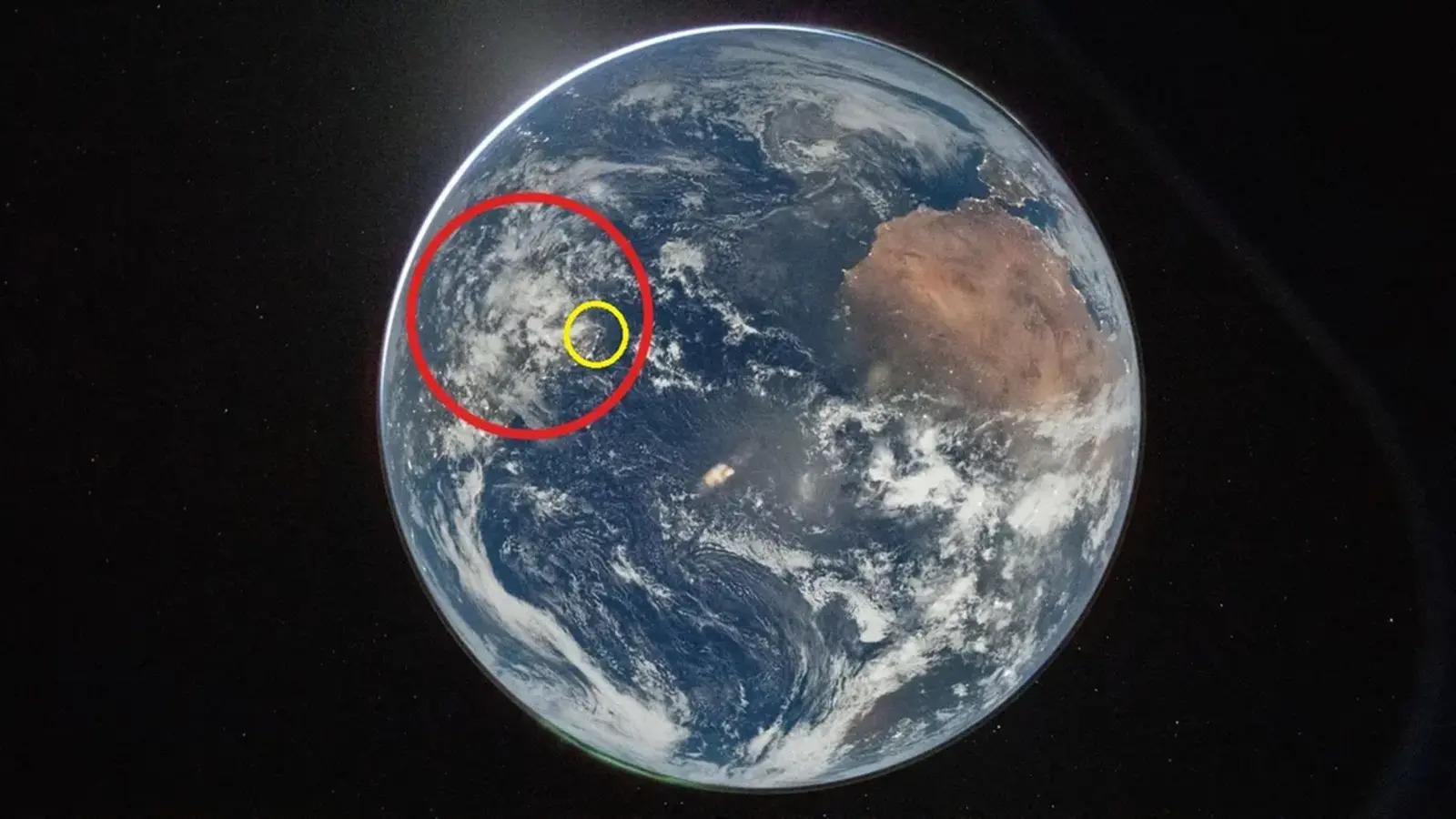
Ceará stands out in the world: it appears in the first photo of Earth taken by Artemis II, and a detail in the Brazilian Northeast catches attention even with clouds covering part of the state.
This detail changes the historical weight of the record: it is not just another beautiful image, but a framing that brings the public closer to a lunar zone that has always been outside direct human experience.
The hidden side and the crew’s reaction
NASA astronaut Christina Koch commented that the first images of the crew from the hidden side of the Moon, which is permanently turned away from Earth and rarely seen, were absolutely spectacular.
She also summarized the feeling of looking at the satellite from another angle: “this is not the Moon I am used to seeing”, indicating the impact of observing a less familiar face even for someone who has studied the Moon their entire life.
More than halfway there and flyby scheduled for Monday (6)

According to NASA, the Artemis II crew has already traveled more than halfway to the Moon. The highly anticipated lunar flyby is set to occur this Monday (6), marking one of the most awaited points of the mission.
The astronauts also reported that the Moon appears larger through the windows of Orion as the journey progresses, a sign that the encounter with the celestial body is approaching in a concrete way.
Orion inside: lights off, clean window, and life in space
The photos from Artemis II did not only focus on the exterior. Part of the material shows the interior of Orion and life on board during the mission, including a record where most of the capsule’s lights are turned off to avoid reflections in the windows.
At this moment, Canadian Space Agency astronaut Jeremy Hansen is seen looking outside, enjoying the view with the cabin in a more “dark” and functional mode, designed to facilitate observation.
Selfies in space and routine external inspection
Just like during Artemis I in 2022, Artemis II also includes planned opportunities for selfies. The solar panel wings of Orion have cameras capable of capturing high-resolution images, with the Moon or Earth in the background.
One of these selfies was taken during a routine external inspection on the second day of the mission. Orion appears in the space environment at an unusual angle, and the transmission of the record was carried out by the optical communications system mentioned in the base.
Earth seen from afar and a visual return reminiscent of the Apollo era

Artemis II also captured images of Earth with perspectives described as impressive. The base emphasizes that these views of the planet have not been seen by human eyes since the last time astronauts left Earth orbit during the Apollo era.
In addition to the photos, the crew also appeared live in continuous transmission from NASA, allowing for more spontaneous moments of daily life in space as the mission approaches its most awaited milestone.
Do you think Artemis II will permanently change public interest in lunar exploration, or does it still depend on the next step, the human landing?







Seja o primeiro a reagir!