





 Portuguese
  English
  Spanish
  4 min of reading
  0 comments


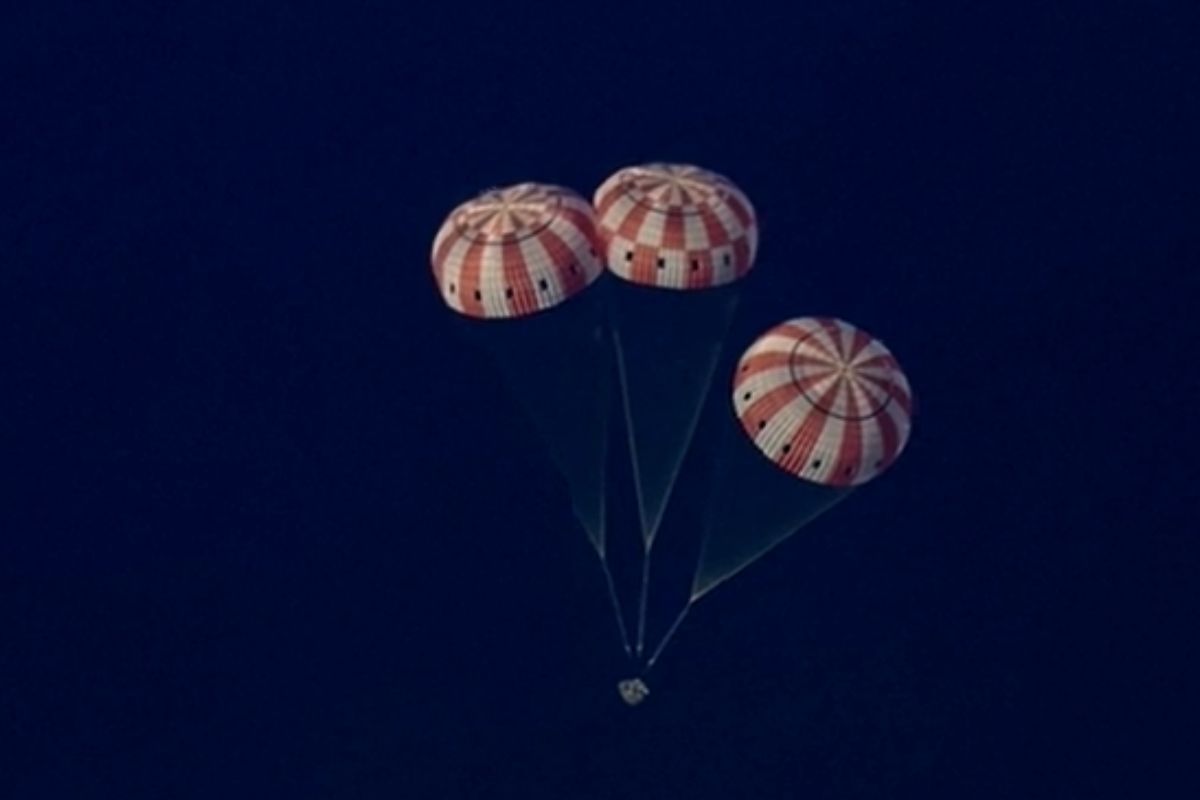
Artemis 2 successfully returned to Earth after a 10-day trip around the Moon, concluding a historic NASA mission with the Orion capsule landing in the Pacific Ocean off the coast of California.
Artemis 2 marked the return of a crewed mission around the Moon with a safe landing on Earth, bringing back astronauts Reid Wiseman, Victor Glover, Christina Koch, and Jeremy Hansen. The conclusion of the journey also confirmed the reentry of Orion and reinforced the advancement of the agency’s lunar program.
The mission ended with the capsule touching the Pacific at 5:07 PM according to live coverage. The safe return concluded a round trip around the Moon that placed humans on this type of trajectory for the first time since the Apollo era.
Beyond the symbolic weight, the trip was treated as a historic and record-setting mission. The landing of Artemis 2 closes an important chapter in lunar exploration and transforms Orion into the centerpiece of NASA’s next steps in deep space.
-
After decades of fear, Britons begin the removal of the masts from a sunken ship from World War II that holds 1,400 tons of explosives.

-
The Brazilian Army now has engineering machines with armor made in the country because the Rio de Janeiro War Arsenal, with over 250 years of history, delivered a backhoe with a customized ballistic protection kit and is already planning to armor other equipment.

-
Starlink’s satellite internet is now bundled with mobile service: US Mobile aims to revolutionize the American connectivity market with an integrated plan starting at $50, but still leaves many questions unanswered about how it will work.

-
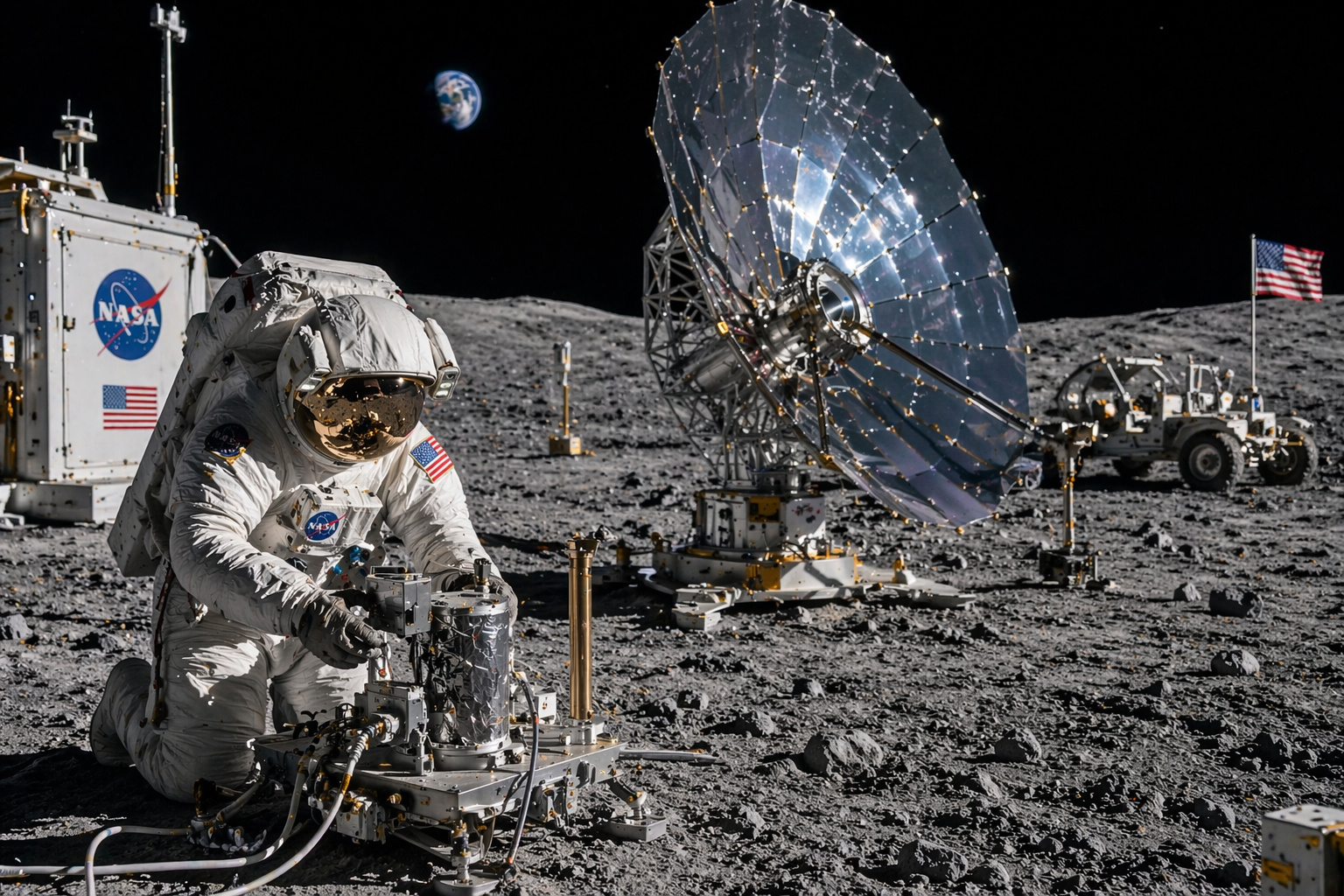
NASA advances in oxygen production on the Moon using concentrated solar energy, eliminating logistical barriers and bringing the scenario of permanent human bases closer with less dependence on Earth shipments.
Artemis 2 concludes historic journey with safe landing
The decisive moment of the mission occurred when Orion landed in the Pacific Ocean with the four astronauts on board. Coverage reports that the landing took place off the coast of California, safely concluding the journey around the Moon.
This return had both technical and symbolic value. Artemis 2 not only completed the planned trajectory but also demonstrated that the capsule was able to navigate the critical phase back to Earth without compromising the crew’s safety.
Orion’s reentry became a central stage of the mission
Before the landing, coverage highlighted Orion’s entry into the Earth’s atmosphere and the separation of the crew module. These moments were followed as decisive points for the mission’s outcome.
The attention surrounding this phase was not by chance. The reentry concentrates one of the most delicate parts of any crewed spaceflight, and the success of Artemis 2 reinforces confidence in the system used by NASA for future lunar missions.
Four astronauts return to Earth after journey around the Moon
The Artemis 2 crew consisted of Reid Wiseman, Victor Glover, and Christina Koch from NASA, along with Jeremy Hansen from the Canadian Space Agency. The four completed the journey and returned safely.
According to coverage, they became the first humans to travel to the Moon and return to Earth safely since the Apollo 17 crew in December 1970. This fact alone places the mission among the most important milestones in recent space exploration.
10-day mission puts the Moon back at the center of crewed exploration
Artemis 2 lasted 10 days and was presented as a historic mission around the Moon and back to Earth. The journey served as a concrete demonstration that NASA has resumed executing a crewed long-range journey in lunar space.
This helps explain the weight given to the operation. This was not just a symbolic flight, but an essential step to validate systems, procedures, and the Orion capsule itself in a real mission.
Artemis 2 reinforces a new chapter in the lunar race
During the broadcast, the NASA commentator stated that a new chapter in the exploration of our celestial neighbor had been completed. The phrase aptly summarizes the political, technical, and historical dimensions of the mission.
Artemis 2 serves as a bridge between the legacy of the Apollo missions and the new phase of lunar exploration. By completing the journey and returning safely, the mission shows that the Moon has returned to occupy the center of the United States’ and its partners’ crewed plans.
Landing in the Pacific concludes NASA’s historic mission
The conclusion in the Pacific was the final point of a journey regarded as one of the most important in recent years for the space agency. The Orion capsule returned to Earth, the crew exited safely, and the mission fulfilled its role as a large-scale test.
With this, Artemis 2 is no longer just an expectation but a concrete result. The mission confirms the ability to take astronauts around the Moon, bring them back, and sustain the ambition of a new phase of human presence in deep space.
In your opinion, has Artemis 2 already elevated lunar exploration to another level, or will the true test come in NASA’s upcoming missions?








Seja o primeiro a reagir!