






 Portuguese
  Spanish
  3 min of reading
  0 comments


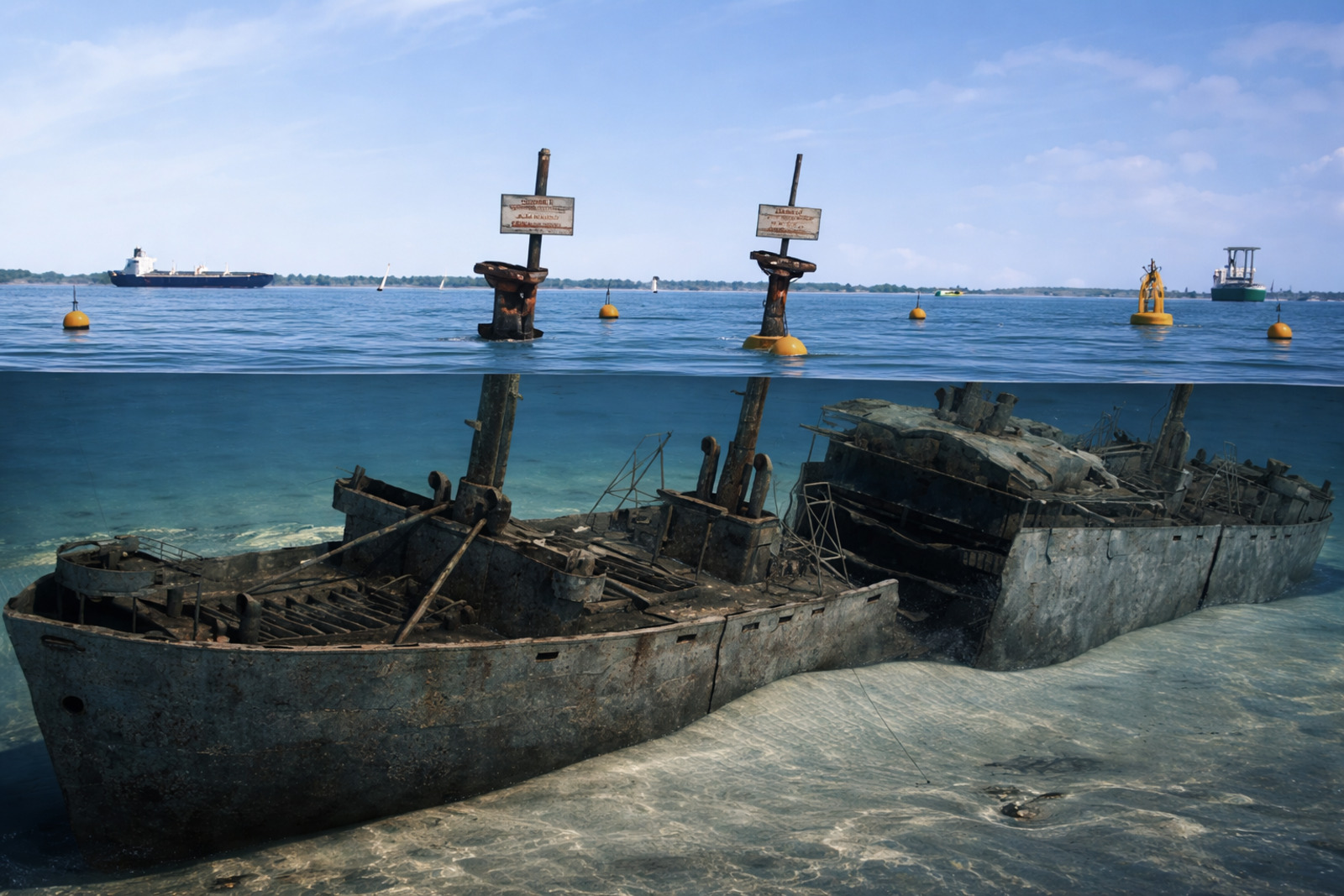
British operation of 9.5 million pounds will attempt to remove the masts of the SS Richard Montgomery, wreck that still holds explosives in the Thames
British authorities will remove the masts of the SS Richard Montgomery, a World War II wreck that still holds about 1,400 tons of explosives in the estuary of the River Thames, near Sheerness, in an operation estimated at 9.5 million pounds.
Intact cargo of the ship
The SS Richard Montgomery was a Liberty-class cargo ship. It ran aground in August 1944 while transporting munitions destined for Allied forces in the Normandy invasion.
Just over a month after the accident, rescue attempts were abandoned. The vessel became fully submerged, and most of the explosive cargo remained intact in the forward holds of the wreck.
-
Helicopter Drops 180 Tons of Sand and Gravel on Swedish River to Revive Ecosystem Damaged by Decades of Exploitation

-
Brazilian Company Launches Retro Smartphone with 48 MP Camera, T9 Keyboard, and Privacy Features for Social Media-Free Use

-
Self-Taught Chinese Farmer Builds 5-Ton Submarine from Scrap, Launches It in Anhui River
-
Invisible Induction Technology Enables Wireless Power for Blenders, Coffee Makers, and Air Fryers, Reducing Countertop Cables






Masts at risk
The masts of the ship remain visible above the surface and have become a landmark. At the same time, they maintain concerns around the wreck and its stability.
Experts consider it essential to remove the masts to prevent a collapse of the structure from impacting the highly flammable material that remains just below.
The operation aims to reduce this risk and address recent external threats.
Drone threat
British authorities assess that the wreck is vulnerable to drone attacks.
Katja Bego, a researcher at Chatham House interviewed by The Telegraph, stated that a highly sophisticated state actor is not needed to carry out sabotage with commercial drones.
Previous government assessments indicated that a potential detonation could cause massive damage and loss of life.
There would also be the formation of a wave of up to five meters, with the potential to hit the coast and critical infrastructure.
Among the threatened points is an important liquefied natural gas terminal.
As a preventive measure, an exclusion zone has been created around the site, prohibiting flights of aircraft and drones within a radius of approximately 1.8 km.
Delayed operation
Despite the urgency, the project has faced successive delays. Announced years ago and initially scheduled to start in 2022, the plan has been postponed several times before the confirmation of the removal.
Now, the British Department of Transport has confirmed the selection of a specialized company to conduct the work.
The removal of the masts is scheduled between April 2026 and March 2027, subject to weather conditions.
In a statement sent to BBC News, the department stated that the priority will be to ensure public safety and reduce any risk posed by the SS Richard Montgomery.
It also stated that the condition of the wreckage remains stable and continues to be monitored by experts.
With information from Revista Galileu.




Be the first to react!