





 Portuguese
  English
  Spanish
  4 min of reading
  0 comments


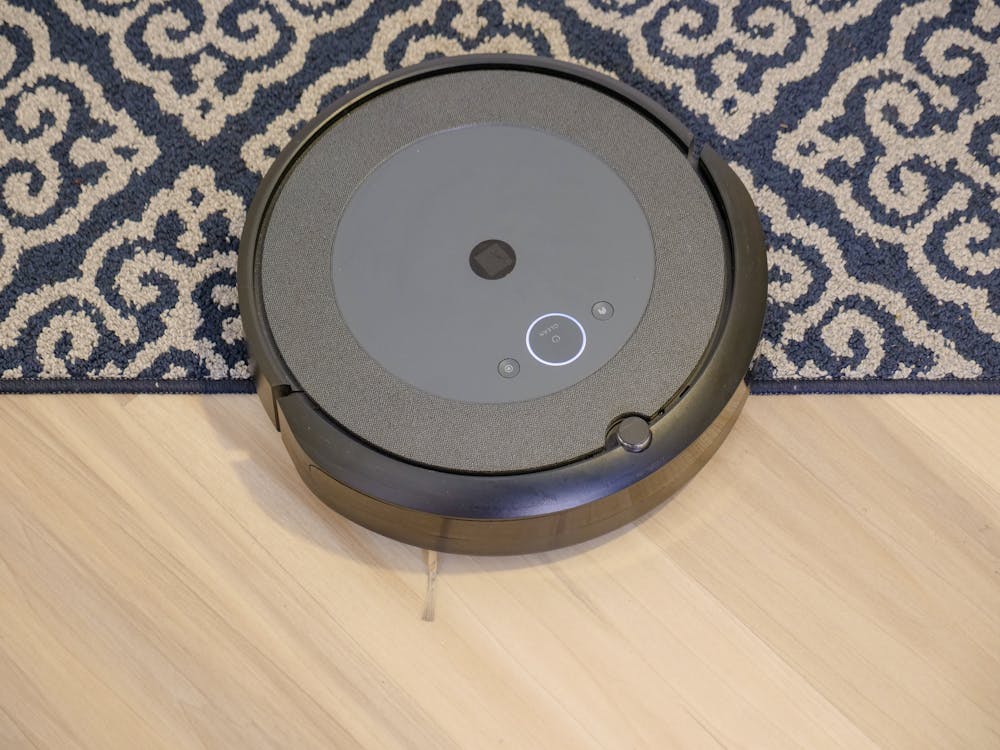
Robot Vacuums Have Little-Publicized Disadvantages, Such as Corner Failures and Frequent Maintenance. See What Manufacturers Don’t Tell You Before You Buy
The robotic vacuum market is in full expansion. Estimates suggest it will surpass US$ 10 billion by 2029. The reason? The promise of a silent, self-working household assistant. But despite the appeal, the product still presents flaws that are not always mentioned in the technical specifications.
High Price May Be Surprising
One of the main obstacles is the price. Quality models cost between € 400 (R$ 2,180.00) and over € 1,000 (R$ 6,230.00). And this is just to ensure reasonable cleaning. Meanwhile, a traditional vacuum cleaner can cost only € 70 (R$ 436.10) and do the same job.
The risk is high: if the environment is not compatible, the investment may become a waste. Thick carpets or uneven floors can cause damage. There have been cases of robotic vacuums burning out after two weeks of use.
-
A woman went out for a regular walk and ended up finding a treasure buried for over 900 years, with more than 2,000 medieval silver coins compared by archaeologists to a lottery prize and considered one of the most significant finds in recent years in the country.

-
Scientists revealed 11 signs that very intelligent people exhibit in their daily lives, and most people have no idea that some of these common behaviors are directly linked to an above-average brain.

-
From space, Buenos Aires appears as a colossal spot of light surrounded by kilometers of darkness, revealing at a single glance the exact boundary between the metropolis and the countryside, seen from 400 km altitude.

-
NASA spent over 118 million reais to build a single bathroom that works in zero gravity, and it has just gone to space on the first crewed mission to the Moon in more than 50 years.

Steps between rooms are also a problem. They can go down, but they can’t go up. The result? They need to be manually carried back to the base, taking away some of the charm of the promised autonomy.
Design of Robotic Vacuums Limits Cleaning
Another point of concern is the shape. Most models are round. This may seem harmless, but it makes it difficult to access corners and narrow areas. Some users report that their robotic vacuums completely avoid these spots.
Carpets also pose a challenge. A fluffy carpet may seem clean after the robot passes, but in practice, the job has not been done correctly. For this reason, the old vacuum still remains close by.
The good news is that the latest models are more precise and can easily navigate around furniture legs. But there are still curious situations. Some simply refuse to go under certain tables for no apparent reason.
Small Objects Can Hinder Cleaning
Obstacles in the robot’s path are another common problem. A carpet fringe, a forgotten toy, a sock on the floor… everything becomes a reason for interruption. The robot sends an alert, notifies that it has detected an obstacle, and waits for help.
If the owner is not nearby, the device may remain stuck in the middle of the room for hours. Even the most modern robotic vacuums with advanced sensors are not infallible. A simple food bowl can cause a standoff.
For this reason, keeping the environment free of loose objects becomes a daily task. It is necessary to lift chairs, pick up bowls, and move boxes and trash cans. What should be a help ends up requiring constant preparation.
Maintenance and Expensive Parts: A Problem for Robotic Vacuums
In addition to cleaning, there is the maintenance factor. Brushes, filters, sensors, and wheels need to be replaced or adjusted frequently. Rotating brushes wear out quickly. Filters should be replaced every two months.
And when a part breaks, the cost of replacement can be high, especially out of warranty. Repairs often require technical skill. Trying to disassemble the device can end with leftover screws and loss of functionality. Many users report frustration when dealing with repairs on their own.
Steps and Uneven Surfaces Interfere with Full Use of the House
Uneven surfaces between rooms are a real barrier. A simple 5 cm step is enough to prevent the robot from fulfilling its function. It can go down, but it cannot go up. In many cases, the robot ends up trapped in one of the rooms, circling until the battery runs out.
The solution? Human interventions. It is necessary to open and close doors, prevent falls, lift the robot, and transport it between rooms. The autonomy, so promised in advertisements, depends heavily on the routine and structure of the house.
Despite the Flaws, Robotic Vacuums Are Quite Useful
Even with all these limitations, many users remain loyal to robotic vacuums. Having clean floors without effort is a privilege hard to give up. The device can be programmed to operate during work hours, saving time and energy.
More modern robotic vacuums now come with an automatic dirt bin emptying function. This further reduces the necessary interaction. It is true that these versions require the use of extra bags, but the time saved makes up for it. And there’s something comforting about coming home and seeing the robot returning to its base after completing its mission.
With information from Neo Zone.







Seja o primeiro a reagir!