





 Portuguese
  English
  Spanish
  4 min of reading
  0 comments



The phenomenon of inverted worlds that questions everything we know about the evolution of stars The discovery of massive planets in internal orbits and rocky worlds on the periphery suggests that gravitational chaos can shape systems in unpredictable ways.
A recent astronomical discovery revealed a planetary system with an “inside-out” configuration, contradicting established theories about world formation. Researchers found an arrangement where massive gas planets orbit extremely close to their host star, while smaller rocky worlds are located in the outer regions. This planetary system is atypical and forces the scientific community to revise the cosmic rules that describe how material around young stars organizes itself.
According to the conventional model, rocky planets like Earth should form close to the star, where heat prevents gas condensation, while gas giants would form in cold, distant regions. However, observations of this new planetary system show the opposite, suggesting that planetary migration processes or extreme initial conditions can create spatial architectures that are much more diverse than previously thought. The discovery was detailed by international teams using high-precision telescopes to map distant exoplanets.
The unusual architecture and the challenge to current theories
What makes this finding so intriguing is the inverted position of celestial bodies relative to the center of gravity of the system. In a standard planetary system, the mass distribution follows a well-defined logic of temperature and density from the star’s birth. In this specific case, the gas giants, which have short-period orbits, challenge the theoretical “frost line,” where large masses of gas typically coalesce.
-
China’s neighbor has a plan to gather thousands of kamikaze drones and cheap missiles with a range of over 1,000 km, putting both Shanghai and Taiwan within striking distance.

-
Ancient boreal forests in Sweden reveal a climate secret by storing 72% more carbon than managed areas, proving that soil preservation is much more effective against global warming than commercial replanting.

-
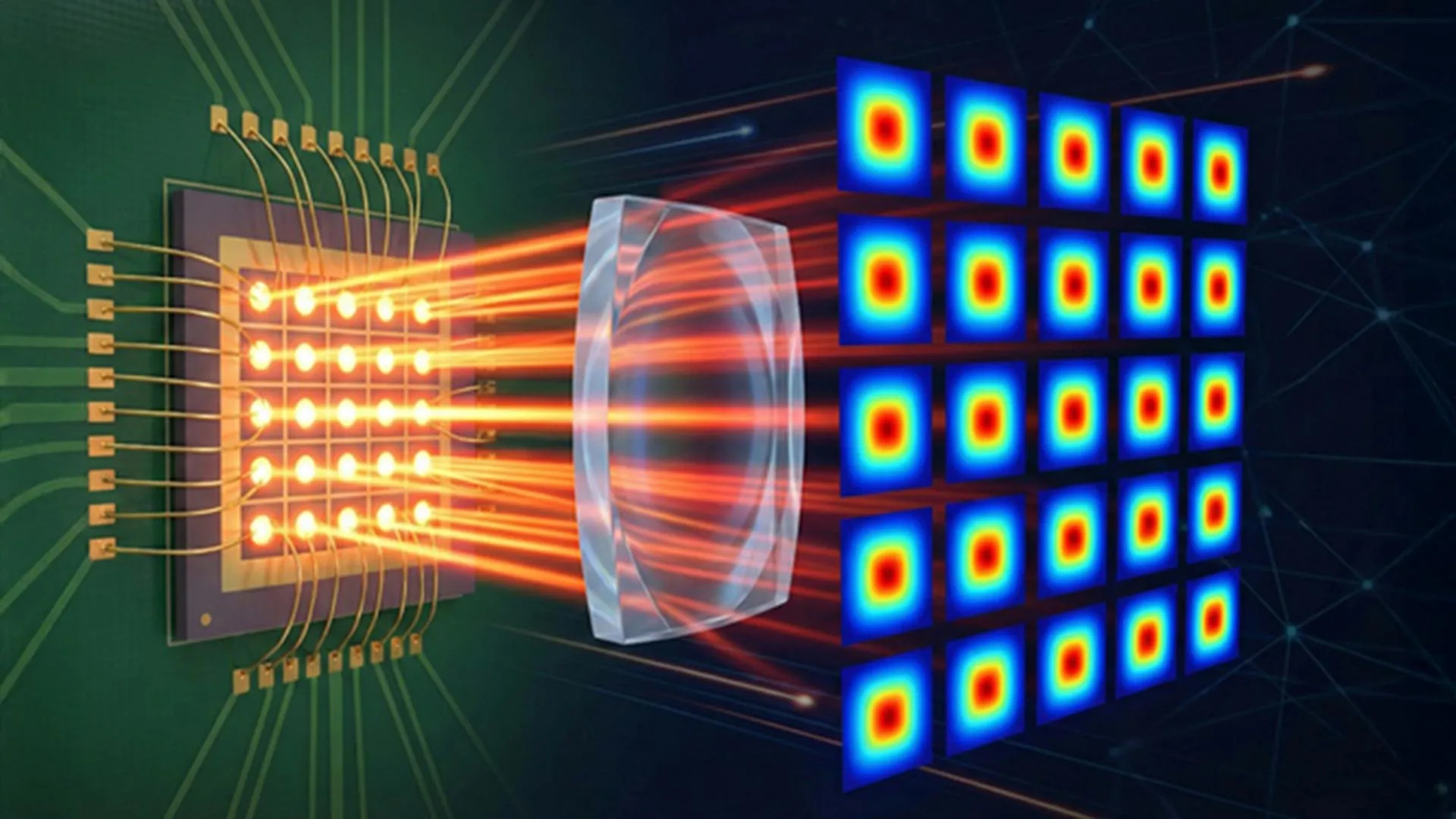
Ultrafast laser technology reaches 360 Gbps with half the energy consumption of Wi-Fi and promises to revolutionize internal connectivity by eliminating interference and congestion in the radio spectrum.
-
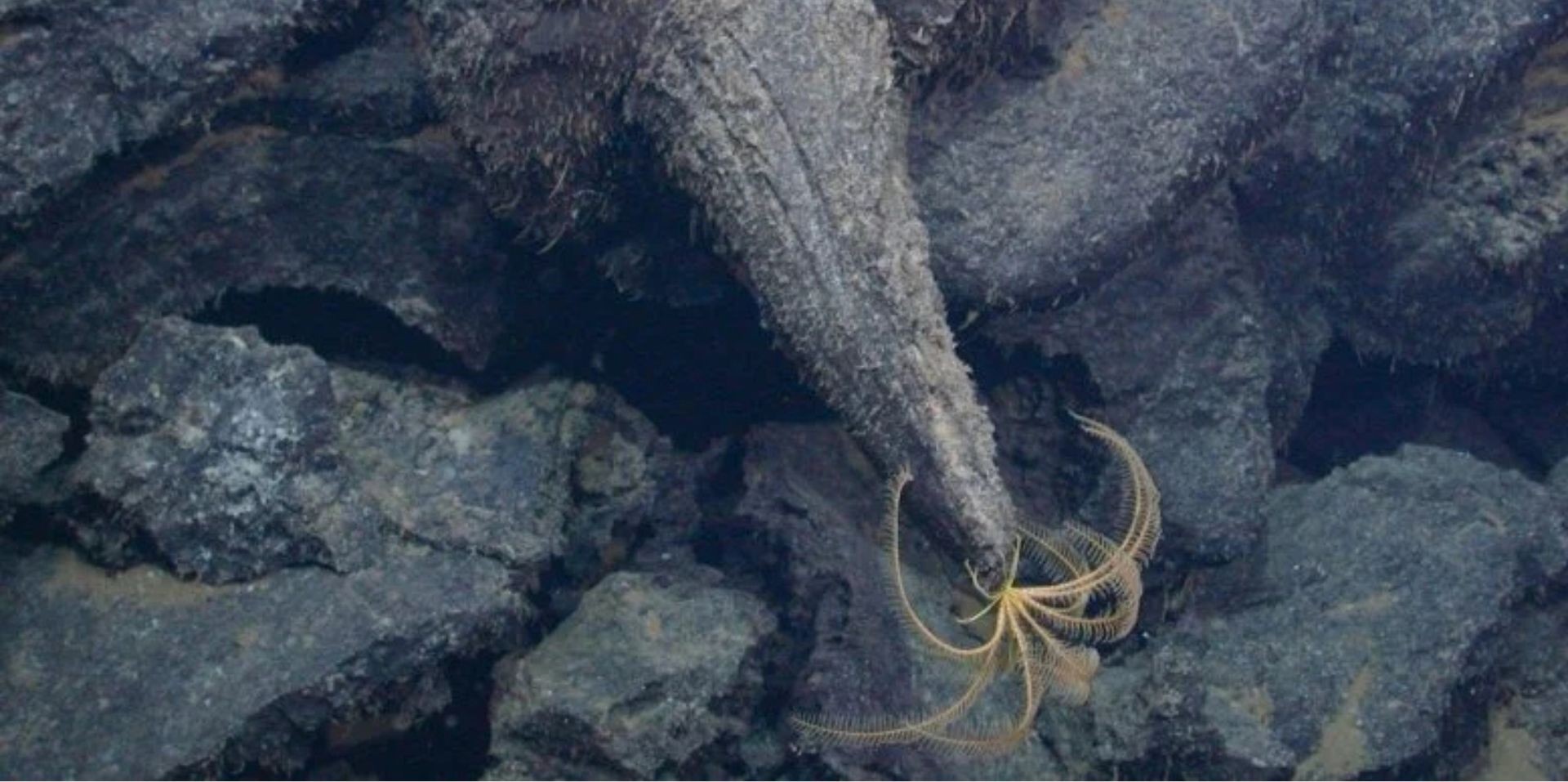
Scientists find gigantic lava fields in an active underwater volcano, and the discovery draws attention to what is happening on the ocean floor.

Astronomers are investigating whether these giant planets formed in their current positions or migrated from outer orbits due to gravitational interactions. If formation occurred in situ, it would indicate that the protoplanetary disk had an unusually high gas density near the star. This characteristic would make the planetary system a natural laboratory for studying extreme physical conditions that are rarely simulated in computer models.
The presence of rocky worlds on the outer edges also raises questions about the availability of heavy materials far from the stellar center. Normally, solid elements are captured by internal gravity, but in this planetary system, they appear to have stabilized in cold orbits. This configuration suggests that the original dust disk may have undergone massive disturbances during the first millions of years of the star’s existence.
Orbital dynamics and planetary migration processes
The migration hypothesis is one of the strongest explanations for the current state of this inverted planetary system. Interactions between forming planets and the remaining gas in the disk may have pushed the giants inward, “overrunning” or ejecting smaller planets in the process. This type of orbital dynamics shows that the history of a planetary system can be chaotic and violent, resulting in final configurations that seem to defy initial logic.
Another factor analyzed is the influence of neighboring stars or a binary companion that may have exerted tidal forces on the system. These external forces can drastically alter the inclination and distance of the original orbits, shaping a planetary system with unique characteristics. The collected data show that the orbits of the giant planets are slightly elliptical, reinforcing the theory of a dynamically unstable past.
Scientists use numerical simulations to try to “go back in time” and understand the steps that led to this inversion. Understanding the exact mechanism is vital to knowing how common this type of configuration is in the observable universe. Each new piece of data about this planetary system serves to adjust the planetary formation variables that astronomers use to search for new worlds in other galaxies.
Implications for the search for life and new worlds
The existence of an “inside-out” system alters how astronomers define the habitable zone of a star. In a planetary system where gas giants occupy the inner space, gravitational interactions may prevent rocky planets from maintaining stable orbits where liquid water would be possible. This means that the architecture of the system is as important for habitability as the individual distance of a planet to its star.
Researchers highlight that this system acts as an exception that confirms the complexity of the cosmos. The diversity of arrangements in each discovered planetary system shows that our own Solar System may not be the universal standard, but just one of many possibilities. Ongoing analysis of this data will help identify whether inverted systems are statistical rarities or if our understanding of spatial physics is still incomplete.
Future space missions equipped with next-generation spectrographs should analyze the atmosphere of these inverted planets. Knowing whether the inner giants retained their original chemical compositions will provide definitive clues about their birthplace within the planetary system. Modern astronomy thus enters a phase where old rules are tested and expanded by discoveries that challenge imagination and traditional scientific logic.
Study published Nature.





Seja o primeiro a reagir!