





 Portuguese
  English
  Spanish
  5 min of reading
  0 comments


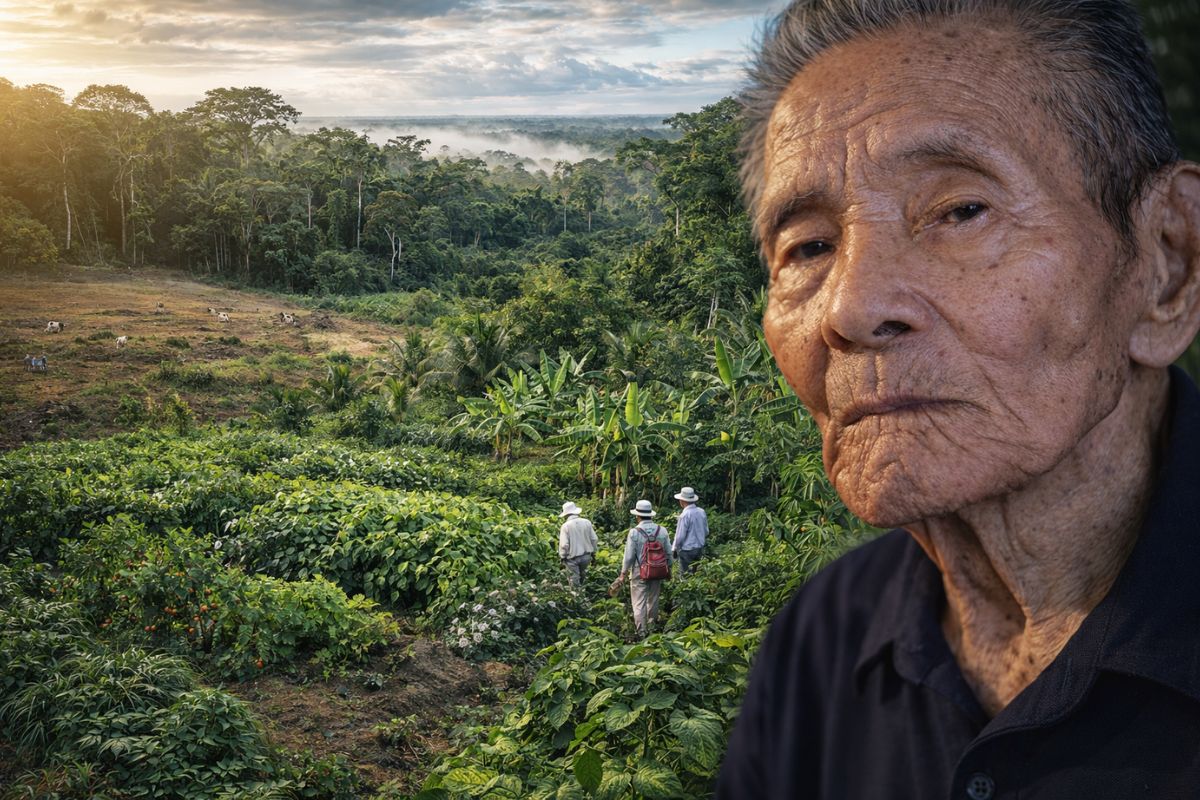
The Japanese who arrived in Tomé-Açu in Pará survived malaria, were persecuted in World War II, and lost everything to a plague in the 1970s, but by observing riverine people and rescuing millennia-old techniques, they created agroforests that recover degraded areas, produce 12 months a year, and export premium cocoa to Japan
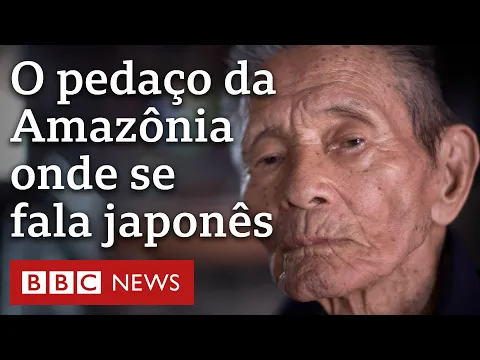
According to the portal BBC News Brasil, Hajime Yamada is 96 years old and is the last living person who was part of the first wave of Japanese immigrants to land in Tomé-Açu, in the interior of Pará, in 1929. He arrived as a baby, at two years old, and grew up in the midst of the forest. “We lived in a tent, a wooden house, covered with shavings, dirt floor. Really poor, always was poor”, he says. The story of the Japanese who ended up in the Amazon is one of loss, adaptation, and reinvention, culminating in an agricultural method that today attracts researchers from around the world.
What this community of Japanese created in Tomé-Açu is something that no environmental campaign has achieved on a large scale: a planting system that recovers depleted soils and deforested areas while producing food year-round, without pesticides and without chemical fertilizers. Abandoned pastures that hadn’t seen a single tree for 15 years now resemble a dense forest with cocoa, açaí, black pepper, and dozens of species coexisting in a system that the Japanese of Tomé-Açu shaped by observing the very nature of the Amazon.
How the Japanese ended up in the Amazon in the 1920s

In the 1920s, Japan was experiencing a severe economic recession. The governor of Pará contacted the Japanese ambassador in Rio de Janeiro to advocate for the arrival of immigrants who would help in the agricultural development of the region.
-
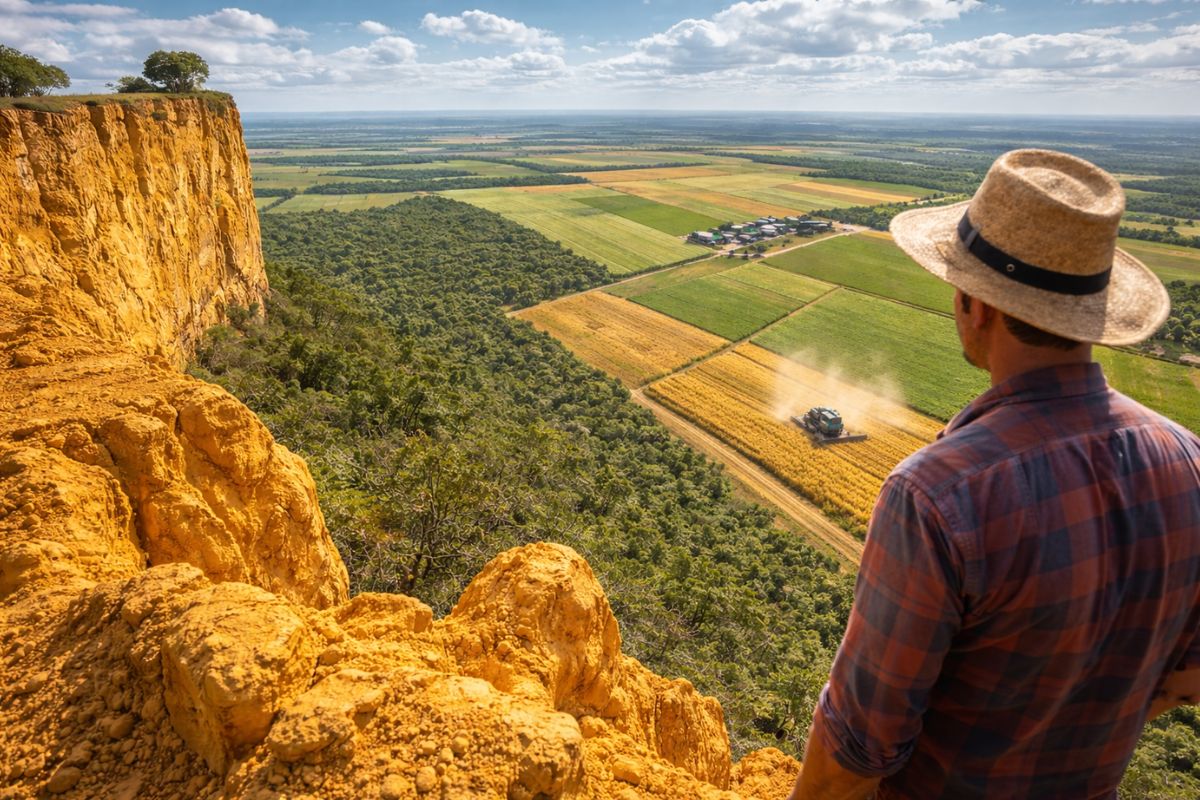
This rare yellow clay at the top of a plateau in northern Pará is transforming one of the poorest regions of Brazil into a new agricultural frontier, with producers already harvesting three crops a year from the same soil.
-
Brazil has avoided deforestation of 50 million hectares in the last three decades thanks to increased productivity in the field, and now low-carbon agriculture wants to prove that the country is part of the climate solution and not the problem.

-
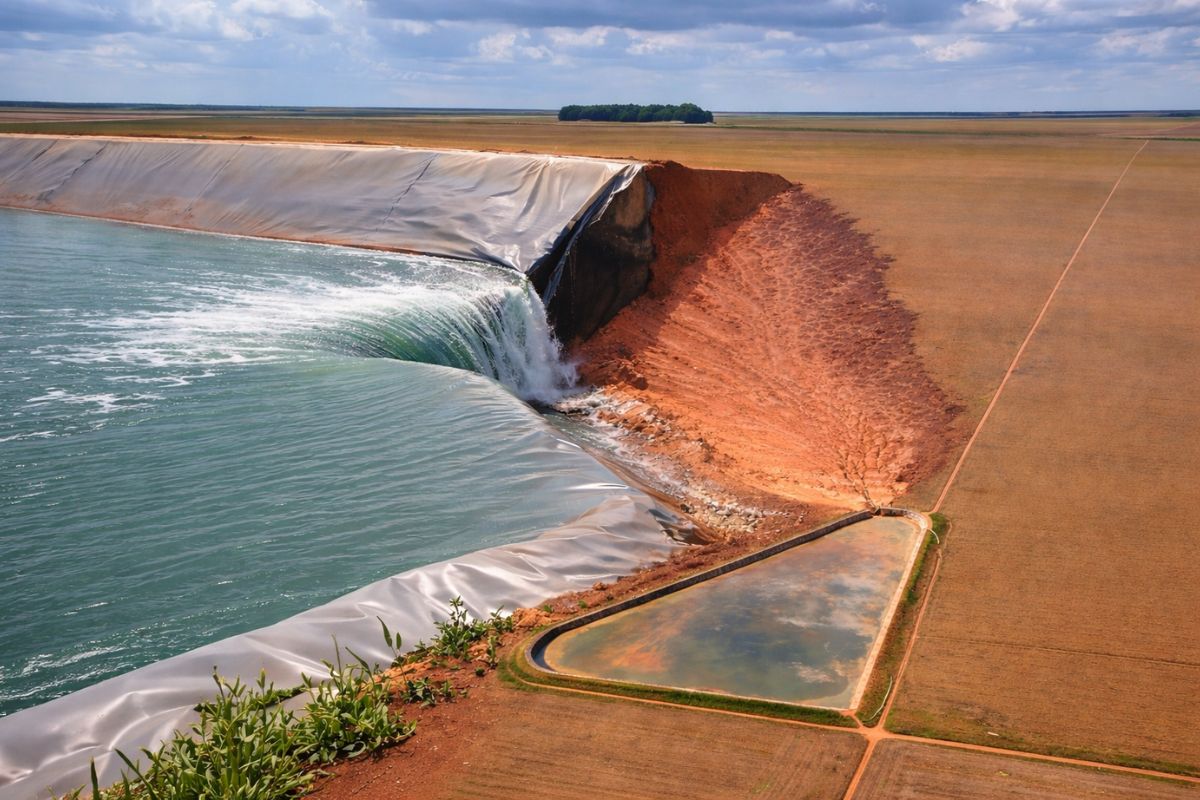
Irrigation pond breaks on a farm in southern Piauí, leaving the reservoir empty and a trail of damage; nearly 1 billion liters flood a soybean field, causing losses, with no injuries reported, and the causes still officially unknown.
-
Santa Catarina harvested 7.85 million tons of grains and exported 2 million tons of meat in 2025: a growth of almost 6% in the food industry, which is four times higher than the national average and drives the entire Brazil.

Each Japanese family that arrived received a plot of 25 hectares covered by dense forest, where they had to fell trees to build houses and make space for rice, bean, tobacco, and cocoa plantations.
The original idea was temporary: the Japanese would stay for a few years, save money, and return to Japan. But that did not happen for most. The families put down roots in the Amazon and faced everything from malaria, isolation, and precarious living conditions.
One thing, however, made the Japanese feel at ease: the abundance of wood. They already knew how to work with it and used the local trees to build traditional Japanese houses with joinery techniques that do not use any nails or screws.
The persecution during the war and the bomb that destroyed Hajime’s hometown

During World War II, when Brazil declared war on the Axis countries, the Japanese in Tomé-Açu were considered enemies of the state.
They were closely monitored by the authorities and lost basic freedoms. If the police found three Japanese people talking together, they were arrested. The older ones describe that period as a kind of concentration camp.
The end of the war brought relief but also devastating news for Hajime Yamada. His hometown, Hiroshima, had been destroyed by an atomic bomb.
“The atomic bomb drove many people mad. It burned our skin. I think if I had stayed there, I would have died,” recalls the survivor. At 96 years old, he acknowledges that his family’s decision to come to Brazil saved his life.
The Japanese who stayed in Japan faced destruction; those who came to the Amazon built a community that endures nearly a century later.
The era of black pepper and the plague that destroyed everything
From the 1960s, the community of Japanese in Tomé-Açu experienced its peak thanks to the cultivation of black pepper, which was priced high in the international market.
Several families dedicated themselves to the activity and prospered, building the main buildings of the municipality, including a hospital in the 1950s. The Japanese were the economic force of Tomé-Açu.
Until in the 1970s, a plague called fusariosis decimated the plantations and ended the cycle of prosperity once and for all. The producers were left without a source of income and had to desperately seek alternatives.
The crisis caused many Japanese from Tomé-Açu to migrate back to Japan in search of work. Buddhism lost strength among the new generations. Families became divided between the two countries. The colony that had prospered entered a decline, but it was precisely from this crisis that the innovation that would make the Japanese of Tomé-Açu famous worldwide was born.
How the Japanese created forests that produce food year-round

Without black pepper, farmers needed a new path. One of the leaders of the Japanese cooperative gave advice that would change everything: “Look at nature. Learn from nature.” By observing how the riverine people of the Amazon lived with fruit trees around their homes, consuming fresh food for 12 months, the Japanese began to test a planting system that mirrored the forest itself.
The method prioritizes species diversity, incorporates ancestral Japanese techniques such as the concept of mottainai—never waste—and completely rejects pesticides and chemical fertilizers. Cocoa shells are thrown back into the field to become fertilizer. Insects that other farmers would call pests are kept because they serve functions of pollination and natural control.
There is no concept of weeds; every species plays some role in the system. The Japanese of Tomé-Açu founded what is now known as the Tomé-Açu Agroforestry System, an international reference in sustainable production.
What the Japanese agroforests produce today in Tomé-Açu

The property of Michinori Konagano, one of the most well-known Japanese-Brazilian farmers in the region, has 230 hectares cultivated with the agroforestry system.
Cocoa, açaí, black pepper, and dozens of forest species coexist, producing year-round in an area that 15 years ago was degraded and abandoned pasture. With the return of vegetation, animals have started to reappear: sloths, foxes, armadillos, pacas, hawks, and owls roam the property.
The high-quality cocoa is the flagship of the production. It undergoes fermentation and drying processes before being exported, via the Japanese cooperative, to chocolate companies in Japan. “Today I feel guilty for having cut down, burned. With a matchstick, we set the entire forest on fire”, admits Michinori, who now dedicates part of his time to teaching the agroforestry method to other farmers in Brazil and other countries.
“I see this vast number of people in need. Why not pass this knowledge on to everyone, regardless of Japanese colony?”
Did you know the story of the Japanese in Tomé-Açu? Do you think their agroforestry system should be replicated throughout the Amazon? Share in the comments.






Seja o primeiro a reagir!