Portuguese
  Spanish


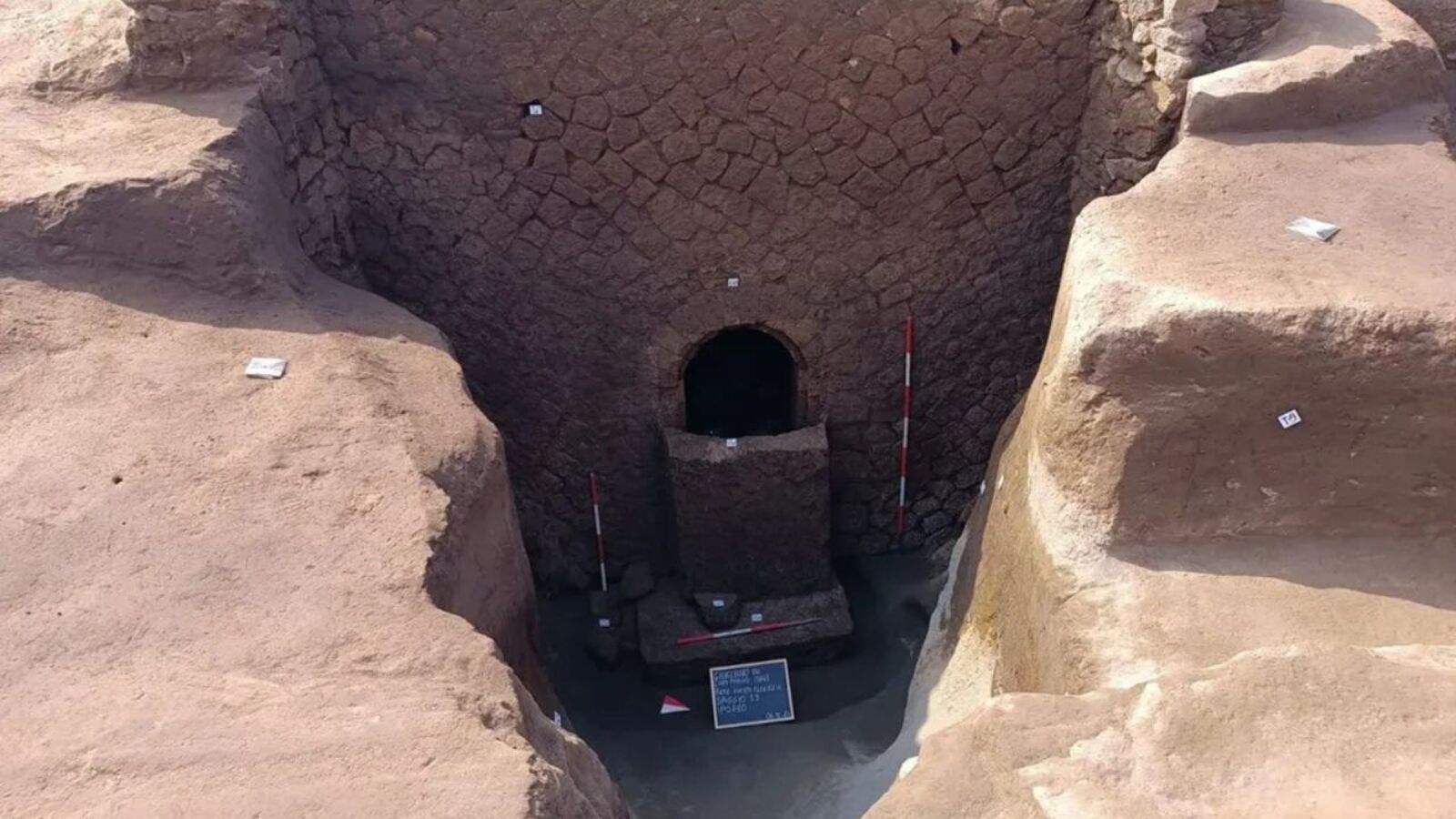


In the Tomb of Cerberus, in Giugliano, DNA, pollen, and tissue analyses help reconstruct funerary rituals and social traits of Naples 2,000 years ago
Experts opened a 2,000-year-old sarcophagus in the Tomb of Cerberus, in Giugliano, northwest of Naples, in 2024, and found a body face down in excellent preservation, surrounded by analyzed funerary objects.
Opening of the sarcophagus
The opening occurred after a microcamera was inserted into the funerary structure. The initial images showed promising conditions and led the archaeological team to proceed to access the tomb sealed for the first time in millennia.
When the passage was opened, the impact was immediate. In the sarcophagus, the professionals located an individual lying face down.
-
Apple Raises MacBook and iPad Prices as Memory Costs Surge by Up to 98%, Losing Edge Over Rivals and Highlighting AI Boom’s Impact on Consumers

-
China Establishes State Centers to Train Humanoid Robots, While the West Lags Behind with Makeshift Solutions
-
The Trap of Modern Technology: How Screen Overload and Digital Connections Can Impact Your Mental Health and Well-being
-
Wyoming Couple Grows Tropical Fruits Year-Round in -40°C Using Geothermal Greenhouse, Demonstrating Earth’s Heat Can Produce Oranges and Lemons in Snow Without Traditional Heating





The Superintendency of Archaeology, Fine Arts, and Landscape of the Metropolitan Area of Naples classified the preservation as excellent.
The work was conducted by a team led by archaeologist Simona Formola, responsible for investigations in the area located in northwest Naples, Italy.
Objects
The body was wrapped in a shroud and surrounded by pots of ointment and instruments related to the cleaning and preparation of the corpse.
These items were used in the funerary rituals practiced during that period.
The care in the arrangement of the body and the choice of objects led researchers to conclude that the buried individual was likely a family member for whom the mausoleum had originally been constructed.
The archaeological site drew attention for its relevance in the Phlegraean region, near the ancient Liternum.
For Marian Nuzzo, from the Italian Ministry of Culture, the site continues to provide valuable data about the local past.
Shroud
The samples taken from the burial and the bed where the body was placed revealed information about the treatment given to the deceased and the mortuary rituals adopted two thousand years ago.
One of the most notable points is the condition of the shroud. The team assesses that the fabric may have undergone mineralization favored by the specific climatic conditions inside the sealed funerary chamber.
The textile analysis is still ongoing. The archaeologists hope to identify the structure of the fabric, the type of thread used, and its quality, in search of clues about the individual’s social status and the techniques of the time.
DNA
DNA tests are underway to try to define biological characteristics of the buried individual, such as ancestry and possible family ties with other burials in the necropolis.
The team is analyzing organic substances, plant residues, and pollen grains found in the sarcophagus.
The initial results indicate that the body may have been treated with creams based on Chenopodium, known as goosefoot, and wormwood.
These substances would have been applied to slow down decomposition and improve the preservation of the corpse.
The Italian Ministry of Culture hopes that the continuation of analyses and sample collection will allow for a better understanding of this burial and the context of the necropolis, reconstructing aspects of social composition, beliefs, and cultural practices of Naples 2,000 years ago.
With information from Adventures in History.